If you’re in the greater Knoxville area on Thursday, September 7th, I hope you’ll join me at the monthly meeting of the Knoxville Writers Guild at Addison’s Bookstore, located at 126 S. Gay St., in Knoxville. The meeting begins at 7:00 p.m.
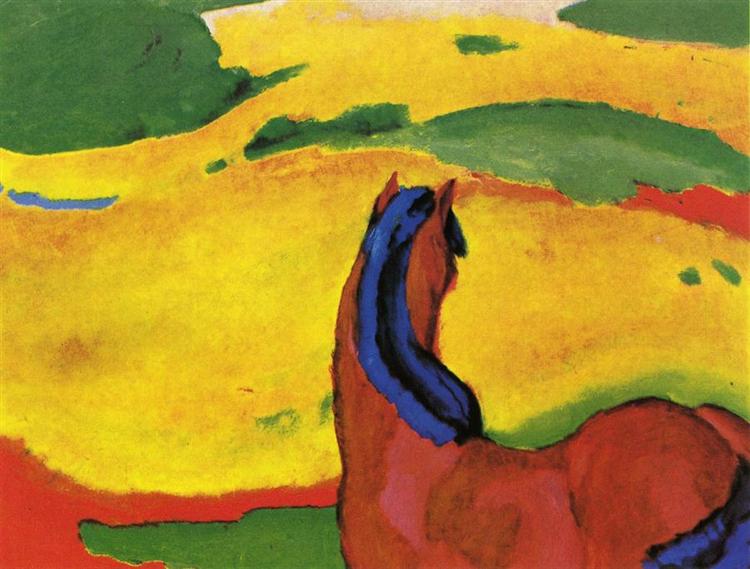
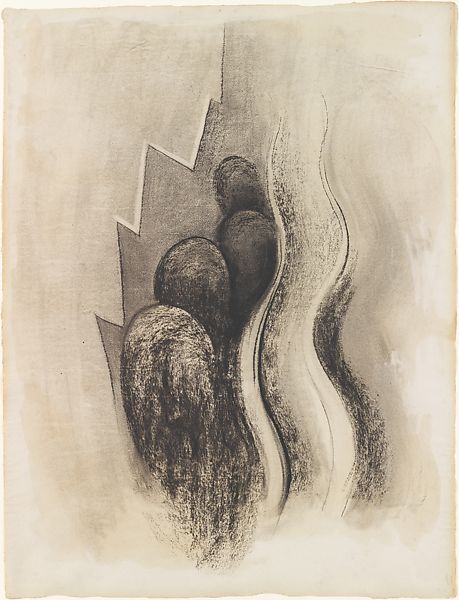
I’ll be talking about ekphrastic writing or ekphrasis. The word “ekphrasis” comes to us from the Greek where it means “description.” If you still aren’t sure what ekphrastic writing is, then I’ll briefly define it as writing that vividly describes a pre-existing work of art. I’ll share some of my favorite examples of ekphrasis, and we’ll even generate new work using some of the fantastic art on display at Addison’s.
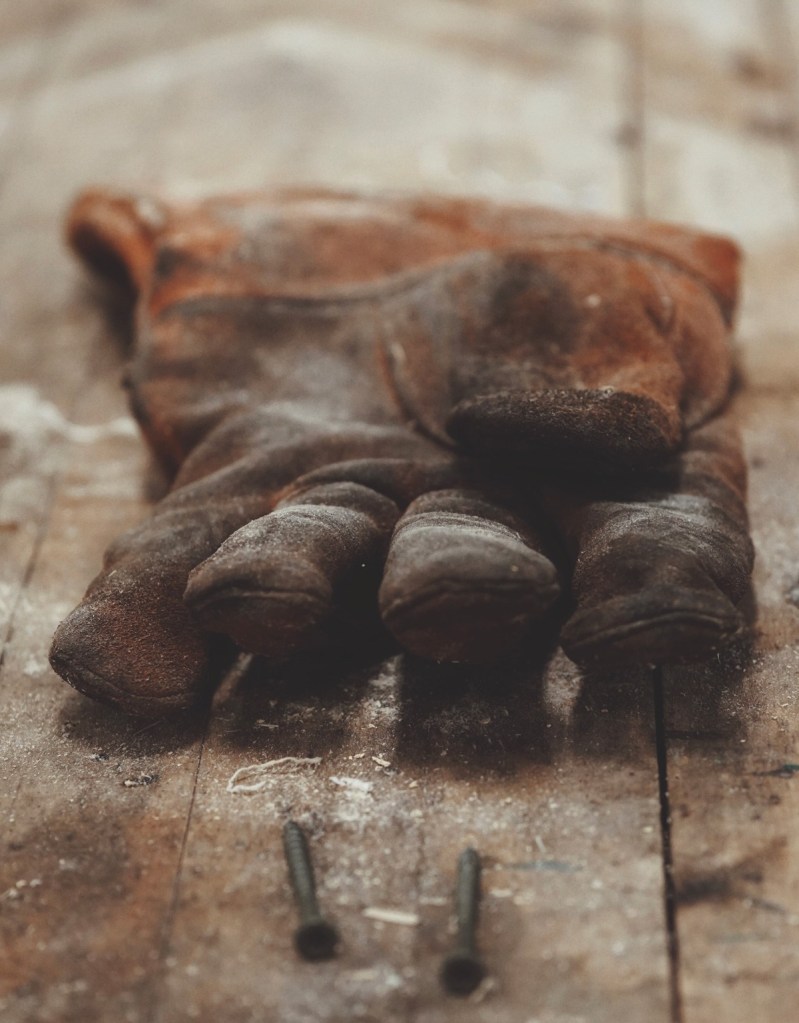
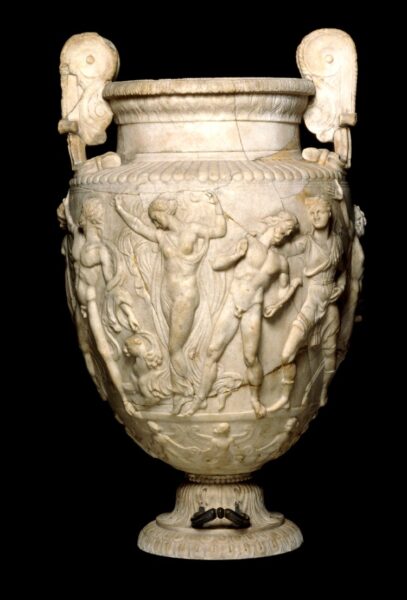
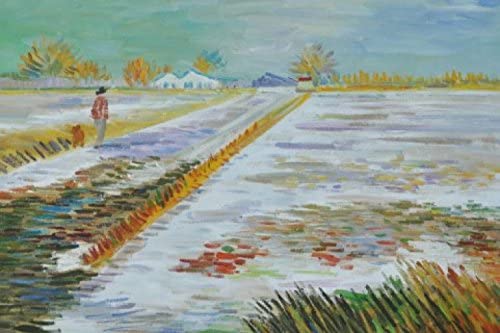
Here are some of the images I’ll be talking about in this session.
.
.
.
.
.
.
.
.
If you live too far away to be in Knoxville on Thursday, I hope you’ll use one of these images or an image of your own in your writing practice this week. If you come up with something you especially like, please send it to me. If you need more guidance, check out my conversation with Julia Wendell about her ekphrastic poem “Horse in the Landscape.”
Georgann Eubanks is a veteran writer and storyteller. She has published five books of nonfiction ranging from literary guides of North Carolina to natural phenomena across multiple Southern states. Along with photographer Donna Campbell, Georgann operates Minnow Media which has produced a number of public television documentaries. When I was visiting City Lights Bookstore in Sylva, North Carolina, last month, I stumbled across Georgann’s fourth book, The Month of Their Ripening. This book explores 12 different heritage foods found within North Carolina while drawing on first hand accounts from the foods’ producers. Along the way, Eubanks reveals fascinating histories of the foods, the people who produce the foods, and the places where they’re produced. I first met Georgann about ten years ago, and since that time, I’ve seen that she is also a consummate community builder. This fact echoes throughout her work in The Month of Their Ripening, one of several reasons why I emailed Georgann even before I could finish reading the book. I was so excited to ask her questions about this book and her writing process, and now I’m excited to share our conversation with you.
DL: One of the pleasures in reading The Month of Their Ripening is the diversity of foods you write about, and especially that they cover all areas of North Carolina which in itself is a large, diverse geography. How did you come to the idea to write about heritage foods? And how long did it take you to write The Month of Their Ripening?
GE: It took a couple of years to do the research, travel, and writing for this book. But as I always say when someone asks this question, the only proper answer is to give my age at the time of completion of a manuscript. A book takes everything I’ve learned over all my years! To be ready to write it, I had to ripen, too!
My first three books with UNC Press were literary travel guides featuring excerpts from North Carolina writers about very specific places where they had lived, worked, or visited in the state. So yes, North Carolina is big, and it took three regional volumes—mountains, piedmont, and coastal plain—to cover the 400 years of writers and the 600+ miles it takes to cross the state. That was a ten-year project, but once photographer Donna Campbell and I rested up after that long journey, we wanted to travel the state again. This time we would eat our way across North Carolina!
How it started: I planted a fig in my yard that was the first to survive of many I had tried to grow over the years. When it began producing figs, I was stunned by the delicious fragility and ephemeral nature of the fruit. You have to WAIT for a fig to ripen, and they only come around once a year. The figs got me to thinking about how spoiled we are in this country, being able to find most any food any time of the year at the grocery.
I started wondering about the foods that are a key part of North Carolina’s history and heritage, and further, what are the foods that our forebears planted in the ground or harvested from the water that they looked forward to eating as a seasonal ritual? Twelve essays seemed a good size to match up to a whole year of foods in their time of ripening. Of course, January was tricky—nothing much to harvest here in January—so the book starts with snow, which becomes a rarer treat the farther east you go in North Carolina. Nevertheless, people have been fanatically making snow cream forever, and as it turns out, there are a million recipes and very strong opinions here about the best way to make snow cream. So that’s where the book begins.
DL: Each chapter in The Month of Their Ripening is beautifully written, and as I read, I was often struck by the voice of your writing which finds the perfect intersection between essay (what some would call creative nonfiction with lush description and personal experience) and investigative journalism (that involves some deep research). Was it difficult to arrive at this intersection, or is this just your natural voice? Do you have tips for writers who want to employ personal interviews or research in their projects?
GE: This is a style that works for me. I start out with my ignorance and take the reader with me on the journey to discover the history, science, and people who have perpetuated these food traditions. As I discover the stories, the reader does, too. And I try to capture my own joy and surprise in what I learn—some of it deep history, like how figs are discussed in the Old Testament. Then there’s the funny story about how a lady friend of Thomas Jefferson was told by her kitchen staff that she could not serve figs in Washington, DC, at a formal dinner party because figs were “vulgar.” And of course, there’s D.H. Lawrence’s sexy prose on the fig. But these are historical anecdotes anyone can find. What made these stories only mine were the interviews/visits with people on the ground, such as the single man left in Ridgeway, North Carolina, who is still growing a special variety of cantaloupe that was once was harvested by his extended family and shipped north by train in great quantities and served as a special seasonal treat at New York’s Waldorf Astoria.
My advice is to embrace your ignorance and go from there—find the best stories from people who have good tales and expertise to share. Honor their stories.
DL: One of my favorite aspects in these chapters is the exploration of these various communities that exist all around us. There’s a good amount of detective work involved in your writing, as one person connects you to another and another. More than simply following the pathways from production to consumption, you’re actually getting to know the people you’re talking to and understanding how their lives and livelihoods are connected. How much of that is driven by your own curiosity such as when you wonder what the berries are on the tree outside your home? Do you have advice for writers about following their own curiosities?
GE: I wanted to show the diversity of communities and people in North Carolina. And now, at least three of the homegrown experts on foods who are featured in The Month of Their Ripening have passed away—the octogenarian and scuppernong grower Clara Brickhouse, the persimmon festival host Gene Stafford, and the snow ice cream expert and unforgettable writer/scholar Randall Kenan. I am so glad to have known them and learned from them and shared their food stories in print. I think this quote from nonfiction writer Tracy Kidder says it best:
“Essays often gain authority from a particular sensibility’s fresh apprehension of generalized wisdom. But the point is not to brush aside the particular in favor of the general, not to make everything a grand idea, but to treat something specific with such attention that it magnifies into significance.”
— from Good Prose: The Art of Nonfiction by Tracy Kidder and Richard Todd
DL: As with your past books, this one was published by The University of North Carolina Press. Can you talk about how you developed a relationship with them and about your experience publishing with a university press?
I have been with UNC Press for so long that I have had three editors—the first two have now retired. I first worked with them on the literary guidebooks. That project was a work-for-hire with a contract from the North Carolina Arts Council. The last two books I pitched to UNC Press on my own. Both are trade books, the last being Saving the Wild South: The Fight for Native Plants on the Brink of Extinction, which has done pretty well, too. I am finishing my sixth book now, also about natural phenomena and covering seven states of the South. (Saving the Wild South featured endangered plants in six states.)
These days university presses are doing more trade books, meaning popular books that are not written only for an academic audience. This is a good thing in that the commercial publishing industry has become more and more centralized and seems only interested in best sellers or what they hope will be best sellers. Regional books have a better chance with a university press. For the press, their trade list often sells enough to supplement the small revenues (if any) that come from highly specialized academic books that have a narrower audience.
But here’s the thing, no matter who your publisher is nowadays, the success of a book rests on the shoulders of the author. You need to be able to present the book in such a way that readers buy it. I think my books have been accepted because they are evergreen, as the publisher likes to say—they tell stories that will last. I also have a track record of giving countless book talks through all five of these books, and I enjoy speaking about the work. Truth is, there is only so much time and money that a press has to give to an individual book. My editor at UNC Press just launched 12 new books this spring that are his babies. Meanwhile, he is going to be reading my new manuscript come November and trying to acquire new titles and coaching first time authors. He called upon me last week to read a book proposal from a new author and give my assessment of its distinctions and potential. That’s how university presses work—the editors depend on the proposal and later the manuscript being reviewed by professionals in the academic field being addressed or by seasoned writers with trade book experience who know the marketplace.
I also have an editor I privately engage to read and critique the manuscript because I know that is necessary. I am also responsible for creating an index—that’s part of the contract these days, too. I have gotten a small grant to cover my travel expenses for the current book I’m writing, which helps, but I don’t do this for the money. I do it because it’s a great challenge, I care about the topic, and I can make a little money giving talks. I get other writing assignments that also help support me.
DL: I’m looking forward to seeing you later this month at the Table Rock Writers Workshop, which is a lovely community of writers and musicians that you shepherd. I believe registration will be closed by the time our conversation is published, but can you talk about your work with TRWW for readers who aren’t familiar? And do you have anything to say about why community is important for writers?
GE: The Table Rock Writers Workshop was born out of the Duke University Writers Workshop, which I attended in the 1980s and then directed for 20 years starting in the 90s. The workshop at Duke was heavily focused on the faculty, getting big name writers—lots of them—to teach. Over the years, we have carved out a different path. We are focused on the participants. I invite faculty who love to teach and have a passion for writing that transcends any concern about commercial success. We don’t really talk much about publication per se, or the marketplace. We focus on writing the best book or story or poem you can. Our workshop is about craft and being in community—getting the support and encouragement you need for the story you want to tell. Our way of building that community of writers is having generous teachers who model how to give useful feedback. Participants begin to learn how to edit themselves and how to stick with the discipline needed to finish a draft. Our teachers are people like you, Denton, who do it for the love of words and are generous with sharing what you know.
I’m very grateful for Georgann’s time in speaking to me. You can order The Month of Their Ripening directly from University of North Carolina Press, or wherever books are sold. Please visit Georgann’s website for more information about her and her work.
If you’re in the Knoxville, Tennessee, area, I hope you’ll join me at Union Avenue Books on Sunday, August 13. I’ll be reading alongside my great friend Sylvia Woods, author of What We Take With Us, a beautiful collection of poems that explores Sylvia’s personal experience as an educator, as well as her own transition from daughter to mother and eventually to grandmother. The reading begins at 2:00 p.m., and we’d love to see you there.
In 2021, founding editor-in-chief of The Bitter Southerner Chuck Reece and his wife Stacy Reece began publishing Salvation South. In the publication’s opening salvo, Reece famously said, “I’m not bitter anymore. What I am is hopeful.” According to Salvation South’s guidelines, they accept stories, in all mediums, including journalism, essays, fiction, photography, filmmaking, and poetry. I saved poetry for the end of that list because Andy Fogle is Salvation South’s new poetry editor, and he’s looking to publish work by established, emerging and new poets. Andy agreed to share some insight into exactly what he’s looking for in terms of submissions. If you’re reading this, Andy (and I) hope you will consider sending Salvation South some of your own work.
DL: Congrats on your new role as poetry editor at Salvation South. I love the magazine’s origin story, and how Chuck and Stacy Reece have said to “think of Salvation South as a big old house party—filled with people who want to celebrate Southern culture and people who are searching for new reasons to be hopeful about the South.” Can you talk about how that ethos pertains to the kind of poetry you hope to curate for the magazine?
AF: Thank you much. I’ve been wanting to get back into doing something like this for a long time, and, among my various professional duties in this world, it’s really one of my favorite things to do.
To the house party metaphor and poetry: I want to cast as wide a net as I possibly can, so just come on in, at least for a cup of coffee. Ever since 10th grade when I realized I wanted to devote my life to the arts, I’ve found things to like all over the artistic map, both across and within genres, and they all swap around. In college and grad school, I ran kind of a punk literary zine called 5th Gear, and while I definitely made some mistakes, I also think I got an underground reputation for being seriously eclectic. You could read all kinds of crazy-different and interesting stuff in 5th Gear. I’m still proud of that, I still believe in that, and I still aim to act like that. I have an MFA; I’ve participated in (and won 2) poetry slams; I’ve taught in all kinds of schools; I’ve been into way-out experimental stuff, formal stuff, middle-of-the-road stuff, street stuff, uncategorizable stuff…I believe that the best poetry has an aesthetic energy and a social function. I believe in the beauty of both, the magic of many, the awe of all. If I can help present a consistent mosaic of diverse voices, I’m a happy dude.
DL: The first time that I became familiar with your work and your involvement at Salvation South was when I read your wonderful interview with the poet Annie Woodford. I loved this interview for a lot of reasons but in part because Woodford’s poetry and your interview with her takes a hard and honest look at her corner of the South. It shows that while Salvation South’s point of view is hopeful, it’s also very focused on narratives that seek to accurately depict the places where we live.
AF: Annie is my newest living poetry hero, for a bunch of reasons I tried to articulate in that piece. Part of it is what look you mention, which is hard, honest, and hopeful too, I think. Salvation South’s general guidelines say we’re looking for “stories, in all mediums, that reckon with the history and celebrate the culture of the American South.” We publish pieces that do one of those things, but I savor those that do both. Celebration should not be blind, and reckoning is kin to rapture. I think being able to face the hard things is a reason for hope, and I think we can even look for hope in the gut-wrenching stuff, not just despite it. Maybe struggling with history is a form of celebration; maybe celebration is predicated on some form of struggle. When we shine a light on what’s been tucked away in the corners of our consciousness, it’s uncomfortable, it’s uncertain, and it’s unpredictable—but remember it’s still light that is the tool.
DL: Let’s talk about the mechanics of the submission process. Are you looking for individual poems or groups of poems? Do you have preferences for style, length, etc.?
AF: First of all, it’s free to submit. I like to see 3-5 poems rather than a single poem. It gives me a broader idea of a poet’s style(s), concerns, and abilities, and it also gives me more stuff to try to build a fire with. Obviously with a single poem, that’s your only shot, and I’m getting a very restricted view of your work; with at least a trio, there’s a higher probability of me finding something to encourage, which is what I want to do. Here’s something unusual and, I hope, useful: I write individualized comments in my responses with some regularity, I guess because I’m a teacher and I’m glad to strike up conversations and correspondence with poets.
Any length and any style, but I should say that I think branches and roots are related. It’s only a good thing when people have an idea of what’s been going on in the last few decades of poetry. But aside from that, if you love language, you’re probably a poet, at some level. And if you also have something…not necessarily to “say,” but if you have something intellectual, emotional, and/or sensual for readers to witness through that love of language—if you’ve got something to wrestle with in the joy of language—then send it on. I read pretty much all the time, year-round, and often respond to folks within a week.
DL: Should submitted work speak explicitly about the South?
AF: We generally do need to see its relevance to the South, be that addressing its past (which is still present), celebrating its culture, or something else. There have been a couple of poems I’ve almost accepted, but then realized that at least geographically, culturally, or thematically, it could’ve been written by anyone from anywhere, and any kind of Southern relevance just wasn’t any part of the equation. Good poems, but not quite a good fit (I try to let people know that too, just to be clear).
I’ll also say that it feels like Salvation South has become sort of a refuge for Southern storytellers of all types, whether their stories come out as prose or verse. We still love reported journalism, but we also love beautifully written personal essays that address all things Southern—identity, politics, history, culture, whatever. It would be nice to see more fiction submissions—we don’t get very many short stories.
DL: Although you’re originally from Virginia, you now live in upstate New York. Has living outside of the region allowed you to view the South in a new light?
AF: If anything, it’s made me defensive. From what I’ve experienced in 18 years of upstate New York, there is, at best, a slowly-fading ignorance about the South. Too many people just blindly lean right into the stereotypes, some of which, to an extent, we’ve unfortunately earned. Living in the North has probably deepened some of my distaste for the stubborn isolationism that persists—although neither region is clean in that regard. Sometimes I do read news about something in the South and think, “What the hell is wrong with y’all?” And then the next day I’ll be calling out some of my high school students, asking why they snicker at the word “Alabama” when I mention my aunt lives there. Ignorance doesn’t use a map.
But look, then again, I recently came home—which is a complicated word for me—to visit my dad, and we took some stuff to the dump, and I very quickly wound up having a brief but detailed and familiar-feeling conversation with the attendant guy—about my compression sock, and how I’d pulled a calf muscle, and then they found two blood clots in there—and he’s friendly as can be, asking follow-up questions and everything. Guess what happens a few days later when my dad and I go to the dump with another load of stuff? Same thing with the same guy. We’re just talking. And it’s not at all weird. I love that. I feel like I’m home—at the dump, talking with the attendant about compression socks. My chest just swelled with love for that little convergence. I think I appreciate that kind of thing more at this point in my life, since I see that it happens way less often up where I live now.
DL: You’re a poet in your own right. Can you talk about some of your current or upcoming projects?
AF: I have my second full-length book of poems coming out in November with Main Street Rag Publishing out of Charlotte. It’s called Mother Countries. It’s mostly about my mom, divorce, death, Virginia, race, and a little grace. It’s not always pretty. A hard book for me, one I don’t expect to get comfortable with anytime soon. It took me way too long to address that particular knot of issues in my work, but I needed to. And I’m about 2/3 done with a long, multi-dimensional book of poems related to abolitionist John Brown, tentatively called Cutting Light. With a little luck, I’ll start sending that around sometime in the fall. I also, when time permits, co-translate an Egyptian poet named Farouk Goweda with my friend Walid Abdallah. We have a chapbook out last summer called Arc and Seam from Finishing Line in Georgetown, Kentucky, but we’re hoping to eventually develop a full-length of his work.
Many thanks to Salvation South and particularly to Andy Fogle for answering my questions.
~
If you missed it, I had the opportunity last week to read some poems about place alongside P. Scott Cunningham and J.D. Isip in Emerge Journal’s Be Well Reading Series. It was such a fund reading. You can watch it here. Check back next week when I plan to post a new list of summer submission opportunities.
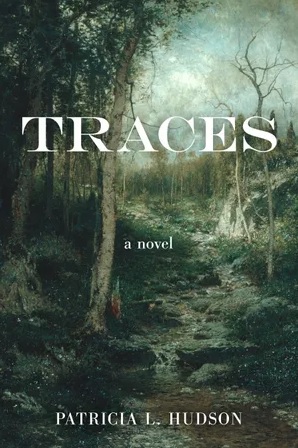
I live in the shadows of the Cumberland Gap. The idea of westward expansion and the mythology of Daniel Boone are very present in my mind and in my daily life. This weekend, I found myself engrossed in the lives of the Boone women as I read Patricia Hudson’s novel, Traces, written from the perspectives of Daniel’s wife Rebecca and their two daughters Susannah and Jemima. Hudson has combined years of meticulous research along with the tools of fiction to give voice to women who were often forgotten or purposely omitted from the historic record. Before publishing Traces, Hudson worked as a journalist, writing for publications such as Americana, Country Living, and Southern Living. She also co-edited Listen Here: Women Writingin Appalachia, and coauthored The Carolinas and the Appalachian States, a volume in the Smithsonian Guide to Historic America series. Patricia agreed to answer some questions about Traces, the Boone women, and her writing process.
DL: In your acknowledgments in Traces, you mention that it took you nearly 25 years to write this book. As a freelance journalist, you were working during those 25 years, and you were also focusing on various other projects. But you must have been continually living with the Boone women in the back of your mind. Can you talk about what motivated you to never give up on this project?
PH: I suspect my husband would say it’s because of my innate stubbornness. It’s hard for me to abandon something I feel strongly about, and for whatever reason, these three women never let me forget about them, even though pieces of this manuscript spent decades in my desk drawer. Like so many other women, Rebecca, Susannah and Jemima had been neglected within the historical record, and I didn’t want to be guilty of yet another “forgetting.” However, at one point, when folks asked me how the novel was progressing, my response was: “Rebecca has climbed out of my desk drawer, given me a disgusted look, and told me she was walking back to Kentucky because I was no count.” Thankfully, she eventually came back.
DL: Of all genres of writing, historical fiction feels perhaps the most daunting to me. I know you employed countless years of research, and you also learned from visiting living history sites. What advice do you have for others interested in in this genre?
PH: Historical fiction authors are sometimes accused of having “research rapture” — that is, researching endlessly rather than actually writing. My first piece of advice for anyone who wants to write historical fiction is that from the beginning you should accept that you’ll never know everything about a historical period. Author L.P. Huntley said, “The past is a foreign country — they do things differently there.” As hard as you try, you won’t get every detail right.
You’ll also be faced with situations where — for reasons of clarity, or to corral a sprawling manuscript — you have to depart from a strict reconstruction of the historical record. For example, I didn’t want to depict more than one of the Boone family’s journeys through Cumberland Gap, so I combined several actual events from several years into a single trip. The rule of thumb is that a writer of historical fiction is allowed to bend history, but not break it.
DL: You have a wonderful map on www.patricia-hudson.com that illustrates the journeys made by the Boones throughout their lives. You also continue to post a “Boone Blog.” Does this mean that you aren’t finished with the Boones? Will you continue to write about them? Are the voices of these women still speaking to you?
PH: I think I’m “done” with the Boones in the fictional sense, but the Boone Blog will likely continue for a while. I’ve always loved getting to see “behind the scenes” of creative endeavors. During college I worked on the stage crew of various theatre productions because I loved watching a play come together, observing all the ways a director would tweak various elements of the show between performances. The Boone Blog pulls back the curtain on how Traces was created. I wanted to highlight the many folks I encountered during the research and acknowledge them — historians, living history reenactors, librarians, and so forth. It’s one small way of saying “thank you” to them for their help.
DL: Reclaiming the stories of historic women in itself makes Traces a political novel in some ways. Another way is in how you address the complications of race, both with whites and Blacks and even more so with whites and indigenous people such as the Cherokee and Shawnee. Can you talk about how you balanced narrative and historical accurateness with cultural sensitivities and modern perspectives?
PH: One of the main reasons I wanted to depict the lives of three of the Boone women, rather than just Rebecca, was because each of the women had unique experiences that allowed me to show a variety of responses to the cultural norms of the time.
As a young wife and mother, Rebecca had tragic interactions with the tribes who called Kentucky home, which I felt sure colored her view of the Indians and their culture. Yet somehow, towards the end of her life, she welcomed Daniel’s Shawnee friends as guests in her home. As a novelist, it was my job to imagine how that change of heart might have come about.
The historical record tells us that Jemima Boone harbored friendly feelings towards Native-Americans, even though she’d had the harrowing experience of being kidnapped by them. She reportedly said that the Indians “treated her as kindly as they could” under the circumstances. Her attitude, which was much like her father’s, allowed me to offer readers a more nuanced portrayal of the Indians than would have been possible otherwise.
My third protagonist, Susannah, accompanied her father and several dozen axmen into the wilderness as they cut the initial trace through Cumberland Gap, and then on to the site along the Kentucky River that would become Boonesborough. The only other woman in that party was an enslaved woman, whose name may have been Dolly. One reviewer doubted my depiction of these two women — one black, one white — developing a friendship. Under normal circumstances, they probably wouldn’t have, but when you consider that Susannah was not quite fifteen years old, that she’d had very little experience with slavery up to that point, and that Richard Callaway’s slave was the only other woman in a party of several dozen men, I believe the two women would have supported one another during that very arduous journey. Their relationship allowed me to portray an enslaved person as a fully formed human being.
DL: Through reading Robert Morgan’s Boone: A Biography, I learned that Richard Callaway, not the most admirable characters, was my 7x-great uncle. (Another of my grandmothers was a Bryan, related to Rebecca Bryan Boone.) I later shared this with Mr. Morgan, and he replied, “One reward of writing the Boone biography has been hearing from many people who are connected with Boone or others in his story. It’s like Boone’s life unites us in a unique way.” Have you found a similar response in regard to the lives of the Boone women?
PH: Definitely. At nearly every place I’ve spoken, someone has come up to me and said they were related to the Boones, or had ancestors in the Yadkin Valley, or at Boonesborough, or some other place mentioned in the book. During my research, I discovered that I had ancestors that went through the Gap not long after the Boones did. They tried to establish a homestead near present-day Danville, Kentucky, but when the Indians burned them out, the family retreated back through the Gap and settled in Powell Valley. My father’s side of the family sank deep roots along the Powell River until TVA flooded their land. If things had worked out differently, I might have been a Kentuckian instead of a Tennessean.
As for Richard Callaway — I depicted him as seen through the eyes of the Boone family. Of course, the Calloway family’s version of the story would have been told very differently. Callaway sought to have Boone court martialed, so there was no love lost there. However, everyone, including the Boones, recognized that Calloway was a brave man who worked hard to protect the inhabitants of Boonesborough during the settlement’s early years. Richard Callaway was fiery, while Boone was more low-key, so from the very beginning, it was a clash of personalities. Maybe you need to write your great uncle’s side of the story? In historical fiction, as in life, truth is multi-faceted. There’s always more than one way to tell a story.
The Artist’s Statement has only been around for a little over 2 years, but in that time, some amazing writers have been featured there, writers such as Nikki Giovanni, Kathy Fish and Colm Toibin, just to name a few. Somehow, I am fortunate enough to now be included on that list. Huge thanks to my friend Davin Malasarn for inviting me to talk about Tamp, and some of the ideas that Tamp explores such as ancestry, mythology, and our interactions with both the natural and dream worlds.
In addition to producing awesome podcasts that talk about writing, The Granum Foundation is also doing wonderful work to support writers and their projects through the Granum Foundation Prize and the Granum Foundation Translation Prize. The Foundation Prize is a $5,000 award for one writer, and up to three finalists are awarded $500 or more. The Translation Prize is an award of $1,500 or more.
Coming up later this week, I’ll share a new list of submission opportunities for writers. And next week, I’ll be in conversation with Erika Nichols-Frazer about her memoir, Feed Me, sponsored by Birch Bark Editing. The online event is free, but registration is required. Hope to see you there.
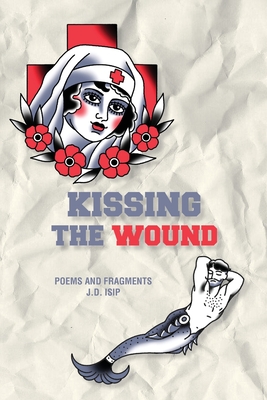
In my previous post, I had a wonderful conversation with J.D. Isipabout his new collection Kissing the Wound. One of the threads in these poems explores the way we are connected to place. One of the places J.D. writes about is The Carmelitos Public Housing Development where he grew up. While reading Kissing the Wound, I admired the way he was able to write about that place and others from multiple views such as from the present and the past, from the inside and the outside. I mentioned to J.D. how place-based writing is always on interest to me, and I asked if he had any advice for writing about place. I’ll share J.D.’s response here:
J.D. Isip: Yes, after reading Tamp, I can definitely see how important place is to you. My time in Carmelitos was from my childhood, over forty years ago. I think that distance in time helped me to be more objective. I like a lot of the ideas of psychogeography, the idea that there is a spiritual imprint on a place that never goes away, that there are times that keep playing over and over just beyond our vision. One might say that I write about Carmelitos from a place of disdain, but I don’t think that’s entirely true. It was a difficult place to exist in, but, going back to the idea of trauma, I think any place can be difficult to exist in depending on what you might be going through. Yes, I lived in the hood at the height of the Crips and the Bloods, but how does that compare to a middle-class woman in a seemingly loving relationship who just can’t find the will to get out of bed, the depression is so bad? So, for me, I try to think back to whatever I was holding onto – maybe it was my mom or my brother, maybe it was the beautiful neighbor boy who was kind to me, maybe it was my white-hot hatred for being poor or hungry. Whatever it was, I think you have to excavate it like an anthropologist (or whatever Indiana Jones was). You have to be willing to look at a past where you weren’t always right, where you made mistakes, where things weren’t always black and white.
My best advice here, and again, after reading your work, I think you might agree, is you have to talk to everyone you can who existed where you existed. Get their stories. See what they verify or contradict. If you can, use their voices. I like having other characters speak in my work. Yes, I am giving them those words, but I feel like there’s a little more ethos there. It’s like, “Oh, I believe everything about Spoon River, cause all these dead folks told me so!” Also, one of my mentors, Frank Gaspar, told me that the more specific you get in the details, the more universal your message can be. So, it’s not just this tree or that flower, it’s the specific kind, the color, the stage they are in growth, etc. For Camelitos, in “Carmelitos Ever After,” I wanted to take the reader through that psychogeographic journey – this is what was, what is, what ever shall be.
DL: One of my favorite poems in Kissing the Wound is “Leaving Krypton”. I quickly knew that I’d love to share this poem on my blog because the conceit is so interesting and makes for a wonderful prompt. Thanks to J.D. for allowing me to share the poem here.
Leaving Krypton for Anne
It is better you had not stayed long enough to know what alchemy binds us to a place, how extracting yourself begins a dissolution, the cloud-capped towers, the cracked cement slab you’d jump every day on your way to school, the band you worshipped, a dog you pet in your sleep, friends, parents, all
melt away before you think to look back, you think turning around, just a glance, will be too much for you and you are right, some ancient knowledge forces your stare forward, drowns out the chain-reacting atoms, the splitting crust of a world where once you were essential as its gravity, its rotation, its sun—
But, O! What crests into view? A light you never felt pulls you closer, a strength you’ve never had takes over, and you are flying this foreign galaxy, feeling yourself for the first time yourself, arms outstretched, open to embrace a brand-new atmosphere, the sweet air, a woman you kiss to sleep, adopted parents, friends, all
will need your new powers to survive this new adventure: x-ray vision to see the imposters; piercing heat to bore deep into layers of tradition, stubbornness, scars; a cold breath for those who call you a false god; and the wisdom to keep that shrunken city from this place as a reminder we never fully lose the past, but what we knew is gone
the instant that we leave it.
DL: One reason I love “Leaving Krypton” is because it is infused with all of the qualities of place-based writing. Even though a specific place isn’t named, the reader gains a sense of the place based on the place’s specific imagery. The sense of that place is expanded by ideas of what will be left behind as well as what will be gained, as well as the strengths that were gained (and will be exported) as we leave the place we’re from. The title allows us to connect the place with the fictional Krypton even though we retain the sense that a more-realistic setting is being described. I asked J.D. if he could relay the inspiration for this poem, and how he came up with the idea to write it from the angle of what I assumed was Superman.
JI: Thank you for asking about this poem, means a lot. One of my best friends, Anne, whom the poem is dedicated to, had hit a real crossroads in her life. I talk a little about it in Kissing the Wound, specifically the prose piece, “A Wedding at Cana.” She’d been in this long, emotionally abusive relationship, her work situation was getting pretty bad, and she had just, pretty late in life, accepted that she was a lesbian. I mean damn, one of those would put me under! After a lot of me and other friends telling her to leave this place, she finally did. She did it for her and for her son. And it was one of the bravest, scariest things I’d ever seen a person do.
I wanted to write something to say goodbye. Superman is one of my favorite characters, so of course I thought of him. But I actually thought of Kara, Supergirl. But Anne and Kal shared more, so I just followed Kal’s story. And I threw in a couple of nods to things she’d know were me saying goodbye – the “O” for Walt Whitman and the “cloud capped towers” for Shakespeare. I wrote it in one night, and I read it to her as she was driving away. We both cried. My hope was that she would see her move as so much bigger than it was, and that she wasn’t only running away from her past but running toward her future. I’m a cheesy person. It took everything in me not to say somewhere, “The S stands for hope” – but it’s implied.
Prompt: If you’d like to use “Leaving Krypton” as a prompt for your own poem, then you probably need to begin with the title by which I also mean you begin with a fictional place. This should be informed by your own interests and likes. J.D. Isip loves to call himself a nerd because he likes, among other things, comic books and superheroes. Krypton is immediately recognizable to most readers. So begin by selecting a fictional place to draw on that will also be fairly recognizable: Gotham, Neverland, The Emerald City, Mansfield Park, Yoknapatawpha County.
Begin your poem, not with this fictional place but with details from the real place that you are writing about. Or from your life if you’re writing about yourself. Think about J.D.’s “cracked cement slab you’d jump every / day on your way to school.” That could be from anywhere, but it feels meaningful because the reader understands it’s from personal experience.
The important factor about the fictional place you pick is that you must know some strengths about the character related to that place. Because you will want to draw on those strengths as your work through your own poem.
I think this is an exercise that can be applied, not only to poetry, but to creative nonfiction and fiction. Give it a try. And if you are able to write something from this prompt, send it to me. I’d love to see it.
J.D. Isip is originally from Long Beach, California, but has lived the last decade or so in Plano, Texas. He received his MA from California State University, Fullerton, and his PhD from Texas A&M University-Commerce. He is a Professor of English at Collin College in North Texas, and he serves as an editor for The Blue Mountain Review. His poetry, plays, short fiction, and essays have appeared in a variety of journals and magazines. His first full-length collection, Pocketing Feathers, was published by Sadie Girl Press (2015). His new collection, Kissing the Wound, was published earlier this year by Moon Tide Press. In Kissing the Wound, J.D. asks readers to look through a multiversal lens to consider how our lives and our loves, our traumas and our triumphs, fold in on one another. J.D. was kind enough to answer some questions about Kissing the Wound, as well as to offer advice about how to approach writing about trauma, and how to mix forms—including fragments—to inform a larger narrative.
DL: I love the title of your newest collection, Kissing the Wound, and how it speaks to the ways our most traumatic experiences shape us. I’m thinking too of the beautiful opening lines from your poem Tornado Radio, “Nostalgia, defined, is a scar in your mind, / that pulled at or picked, bleeds across time…” Do you have advice for writing about trauma, particularly the difficult task of stepping outside of yourself to craft personal experience into art?
JI: Thank you so much, Denton. The story behind this title, but also behind a lot of things I’ve written and revised over the years is that we (the writers) are sometimes too laser focused on a particular idea. This can be useful, and I personally love many poets who would fall into this category (Victoria Chang, Richie Hofmann, and Patrick Phillips come to mind) of being meticulous almost to the point of obsession. With this book, I had picked the title Number Our Days early on. There’s a lot of Bible in much of what I write, so it seemed a good choice. Plus, the fragmented nature of the book seemed to pair well with this idea of trying to count or recount the days we live, have lived, and will live. Well, very late into the editing process, my publisher calls me and says, “We have a problem, J.D. Neil Hilborn has a book and a poem called Our Numbered Days, and, man, I just don’t feel comfortable doing something that sounds so much like that title.” I kinda panicked, but I had just finished a poem that I moved to the front of the book – “Kissing the Wound.” I suggested it as an alternative, and my publisher, Eric, was like, “Oh man! That’s perfect! It’s better!” That was that.
See, in my mind the book was about recounting, about “memoir-izing” my past in lyric form. But, as you point out, it was much simpler than that. It was about trauma, both individual and collective. What I want to say, the advice I would give here about writing trauma, is maybe not something I always follow, but it is certainly something I strive for. I think it’s important for us to push against two impulses: one, to relive the trauma in some masochistic or voyeuristic way; two, to homilize the trauma to the “all things happen for a reason” point of dishonesty. Instead, I think it’s better to pluck out the particulars, as much as you can remember, and let the scene and/or the action take the lead over whatever “lesson” we are trying to communicate. Also, be gut-wrenchingly honest, or what is the point? I think of student papers where maybe they spend pages talking about a really screwed up relationship with a parent or an abusive love, then the last paragraph is, “But I am happy that happened, or I wouldn’t be who I am today. I don’t even think about it anymore.” Um, Sure, Jan.
To that final point of, to paraphrase, moving from “Dear Diary” to something more universal, or at least welcoming to readers – read, read, read. What you are talking about is something that we learn by watching (reading) others do it well. How can I read Audre Lorde or John Keats and feel like I have anything in common with them? But I do. Why? Because I may have never felt romantic love for a woman, but I have felt love… and longing, and all of that. I think when you read widely, your writing starts to feel more like you are in conversation rather than screaming from a soapbox. You’re not under the impression you’re the only one who ever said this or felt this, but your story adds to what has come before. So, yeah, there’s my traditionalist leanings showing!
DL: Kissing the Wound is described as containing “poems and fragments”. I would describe some of these fragments as prose pieces, even as essays. How do poems and nonfiction overlap in terms of their autobiographical qualities? Are there other ways the two forms connect in your mind? Are there challenges to interweaving different genres into one cohesive book?
JI: I love that more and more writers are crossing genre lines or hobbling together so-called “new” genres. Not to get too pedantic, but I think we generationally tend to congratulate ourselves for innovation that has always been there. Take this delineation between poem and play and essay and recipe and whatever else. Alexander Pope, Christine de Pizan, Borges, Eliot, tons of folks were crossing those genre lines decades, centuries before us. But, we forget, and it is always nice when some memory of “permission” stirs in us: Can I do this? Why the hell not?
That preamble is my way of saying, “I know what I am about to say has probably been said before.” Years ago, I had started jotting down “fragments” I thought might be part of something bigger. A book? A memoir? Poems? Maybe. For the most part, I was a little desperate not to lose these moments or images that would pop into my mind. I’ve seen a lot of friends and family die now, and it pains me to see them try to recall something. You see it in their face, in that disappointment: they can’t, it’s gone forever. As writers, we have this unique gift to preserve a little time. That’s how the fragments started.
Because they are more like prose, these pieces definitely lean more into the “lesson” aspect, or homily. Unlike poems, I feel like prose needs to land somewhere for a reader (a poem can just leave you hanging – many times, that’s the point). Donald Murray said that all writing was autobiographical, and I tend to agree. Walt Disney chose Snow White and the Seven Dwarfs as his first feature based almost exclusively on the fact that he remembered reading the story to his daughters. Charlie Brown is basically Charles Schulz. If we accept that whatever we write is going to tell our story, I think it gives us permission to tell bigger stories, stories with more characters, stories where we don’t have to be at the center of the action.
The first prose piece in the book, “How Long Was I Gone,” helped to pull the whole collection together. The night I wrote the first draft, I sent it to my friend Allyson (who wrote my spectacular forward). I was over the moon because all of a sudden I had this idea of how to tie everything I had been working on together. My first book was published in 2015, so it had been years since I had even thought about pulling together another collection. However, just like with that first book, I think when you know you’ve landed on something you have to follow your gut. That’s tricky, because there are many, many writers who will tell you, “My gut tells me every day I should be jotting out a whole collection.” I mean, if that works for you, awesome. Darren Demaree, Nicole Tallman, and Jenn Givhan are my friends who do this—and they just pump out gem after gem. For us mere mortals, it takes a little more time. I think you have to trust your writing to lead you… and you can’t do that if you’re trying to keep up with others. I am a lot happier being able to be truly happy for my friends getting published all over, getting all of the awards – rather than grousing about things being unfair, or “they’re just so much more talented” or “so much more connected” etc. Who cares? Do you. You’ll be okay.
Oh, the interweaving of the prose and poems. One, I saw someone on Twitter griping (shocker, I know) about “people who divide their poetry collections into individual sections”; it’s such a specific and therefore hilarious thing to be miffed about. I have done it with both of my collections, and I am doing it with my third collection. I don’t have any plans to stop. It helps to have those guideposts. It gives you more freedom so your collection can be about one overarching idea but also several smaller ones. Not that a collection has to be about anything, but I tend to like collections that are about something. I feel like the hodgepodge approach is an odd one. If I wanted a grab bag of subject matter, I can just read a poetry journal or magazine. Anyway, the prose pieces in Kissing the Wound started working as these kinds of guideposts, too. I could group them with poems that would, hopefully, emphasize or challenge the point or lesson of the prose piece. I liked that idea of having my cake and eating it too – here’s a lesson, but do I actually buy it? Should you? I had a lot of fun pulling it together, moving things around. I was lucky to have a patient and enthusiastic publisher. And good friends to read over drafts! So important!
DL: I’d like to go back to the idea of the word “fragment” as you use it alongside “poem”. Can you talk about what a poem is or does, for you, in its perfect form? Is it supposed to center on a single moment, an image, an emotion? All of the above or something else?
JI: I did an interview a couple of weeks ago, and I thought of an answer to this question after I said whatever I said during that interview. So, thank you for this chance to redeem myself! For me, poems are questions at their heart. They can sometimes sound like statements, proclamations, edicts, arguments, solutions, and all of that. But not so far behind even the most self-assured poem is a do you think? And I don’t think there is any other genre that has that consistency (except maybe American musical theater). The gift of a poem, then, is that it comes alongside you when “shit doesn’t make sense,” and it says, “Yeah, why is that?” Not, “so let me tell you why that is.”
Prose pieces allow ideas to breathe. That is important. But poems, for me, are in a bit more of a hurry. Prose are the divorced couple in front of the lawyers or the marriage counselor. Poems are the fights before bed, the one liners to poison the kids against the other spouse, the angry sex. You can probably guess which I like reading more. But I make a point to read both and read lots of everything. I think it would be foolish to think prose take longer to write than poems. That was not the case in Kissing the Wound – generally speaking, the poems almost all took longer than the prose pieces. And, because I set up the prose to be fragments – meaning I didn’t have to flesh out each scene, just layered them on top of one another – they were even easier to pull together. Truth be told, we always have a little more fun doing the thing we don’t always do. It was really fun, even freeing to play between genres.
DL: I often ask writers about the process of submitting their manuscripts for publication. Can you describe the time between writing and publishing these stories? How did you connect with Moon Tide Press?
JI: It took me years to write the manuscript, a solid eight years of plugging away. It’s not because I am meticulous or anything like that. It’s because I work full time as a professor, like most other artists I know. I like to think if I were given some sort of writing fellowship, I’d just crank out book after book, year after year. But that’s not true. I’d probably do what I did with my dissertation and with this book – let it simmer for years, then bang it out when I finally get tired of simmering.
I gave myself $300 to send out manuscripts to contests or editors. That’s honestly not a lot when you consider most contests are $25 or more to enter. There are also editors who will take manuscripts via email, so that costs you nothing (no printing, no postage). Moon Tide Press had been on my radar because it’s pretty big in Southern California, where I grew up. You have Red Hen Press, Write Bloody Publishing, and Moon Tide Press – those were the places I was a fan of in grad school, and the places where I had met or seen most of the writers they published. Eric Morago picked up the press years ago. I didn’t know that—but I had read his first collection a while back, and I watched him do some of his slam stuff. I was a big fan (Eric’s easy on the eyes, he has lots of fans).
Anyway, I wrote to my friend who published my first book, Sarah Thursday with Sadie Girl Press. She’d semi-retired at the time, but she was enthusiastic about me getting another book out. I think that’s important. You need to have a group of folks doing this writing thing who you can turn to who will give you honest feedback. This isn’t your mom saying she likes the pretty things you write (though that is nice if you can get it). It’s the friends who will tell you this is what you were meant to do, and they aren’t bullshitting you. They have no reason to. She told me about Moon Tide being open to unsolicited submissions. That’s worth knowing about. A lot of places, especially big publishers, are not going to look at your work unless they have sought you out (this is rare). It’s often in contests where “unknowns” get picked up by the big presses. That’s good, but the odds are generally stacked against you. Especially if you didn’t go to a specific MFA program, didn’t publish in the big magazines, haven’t gone to AWP.
That’s all to say, yeah, I got a lot of rejections. But not as many as I feared. And, as luck would have it, I got an offer for a chapbook the same week Eric accepted my full manuscript. I felt terrible about having to turn down the chapbook, but the publishers were so excited, and that I learned you shouldn’t feel bad if you have to say no to a publisher. They probably have dozens of folks waiting in the wings and, if they are decent folks, they are gonna cheer for you – after all, they just chose you. It should make sense to them.
My friend R. Flowers Rivera came to do a reading at my alma mater, and when I came up to talk with her afterward, she said, “So, when am I going to see a book from you?” This was maybe 2012, and I told her I had submitted to contests for years, but nothing ever came of it. She said, “If the contests don’t pick you, pick yourself. Send out your manuscript.” It took about a year and some kismet with a friend from high school, Sarah, but I got my first book published a few years later. The point is that if you feel like your work needs to be out in the world, you will find a way. It might take some hustle. It might take years. It sounds cliché, but you just have to keep at it. Also, honestly, and you probably know this well, just be incredibly humble when dealing with publishers. They are almost always doing it as a passion project, and they are almost always getting paid far less than they are worth. Being patient and humble goes a long way.
DL: Are there any upcoming opportunities for readers to hear you read from Kissing the Wound either via Zoom or in person?
JI: I will be on #SundaySweetChats with Charles K. Carter on Sunday, May 28th on YouTube. I’ll be the featured reader at The Ugly Mug in Orange, California, on Wednesday, May 31st. And I will be on a future episode of Be Well: A Reading Series hosted by Nicole Tallman. I’d love to see folks in California, and I highly recommend folks check out Charlie and Nicole’s shows. Both have several videos already up.
Huge thanks to J.D. Isip for speaking to me about his new book. Don’t forget to order Kissing the Wound now. Stay tuned for my next post where I’ll share the advice J.D. shared with me about writing about the places we come from, as well as a writing exercise from J.D. based on one of his poems. Make sure you never miss a post by subscribing.
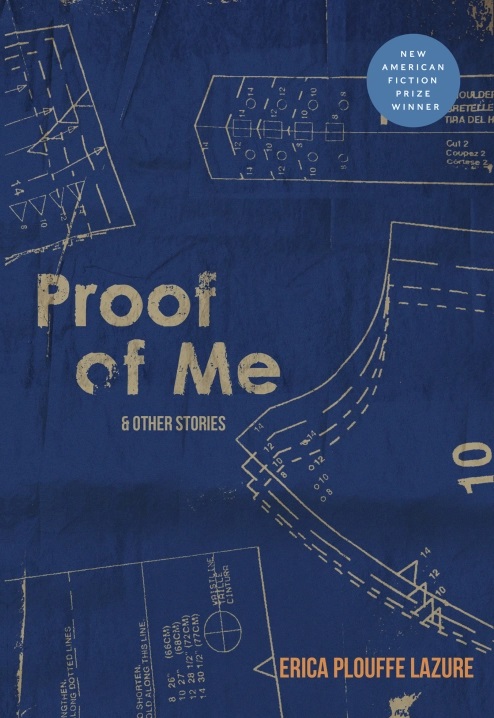
Erica Plouffe Lazure is quick to explain that she is not a Southerner nor a Southern writer. But what exactly is a Southerner or a Southern writer today? Are such distinctions based on the accident of birth? On the range of time and experience? How do perspective, talent and empathy work into the equations? I’ve heard every side of these arguments over the years. All I know for certain is that regardless of the way she self-identifies, the stories in Erica Plouffe Lazure’s linked-story collection Proof of Me authentically center on a small square of land called Mewborn, North Carolina, a place born out of Erica’s lived experience as much as from her imagination. Erica was kind enough to answer some of my questions about putting these stories together, about her submission process, and about winning the prestigious New American Press Fiction Prize.
DL: How long did it take you to write the stories in Proof of Me? Can you talk about how some of these stories link together and how those links impacted the shaping of the collection?
EPL: The stories in Proof of Me go back from when I first started pursuing creative writing—as early as 2005. Some were completed and published right away; others sat as drafts that I’d revisit and revise from time to time. I always keep a folder of stories that are “workable” but as of yet incomplete, and as I set out to help round out the stories and voices in this collection, they were integral.
I enjoy the editing process, and believe that, especially when you’re feeling stuck with a particular story, setting it aside for a while and returning to it can help shake loose its arc, and get it into publishable shape. Combing through each story one by one can help you to see how they might all fit together. Initially, I had not set out to link the stories (geographically or otherwise) in earlier configurations of the collection, but in the early days of the pandemic, I decided to dust off the collection, print it out, and see how I might more consciously connect each story to the other. I’d already written several pieces about some of the characters (like the Weaver sisters, or Cassidy Penelope), and so those stories became natural anchors for the larger collection. From there, I reworked some of the other pieces to connect more organically to other characters in the collection, or found ways to tie back stories that were set outside of Mewborn to the town itself. If I hadn’t allowed myself the flexibility to change certain aspects of the stories as I’d initially envisioned them, I’m not sure the collection would have been as strong.
DL: These stories are set in a range of locations such as Nashville and Boston and as far away as India, but each story is centered emotionally around Mewborn, North Carolina. Was it helpful in your writing process to create your own Yoknapatawpha County?
EPL: Mewborn the town is very much an imagined community, a bit of a hybrid of the small city of Greenville, in Pitt County (where I’d lived for about eight years), certain parts of Eastern Carolina, and my own hometown in Massachusetts. The name Mewborn is taken from a small crossing close to Kinston, but I chose it because I liked the sound of the name, and did not want (like Faulkner, I would guess) to have to adhere to the actual historical particulars of Pitt County while crafting a fictional work. And yet, a strong sense of place—about a small town, about how families and neighbors live and function alongside each other, about how even those who leave their hometown are still tethered to it—is what I hope surfaces in this collection. And as I mentioned earlier, I hadn’t intended the stories to be linked when I first set out to write them, but the revision process enabled me to see how I was, in fact, writing of, or about, the same place all along. And I should note that, for the record, I am not from the South, nor do I claim to be a Southerner, but I am very much a student of its literature, and I had never written a word of fiction until I moved to North Carolina.
DL: Can you describe the time between writing and publishing these stories? How did you connect with New American Press? Were there many rejections along the way?
EPL: Since about 2009, I had submitted various versions of Proof of Me to book prize contests offered by smaller presses. I like to joke how I almost renamed the collection The Bridesmaid, because it had been a finalist or runner-up in at least a half-dozen or so competitions (including New American Press, which eventually took it). But I think my effort to substantially rework the collection to make it more directly linked, geographically and thematically, worked in my favor. Rejection is part and parcel of the publishing game, and at some point, you understand that it’s not because the work isn’t any good; it’s more of what fits with the vision of the press, and the aesthetic tastes of the contest judge (or editor). I haven’t really gone the agent route—the agents I’ve had conversations with were always asking about my novel (! Don’t ask !) and were not interested in story collections. I’ve found there is certainly an interest and demand for short stories, but I guess we story writers have more work to do in making a convincing case to big publishers.
DL: Do you have advice for writers who hope to publish story collections?
EPL: This is rather technical advice, but something that helped me to envision my collection AS a collection was printing it all out (1.5 spacing, double-sided) and then read it aloud and edit with a pen in hand. I would make notes of key objects, characters or themes in a notebook, and then look for spots where those objects (sewing machines, dice, cars) might show up in another story. In some cases, I realized that, with a name change and a shift in a few key details, a story that might not have been part of the collection could be transformed into another piece of the Mewborn puzzle.
As far as submitting your work, I suggest that you research the publisher first to make sure it will be a good fit. Some publishers will want you to chip in for paying for a publicist (and there goes your advance), others might not do much in terms of promotion, or expect you to do much of that work yourself. I suggest researching a few past winners of story collections prizes of publishers that you’re interested in, and see how their books fared (via reviews, or press interest, or readings). Smaller presses tend not to have big budgets for book launches, so be aware of that.
DL: What are you working on now?
EPL: I’ve been working on a collection of flash stories under the thematic title Desire Path. It’s a term often used by city planners and landscapers to describe a “footpath made through foliage or grass by repeated traffic, rather than laid out by design.” I plan to take this literal definition in a metaphorical direction, where each of my characters will aspire for something guided by their desires, instincts and travels, and endeavor to carve a path of their own making to attain it. It is slow-going, but I’m enjoying discovering how each story might bend toward (or even challenge!) the established theme.
Huge thanks to Erica Plouffe Lazure for speaking to me about her new book. Don’t forget to order Proof of Me now. Stay tuned for my next post where I’ll share a writing exercise from Erica based on one of her short stories. Make sure you never miss a post by subscribing here:
About a year ago, I read a book that completely captured my attention. It was A.E. Hines’ Any Dumb Animal, published by Main Street Rag Publishing. Although Any Dumb Animal is a collection of poetry, it can also be likened to a memoir, moving through time to reveal moments of Hines’ personal life story. I was excited by the mixture of craft and accessibility in Hines’ writing. Many of his poems lean toward the narrative as well as the confessional. The result is that reading each poem feels like you’re being let in on a secret that has the potential to change your personal outlook of the world.
I’m far from alone in recognizing Hines’ talents. Any Dumb Animal received Honorable Mention in the North Carolina Poetry Society’s 2022 Brockman-Campbell Book contest and was a finalist for the Eric Hoffer Book award. His work has also appeared in some of the best journals of our time such as Alaska Quarterly Review, Southern Review, Rhino, American Poetry Review, Poet Lore, The Greensboro Review, Ninth Letter, The Missouri Review, I-70 Review, and Tar River Poetry, among other places.
He splits his time between Charlotte, North Carolina, and Medellín, Colombia. Last week, I reached out and asked if he would share one of his poems.
Waiting for the Diagnosis
Lying with the man I love, I muse about a farm high in the Colombian mountains where terraced slopes of coffee meander valley to peak and disappear into mist.
There’s still time, I tell him, to plant a thousand bamboo trees, watch them leap into the sky, to nail bat houses to the trunks and hear the flitter of webbed-wings, to hear the night monkeys winding their way in the dark, leaping branch to branch.
Let the shadows come and wrap us in their slippery shawls— there’s still time to dig our fingers into the black brooding earth, to taste the prickly fruit,
to believe we can grow old listening to the bats shriek, and night monkeys howl, to bamboo trunks rubbing together in the breeze, their insistent music like the luxury of creaking old bones.
I asked A.E. Hines if he would share the inspiration for writing Waiting for the Diagnosis, and here’s what he wrote:
“When Any Dumb Animal first came out, a couple of friends contacted me after reading this poem to inquire about my health. “What’s going on?” one asked. As I told my friend, I’m fine now. A few years ago, I did have one of those surprise health issues that stops you in your tracks, and leaves you worrying and waiting for the days and weeks it takes to get into doctor visits, to schedule and receive various test results. That gap in time was the genesis for this poem. I recall coming home after a particularly invasive test and wrote the title in my notebook. At the time, I was in a brand new relationship with the man who would later become my husband. We were still very new, and it was my first serious relationship after ending a twenty year marriage. Like all new couples, we were making plans for the future. But as middle-aged (and previously divorced) adults, we also understood time isn’t always on one’s side, and plans don’t always work out. Growing old (and doing it with someone you love) really is a luxury. This poem lives in the gap, that anxious moment of waiting. Of not knowing if plans will work out. But also in hope that they will. PS: As for me, so far, so good!”
In my next post, I’ll share a writing exercise based on Waiting for the Diagnosis. If you’re not already subscribed, you can make sure you never miss a post by subscribing here:
For many years before Tony Taddei was creating characters on the page, he was creating them on the stage as a trained actor. Born and raised in New Haven, Connecticut, Tony now lives in New Jersey. I first met Tony in 2014 when we both attended the Sewanee Writers’ Conference. A few years later, we reconnected through the Bennington College Writing Seminars. Though all of my interactions with Tony had been related to writing, I hadn’t had the pleasure to read his work for myself until the recent publication of his collection of linked short stories, The Sons of the Santorelli. What a joy it was to discover the craftsmanship and poignancy in these twelve stories about an immigrant family, particularly the men in the family who struggle with their desires and ambitions. Yes, this is a narrative about an immigrant family, but as David Gates said about the book, this is not “the conventional immigrant family saga.” Tony was kind enough to answer some of my questions about putting these stories together, about how he avoided convention, and how he infused a political slant into such personal, character-driven writing.
DL: How long did it take you to write these stories, and do you recall when you knew how individual stories would work together? Can you talk about your reasons for writing multiple, linked stories rather than a novel?
TT: I took my time writing these stories, so that the process from drafting the initial stories to finalizing the collection probably took five or six years. The collection wasn’t the only thing I was working on during the time, and, in any case, I didn’t want to rush the process of writing the collection. First, because I wanted to get the premise of each story right as well as to spend time considering what stories might need to be added, and second, because I was having a lot of fun writing about these people and I kind of wanted to savor it.
During the process of working on the stories I don’t think I really had a master plan for how they would all work together. That said, once I decided to write one story for each of the Santorelli sons and grandsons as well as at least one story about the patriarch, the linkages between stories started to become evident, and I was able to find ways in rewriting the stories and adding new ones to get them to work together as a piece. My goal was to have each story stand on its own but also for a reader to be able to sit back and think about them in their entirety after finishing the collection to realize that the parts of the book made up a whole.
As to why I wrote the saga of this family as linked stories rather than a novel, I did it because it gave me the ability to tell multiple, smaller stories that I would not have been able to tell in a novel (while still trying to make the novel a cohesive whole). It was also a lot easier for me to write about the individuals in this very complex and human family in separate stories than it would have been in a novel. By telling the story of the Santorellis a character at a time, I think I did more justice to each individual while still creating the personality and a legacy of a whole family.
DL: One of the recurring themes throughout these stories is the idea of the immigrant experience, often depicted here in connection with “immigrant shame” and the idea that America “breaks” the spirit of immigrants. This is the antithetical American story. How conscious were you of making this kind of political statement during the writing? Do you have advice for other writers about incorporating political ideas into fiction?
TT: As the work progressed, I was very conscious of it. Having come from an immigrant family and seen them fail more than succeed at the things they most wanted I can be somewhat cynical about the idea of an American Dream to begin with. I knew that cynicism would likely play a role in the situations I put my characters in.
That said, I didn’t I initially set out to tell stories that torpedoed the idea of what can be achieved in America. I set out to write human stories that were compelling to read as well as funny and tragic with as many twists and surprises as I could manage. In order tell the truth about the characters in this family as I saw them, I had to show the forces that were working upon them. The largest of those forces being that for most immigrants and, especially for the poor, this country very often only lets them get so far before it pushes them back down again. This comes in the form of economic imprisonment, and it comes in the form of racial imprisonment where one wave of immigrants who’d faced bigotry visits their own xenophobia and bigotry on the next wave of immigrants to reach America’s shores.
My advice for writers who want to incorporate political ideas into fiction is to first find an honest story that is personal and then begin writing it without focusing on the political or cultural connotations. If the story is honest and tracks with the world we live in, they won’t be able to help themselves from writing about the political forces that are acting upon their characters. Those forces come into play in our lives most of the time without us even realizing they are there. After that, when the writer looks back on what they’ve written, they can draw out the more political aspects of the story to any degree they choose. To put the above more succinctly, all politics are personal. I think any political writing should follow that guideline.
DL: Many of these stories are told through the male point of view which makes sense given the title of the collection. But that’s not to say that you don’t give voice to women within the Santorelli family. How did you settle on the balance between male and female characters and points-of-view? Were there any challenges in allowing the women to have their say in this male-dominated cast?
TT: Not at all, because I think if you look closely at each of the stories, you’ll see that the women in the backgrounds of these men’s lives are the real truth-tellers. The stories would not have found the ballast they needed for their conflict and reasoning if it weren’t for the women characters. A reader will likely see this most clearly in a story like “Commedia Dell’Arte” which has the matriarch of the family as the protagonist trying to make sense of and tell the truth about male dominance in her life. But it’s just below the surface of most of the other stories as well. From “Songs for Swingin’ Lovers” where a prostitute early on dominates a group of highly dysfunctional and misogynist men, to “Valiant” where the sisters and especially the mother in the family turn out to be stronger and more insightful then either the father or the son.
So, no, I did not find many challenges in allowing the women to have their say in my largely male-dominated cast. In fact, I’d say that the challenge was being able to hold off in letting the women have their say long enough so that the men could act out in the wrong-headed and solipsistic ways that I think make the stories interesting and recognizable to readers. Especially female readers.
DL: In an effort to demystify the process, I always ask writers about the process of submitting their manuscripts for publication. Can you describe the time between writing and publishing these stories? How did you connect with Bordighera Press?
TT: The time between writing and publishing was, to some extent, concurrent. I started to send the manuscript to publishers when I had most of the stories finished but was still revising the last two or three. At that point it was rejection, rejection, rejection until I found Bordighera Press.
Bordighera is a small independent press that is partially privately funded with a mission to publish writing about the culture of Italy and Italian Americans—essays, fiction, poetry, what have you. They publish a semiannual review of shorter work as well as a twice yearly run of new full-length work and are always looking for good writing that fits the themes of Italian life. About 2 years ago, I submitted the title story of my collection to Bordighera for consideration in their semiannual review, and it was accepted. Once I realized that they also published full length work, I sent the full and, by then, nearly completed manuscript, and I was thrilled when they said they wanted to publish it.
I’ve been telling people who ask how you find a publisher for your work that you have to persevere until you find a publisher that is the right fit. Most of the time that’s easier said than done. In my case I believe it was a bit easier because the work was a more-or-less exact match with the kind of work Bordighera is looking for.
DL: What are you working on now?
TT: I’m finishing up another collection of short stories that revolve around the melancholy, indignities, and occasional pleasures that men face as they age. Each of these stories also weaves in animals and their ability to live instinctually and unquestioningly as a humorous and (I think) affecting counterpoint to the men in the stories who are creating their own problems and then struggling to accept the circumstances they find themselves in. These two themes may not at first glance seem to go together, but I think the stories work better because of their juxtaposition. I’m hoping to have these stories published as a collection sometime soon and readers can judge for themselves. For now, if any of your readers want to take a look a couple of these stories, they a can go to Animal Literary Magazine and The Florida Review online. I’m also beginning a novel but it’s too early to say much about it, so I’ll have to get back to you on that.
DL: Are there any opportunities coming up for readers to hear you read from The Sons of the Santorelli either via Zoom or in person?
TT: Yes, I recently read an excerpt from a story in the collection – “We Now Conclude Our Broadcast Day” – online for the Prospect Street Reading series and readers can view that on Facebook Events at https://www.facebook.com/events/413658933932101/?ref=newsfeed (no Facebook account required to view).
Other readings are in the works, and I’ll post the particulars to my social media feeds when they’re set. (@tony_taddei/ Twitter; Tony Taddei / Facebook; tonytaddei / Instagram)









 Denton Loving