One of my favorite reads this year has been Cipher by Jeremy B. Jones. I first heard Jeremy speak about his work on this project more than five years ago, and when I finally got my hands on the finished book, I devoured it. I often feel a sense of pleasure from the books I read, but some books actively call for some kind of engagement with the text or the writer. Cipher spoke to many of my interests, notably place, history, genealogy and genetics. As quickly as I read Cipher, I found myself laying the book aside, over and over, for just long enough to make notes and jot down questions. I’m fortunate that Jeremy was willing to answer those questions, and the result of our conversation is available for you to read at Electric Literature.
I said that I had a lot (a lot!) of questions, and they didn’t all make it into the final publication. So I thought this would be a good place to share Jeremy’s responses when I asked him about editing nonfiction books and teaching nonfiction to his students at Western Carolina University.
Denton Loving: You’re also an editor for In Place, the nonfiction book series published by WVU Press. What makes an essay or a memoir resonate with you?
Jeremy B. Jones: I read and write a lot about place. When I was presented with the opportunity to pitch a book series to WVU Press, I thought immediately of books that had shaped me in my younger days, books like Annie Dillard’s Pilgrim at Tinker Creek and Gretel Ehrlich’s The Solace of Open Spaces and Wendell Berry’s The Long-Legged House. It’s hard to imagine those books being released by a big publisher today and getting the press and attention they deserve in the process. The publishing landscape (pun alert) has changed, so my hope with In Place was to create a space for thoughtful books about place to find a home.
Serving as series co-editor (alongside Elena Passarello) can be pretty catalytic for my writing, as I’m getting to see manuscripts that are engaging with the physical world in exciting (often formally exciting) ways. Even if the manuscripts aren’t quite right for the series or quite ready for publication, just getting access to drafts of these projects spurs on my own work and my own thinking.
DL: What about as a teacher? How do you teach students to shape their work, particularly nonfiction?
JBJ: Nonfiction is especially fun to teach at the undergraduate level because few of the students know exactly what they’ve gotten into. “Nonfiction” isn’t an especially helpful term—it only tells us what the form isn’t. That means I get to open up lots of possibilities for young writers, and that’s a gift. That opening of possibilities was my experience in college. I wrote a short essay in a first-year writing course in college that I now recognize was a memoir, even though I don’t think that was a term I knew then. My professor, Dr. Jane Stephens, pushed me deeper into that form and encouraged my explorations of memory and place that semester, and it was life-changing. I recognize that not every student who shows up in my classroom is going to have their life changed by literary nonfiction, but it’s a privilege to be able to show them what they can do with the world around them, especially if their default nonfiction form is the academic essay. Because of that, I tend to offer students tons of models and encourage lots of experimentation. I want them leaving with a lit spark more than I care about a perfect, polished essay.
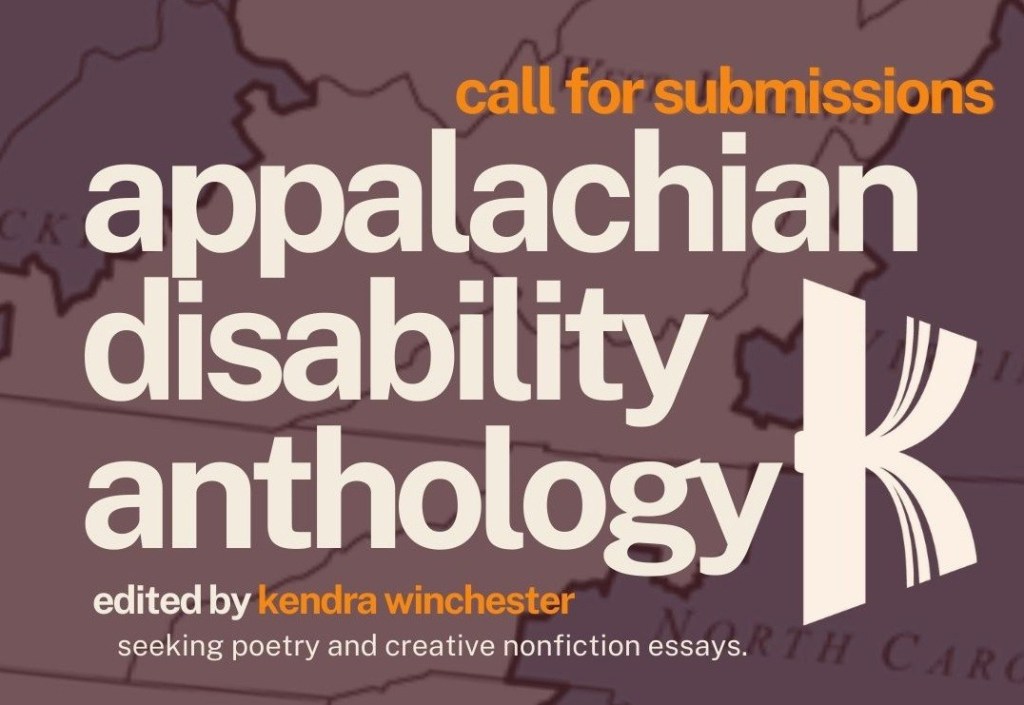
Many readers of this blog will be familiar with Kendra Winchester’s name from her work as the host of the popular Read Appalachia podcast, which celebrates Appalachian literature and writing. Kendra is also a Contributing Editor for Book Riot where she writes about audiobooks and disability literature. Kendra and I had a chance to spend some time together in person this past summer during the Appalachian Writers’ Workshop. One day while we were having lunch, Kendra started to tell me about her new project to compile and edit an anthology of work by disabled writers from Appalachia. The dining hall that day was so loud with conversation and laughter that we struggled to hear each other. So Kendra agreed to answer some questions over email about this anthology, which is actively accepting submissions.
DL: I was excited to learn that you will be editing an anthology of work by Appalachians writing about disability. How did the idea of this anthology form?
KW: Far too often, disabled people are treated like we’re invisible. When we are mentioned, we’re featured as inspirations, side characters, or burdens for the nondisabled people around us. Sometimes the very existence of our disability makes other people uncomfortable.
When I first read Disability Visibility, edited by Alice Wong, I didn’t realize how rarely I saw my disabled self in books. Reading stories about people like me was something I never knew I needed. This led me to seeking out as many books by disabled authors as I could get my hands on. Little did I know that there was a whole disability community waiting for me. We have our own culture and history. People just have to realize that it’s there.
In the vein of Disability Visibility, I wanted to bring together Appalachian writers to tell their own stories of what it’s like being disabled in Appalachia. With poetry being such a vibrant tradition in the region, I also wanted to include poets, and my goodness, so many Appalachian poets have shown up in such a big way. My hope is that this anthology will be the first of many anthologies of disabled writers from the region sharing their work with the world. The more voices, the better.
Sometimes people ask me if their disability “counts,” but we’re using the big umbrella for disability. So anyone who is disabled, chronically ill, deaf, or neurodivergent is most welcome to submit.
DL: Do people with disabilities in our region face challenges that are unusual or different from other regions?
KW: Appalachia has higher rates of disability than the national average. Some disabled people have had to completely leave the region to seek treatment. Some disabled people can still live in the region but have to travel back and forth to urban centers to see specialists. And others are disabled because they worked in major Appalachian industries, such as coal mines and paper mills. Whatever our experience, we all have stories to tell.
DL: What genres are you seeking for this anthology, and how long should submissions be?
KW: I’m looking for creative nonfiction essays—around 2,500 – 3,000 words—that center the writer’s experience with living with disability in Appalachia. I’m also looking for poetry—3-5 poems—informed by personal experiences with disability in the region. I also welcome previously published work.
DL: Are you only looking for work from published, experienced writers?
KW: I’m looking for writers of all experience levels! The anthology includes experienced, prize-winning writers and people who have never had a published piece before.
DL: How can writers submit to your anthology, or reach out to you if they have questions?
KW: To submit their work or if anyone has questions, they can reach me at Kendra (at) readappalachia.com. I’m happy to answer any questions that they may have.
DL: When we were at the Appalachian Writers Workshop this past summer, you read a wonderful piece about growing up with a disability. Where can readers find that essay or any of your other recent work?
KW: Owning It: Our Disabled Childhoods in Our Own Words just came out in the U.S. this past August. It includes dozens of essays by disabled adults who were also disabled as kids. I was so honored to be included with writers like Ilya Kaminsky, Imani Barbarin, Ashley Harris Whaley, Rebekah Taussig, and Carly Findlay. I also write for Book Riot and have an occasional newsletter called.
Many thanks to Kendra Winchester for this important work and for answering my questions. You can find out more about Kendra and all of her projects by following her on Instagram or Twitter, or by subscribing to her occasional newsletter called Winchester Ave.
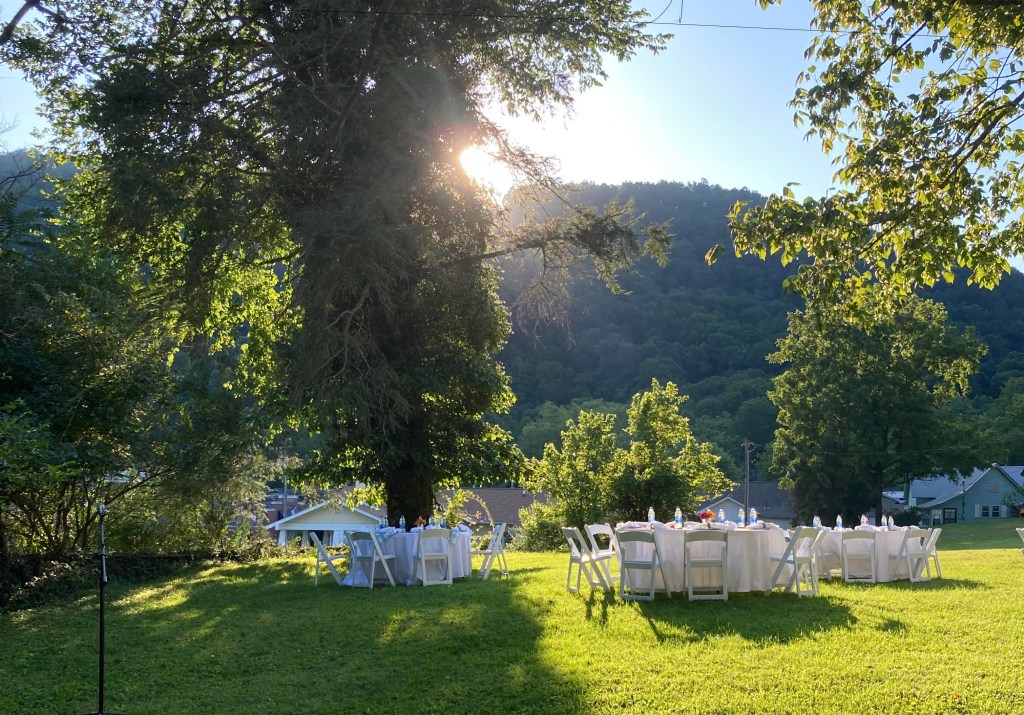
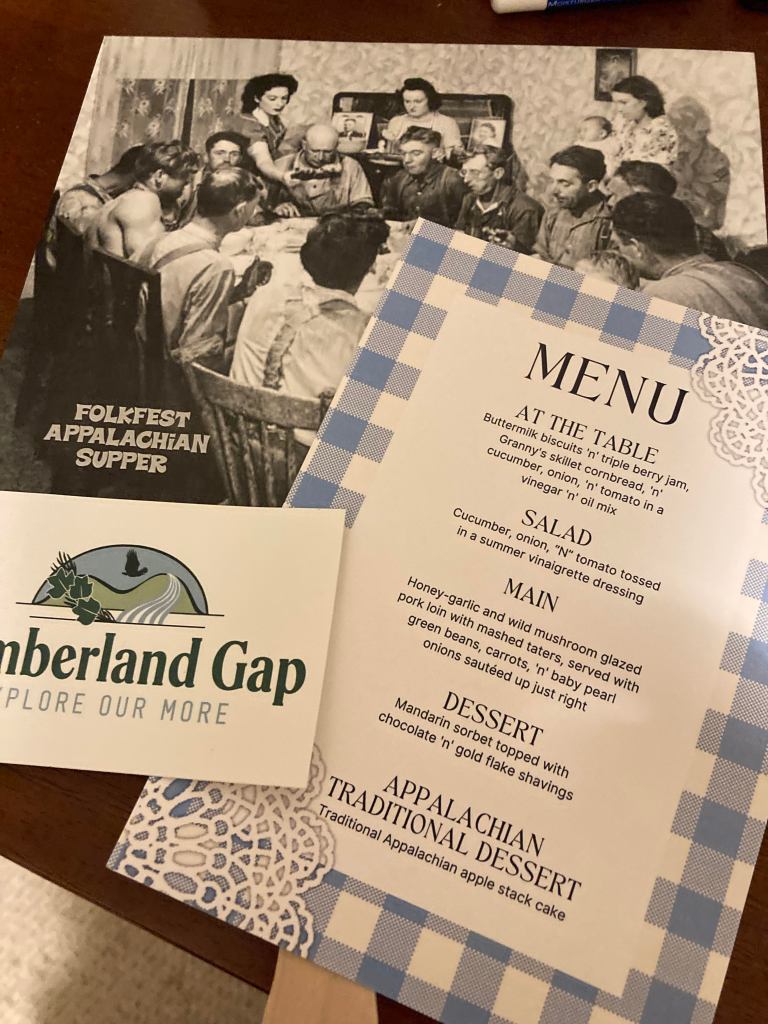
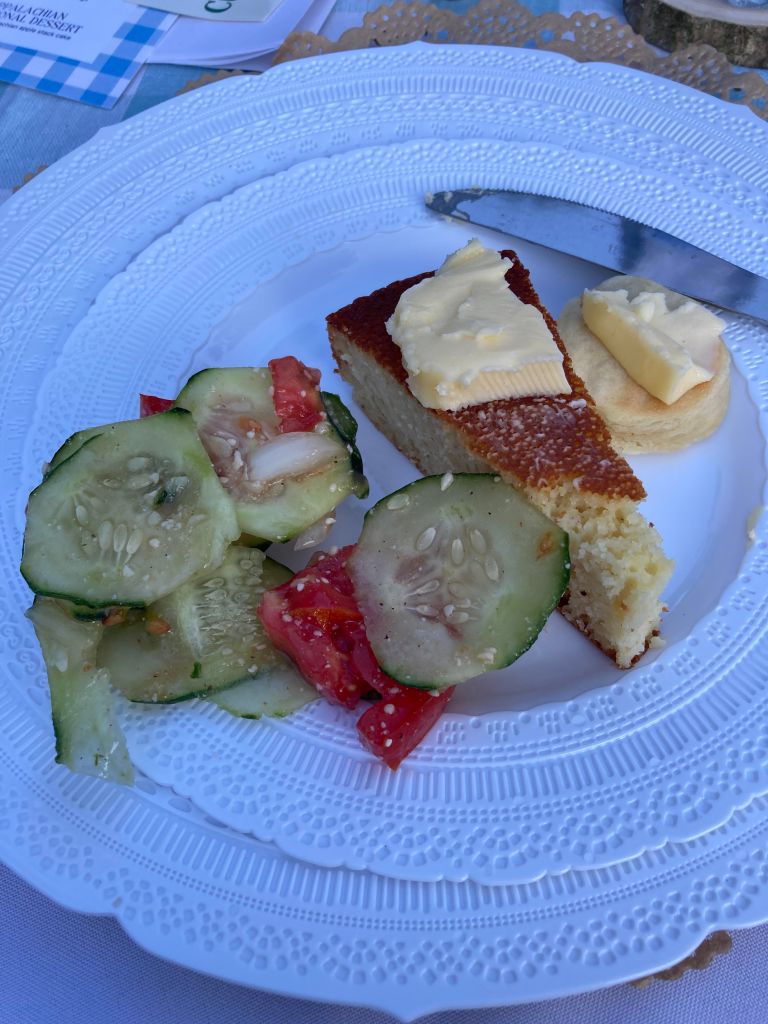
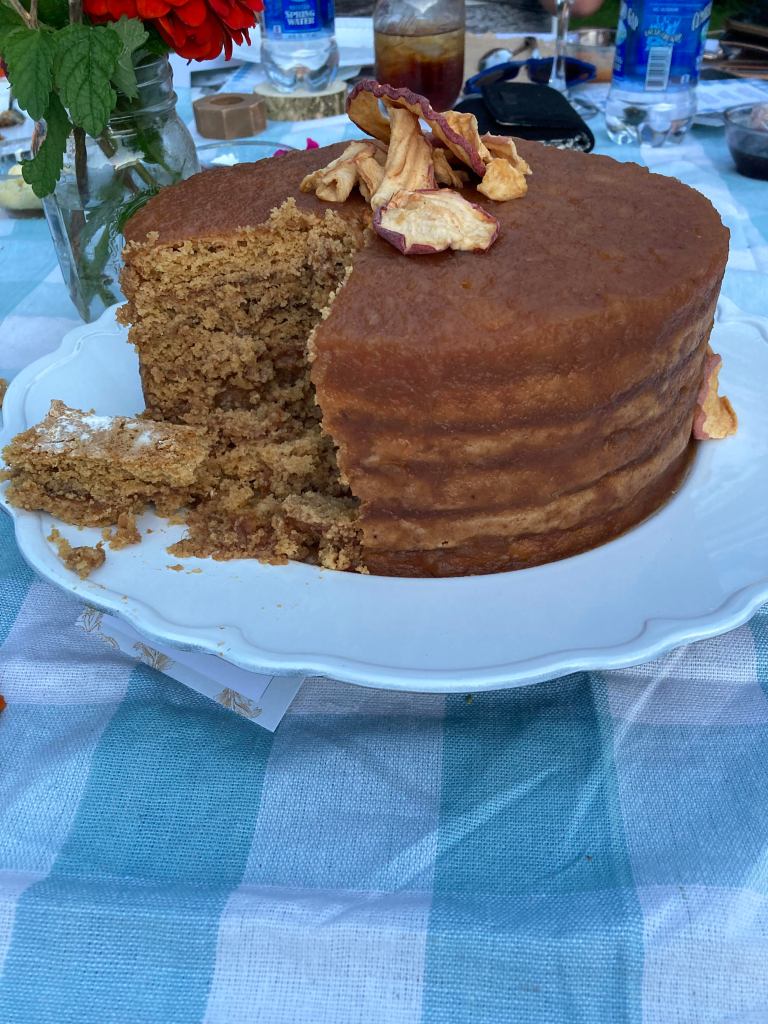
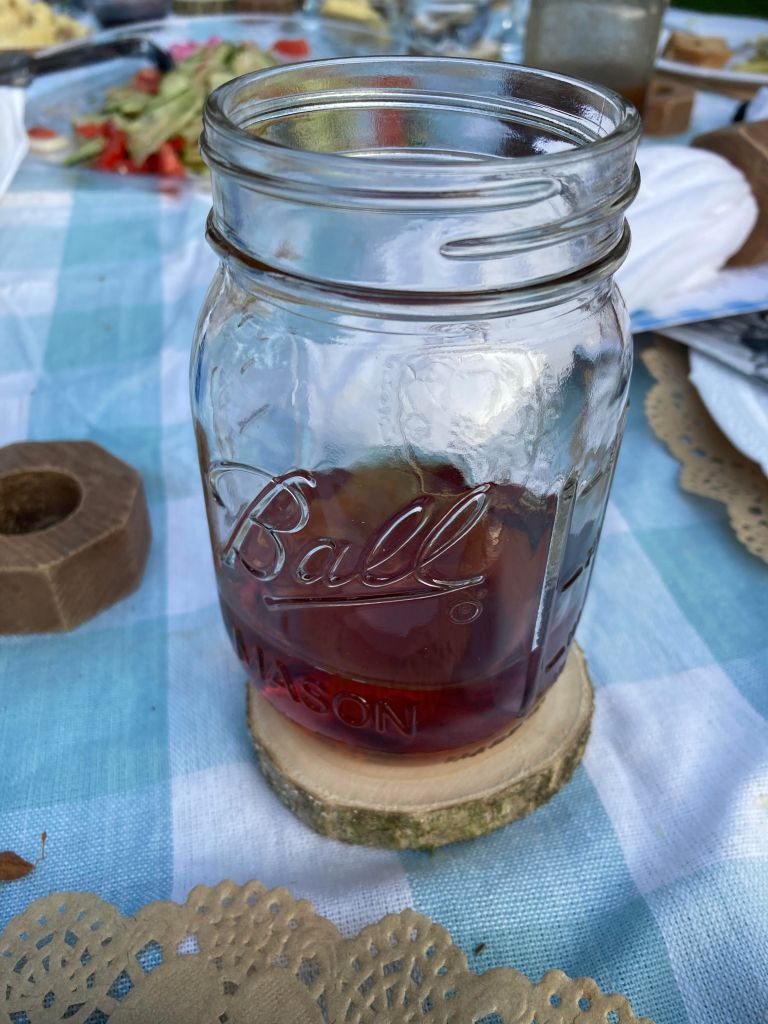
Last night, I was given the opportunity to read at the Folkfest Appalachian Supper in Cumberland Gap, Tennessee. This annual event to celebrate local and traditional foods is part of the city’s larger Folkfest weekend, which was re-introduced a few years ago by a citizen’s group called Guardians of the Gap. For my part in the event, I revisited a short essay I’d written several years ago about how I learned to raise a garden and how much my family has always loved fried corn. Here’s the essay and few pictures from last night’s farm-to-table dinner on the lawn. I hope that apple stack cake doesn’t make you too hungry.
There is a unique joy that comes from watching a seed emerge from the earth. In such a short amount of time, a kernel of corn, for example, grows from a tender green blade to a stalk that is taller than a person. In between these stages, if the rains have come at the right times (not too little but also not too much) and if the bugs and blackbirds haven’t eaten it all first, there are ears of delicious corn.
When I was growing up, my parents always raised a garden, and I was taught how to pull onions, cut cabbage heads, dig potatoes, husk corn, and pick everything that can be picked. It was important, especially to my dad, that I knew how to grow things, where food came from and that it involved hard work.
Six months after I graduated from college, my dad suffered a stroke. The doctors didn’t immediately think he would survive. And when he did survive, he was completely paralyzed on his left side. After weeks in a hospital and a rehabilitation facility, he finally came home, but everything in our lives was different after the stroke. That included the significance of the garden. All that winter and spring, as my dad endured daily physical and occupational therapy sessions, he talked about getting the ground ready to plant, and I became determined he would have his garden as usual.
My dad regained sensation and mobility. Only his left leg remained partially paralyzed, and he was fitted with a brace that kept his ankle from buckling under his own weight. He gradually was able to walk farther distances. But before he was strong enough to pull the starter cord on his old tiller, I would start it for him and shadow him as he guided the machine down a row. At first, it was all he could do to make it back to his starting place and then to his lawn chair under our crab apple tree. It exhausted him, but it was some of his most motivating physical therapy.
When my dad couldn’t be the gardener he wanted to be, he became a gardening coach, urging me to chop away the ever-persistent chickweed, to pull the dirt away from the onions and toward the potatoes. He instructed me until I was sick of the entire idea of gardening. I would sometimes quit out of frustration or maybe out of sheer resentment. I was sure I would never master this particular art, and I was frustrated at the amount of time the garden was taking away from what I wanted to do. But I always came back to it.
For almost a decade after that, I helped my parents raise their garden. While other jobs seemed to be expected of me, gardening was the one task my dad was verbally appreciative of. It made him happy to wake up in the morning, look out his kitchen window and see clean rows of young plants growing bigger, taller, thicker, stronger. I also learned to more fully appreciate the complimentary beauty of fresh green growth against the garden’s rich brown dirt. When the spring nights are still cool, the onion sets are slow to straighten and turn green. As the days grow warmer, the tiny lettuce seeds grow into a thick, luscious bed. When it’s finally warm enough to plant the beans, they sprout so fast, it can only be described as a miracle. The more involved I became with growing the garden, the more satisfied and grateful I felt for being a small part of that miracle.
In my family, the most anticipated meal of the year was always the day the first corn came in. We love it any way it can be cooked—boiled, baked or grilled, but to us, the greatest delicacy is fried corn. We cut it off, slow simmer it in butter and milk, and eat it with biscuits hot out of the oven. We’re not even too picky about the biscuits, as long as they exist. Fried corn is the star of this meal. There’s only a certain window in the year when fried corn comes. This delicacy can never be exactly duplicated with frozen or canned corn. You have to have fresh corn, and even fresh corn from the farmer’s market is not quite the same as corn straight out of your own garden.
We are in such a hurry to eat it that we are sometimes careless if a strand of silk makes it to the pan or even the plate. Fried corn is the most tangible reward for all the tilling, hoeing, weeding, watering, waiting and praying that is required in the previous two months. As much as the taste on our tongues is the satisfaction in our bones that all our hard work was worth it. We planted a row of seeds and had faith a meal would be delivered from it sometime later.
Witnessing the production of my own food—brought forth by my own hard work—changed my relationship with my dad who has been gone for almost eight years now. It changed my perspective on food and health, and on how I want to live my life. It changed the way I think about the lives of the people around me.
In the second chapter of My Antonia, Willa Cather writes about Jim Burden’s first visit to his grandmother’s garden. The well-preserved garden, full of flowers and vegetables, assures him that humans, when they die, “become part of something entire, whether it is sun and air, or goodness and knowledge. At any rate, that is happiness; to be dissolved into something complete and great.” Every time I plant a seed, I feel connected to my dad. I feel connected to my ancestors and to all the people who turned the earth before me.
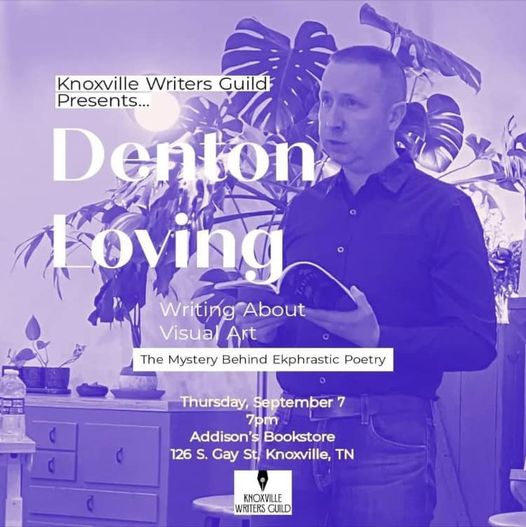
If you’re in the greater Knoxville area on Thursday, September 7th, I hope you’ll join me at the monthly meeting of the Knoxville Writers Guild at Addison’s Bookstore, located at 126 S. Gay St., in Knoxville. The meeting begins at 7:00 p.m.
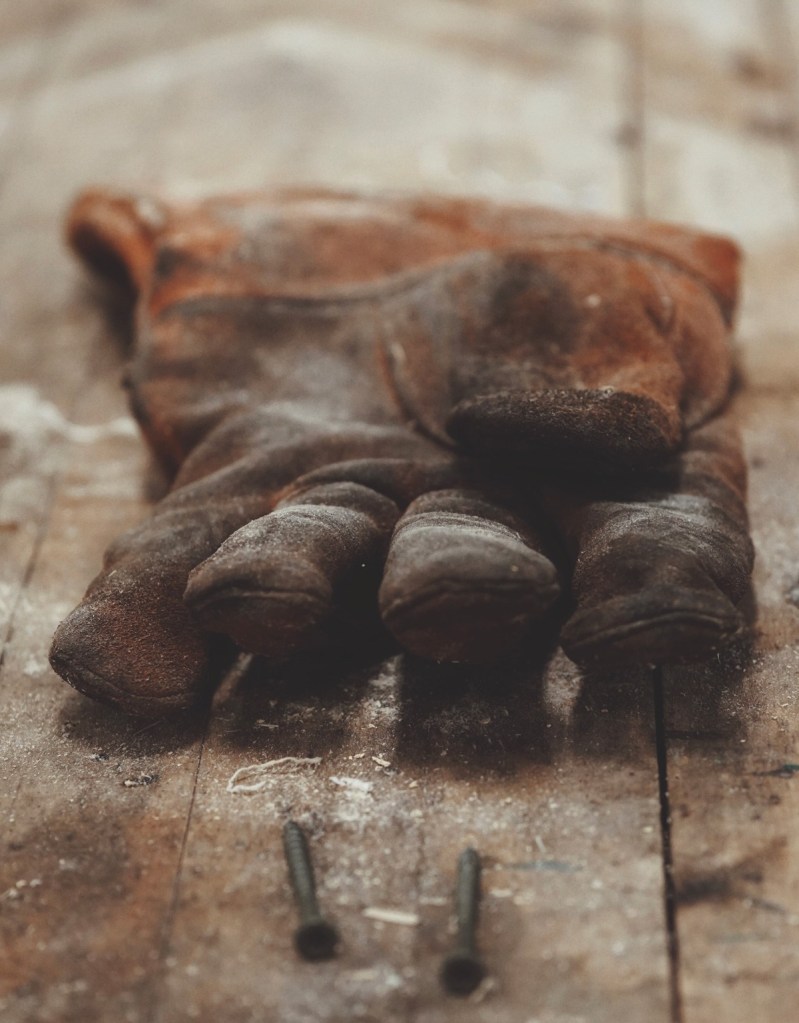
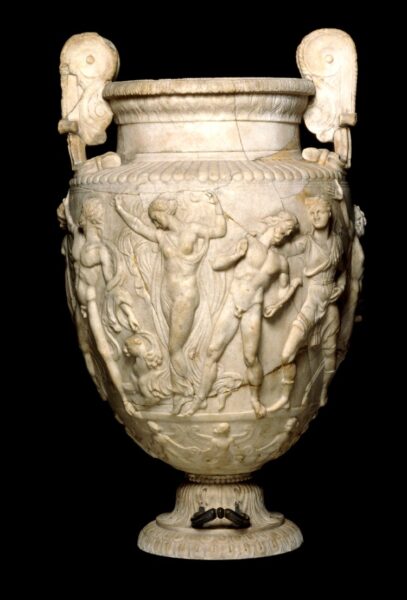
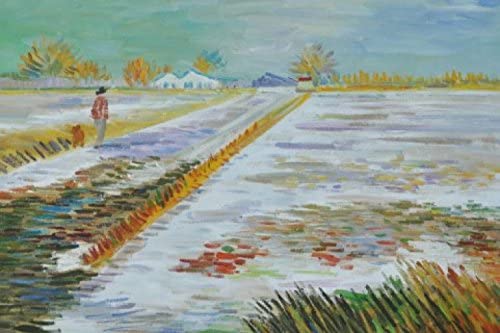
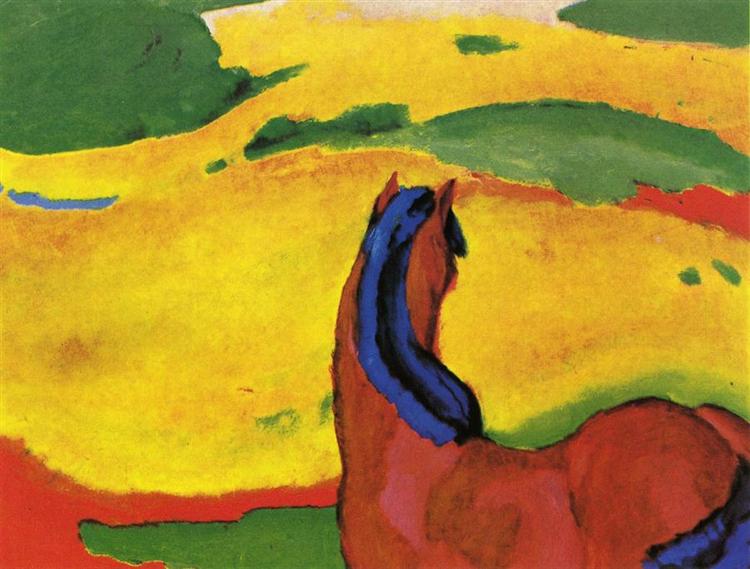
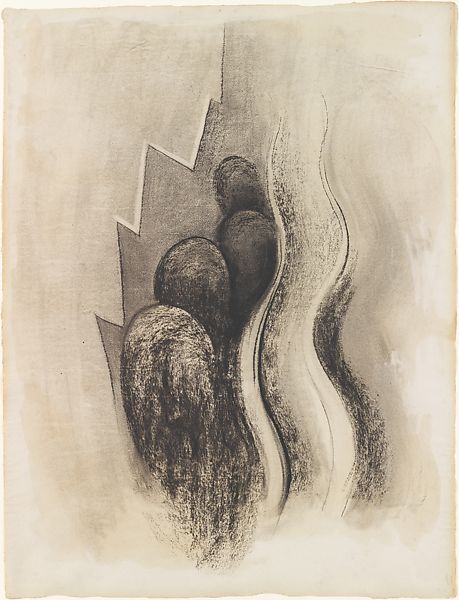
I’ll be talking about ekphrastic writing or ekphrasis. The word “ekphrasis” comes to us from the Greek where it means “description.” If you still aren’t sure what ekphrastic writing is, then I’ll briefly define it as writing that vividly describes a pre-existing work of art. I’ll share some of my favorite examples of ekphrasis, and we’ll even generate new work using some of the fantastic art on display at Addison’s.
Here are some of the images I’ll be talking about in this session.
.
.
.
.
.
.
.
.
If you live too far away to be in Knoxville on Thursday, I hope you’ll use one of these images or an image of your own in your writing practice this week. If you come up with something you especially like, please send it to me. If you need more guidance, check out my conversation with Julia Wendell about her ekphrastic poem “Horse in the Landscape.”
Georgann Eubanks is a veteran writer and storyteller. She has published five books of nonfiction ranging from literary guides of North Carolina to natural phenomena across multiple Southern states. Along with photographer Donna Campbell, Georgann operates Minnow Media which has produced a number of public television documentaries. When I was visiting City Lights Bookstore in Sylva, North Carolina, last month, I stumbled across Georgann’s fourth book, The Month of Their Ripening. This book explores 12 different heritage foods found within North Carolina while drawing on first hand accounts from the foods’ producers. Along the way, Eubanks reveals fascinating histories of the foods, the people who produce the foods, and the places where they’re produced. I first met Georgann about ten years ago, and since that time, I’ve seen that she is also a consummate community builder. This fact echoes throughout her work in The Month of Their Ripening, one of several reasons why I emailed Georgann even before I could finish reading the book. I was so excited to ask her questions about this book and her writing process, and now I’m excited to share our conversation with you.
DL: One of the pleasures in reading The Month of Their Ripening is the diversity of foods you write about, and especially that they cover all areas of North Carolina which in itself is a large, diverse geography. How did you come to the idea to write about heritage foods? And how long did it take you to write The Month of Their Ripening?
GE: It took a couple of years to do the research, travel, and writing for this book. But as I always say when someone asks this question, the only proper answer is to give my age at the time of completion of a manuscript. A book takes everything I’ve learned over all my years! To be ready to write it, I had to ripen, too!
My first three books with UNC Press were literary travel guides featuring excerpts from North Carolina writers about very specific places where they had lived, worked, or visited in the state. So yes, North Carolina is big, and it took three regional volumes—mountains, piedmont, and coastal plain—to cover the 400 years of writers and the 600+ miles it takes to cross the state. That was a ten-year project, but once photographer Donna Campbell and I rested up after that long journey, we wanted to travel the state again. This time we would eat our way across North Carolina!
How it started: I planted a fig in my yard that was the first to survive of many I had tried to grow over the years. When it began producing figs, I was stunned by the delicious fragility and ephemeral nature of the fruit. You have to WAIT for a fig to ripen, and they only come around once a year. The figs got me to thinking about how spoiled we are in this country, being able to find most any food any time of the year at the grocery.
I started wondering about the foods that are a key part of North Carolina’s history and heritage, and further, what are the foods that our forebears planted in the ground or harvested from the water that they looked forward to eating as a seasonal ritual? Twelve essays seemed a good size to match up to a whole year of foods in their time of ripening. Of course, January was tricky—nothing much to harvest here in January—so the book starts with snow, which becomes a rarer treat the farther east you go in North Carolina. Nevertheless, people have been fanatically making snow cream forever, and as it turns out, there are a million recipes and very strong opinions here about the best way to make snow cream. So that’s where the book begins.
DL: Each chapter in The Month of Their Ripening is beautifully written, and as I read, I was often struck by the voice of your writing which finds the perfect intersection between essay (what some would call creative nonfiction with lush description and personal experience) and investigative journalism (that involves some deep research). Was it difficult to arrive at this intersection, or is this just your natural voice? Do you have tips for writers who want to employ personal interviews or research in their projects?
GE: This is a style that works for me. I start out with my ignorance and take the reader with me on the journey to discover the history, science, and people who have perpetuated these food traditions. As I discover the stories, the reader does, too. And I try to capture my own joy and surprise in what I learn—some of it deep history, like how figs are discussed in the Old Testament. Then there’s the funny story about how a lady friend of Thomas Jefferson was told by her kitchen staff that she could not serve figs in Washington, DC, at a formal dinner party because figs were “vulgar.” And of course, there’s D.H. Lawrence’s sexy prose on the fig. But these are historical anecdotes anyone can find. What made these stories only mine were the interviews/visits with people on the ground, such as the single man left in Ridgeway, North Carolina, who is still growing a special variety of cantaloupe that was once was harvested by his extended family and shipped north by train in great quantities and served as a special seasonal treat at New York’s Waldorf Astoria.
My advice is to embrace your ignorance and go from there—find the best stories from people who have good tales and expertise to share. Honor their stories.
DL: One of my favorite aspects in these chapters is the exploration of these various communities that exist all around us. There’s a good amount of detective work involved in your writing, as one person connects you to another and another. More than simply following the pathways from production to consumption, you’re actually getting to know the people you’re talking to and understanding how their lives and livelihoods are connected. How much of that is driven by your own curiosity such as when you wonder what the berries are on the tree outside your home? Do you have advice for writers about following their own curiosities?
GE: I wanted to show the diversity of communities and people in North Carolina. And now, at least three of the homegrown experts on foods who are featured in The Month of Their Ripening have passed away—the octogenarian and scuppernong grower Clara Brickhouse, the persimmon festival host Gene Stafford, and the snow ice cream expert and unforgettable writer/scholar Randall Kenan. I am so glad to have known them and learned from them and shared their food stories in print. I think this quote from nonfiction writer Tracy Kidder says it best:
“Essays often gain authority from a particular sensibility’s fresh apprehension of generalized wisdom. But the point is not to brush aside the particular in favor of the general, not to make everything a grand idea, but to treat something specific with such attention that it magnifies into significance.”
— from Good Prose: The Art of Nonfiction by Tracy Kidder and Richard Todd
DL: As with your past books, this one was published by The University of North Carolina Press. Can you talk about how you developed a relationship with them and about your experience publishing with a university press?
I have been with UNC Press for so long that I have had three editors—the first two have now retired. I first worked with them on the literary guidebooks. That project was a work-for-hire with a contract from the North Carolina Arts Council. The last two books I pitched to UNC Press on my own. Both are trade books, the last being Saving the Wild South: The Fight for Native Plants on the Brink of Extinction, which has done pretty well, too. I am finishing my sixth book now, also about natural phenomena and covering seven states of the South. (Saving the Wild South featured endangered plants in six states.)
These days university presses are doing more trade books, meaning popular books that are not written only for an academic audience. This is a good thing in that the commercial publishing industry has become more and more centralized and seems only interested in best sellers or what they hope will be best sellers. Regional books have a better chance with a university press. For the press, their trade list often sells enough to supplement the small revenues (if any) that come from highly specialized academic books that have a narrower audience.
But here’s the thing, no matter who your publisher is nowadays, the success of a book rests on the shoulders of the author. You need to be able to present the book in such a way that readers buy it. I think my books have been accepted because they are evergreen, as the publisher likes to say—they tell stories that will last. I also have a track record of giving countless book talks through all five of these books, and I enjoy speaking about the work. Truth is, there is only so much time and money that a press has to give to an individual book. My editor at UNC Press just launched 12 new books this spring that are his babies. Meanwhile, he is going to be reading my new manuscript come November and trying to acquire new titles and coaching first time authors. He called upon me last week to read a book proposal from a new author and give my assessment of its distinctions and potential. That’s how university presses work—the editors depend on the proposal and later the manuscript being reviewed by professionals in the academic field being addressed or by seasoned writers with trade book experience who know the marketplace.
I also have an editor I privately engage to read and critique the manuscript because I know that is necessary. I am also responsible for creating an index—that’s part of the contract these days, too. I have gotten a small grant to cover my travel expenses for the current book I’m writing, which helps, but I don’t do this for the money. I do it because it’s a great challenge, I care about the topic, and I can make a little money giving talks. I get other writing assignments that also help support me.
DL: I’m looking forward to seeing you later this month at the Table Rock Writers Workshop, which is a lovely community of writers and musicians that you shepherd. I believe registration will be closed by the time our conversation is published, but can you talk about your work with TRWW for readers who aren’t familiar? And do you have anything to say about why community is important for writers?
GE: The Table Rock Writers Workshop was born out of the Duke University Writers Workshop, which I attended in the 1980s and then directed for 20 years starting in the 90s. The workshop at Duke was heavily focused on the faculty, getting big name writers—lots of them—to teach. Over the years, we have carved out a different path. We are focused on the participants. I invite faculty who love to teach and have a passion for writing that transcends any concern about commercial success. We don’t really talk much about publication per se, or the marketplace. We focus on writing the best book or story or poem you can. Our workshop is about craft and being in community—getting the support and encouragement you need for the story you want to tell. Our way of building that community of writers is having generous teachers who model how to give useful feedback. Participants begin to learn how to edit themselves and how to stick with the discipline needed to finish a draft. Our teachers are people like you, Denton, who do it for the love of words and are generous with sharing what you know.
I’m very grateful for Georgann’s time in speaking to me. You can order The Month of Their Ripening directly from University of North Carolina Press, or wherever books are sold. Please visit Georgann’s website for more information about her and her work.
If you’re in the Knoxville, Tennessee, area, I hope you’ll join me at Union Avenue Books on Sunday, August 13. I’ll be reading alongside my great friend Sylvia Woods, author of What We Take With Us, a beautiful collection of poems that explores Sylvia’s personal experience as an educator, as well as her own transition from daughter to mother and eventually to grandmother. The reading begins at 2:00 p.m., and we’d love to see you there.
I’ve had a lot of fun this last month as my new collection, Tamp, has found its way into readers’ hands. Thanks to all of you who have ordered the book, and extra thanks to those of you who’ve reached out to let me know what you think about the poems. Just as the days are growing warmer and longer, I’m very aware of how much I hope to accomplish this summer. I have several writing projects that I want to move forward in at least some way. And there also has to be time set aside to submitting our work. To that purpose, I offer this list of one dozen submission opportunities. It’s tempting to pretend most journals are taking the summer off, and maybe we should take it off, too. But neither is exactly true. A lot of great journals, like these 12, are open right now, and would love to read whatever you’ve been writing. Good luck!
Exacting ClamExacting Clam is an online and in print quarterly journal from Sagging Meniscus Press, publishing short fiction, poetry, book, art and music reviews, essays, interviews, and visual art/illustrations. https://www.exactingclam.com/submit/
Florida Review & Aquifer: The Florida Review Online We are looking for innovative, luxuriant, insightful human stories—and for things that might surprise us. Please submit no more than one piece of fiction, nonfiction, graphic narrative, review, or digital story at a time. Poets and visual artists may submit up to (but no more than) five poems or artworks as a single submission. We charge a $2 or $3 submission fee depending on category. https://floridareview.submittable.com/submit
Pithead ChapelPithead Chapel electronically publishes art, literary fiction, nonfiction, and prose poetry monthly. At present, we only accept submissions under 4,000 words. https://pitheadchapel.com/submission-guidelines/
Tipton Poetry Journal The Tipton Poetry Journal is published quarterly both in print and an online archive. The Tipton Poetry Journal publishes about 35 poems each. Poems with the best chance for acceptance are quality free verse which evokes a shared sense of common humanity. The Tipton Poetry Journal is published in Indiana, so themes with a regional focus are encouraged. Submissions are read year-round. http://tiptonpoetryjournal.com/submission.html
Waxwing We read submissions of poetry, short fiction, and literary essays Sept 1 to May 1; translations of poetry and literary prose are read year-round. Each issue features approximately thirteen poets, six prose writers, and six authors in translation. Poets should send one to five poems, and prose writers one story, essay, novella, or novel chapter (or up to three short-short stories or micro-essays). https://waxwing.submittable.com/submit
Qu Qu is a literary journal, published by the MFA program at Queens University of Charlotte. The Qu editorial staff is comprised of current students. We publish fiction, poetry, essays and script excerpts of outstanding quality. Payment upon publication is $100 per prose piece and $50 per poem. Next reading period opens May 15th, 2023. http://www.qulitmag.com/submit/
The Stinging Fly We publish new, previously unpublished work by Irish and international writers. Each issue of The Stinging Fly includes a mix of poetry, fiction, and non-fiction, alongside our Featured Poets and Comhchealg sections, occasional author interviews and novel extracts. We have a particular interest in promoting new writers, and in promoting the short story form. We plan on being open again for submissions from May 16 until May 31 2023, for Issue 49 Volume Two (November 2023). http://www.stingingfly.org/about-us/submission-guidelines
Baltimore Review Summer The Baltimore Review is a quarterly, online literary journal. Submit one short story or creative nonfiction piece, no more than 5,000 words. Submit three poems. Our current submission period runs through May 31, 2023. www.baltimorereview.org
2023 New American Fiction Prize The New American Fiction Prize is awarded each year to a full-length fiction manuscript, such as a story collection, novel, novella(s), or something that blends forms, like a novel in verse. The winner receives $1,500 and a book contract, as well as 25 author’s copies and promotional support. Deadline is June 15, 2023. There is a $25 submission fee. https://newamericanpress.submittable.com/submit
The Fairy Tale Review Founding Editor Kate Bernheimer will edit the twentieth annual issue of Fairy Tale Review. Vol. 20 will not have a theme. We are looking for your best new work. Writers may submit a single prose piece up to 6,000 words or up to three prose pieces under 1,000 words each. We welcome short fiction, essays, lyric nonfiction, and creative scholarship. Submit up to four poems totaling no more than ten pages. Submissions will be accepted through July 15, 2023. http://fairytalereview.com/submit/
Poetry South Poetry South is a national journal that considers all kinds of poetry. Though we pay particular attention to writers from the South — born, raised, or living here — all poetry within our covers has a claim to the South because it is published here. The magazine has a tradition of including poets from other regions in the US and other countries. We are looking for a great mix of styles and voices that will appeal to our audience and breathe new life into the poetry of the South. Send 1-4 unpublished poems in Word or RTF format. Our annual submission deadline is July 15. https://www.muw.edu/poetrysouth/submit
Masque & Spectacle Masque & Spectacle is a bi-annual arts and literary journal.We publish short fiction of all genres, up to 7,500 words. We are looking for unpublished nonfiction essays, literary analysis pieces, and personal essay/memoirs of up to 7,500 words. We are looking for all forms of poetry, including formal and experimental work. Submit work to be included in our next issue between May 1 and July 31, 2023. http://masqueandspectacle.com/submission-guidelines/
Thanks for reading. Please feel free to share these opportunities with other writers. If you’re not already receiving these posts directly to your inbox, please subscribe.
Coming up… Join me Tuesday, May 16, at 7:00 p.m., as I speak with Erica Nichols-Frazer about her book, Feed Me, in Birch Bark Editing’s InConversation series. The event is free but registration is required. I hope to see you there.
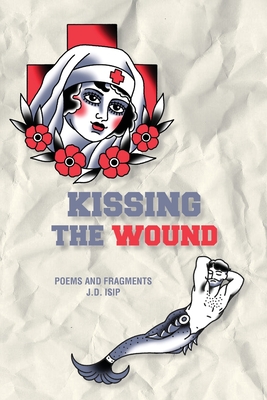
J.D. Isip is originally from Long Beach, California, but has lived the last decade or so in Plano, Texas. He received his MA from California State University, Fullerton, and his PhD from Texas A&M University-Commerce. He is a Professor of English at Collin College in North Texas, and he serves as an editor for The Blue Mountain Review. His poetry, plays, short fiction, and essays have appeared in a variety of journals and magazines. His first full-length collection, Pocketing Feathers, was published by Sadie Girl Press (2015). His new collection, Kissing the Wound, was published earlier this year by Moon Tide Press. In Kissing the Wound, J.D. asks readers to look through a multiversal lens to consider how our lives and our loves, our traumas and our triumphs, fold in on one another. J.D. was kind enough to answer some questions about Kissing the Wound, as well as to offer advice about how to approach writing about trauma, and how to mix forms—including fragments—to inform a larger narrative.
DL: I love the title of your newest collection, Kissing the Wound, and how it speaks to the ways our most traumatic experiences shape us. I’m thinking too of the beautiful opening lines from your poem Tornado Radio, “Nostalgia, defined, is a scar in your mind, / that pulled at or picked, bleeds across time…” Do you have advice for writing about trauma, particularly the difficult task of stepping outside of yourself to craft personal experience into art?
JI: Thank you so much, Denton. The story behind this title, but also behind a lot of things I’ve written and revised over the years is that we (the writers) are sometimes too laser focused on a particular idea. This can be useful, and I personally love many poets who would fall into this category (Victoria Chang, Richie Hofmann, and Patrick Phillips come to mind) of being meticulous almost to the point of obsession. With this book, I had picked the title Number Our Days early on. There’s a lot of Bible in much of what I write, so it seemed a good choice. Plus, the fragmented nature of the book seemed to pair well with this idea of trying to count or recount the days we live, have lived, and will live. Well, very late into the editing process, my publisher calls me and says, “We have a problem, J.D. Neil Hilborn has a book and a poem called Our Numbered Days, and, man, I just don’t feel comfortable doing something that sounds so much like that title.” I kinda panicked, but I had just finished a poem that I moved to the front of the book – “Kissing the Wound.” I suggested it as an alternative, and my publisher, Eric, was like, “Oh man! That’s perfect! It’s better!” That was that.
See, in my mind the book was about recounting, about “memoir-izing” my past in lyric form. But, as you point out, it was much simpler than that. It was about trauma, both individual and collective. What I want to say, the advice I would give here about writing trauma, is maybe not something I always follow, but it is certainly something I strive for. I think it’s important for us to push against two impulses: one, to relive the trauma in some masochistic or voyeuristic way; two, to homilize the trauma to the “all things happen for a reason” point of dishonesty. Instead, I think it’s better to pluck out the particulars, as much as you can remember, and let the scene and/or the action take the lead over whatever “lesson” we are trying to communicate. Also, be gut-wrenchingly honest, or what is the point? I think of student papers where maybe they spend pages talking about a really screwed up relationship with a parent or an abusive love, then the last paragraph is, “But I am happy that happened, or I wouldn’t be who I am today. I don’t even think about it anymore.” Um, Sure, Jan.
To that final point of, to paraphrase, moving from “Dear Diary” to something more universal, or at least welcoming to readers – read, read, read. What you are talking about is something that we learn by watching (reading) others do it well. How can I read Audre Lorde or John Keats and feel like I have anything in common with them? But I do. Why? Because I may have never felt romantic love for a woman, but I have felt love… and longing, and all of that. I think when you read widely, your writing starts to feel more like you are in conversation rather than screaming from a soapbox. You’re not under the impression you’re the only one who ever said this or felt this, but your story adds to what has come before. So, yeah, there’s my traditionalist leanings showing!
DL: Kissing the Wound is described as containing “poems and fragments”. I would describe some of these fragments as prose pieces, even as essays. How do poems and nonfiction overlap in terms of their autobiographical qualities? Are there other ways the two forms connect in your mind? Are there challenges to interweaving different genres into one cohesive book?
JI: I love that more and more writers are crossing genre lines or hobbling together so-called “new” genres. Not to get too pedantic, but I think we generationally tend to congratulate ourselves for innovation that has always been there. Take this delineation between poem and play and essay and recipe and whatever else. Alexander Pope, Christine de Pizan, Borges, Eliot, tons of folks were crossing those genre lines decades, centuries before us. But, we forget, and it is always nice when some memory of “permission” stirs in us: Can I do this? Why the hell not?
That preamble is my way of saying, “I know what I am about to say has probably been said before.” Years ago, I had started jotting down “fragments” I thought might be part of something bigger. A book? A memoir? Poems? Maybe. For the most part, I was a little desperate not to lose these moments or images that would pop into my mind. I’ve seen a lot of friends and family die now, and it pains me to see them try to recall something. You see it in their face, in that disappointment: they can’t, it’s gone forever. As writers, we have this unique gift to preserve a little time. That’s how the fragments started.
Because they are more like prose, these pieces definitely lean more into the “lesson” aspect, or homily. Unlike poems, I feel like prose needs to land somewhere for a reader (a poem can just leave you hanging – many times, that’s the point). Donald Murray said that all writing was autobiographical, and I tend to agree. Walt Disney chose Snow White and the Seven Dwarfs as his first feature based almost exclusively on the fact that he remembered reading the story to his daughters. Charlie Brown is basically Charles Schulz. If we accept that whatever we write is going to tell our story, I think it gives us permission to tell bigger stories, stories with more characters, stories where we don’t have to be at the center of the action.
The first prose piece in the book, “How Long Was I Gone,” helped to pull the whole collection together. The night I wrote the first draft, I sent it to my friend Allyson (who wrote my spectacular forward). I was over the moon because all of a sudden I had this idea of how to tie everything I had been working on together. My first book was published in 2015, so it had been years since I had even thought about pulling together another collection. However, just like with that first book, I think when you know you’ve landed on something you have to follow your gut. That’s tricky, because there are many, many writers who will tell you, “My gut tells me every day I should be jotting out a whole collection.” I mean, if that works for you, awesome. Darren Demaree, Nicole Tallman, and Jenn Givhan are my friends who do this—and they just pump out gem after gem. For us mere mortals, it takes a little more time. I think you have to trust your writing to lead you… and you can’t do that if you’re trying to keep up with others. I am a lot happier being able to be truly happy for my friends getting published all over, getting all of the awards – rather than grousing about things being unfair, or “they’re just so much more talented” or “so much more connected” etc. Who cares? Do you. You’ll be okay.
Oh, the interweaving of the prose and poems. One, I saw someone on Twitter griping (shocker, I know) about “people who divide their poetry collections into individual sections”; it’s such a specific and therefore hilarious thing to be miffed about. I have done it with both of my collections, and I am doing it with my third collection. I don’t have any plans to stop. It helps to have those guideposts. It gives you more freedom so your collection can be about one overarching idea but also several smaller ones. Not that a collection has to be about anything, but I tend to like collections that are about something. I feel like the hodgepodge approach is an odd one. If I wanted a grab bag of subject matter, I can just read a poetry journal or magazine. Anyway, the prose pieces in Kissing the Wound started working as these kinds of guideposts, too. I could group them with poems that would, hopefully, emphasize or challenge the point or lesson of the prose piece. I liked that idea of having my cake and eating it too – here’s a lesson, but do I actually buy it? Should you? I had a lot of fun pulling it together, moving things around. I was lucky to have a patient and enthusiastic publisher. And good friends to read over drafts! So important!
DL: I’d like to go back to the idea of the word “fragment” as you use it alongside “poem”. Can you talk about what a poem is or does, for you, in its perfect form? Is it supposed to center on a single moment, an image, an emotion? All of the above or something else?
JI: I did an interview a couple of weeks ago, and I thought of an answer to this question after I said whatever I said during that interview. So, thank you for this chance to redeem myself! For me, poems are questions at their heart. They can sometimes sound like statements, proclamations, edicts, arguments, solutions, and all of that. But not so far behind even the most self-assured poem is a do you think? And I don’t think there is any other genre that has that consistency (except maybe American musical theater). The gift of a poem, then, is that it comes alongside you when “shit doesn’t make sense,” and it says, “Yeah, why is that?” Not, “so let me tell you why that is.”
Prose pieces allow ideas to breathe. That is important. But poems, for me, are in a bit more of a hurry. Prose are the divorced couple in front of the lawyers or the marriage counselor. Poems are the fights before bed, the one liners to poison the kids against the other spouse, the angry sex. You can probably guess which I like reading more. But I make a point to read both and read lots of everything. I think it would be foolish to think prose take longer to write than poems. That was not the case in Kissing the Wound – generally speaking, the poems almost all took longer than the prose pieces. And, because I set up the prose to be fragments – meaning I didn’t have to flesh out each scene, just layered them on top of one another – they were even easier to pull together. Truth be told, we always have a little more fun doing the thing we don’t always do. It was really fun, even freeing to play between genres.
DL: I often ask writers about the process of submitting their manuscripts for publication. Can you describe the time between writing and publishing these stories? How did you connect with Moon Tide Press?
JI: It took me years to write the manuscript, a solid eight years of plugging away. It’s not because I am meticulous or anything like that. It’s because I work full time as a professor, like most other artists I know. I like to think if I were given some sort of writing fellowship, I’d just crank out book after book, year after year. But that’s not true. I’d probably do what I did with my dissertation and with this book – let it simmer for years, then bang it out when I finally get tired of simmering.
I gave myself $300 to send out manuscripts to contests or editors. That’s honestly not a lot when you consider most contests are $25 or more to enter. There are also editors who will take manuscripts via email, so that costs you nothing (no printing, no postage). Moon Tide Press had been on my radar because it’s pretty big in Southern California, where I grew up. You have Red Hen Press, Write Bloody Publishing, and Moon Tide Press – those were the places I was a fan of in grad school, and the places where I had met or seen most of the writers they published. Eric Morago picked up the press years ago. I didn’t know that—but I had read his first collection a while back, and I watched him do some of his slam stuff. I was a big fan (Eric’s easy on the eyes, he has lots of fans).
Anyway, I wrote to my friend who published my first book, Sarah Thursday with Sadie Girl Press. She’d semi-retired at the time, but she was enthusiastic about me getting another book out. I think that’s important. You need to have a group of folks doing this writing thing who you can turn to who will give you honest feedback. This isn’t your mom saying she likes the pretty things you write (though that is nice if you can get it). It’s the friends who will tell you this is what you were meant to do, and they aren’t bullshitting you. They have no reason to. She told me about Moon Tide being open to unsolicited submissions. That’s worth knowing about. A lot of places, especially big publishers, are not going to look at your work unless they have sought you out (this is rare). It’s often in contests where “unknowns” get picked up by the big presses. That’s good, but the odds are generally stacked against you. Especially if you didn’t go to a specific MFA program, didn’t publish in the big magazines, haven’t gone to AWP.
That’s all to say, yeah, I got a lot of rejections. But not as many as I feared. And, as luck would have it, I got an offer for a chapbook the same week Eric accepted my full manuscript. I felt terrible about having to turn down the chapbook, but the publishers were so excited, and that I learned you shouldn’t feel bad if you have to say no to a publisher. They probably have dozens of folks waiting in the wings and, if they are decent folks, they are gonna cheer for you – after all, they just chose you. It should make sense to them.
My friend R. Flowers Rivera came to do a reading at my alma mater, and when I came up to talk with her afterward, she said, “So, when am I going to see a book from you?” This was maybe 2012, and I told her I had submitted to contests for years, but nothing ever came of it. She said, “If the contests don’t pick you, pick yourself. Send out your manuscript.” It took about a year and some kismet with a friend from high school, Sarah, but I got my first book published a few years later. The point is that if you feel like your work needs to be out in the world, you will find a way. It might take some hustle. It might take years. It sounds cliché, but you just have to keep at it. Also, honestly, and you probably know this well, just be incredibly humble when dealing with publishers. They are almost always doing it as a passion project, and they are almost always getting paid far less than they are worth. Being patient and humble goes a long way.
DL: Are there any upcoming opportunities for readers to hear you read from Kissing the Wound either via Zoom or in person?
JI: I will be on #SundaySweetChats with Charles K. Carter on Sunday, May 28th on YouTube. I’ll be the featured reader at The Ugly Mug in Orange, California, on Wednesday, May 31st. And I will be on a future episode of Be Well: A Reading Series hosted by Nicole Tallman. I’d love to see folks in California, and I highly recommend folks check out Charlie and Nicole’s shows. Both have several videos already up.
Huge thanks to J.D. Isip for speaking to me about his new book. Don’t forget to order Kissing the Wound now. Stay tuned for my next post where I’ll share the advice J.D. shared with me about writing about the places we come from, as well as a writing exercise from J.D. based on one of his poems. Make sure you never miss a post by subscribing.
Writing Exercise 22.4: Everyone has experiences in a waiting room, whether a physical room at the doctor’s office or a virtual room before a Zoom call. Many stories start or end in a waiting room: Flannery O’Connor’s Mrs. Turpin waits in a doctor’s office filled with people she disapproves so openly that one of them disapproves of her right back by smacking her with a textbook, and Anthony Perkins hopes to impress the police that he is harmless at the end of Psycho, saying, “I’m not even gonna swat that fly.”
Describe a waiting room, real or imagined, in as much detail as necessary to create the beginning or end of a story.
Walter’s writing prompt triggered the memory of Elizabeth Bishop’s famous poem, In the Waiting Room, and when I searched for it online, I came across a poem by Thomas Hardy that I’d never read before but that uses a similar title, In A Waiting-room.
I love this prompt because waiting rooms, although they can be incredibly unique from each other, have a universal quality that readers can immediately connect with. I’m so grateful to Walter for taking the time to talk about his writing and for offering this exercise. I’m anxious to try it myself.
Please buy Walter’s new book, What Cannot Be Undone—True Stories of a Life in Medicine, available from University of New Mexico Press, online retailers, and your local bookstore.
Walter M. Robinson is a writer and physician. Originally from Nashville, Tennessee, Walter now lives in Massachusetts. His collection of essays,What Cannot Be Undone—True Stories of a Life in Medicine, won the River Teeth Book Prize for 2020 and was published by University of New Mexico Press. Walter has been a fellow at MacDowell and Yaddo and was a PEN-New England “New Discovery in Non-Fiction.”
What Cannot Be Undone relates stories from a lifetime of professional experience, primarily working with cystic fibrosis patients. That experience expertly shows the complexity of cystic fibrosis, of the body in general, and of the inner workings of the mind and soul of a medical professional. Among the many aspects of Walter’s work, I admire how he is able to break down complicated medical information so that I, as a lay person, am able to understand it. Walter also served as a medical/hospital ethicist, and the ethical questions—about why and how a person is treated—are some of my favorite parts of these essays.
Walter and I first met as students in the Bennington Writing Seminars, and now we work together as editors at EastOver Press and Cutleaf. Walter agreed to answer some questions about What Cannot Be Undone as well as about the writing and publishing process. Come back tomorrow for a writing exercise inspired by Walter’s work in non-fiction.
DL: The full title of your book is What Cannot Be Undone: True Stories of a Life in Medicine, and yet, you explain in the book’s foreword that you’ve relied on an imperfect memory to write these essays. Can you talk about the challenge of relying on memory in nonfiction, some of the workarounds, and what added measures you took to protect the privacy of patients?
WR: Everything in the book is just as I remember it, but I acknowledge in the foreword that others might remember these events differently than I do. Everyone’s memory is imperfect because we only notice fragments of any event while it is happening, and as time passes, the act of remembering brings some things into sharper focus while others fade away. This is the fallible nature of human memory.
I chose the term “true stories” because these essays are not case reports or journalistic accounts, but nor are they fiction. I wrote them in a style that tries to give life to my experience as a doctor rather than simply recounting a clinical case. Medical case reports never use the first person, but I use it in some of these essays to accentuate that the story is about my perspective. In other essays I use the third person to remove myself somewhat as a character, while in still others I use third person to emphasize how I see myself in the past as a very different person. None of these approaches are typical in medical reports, so it seemed like the term “true stories” was the best fit.
I changed the identifying details of patients and families because I didn’t want my version of events to crowd out the families’ or patients’ versions. I was just one doctor among many, and I was often present at a very difficult part of their lives. I hope the story they live with now is not about me but about their loved one.
One way a nonfiction writer can address natural flaws of memory is to acknowledge in the essay that his version of events is not necessarily the only accurate account, as I did in “Nurse Clappy Gets His.” Another way is to take care not to re-configure the story to make himself look smarter, wiser, or kinder than he was in the moment. I hope I succeeded in that. As I wrote in the foreword, I am “no hero, no wizard, no saint.”
DL: At the time we met, your goal was to find a way to write about your experiences as a doctor, particularly one who worked with cystic fibrosis patients. So it seems like What Cannot Be Undone is the successful answer to that pursuit. Is this book exactly as you imagined it?
WR: I didn’t call myself a writer when I started at Bennington, though I had written scores of academic papers. I had finished about 60% of what I called a “social history” of cystic fibrosis. It was overly academic and unbearably dull. I knew it, and anyone who tried to read it knew it. Thank goodness my teacher at Bennington, Susan Cheever, told me at our very first meeting, “Walter, this is terrible, just start over.” I will forever be grateful to her for that advice because it saved me from trying to rescue something that wasn’t worth the effort.
And while I started over, I followed the Bennington method: Read one hundred books to write one. Pay close attention to the work of others. Read the work of the past in order to make the work of the present. Gather up the tools of art to see if they fit your own work. What a gift those reading lists have been to me!
By the time I finished I had some idea of what I was doing, and I’ve just kept at it. So I’d say this book is the descendent of that early draft, but they have very little in common. Or at least I hope so.
DL: The essays in What Cannot Be Undone describe traumatic events, particularly for the patients whose lives you write about. But what has always been clear to me in reading your work is that you as a medical professional have carried much of that traumatic history with you. Do you have advice for writers writing about their own trauma?
WR: I think of my work as a doctor as meaningful, moving, difficult, exhausting, and completely absorbing. Yes, it was sometimes heartbreaking, but sometimes it was joyful. I loved being a doctor most of the time, even though I worked mostly with patients with life-limiting illnesses. I admit that I am a person who concentrates more than most on the tragic aspects of human life, and many of the stories in this book end with the death of a patient because being at the bedside of these patients may be the most meaningful work I have ever done.
In the most personal essays in the book, “The Necessary Monster” and “White Coat, Black Habit,” I write about my work in a way that most doctors keep private. I try to bear witness to my uncertainty about my value as a doctor and a human.
I think anyone trying to write about difficult experiences should be as honest as they can but also hold things in reserve. Not every part of a life should be open to public view.
DL: In my recent conversation with Lauren Davis, she said that it took her about five years and 48 rejections before she found a publisher for her first full-length collection of poems. How long did it take you to write and shape these essays? What was the submission and publication process like for What Cannot Be Undone?
WR: I worked on these essays much longer than I work on essays now because I was learning how to write while I was writing this book. I revised all of them over and over and started over with a blank page many times. I’ve gotten much faster over the years, especially in knowing what is not working and starting over.
Once I had enough essays for a book, I submitted the manuscript to an agent and was floored when she said “yes.” I thought it would be smooth sailing from then on, but eighteen months later most of the publishers had not replied. I thanked the agent for her time, and I gave up.
But then two friends from Bennington—one of them you––told me about contests for manuscripts run by journals, and so I submitted it to as many contests as I could find. A year later, I had gotten form rejections from every single contest. I thanked my two friends, and I gave up, again.
I told myself, “This is no tragedy. You learned so much by writing these essays. This is your second career, and you started in your late fifties. What did you expect? Time to move on to something else.”
As is so often the case, I was wrong again. I thought I had gotten rejections from every contest, but one day I got a call from an unknown number. I didn’t pick up; surely it was those people who are so worried about my warranty expiring, right? But no, the voicemail was from the very kind editor at River Teeth, telling me I had won their Literary Nonfiction Prize. I smiled so hard the rest of that day my face hurt.
After winning the Prize, the publication process was a breeze. The folks at University of New Mexico Press have been delightful and kind to a first-time author. I didn’t count the number of rejections, but I wrote the first very rough draft of one of the essays, “Nurse Clappy Gets His,” in July 2012, and the book came out in February 2022. So it took about ten years.
DL: What are you working on now?
WR: I have been working on two projects. One is another essay collection about medicine and medical ethics tentatively titled “Deciding the Fate of Others.” The other is a more speculative book about the lives my ancestors did not lead so that I might be here to write a book.
DL: Are there any opportunities coming up for readers to meet you or study with you via zoom or in person? (workshops, readings, interviews, AWP?)
WR: I’ll be at AWP with EastOver Press and Cutleaf, so please stop by our booth and say hello if you’d like to talk about the book. And I am happy to try to arrange readings or other interviews or talks about the book, over Zoom or in person. Contact me at words (at) wmrobinson (dot) com.
* * *
My next post will feature a writing exercise inspired by one of Walter M. Robinson’s essays in What Cannot Be Undone—True Stories of a Life in Medicine.
It’s been almost 8 months since my last blog post here. I’m afraid a lot of my plans for this space escaped me as the year rushed by. Probably the biggest reason for this is because of the role I accepted as an editor for EastOver Press and EOP’s literary journal Cutleaf. In our first year, we published 23 bi-weekly issues of the journal. We also published 4 wonderful books of poetry that I’m really proud of. (See the links below to purchase EOP books and others!) This new position as an editor requires a lot of reading, and so my list of published books I read last year (2021) isn’t quite as robust as I’d like. But I love seeing other people’s what-I’ve-read lists, so here’s mine.
Julia Cameron – Finding Water
Haruki Murakami – What I Talk About When I Talk About Running
I’d like to think that my list for next year will be at least twice this long. And maybe it will be. But it really doesn’t matter. These days, I’m trying to be more comfortable with the idea of slowing down the process. What this means to me is sometimes reading fewer books, but giving more time to think about and engage with each one.
If you’ve posted your own 2021 list or have recommendations for what to read in 2022, please post links and ideas in the comments section. I’d love to hear from you. Happy New Year!









 Denton Loving