Writing Exercise 22.4: Everyone has experiences in a waiting room, whether a physical room at the doctor’s office or a virtual room before a Zoom call. Many stories start or end in a waiting room: Flannery O’Connor’s Mrs. Turpin waits in a doctor’s office filled with people she disapproves so openly that one of them disapproves of her right back by smacking her with a textbook, and Anthony Perkins hopes to impress the police that he is harmless at the end of Psycho, saying, “I’m not even gonna swat that fly.”
Describe a waiting room, real or imagined, in as much detail as necessary to create the beginning or end of a story.
Walter’s writing prompt triggered the memory of Elizabeth Bishop’s famous poem, In the Waiting Room, and when I searched for it online, I came across a poem by Thomas Hardy that I’d never read before but that uses a similar title, In A Waiting-room.
I love this prompt because waiting rooms, although they can be incredibly unique from each other, have a universal quality that readers can immediately connect with. I’m so grateful to Walter for taking the time to talk about his writing and for offering this exercise. I’m anxious to try it myself.
Please buy Walter’s new book, What Cannot Be Undone—True Stories of a Life in Medicine, available from University of New Mexico Press, online retailers, and your local bookstore.
Walter M. Robinson is a writer and physician. Originally from Nashville, Tennessee, Walter now lives in Massachusetts. His collection of essays,What Cannot Be Undone—True Stories of a Life in Medicine, won the River Teeth Book Prize for 2020 and was published by University of New Mexico Press. Walter has been a fellow at MacDowell and Yaddo and was a PEN-New England “New Discovery in Non-Fiction.”
What Cannot Be Undone relates stories from a lifetime of professional experience, primarily working with cystic fibrosis patients. That experience expertly shows the complexity of cystic fibrosis, of the body in general, and of the inner workings of the mind and soul of a medical professional. Among the many aspects of Walter’s work, I admire how he is able to break down complicated medical information so that I, as a lay person, am able to understand it. Walter also served as a medical/hospital ethicist, and the ethical questions—about why and how a person is treated—are some of my favorite parts of these essays.
Walter and I first met as students in the Bennington Writing Seminars, and now we work together as editors at EastOver Press and Cutleaf. Walter agreed to answer some questions about What Cannot Be Undone as well as about the writing and publishing process. Come back tomorrow for a writing exercise inspired by Walter’s work in non-fiction.
DL: The full title of your book is What Cannot Be Undone: True Stories of a Life in Medicine, and yet, you explain in the book’s foreword that you’ve relied on an imperfect memory to write these essays. Can you talk about the challenge of relying on memory in nonfiction, some of the workarounds, and what added measures you took to protect the privacy of patients?
WR: Everything in the book is just as I remember it, but I acknowledge in the foreword that others might remember these events differently than I do. Everyone’s memory is imperfect because we only notice fragments of any event while it is happening, and as time passes, the act of remembering brings some things into sharper focus while others fade away. This is the fallible nature of human memory.
I chose the term “true stories” because these essays are not case reports or journalistic accounts, but nor are they fiction. I wrote them in a style that tries to give life to my experience as a doctor rather than simply recounting a clinical case. Medical case reports never use the first person, but I use it in some of these essays to accentuate that the story is about my perspective. In other essays I use the third person to remove myself somewhat as a character, while in still others I use third person to emphasize how I see myself in the past as a very different person. None of these approaches are typical in medical reports, so it seemed like the term “true stories” was the best fit.
I changed the identifying details of patients and families because I didn’t want my version of events to crowd out the families’ or patients’ versions. I was just one doctor among many, and I was often present at a very difficult part of their lives. I hope the story they live with now is not about me but about their loved one.
One way a nonfiction writer can address natural flaws of memory is to acknowledge in the essay that his version of events is not necessarily the only accurate account, as I did in “Nurse Clappy Gets His.” Another way is to take care not to re-configure the story to make himself look smarter, wiser, or kinder than he was in the moment. I hope I succeeded in that. As I wrote in the foreword, I am “no hero, no wizard, no saint.”
DL: At the time we met, your goal was to find a way to write about your experiences as a doctor, particularly one who worked with cystic fibrosis patients. So it seems like What Cannot Be Undone is the successful answer to that pursuit. Is this book exactly as you imagined it?
WR: I didn’t call myself a writer when I started at Bennington, though I had written scores of academic papers. I had finished about 60% of what I called a “social history” of cystic fibrosis. It was overly academic and unbearably dull. I knew it, and anyone who tried to read it knew it. Thank goodness my teacher at Bennington, Susan Cheever, told me at our very first meeting, “Walter, this is terrible, just start over.” I will forever be grateful to her for that advice because it saved me from trying to rescue something that wasn’t worth the effort.
And while I started over, I followed the Bennington method: Read one hundred books to write one. Pay close attention to the work of others. Read the work of the past in order to make the work of the present. Gather up the tools of art to see if they fit your own work. What a gift those reading lists have been to me!
By the time I finished I had some idea of what I was doing, and I’ve just kept at it. So I’d say this book is the descendent of that early draft, but they have very little in common. Or at least I hope so.
DL: The essays in What Cannot Be Undone describe traumatic events, particularly for the patients whose lives you write about. But what has always been clear to me in reading your work is that you as a medical professional have carried much of that traumatic history with you. Do you have advice for writers writing about their own trauma?
WR: I think of my work as a doctor as meaningful, moving, difficult, exhausting, and completely absorbing. Yes, it was sometimes heartbreaking, but sometimes it was joyful. I loved being a doctor most of the time, even though I worked mostly with patients with life-limiting illnesses. I admit that I am a person who concentrates more than most on the tragic aspects of human life, and many of the stories in this book end with the death of a patient because being at the bedside of these patients may be the most meaningful work I have ever done.
In the most personal essays in the book, “The Necessary Monster” and “White Coat, Black Habit,” I write about my work in a way that most doctors keep private. I try to bear witness to my uncertainty about my value as a doctor and a human.
I think anyone trying to write about difficult experiences should be as honest as they can but also hold things in reserve. Not every part of a life should be open to public view.
DL: In my recent conversation with Lauren Davis, she said that it took her about five years and 48 rejections before she found a publisher for her first full-length collection of poems. How long did it take you to write and shape these essays? What was the submission and publication process like for What Cannot Be Undone?
WR: I worked on these essays much longer than I work on essays now because I was learning how to write while I was writing this book. I revised all of them over and over and started over with a blank page many times. I’ve gotten much faster over the years, especially in knowing what is not working and starting over.
Once I had enough essays for a book, I submitted the manuscript to an agent and was floored when she said “yes.” I thought it would be smooth sailing from then on, but eighteen months later most of the publishers had not replied. I thanked the agent for her time, and I gave up.
But then two friends from Bennington—one of them you––told me about contests for manuscripts run by journals, and so I submitted it to as many contests as I could find. A year later, I had gotten form rejections from every single contest. I thanked my two friends, and I gave up, again.
I told myself, “This is no tragedy. You learned so much by writing these essays. This is your second career, and you started in your late fifties. What did you expect? Time to move on to something else.”
As is so often the case, I was wrong again. I thought I had gotten rejections from every contest, but one day I got a call from an unknown number. I didn’t pick up; surely it was those people who are so worried about my warranty expiring, right? But no, the voicemail was from the very kind editor at River Teeth, telling me I had won their Literary Nonfiction Prize. I smiled so hard the rest of that day my face hurt.
After winning the Prize, the publication process was a breeze. The folks at University of New Mexico Press have been delightful and kind to a first-time author. I didn’t count the number of rejections, but I wrote the first very rough draft of one of the essays, “Nurse Clappy Gets His,” in July 2012, and the book came out in February 2022. So it took about ten years.
DL: What are you working on now?
WR: I have been working on two projects. One is another essay collection about medicine and medical ethics tentatively titled “Deciding the Fate of Others.” The other is a more speculative book about the lives my ancestors did not lead so that I might be here to write a book.
DL: Are there any opportunities coming up for readers to meet you or study with you via zoom or in person? (workshops, readings, interviews, AWP?)
WR: I’ll be at AWP with EastOver Press and Cutleaf, so please stop by our booth and say hello if you’d like to talk about the book. And I am happy to try to arrange readings or other interviews or talks about the book, over Zoom or in person. Contact me at words (at) wmrobinson (dot) com.
* * *
My next post will feature a writing exercise inspired by one of Walter M. Robinson’s essays in What Cannot Be Undone—True Stories of a Life in Medicine.
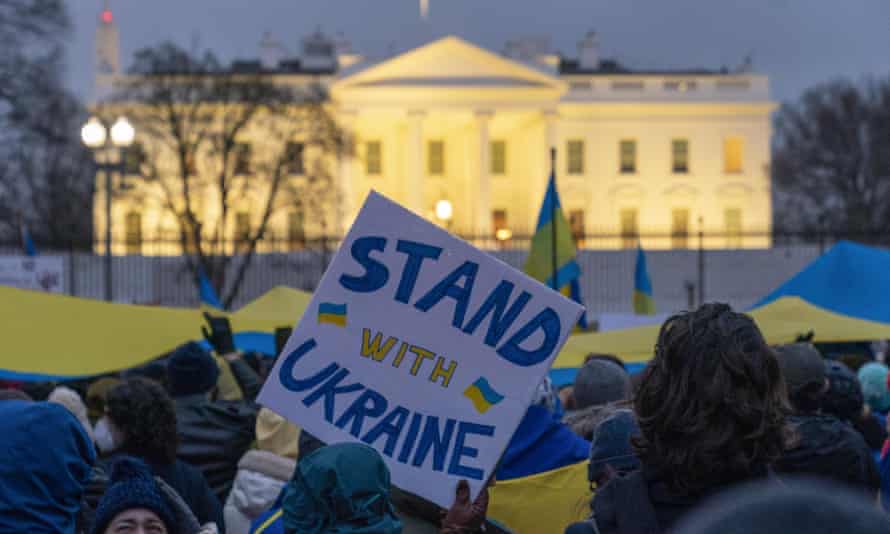
I find it nearly impossible to accomplish anything at the moment without first checking the news to see what’s happening in Ukraine, hoping and praying that the Ukrainians can stay strong and hold off Putin’s forces.
In between news checks, I started looking for some Ukrainian writing, and I came across this poem written by Lyudmyla Khersonska, translated by Katherine E. Young, and published in 2016 by WORDS without BORDERS that I wanted to share.
[The whole soldier doesn’t suffer]
The whole soldier doesn’t suffer— it’s just the legs, the arms, just blowing snow, just meager rain. The whole soldier shrugs off hurt— it’s just missile systems “Hail” and “Beech,” just bullets on the wing, just happiness ahead. Just meteorological pogroms, geo-Herostratos wannabes, just the girl with the pointer poking the map in the stomach. Just thunder, lightning, just dreadful losses, just the day with a dented helmet, just God, who doesn’t protect.
If you missed my previous post, please check out my conversation with Lauren Davis about her new poetry collection, Home Beneath the Church. Lauren talked about how difficult it was her to write deeply personal poems about her body and health. The poems in Home Beneath the Church also explore holy spaces. Those holy spaces begin and end with the body, but there are also churches, French basilicas, and other spaces reserved for traditional religious figures. And there is also the outside world. Lauren’s poems are never far from nature. It’s clear that she is a gifted student of observation, although I must assume there’s some amount of research that supports her knowledge of the natural world.
Two of my favorite poems in this collection are “If I Were a Resurrection Fern” and “I am a New Caledonian Owlet-Nightjar.”
If I Were a Resurrection Fern
And you were the wind-shipped rain, I’d draw you up. My fronds bright soaked
without shame. Imagine my grief this past drought. I shivered in my little
plot of lack. Come my mineral nip, my sky-dropped lake.
Nothing can keep us apart, not even climate nor gods.
You come down and down and never stop coming down,
and I revive, baptized.
I am a New Caledonian Owlet-Nightjar
Unseen since 1998, I am nearly a lost breed.
No one has heard my voice but you— a different genus of bird who sought and discovered me.
I beat my wings against yours unable to mate, but look
how groomed my semiplumes. I pluck them into dead air.
Now I am ready to be collected beneath your breast.
Let scientists say I dared to survive— that you came down from your perch
to quiver against me, my last known touch.
They will find me in the brushweed, virgin. But a song in my throat.
In both poems, the narrator takes on the identity of non-human forms in order to express very human yearning. One poem is qualified with the word “if.” The second poem is more declaratory: “I am.” But in both poems, the narrator embodies another form.
For this writing exercise, start with a quick online search for vulnerable species in the region where you live or within a geographic area that has significance for you.
Reading these poems prompted me to think about what animal or plant I would choose to speak through in a poem. So I started with a quick online search for “endangered birds of Appalachia.” The first link expanded my original idea by taking me to a website that listed vulnerable species beyond birds. I chose to search for species in Appalachia because that’s where I live, and it felt more appropriate for my writing.
I love that a minimal amount of research can keep me from feeling that I don’t know what to write. So once you’ve selected your species, see what you can find about their behaviors. This will help you embody that species for yourself by borrowing where they are and what they do.
Notice that in both poems, the narrator speaks directly to a beloved by addressing that person as “you.” Do the same in your poem by speaking directly to someone.
Speaking from a non-human voice is not limited to poetry. A New Caledonian Owlet-Nightjar likely would have just as much to say in a short story as she does in a poem. The same is true in an essay, and in an essay, there’s even more room for research. Whatever form you’re writing in, you may find it wonderfully freeing to speak through this other voice.
Lauren Davis is a writer who lives on the Olympic Peninsula. I first met Lauren when we were both MFA students at Bennington College. Since that time, Lauren has published two chapbooks of poetry, and, most recently, a full-length collection, Home Beneath the Church. “Lauren Davis is the poet you need to be reading,” says Kelli Russell Agodon, and I couldn’t agree more.
Home Beneath the Church includes deeply personal poems about the body and then moves into writing about religious spaces. Clearly, the body is one such religious space, perhaps even the holiest. But there are also churches, French basilicas, grottoes reserved for anchoresses and saints. And there is also the outside world: the forest, the bay, the moon, and everything that lives and endures in that outside world. Davis finds the holiness in it all.
Lauren agreed to answer some questions about Home Beneath the Church as well as about the writing and publishing process. Come back tomorrow for a writing exercise inspired by Lauren’s new collection.
DL: So many of the poems in Home Beneath the Church explore deeply personal material about your body and particularly your health. I often feel that we poets are inherently confessional, but can you talk about the process of writing these poems?
LD: I sometimes wept while putting pen to paper. One thing that kept me going was my absolute rage at the shame that surrounds women’s bodies. There was nothing for me to be ashamed of in these poems, and yet, I struggled. I found this struggle infuriating, so I pressed forward.
DL: Do you have advice for writers who are attempting to write about the body? Were there other poets or specific poems you referred to for guidance?
LD: Read, read, read. That’s my advice. Somewhere someone has taken the plunge, or they’ve taken a similar risk. I turned many times to Sharon Olds and Jason Shinder. I also made use of therapy. There’s so much to unravel when we talk about bodies.
DL: One of the questions I’m asked the most, especially by poets early in their career, is how to not sound overly prosaic. What kind of craft elements do you employ to identify and modify those prosaic turns of phrase?
LD: We’re not supposed to be overly prosaic? That’s news to me! I often find the opposite situation in new writers. They’re writing in such a complicated or elevated manner that the music, imagery, and meaning gets lost. But my advice, whether the new writer is dealing with either side of the spectrum, is to read, read, read. There is no substitute. And read living poets. Give the Greats a rest for a moment. Come back to them in a couple of years. For now, find those writers that are winning awards and branch out from there.
DL: In my conversation with Rosemary Royston last month, she said that it took her about six years of reorganizing, resending, and hoping before she found a publisher for her most recent collection of poems. How long did it take you to write and shape this collection? What was the submission and publication process like for Home Beneath the Church?
LD: Oh, Lord. Who really knows how long this took? Five years? And forty-eight rejections, I think. Each rejection helped shape the book in its own way. The publication process was a little rocky. We entered the pandemic shutdown, and I just took my hands off of it. Full surrender. And I could not be happier with the final product that Fernwood Press delivered.
DL: I know you have another collection of poems already in the works. If it’s not too early, can you tell us when that will be available? And what are you working on now?
LD: When I Drowned will be available in Winter 2023 through Aldrich Press. At the moment, I’m working on a novel titled The Sleeping Cure, and I’m seeking a publisher for my short-story collection The Milk of Dead Mothers.
* * *
My next post will feature a writing exercise inspired by one of Lauren Davis’s poems in Home Beneath the Church, as well as more information about where you can hear Lauren read this spring.
This has been a hard winter, in large part because we’ve all been enduring a difficult two years. When the weather is as cold as it’s been, I especially want to do nothing but hibernate. But yesterday and today, the sun has felt a little stronger, and I’m finding just enough energy to think about the future. That includes finding the courage to submit new work. In that vein, here are a dozen submission opportunities for writers. There’s something here for you regardless of what genre you’re writing in. So happy submitting, and good luck!
The Barcelona Review The Barcelona Review is presently accepting submissions for previously unpublished short fiction, articles and essays. We do not accept poetry submissions. Submit one story at a time for consideration to the editor. Word length: 4,500 words max. Articles/Essays should be related in some way to the world of books and writing; creative non-fiction (e.g., personal essays) that fits with the review is welcome. Word length: preferably under 3,000 words. https://barcelonareview.com/mis/subguide.htm
The Manifest-Station We are looking for honest writing that has heart. We want to be moved. Nonfiction submissions should be no longer than 3,000 words. Fiction submissions should be no longer than 5000 words. http://themanifeststation.net/submissions/
Regal House Publishing We are currently seeking manuscripts within the genres of literary fiction, contemporary fiction, historical fiction, and memoirs. For submissions, please send us: A query letter, a one-page synopsis of your story, and the first three chapters of your novel or the first fifty pages, whichever is more. https://www.regalhousepublishing.com/submissions/
Barrow Street We are currently open for poetry submissions. There is a $3 charge per submission. Submit up to five manuscript pages. http://barrowstreet.org/press/submit/
Western Humanities Review Western Humanities Review accepts unsolicited submissions of original poetry, fiction, nonfiction, hybrid work, audio/visual work, essays, and reviews year round. Because of the volume of submissions we receive, we are only able to publish about 2% of them—so please send us your best work. We’re looking for dynamic writing that engages, surprises, and moves us, work that is, in fact, out to get us. http://www.westernhumanitiesreview.com/submissions/
Valparaiso Fiction Review Publishing since 2011, Valparaiso Fiction Review is a biannual publication of Valparaiso University and its Department of English. Valparaiso Fiction Review is seeking submissions of short stories for its upcoming 2019 issues (Summer & Winter). Submissions to VFR should be original, unpublished works that range from 1,000 to 9,000 words. There is no set deadline, and submissions are considered on a rolling basis. Current and archived issues of the journal can be found online. https://scholar.valpo.edu/vfr/guidelines.html
Orange Blossom Review We are excited to announce the open call period for submissions to Orange Blossom Review, the peer-reviewed, digital-format literary journal of the Florida College English Association. OBR publishes innovative poetry, short fiction, creative nonfiction, and visual art. Submit short fiction and creative nonfiction up to 5,000 words. Submit up to five poems. Deadline: February 15, 2022.https://orangeblossomreview.org/
Echolocation For the very special 20th (!) volume of Echolocation, the theme is Everything Is Free – an aptly contradictory idea for this year (2021-2022). Our theme calls for writing that explores the costs of being alive, in whatever way you may interpret this; let the theme serve as a springboard to loosely guide your submission. We want you to send us your writing, no matter how subtle, explicit or tenuous the connection may appear. Please submit 1 or 2 pieces of prose, or 1-4 poems, or 1 piece of prose and 1-2 poems. Submissions close March 1, 2022.https://www.echolocationmagazine.com/submit
Embark Embark is a literary journal designed for novelists, and features the openings of unpublished novels. The opening of your novel should be a minimum 2,500 words and a maximum 4,000 words. The novel in question must be unpublished at the time of submission. Submissions received by March 1, 2022, will be considered for our sixteenth issue, which will be released in April 2022. https://embarkliteraryjournal.com/submissions/
Orange Blossom Review We are excited to announce the open call period for submissions to Orange Blossom Review, the peer-reviewed, digital-format literary journal of the Florida College English Association. OBR publishes innovative poetry, short fiction, creative nonfiction, and visual art. Submit short fiction and creative nonfiction up to 5,000 words. Submit up to five poems. Deadline: February 15, 2022.https://orangeblossomreview.org/
Salamander Salamander, which is published biannually, features poetry, fiction, and nonfiction. Submit no more than five poems at a time. Submit one story or memoir at a time, or up to three flash pieces in either fiction or nonfiction at a time. Our current reading period closes April 1, 2022.http://salamandermag.org/how-to-submit/
Bennington Review Bennington Review is published twice a year in print form, Summer and Winter. For poetry, please send no fewer than three and no more than five poems per submission. For fiction and creative nonfiction, please send no more than thirty pages per submission; any excerpts from a longer project must work as self-contained essays or stories. Our current reading period will end on May 8, 2022.http://www.benningtonreview.org/submit/
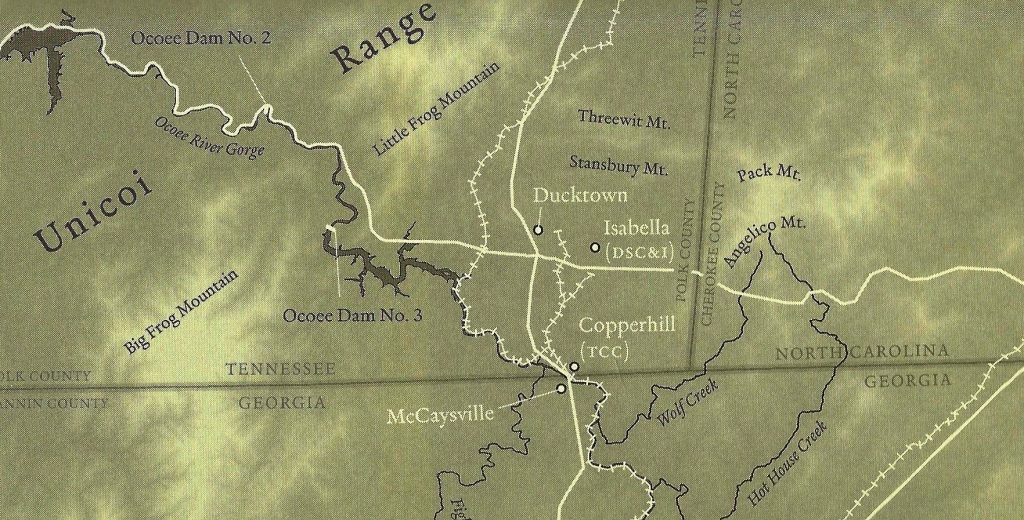
Reading “Place Names” prompted me to think about some of the wonderful place names near where I live. For this writing exercise, begin by making a list of location names near you. Or if not near you, consider making a list of location names that are important to you for one reason or another. You might even consider looking at some historical maps in case some more-interesting names have been replaced over the years.
Historic map of the Copper Basin region of Tennessee, referenced in yesterday’s post.
“Place Names” should probably be considered a narrative poem because the story of the bear hunt leads the reader through the locations. But because the names of the locations are so musical and interesting, the place names tend to rise above the narrative, and for this reason, “Place Names” feels a bit like a list poem.
Caki Wilkinson’s poem “Flyover Country” is an actual list poem. There’s no narrative structure in this poem although the epigraph “Between Memphis and Bristol” does a lot of work. I love this poem in part because Wilkinson includes my home town, Speedwell, but also because of the sound and culminating meaning of the poem.
Once you have created your list of location names that are meaningful or relevant to you, you can think about how they might work as a poem. I love a well-designed list poem like “Flyover Country,” but use Sue Weaver Dunlap’s poem as an example for how to give your own poem a narrative structure.
There’s a writing exercise to be found here for prose writers too. Think of the narrative that holds the place names together in “Place Names.” Think also of the original essay by Horace Kephart. And there’s always the question of how these place names originated. Who bestowed these names. A little research might go a far way.
I received a wonderful surprise in the mail last week in the form of Sue Weaver Dunlap’s newest collection of poems, A Walk to the Spring House, published by Iris Press. Sue Weaver Dunlap is a retired teacher who lives deep in the Southern Appalachian Mountains near Walland, Tennessee, where she and her husband Raymond live and work a mountain farm. She has published poems in venues such as Appalachian Journal, Anthology of Appalachian Writers, Pine Mountain Sand and Gravel, and Southern Poetry Anthology, and elsewhere. “A Walk to the Spring House” includes many beautiful poems, but one that especially caught my attention is “Place Names” which I’m sharing here.
Place Names
from “A Bear Hunt in the Smokies” Our Southern Highlanders by Horace Kephart
Mountain men slide through place names, their bear dogs ready. They rest at Siler’s Meadow, slap cold water on stubbled faces at Fortney’s Creek, camp at Rip Shin Thicket near Gunstick Laurel, head out at day’s first break, think to find meat at Clingman Dome. They don’t cross Sugarland Mountains, follow sign from Little River near Thunderhead and Briar Knobb, track an old fellow around Devil’s Court House, Block House, and Wooly Ridge near Bear Pen. Dogs take chase between Briar Knob and Laurel Top, end him near Saddle-back. Two shots. His parts shared among highlander hunters.
After reading this poem several times, I wrote Sue to ask her if she’d share the background of this poem. Here is what Sue was kind enough to write back to me:
“My first memory is of me standing between my parents in our Chevrolet truck, Dad driving us back from visiting my maternal grandparents. It’s December, 1956. A Sunday. We’ve left Ducktown through the Boyd Gap and across the White Bridge, and then along the Ocoee River Road, flanked on either side by the Big and Little Frog Mountains. I know this because Mama wrapped my memory in place names, places my people rooted long before I was born. The complexity and beauty of mountain language hypnotized me then and now. My mama grew up in places like Turtletown, Ducktown, Isabella, and Farner. The train depot was at Postelle. My Poppy worked mines in the Copper Basin, mines with names like Burra Burra and Mary. Place names like these girded me. In college, I listened to my older brother talk about his hikes in the Southern Appalachian Mountains, his love of places like Siler’s Bald, Gunstick Laurel, and Clingman’s Dome. All those place names rolled off his tongue like the language of our people. I also encountered the writings of Horace Kephart for the first time, especially his Our Southern Highlanders, his comprehensive accounting of his time spent with the people and places of our region. Over the last fifty or so years, I continue to visit Kephart’s book, a beautiful written reminder of what threads through my DNA. It was one of those “pick up the book and open to a random essay” entitled “A Bear Hunt in the Smokies” that I was inspired to write my poem “Place Names.” I could see those mountain men on their hunt for bear and hear the dogs tracking the scent. The catalogue of places they passed through became part of my own catalogue of place names. And then the poem was born, basically as it appears on the page.”
Many thanks to Sue Weaver Dunlap for sharing the history and inspiration of her poem “Place Names.” In my next post, I’ll share a writing exercise based on “Place Names.”
If you missed my previous post, please check out my conversation with Rosemary Royston where Rosemary talked about the process that inspired the poems in her poetry collection, Second Sight. She also talked about how writers should think about writing about traumatic events, and some revision tricks to make poetry sound and feel less prosaic. The poems in Second Sight combine folk traditions, superstitions, sixth sense, and the powers of suggestion and intention. Now, I’m sharing a writing exercise that Rosemary shared with me. Before you start, read Rosemary’s “Appalachian Ghazal” online at the museum of americana, and “Rumex acetosella” online at Split Rock Review.
Writing Exercise 22.1: I challenge readers to do some quick research on a superstition, belief, colloquialism, or a nagging question they’ve had, and to take what they find and turn it into a poem (or an essay or a scene for a short story or a novel chapter). It can be a narrative or list poem or even a lyric! Whatever comes out, but be sure to pay close attention to sound, imagery, and diction.
I love prompts like this one that involve a little research. For this one, I suggest writing into any superstition or belief that you already hold, but if you need more help to get started, check out ScaryMommy.com’s list of common superstitions, or Good Housekeeping’s list of 55 of the Strangest Superstitions From Around the World.
Rosemary Royston, author of Second Sight
I’m so grateful for the time and energy Rosemary took to talk about her writing and to offer this prompt. Please buy Rosemary’s book, Second Sight, available through Kelsay Press and Amazon), and give her a follow for regular updates at her blog “The Luxury of Trees.”
Rosemary is also teaching at two upcoming events, both of which I highly recommend:
February 5, 2022 — Poetry Workshop, Mildred Haun Conference, Walters State Community College. Rosemary says, “In this poetry workshop, I’m addressing the overall theme of the conference: Coming or Staying Home: the Appalachian Dilemma, by focusing on places/emotions/relationships/etc. that we wrestle leaving or staying with. So the workshop will be both place-based and universal.”
May 8-14, 2022 —Creative Writing across the Genres, John C. Campbell Folk School. Rosemary says, “In this week-long class at the wonderful John C. Campbell Folk School in North Carolina, participants will read, write, and discuss poetry, creative nonfiction, and fiction. It is always lovely to be at the Folk School.”
According to Rosemary Royston’s own description, she is a poet, writer, re-imaginer of things. I couldn’t agree more, especially with that last part. Her most recent publication—a full-length collection of poetry, Second Sight, available through Kelsay Press and Amazon—is all about reimagining things. Reading the poems in Second Sight causes me as a reader to want to reimagine things too.
Rosemary agreed to answer some questions about Second Sight as well as about the writing and publishing process. Come back tomorrow for a writing prompt from Rosemary, inspired by her new collection.
* * *
DL: Thepoems in Second Sight are often about intuition and premonition. A number of poems such as “Mountain Hoodoo” explore rich traditions of superstition. How did you first become interested in these traditions, and why/how did it occur to you that they were ripe for poetry?
RR: Having lived in many places in northeast Georgia, I found Appalachia, where I’ve spent the last 30 years, to be full of wonderful traditions and superstitions that intrigued me greatly. Always one open to the sixth sense and the power of suggestion or intention, I wanted to know more. Where did these “spells” come from? Why did some contain scripture from the Bible (something I stumbled upon), and why were others different? These questions led me in two directions: one, asking my friends and acquaintances in Southern Appalachia for their stories, and two, doing research that ranged from academic to collections based totally on experience or wisdom passed down. There were two sources that were very rich with history and on both ends of the spectrum: Anthony Cavander’s Folk Medicine in Appalachia, and Edain McCoy’s Mountain Magick: Folk Wisdom from the Heart of Appalachia. Cavender’s text is based on significant research, and identifies the “magic” or superstitions that have a level of legitimacy (such as medical magic that uses herbs of the region), along with identifying folk” treatments” that can be confounding and not based on scientific evidence. One of the examples Cavender shared that stayed with me is the act of “passing” a colicky baby around table legs nine times to end the colic. On the other hand, Edain McCoy (an actual relative of the famous McCoy’s) recorded a substantial amount of wisdom that had been passed down from her family. So before I began crafting the poems, I did a good bit of research as I wanted to honor the traditions and be as accurate as possible. Nothing in the poems with “Mountain Hoodoo” are totally made-up by me: they are references to the texts listed in the end of the book, or based on oral traditions shared with me by those who have lived in Appalachia for the majority of their lives.
As for their ripeness for poetry, I know that the traditions of any culture begin to slip away as society changes. I do not want the heritage of Southern Appalachia to evaporate. To capture them in poems allowed me to not only practice my well-loved craft of poetry, but also pass on some of the practices that I found most intriguing.
DL: The third section of Second Sight begins with your son’s at-first undiagnosed illness, but the section includes poems about other traumatic experiences from your life. Can you talk about the benefits of writing about trauma? What’s your process like for transforming that kind of therapeutic writing into a well-crafted poem?
RR: Early in my writing career, I had the luxury of working with Heather McHugh. I had written a poem about my (favorite) dog passing away. She read the poem and put it down and said in the kindest way, “this is too close.” What she meant was that not enough time had not passed. I needed time to grieve. To reflect. She was 100% correct. So my thoughts on trauma are to definitely journal the pain and spiraling that trauma throws us in. But then let it sit. Because if a writer does not, the writing can be too painful to process, or come out in a way that is too sentimental. Even today, when I read “Type 1” or “Sudden Awareness of Embodying the Dialectical” I may tear up. It took years for me to be able to write poetically and with somewhat of a psychic distance about our son’s near-death experience, and my own experiences in this miraculous but aging body. I’m glad I did, but processing and grieving take time, and the writer must honor that. I’d also posit that turning therapeutic writing into poetry is not unlike writing creative nonfiction. The writer must decide what details are necessary, and they must be comfortable editing details or events in order to support the essence of the poem—this includes language, chronology, and the actual event in order to convey the emotions that the writer wishes the poem to convey to its audience.
DL: One of the questions I’m asked the most, especially by poets early in their career, is how to not sound overly prosaic. What kind of craft elements do you employ to identify and modify those prosaic turns of phrase?
RR: Oh, this is a great question and extremely relevant. In the first drafts of many of these poems, I would go back and read them and see that I’d just made more or less a list of my research findings. Making the language poetic was a big factor in taking research and shaping or conjuring it into poetic form. To do this, I had multiple drafts, with specific attention to diction, sound, line breaks, and form. I think that those of us who have grown up in the South have an innate ear for sound, and we often incorporate it without even thinking about it, but I made a concerted effort to take advantage of sound. I turned some of the research I’d gathered into narrative poems. Also, I used the ghazal form, which is a Persian form that allows for repetition. Since spells often involve repetition, I found this to be an applicable form. I intentionally steered away from ballads because not only was I not good at doing them, I felt they were a form already done well by my Appalachian literary aunts and uncles. Finally, I went for the scientific—Latinate titles for some of the poems with the intent that the reader be both aware of sound and craft, but also intellectually engaged—having to read further or deduce exactly what is being described.
DL: My first book took two years to find the right publisher, and that time while you’re searching can be really disheartening. What was the submission and publication process like for Second Sight?
RR: Just as hard as the first process! However, I’m grateful for both opportunities, which took about six years of reorganizing, resending, and hoping. I was proud of myself for being more assertive this go around, though. Initially, Kelsay Books accepted a chapbook submission. But I felt that the submission was too thin for the work I’d done; it did not feature everything I wanted. I asked if they would consider my full-length, and they did! It was very rewarding.
DL: What are you working on now?
RR: Of all the questions, this one (which should be easy) was the most challenging to answer! I will always write poetry. It’s in my bones. However, I’ve found that I’m branching out and experimenting with all types of art, from mixed media, needle felting, and playing barbies! LOL. Yes—barbies. But not only in the sense of play, but also of conveying a message, which is often based on issues such as gender, feminism, and sexism. Often, I’ll “enact” the essence of a poem in one of these forms (for readers who want to see this, follow midge_and_midge on Instagram). I’ve also done some collaborative work with the painter and artist Larry Caveney through ekphrastic poems based on his paintings. For the most part, I feel like I’m in that necessary lull between poetic projects, and I’m enjoying it (as opposed to berating myself!).
* * *
My next post will feature a writing prompt supplied by Rosemary Royston, as well as more information for opportunities to study with Rosemary this spring.






 Denton Loving