Conversation with J.D. Isip

J.D. Isip is originally from Long Beach, California, but has lived the last decade or so in Plano, Texas. He received his MA from California State University, Fullerton, and his PhD from Texas A&M University-Commerce. He is a Professor of English at Collin College in North Texas, and he serves as an editor for The Blue Mountain Review. His poetry, plays, short fiction, and essays have appeared in a variety of journals and magazines. His first full-length collection, Pocketing Feathers, was published by Sadie Girl Press (2015). His new collection, Kissing the Wound, was published earlier this year by Moon Tide Press. In Kissing the Wound, J.D. asks readers to look through a multiversal lens to consider how our lives and our loves, our traumas and our triumphs, fold in on one another. J.D. was kind enough to answer some questions about Kissing the Wound, as well as to offer advice about how to approach writing about trauma, and how to mix forms—including fragments—to inform a larger narrative.
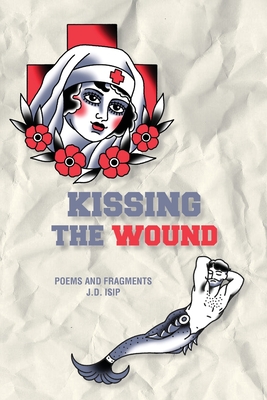
DL: I love the title of your newest collection, Kissing the Wound, and how it speaks to the ways our most traumatic experiences shape us. I’m thinking too of the beautiful opening lines from your poem Tornado Radio, “Nostalgia, defined, is a scar in your mind, / that pulled at or picked, bleeds across time…” Do you have advice for writing about trauma, particularly the difficult task of stepping outside of yourself to craft personal experience into art?

JI: Thank you so much, Denton. The story behind this title, but also behind a lot of things I’ve written and revised over the years is that we (the writers) are sometimes too laser focused on a particular idea. This can be useful, and I personally love many poets who would fall into this category (Victoria Chang, Richie Hofmann, and Patrick Phillips come to mind) of being meticulous almost to the point of obsession. With this book, I had picked the title Number Our Days early on. There’s a lot of Bible in much of what I write, so it seemed a good choice. Plus, the fragmented nature of the book seemed to pair well with this idea of trying to count or recount the days we live, have lived, and will live. Well, very late into the editing process, my publisher calls me and says, “We have a problem, J.D. Neil Hilborn has a book and a poem called Our Numbered Days, and, man, I just don’t feel comfortable doing something that sounds so much like that title.” I kinda panicked, but I had just finished a poem that I moved to the front of the book – “Kissing the Wound.” I suggested it as an alternative, and my publisher, Eric, was like, “Oh man! That’s perfect! It’s better!” That was that.

See, in my mind the book was about recounting, about “memoir-izing” my past in lyric form. But, as you point out, it was much simpler than that. It was about trauma, both individual and collective. What I want to say, the advice I would give here about writing trauma, is maybe not something I always follow, but it is certainly something I strive for. I think it’s important for us to push against two impulses: one, to relive the trauma in some masochistic or voyeuristic way; two, to homilize the trauma to the “all things happen for a reason” point of dishonesty. Instead, I think it’s better to pluck out the particulars, as much as you can remember, and let the scene and/or the action take the lead over whatever “lesson” we are trying to communicate. Also, be gut-wrenchingly honest, or what is the point? I think of student papers where maybe they spend pages talking about a really screwed up relationship with a parent or an abusive love, then the last paragraph is, “But I am happy that happened, or I wouldn’t be who I am today. I don’t even think about it anymore.” Um, Sure, Jan.

To that final point of, to paraphrase, moving from “Dear Diary” to something more universal, or at least welcoming to readers – read, read, read. What you are talking about is something that we learn by watching (reading) others do it well. How can I read Audre Lorde or John Keats and feel like I have anything in common with them? But I do. Why? Because I may have never felt romantic love for a woman, but I have felt love… and longing, and all of that. I think when you read widely, your writing starts to feel more like you are in conversation rather than screaming from a soapbox. You’re not under the impression you’re the only one who ever said this or felt this, but your story adds to what has come before. So, yeah, there’s my traditionalist leanings showing!

DL: Kissing the Wound is described as containing “poems and fragments”. I would describe some of these fragments as prose pieces, even as essays. How do poems and nonfiction overlap in terms of their autobiographical qualities? Are there other ways the two forms connect in your mind? Are there challenges to interweaving different genres into one cohesive book?

JI: I love that more and more writers are crossing genre lines or hobbling together so-called “new” genres. Not to get too pedantic, but I think we generationally tend to congratulate ourselves for innovation that has always been there. Take this delineation between poem and play and essay and recipe and whatever else. Alexander Pope, Christine de Pizan, Borges, Eliot, tons of folks were crossing those genre lines decades, centuries before us. But, we forget, and it is always nice when some memory of “permission” stirs in us: Can I do this? Why the hell not?

That preamble is my way of saying, “I know what I am about to say has probably been said before.” Years ago, I had started jotting down “fragments” I thought might be part of something bigger. A book? A memoir? Poems? Maybe. For the most part, I was a little desperate not to lose these moments or images that would pop into my mind. I’ve seen a lot of friends and family die now, and it pains me to see them try to recall something. You see it in their face, in that disappointment: they can’t, it’s gone forever. As writers, we have this unique gift to preserve a little time. That’s how the fragments started.

Because they are more like prose, these pieces definitely lean more into the “lesson” aspect, or homily. Unlike poems, I feel like prose needs to land somewhere for a reader (a poem can just leave you hanging – many times, that’s the point). Donald Murray said that all writing was autobiographical, and I tend to agree. Walt Disney chose Snow White and the Seven Dwarfs as his first feature based almost exclusively on the fact that he remembered reading the story to his daughters. Charlie Brown is basically Charles Schulz. If we accept that whatever we write is going to tell our story, I think it gives us permission to tell bigger stories, stories with more characters, stories where we don’t have to be at the center of the action.

The first prose piece in the book, “How Long Was I Gone,” helped to pull the whole collection together. The night I wrote the first draft, I sent it to my friend Allyson (who wrote my spectacular forward). I was over the moon because all of a sudden I had this idea of how to tie everything I had been working on together. My first book was published in 2015, so it had been years since I had even thought about pulling together another collection. However, just like with that first book, I think when you know you’ve landed on something you have to follow your gut. That’s tricky, because there are many, many writers who will tell you, “My gut tells me every day I should be jotting out a whole collection.” I mean, if that works for you, awesome. Darren Demaree, Nicole Tallman, and Jenn Givhan are my friends who do this—and they just pump out gem after gem. For us mere mortals, it takes a little more time. I think you have to trust your writing to lead you… and you can’t do that if you’re trying to keep up with others. I am a lot happier being able to be truly happy for my friends getting published all over, getting all of the awards – rather than grousing about things being unfair, or “they’re just so much more talented” or “so much more connected” etc. Who cares? Do you. You’ll be okay.

Oh, the interweaving of the prose and poems. One, I saw someone on Twitter griping (shocker, I know) about “people who divide their poetry collections into individual sections”; it’s such a specific and therefore hilarious thing to be miffed about. I have done it with both of my collections, and I am doing it with my third collection. I don’t have any plans to stop. It helps to have those guideposts. It gives you more freedom so your collection can be about one overarching idea but also several smaller ones. Not that a collection has to be about anything, but I tend to like collections that are about something. I feel like the hodgepodge approach is an odd one. If I wanted a grab bag of subject matter, I can just read a poetry journal or magazine. Anyway, the prose pieces in Kissing the Wound started working as these kinds of guideposts, too. I could group them with poems that would, hopefully, emphasize or challenge the point or lesson of the prose piece. I liked that idea of having my cake and eating it too – here’s a lesson, but do I actually buy it? Should you? I had a lot of fun pulling it together, moving things around. I was lucky to have a patient and enthusiastic publisher. And good friends to read over drafts! So important!

DL: I’d like to go back to the idea of the word “fragment” as you use it alongside “poem”. Can you talk about what a poem is or does, for you, in its perfect form? Is it supposed to center on a single moment, an image, an emotion? All of the above or something else?

JI: I did an interview a couple of weeks ago, and I thought of an answer to this question after I said whatever I said during that interview. So, thank you for this chance to redeem myself! For me, poems are questions at their heart. They can sometimes sound like statements, proclamations, edicts, arguments, solutions, and all of that. But not so far behind even the most self-assured poem is a do you think? And I don’t think there is any other genre that has that consistency (except maybe American musical theater). The gift of a poem, then, is that it comes alongside you when “shit doesn’t make sense,” and it says, “Yeah, why is that?” Not, “so let me tell you why that is.”

Prose pieces allow ideas to breathe. That is important. But poems, for me, are in a bit more of a hurry. Prose are the divorced couple in front of the lawyers or the marriage counselor. Poems are the fights before bed, the one liners to poison the kids against the other spouse, the angry sex. You can probably guess which I like reading more. But I make a point to read both and read lots of everything. I think it would be foolish to think prose take longer to write than poems. That was not the case in Kissing the Wound – generally speaking, the poems almost all took longer than the prose pieces. And, because I set up the prose to be fragments – meaning I didn’t have to flesh out each scene, just layered them on top of one another – they were even easier to pull together. Truth be told, we always have a little more fun doing the thing we don’t always do. It was really fun, even freeing to play between genres.

DL:  I often ask writers about the process of submitting their manuscripts for publication. Can you describe the time between writing and publishing these stories? How did you connect with Moon Tide Press?

JI: It took me years to write the manuscript, a solid eight years of plugging away. It’s not because I am meticulous or anything like that. It’s because I work full time as a professor, like most other artists I know. I like to think if I were given some sort of writing fellowship, I’d just crank out book after book, year after year. But that’s not true. I’d probably do what I did with my dissertation and with this book – let it simmer for years, then bang it out when I finally get tired of simmering.

I gave myself $300 to send out manuscripts to contests or editors. That’s honestly not a lot when you consider most contests are $25 or more to enter. There are also editors who will take manuscripts via email, so that costs you nothing (no printing, no postage). Moon Tide Press had been on my radar because it’s pretty big in Southern California, where I grew up. You have Red Hen Press, Write Bloody Publishing, and Moon Tide Press – those were the places I was a fan of in grad school, and the places where I had met or seen most of the writers they published. Eric Morago picked up the press years ago. I didn’t know that—but I had read his first collection a while back, and I watched him do some of his slam stuff. I was a big fan (Eric’s easy on the eyes, he has lots of fans).

Anyway, I wrote to my friend who published my first book, Sarah Thursday with Sadie Girl Press. She’d semi-retired at the time, but she was enthusiastic about me getting another book out. I think that’s important. You need to have a group of folks doing this writing thing who you can turn to who will give you honest feedback. This isn’t your mom saying she likes the pretty things you write (though that is nice if you can get it). It’s the friends who will tell you this is what you were meant to do, and they aren’t bullshitting you. They have no reason to. She told me about Moon Tide being open to unsolicited submissions. That’s worth knowing about. A lot of places, especially big publishers, are not going to look at your work unless they have sought you out (this is rare). It’s often in contests where “unknowns” get picked up by the big presses. That’s good, but the odds are generally stacked against you. Especially if you didn’t go to a specific MFA program, didn’t publish in the big magazines, haven’t gone to AWP.

That’s all to say, yeah, I got a lot of rejections. But not as many as I feared. And, as luck would have it, I got an offer for a chapbook the same week Eric accepted my full manuscript. I felt terrible about having to turn down the chapbook, but the publishers were so excited, and that I learned you shouldn’t feel bad if you have to say no to a publisher. They probably have dozens of folks waiting in the wings and, if they are decent folks, they are gonna cheer for you – after all, they just chose you. It should make sense to them.

My friend R. Flowers Rivera came to do a reading at my alma mater, and when I came up to talk with her afterward, she said, “So, when am I going to see a book from you?” This was maybe 2012, and I told her I had submitted to contests for years, but nothing ever came of it. She said, “If the contests don’t pick you, pick yourself. Send out your manuscript.” It took about a year and some kismet with a friend from high school, Sarah, but I got my first book published a few years later. The point is that if you feel like your work needs to be out in the world, you will find a way. It might take some hustle. It might take years. It sounds cliché, but you just have to keep at it. Also, honestly, and you probably know this well, just be incredibly humble when dealing with publishers. They are almost always doing it as a passion project, and they are almost always getting paid far less than they are worth. Being patient and humble goes a long way.

DL:  Are there any upcoming opportunities for readers to hear you read from Kissing the Wound either via Zoom or in person?

JI: I will be on #SundaySweetChats with Charles K. Carter on Sunday, May 28th on YouTube. I’ll be the featured reader at The Ugly Mug in Orange, California, on Wednesday, May 31st. And I will be on a future episode of Be Well: A Reading Series hosted by Nicole Tallman. I’d love to see folks in California, and I highly recommend folks check out Charlie and Nicole’s shows. Both have several videos already up.

Huge thanks to J.D. Isip for speaking to me about his new book. Don’t forget to order Kissing the Wound now. Stay tuned for my next post where I’ll share the advice J.D. shared with me about writing about the places we come from, as well as a writing exercise from J.D. based on one of his poems. Make sure you never miss a post by subscribing.

Conversation with Tony Taddei

For many years before Tony Taddei was creating characters on the page, he was creating them on the stage as a trained actor.  Born and raised in New Haven, Connecticut, Tony now lives in New Jersey. I first met Tony in 2014 when we both attended the Sewanee Writers’ Conference. A few years later, we reconnected through the Bennington College Writing Seminars. Though all of my interactions with Tony had been related to writing, I hadn’t had the pleasure to read his work for myself until the recent publication of his collection of linked short stories, The Sons of the Santorelli. What a joy it was to discover the craftsmanship and poignancy in these twelve stories about an immigrant family, particularly the men in the family who struggle with their desires and ambitions. Yes, this is a narrative about an immigrant family, but as David Gates said about the book, this is not “the conventional immigrant family saga.” Tony was kind enough to answer some of my questions about putting these stories together, about how he avoided convention, and how he infused a political slant into such personal, character-driven writing.

DL: How long did it take you to write these stories, and do you recall when you knew how individual stories would work together? Can you talk about your reasons for writing multiple, linked stories rather than a novel?

TT: I took my time writing these stories, so that the process from drafting the initial stories to finalizing the collection probably took five or six years.  The collection wasn’t the only thing I was working on during the time, and, in any case, I didn’t want to rush the process of writing the collection.  First, because I wanted to get the premise of each story right as well as to spend time considering what stories might need to be added, and second, because I was having a lot of fun writing about these people and I kind of wanted to savor it. 

During the process of working on the stories I don’t think I really had a master plan for how they would all work together.  That said, once I decided to write one story for each of the Santorelli sons and grandsons as well as at least one story about the patriarch, the linkages between stories started to become evident, and I was able to find ways in rewriting the stories and adding new ones to get them to work together as a piece.  My goal was to have each story stand on its own but also for a reader to be able to sit back and think about them in their entirety after finishing the collection to realize that the parts of the book made up a whole.

As to why I wrote the saga of this family as linked stories rather than a novel, I did it because it gave me the ability to tell multiple, smaller stories that I would not have been able to tell in a novel (while still trying to make the novel a cohesive whole).  It was also a lot easier for me to write about the individuals in this very complex and human family in separate stories than it would have been in a novel.  By telling the story of the Santorellis a character at a time, I think I did more justice to each individual while still creating the personality and a legacy of a whole family.

DL: One of the recurring themes throughout these stories is the idea of the immigrant experience, often depicted here in connection with “immigrant shame” and the idea that America “breaks” the spirit of immigrants. This is the antithetical American story. How conscious were you of making this kind of political statement during the writing? Do you have advice for other writers about incorporating political ideas into fiction?

TT: As the work progressed, I was very conscious of it.  Having come from an immigrant family and seen them fail more than succeed at the things they most wanted I can be somewhat cynical about the idea of an American Dream to begin with. I knew that cynicism would likely play a role in the situations I put my characters in.

That said, I didn’t I initially set out to tell stories that torpedoed the idea of what can be achieved in America.  I set out to write human stories that were compelling to read as well as funny and tragic with as many twists and surprises as I could manage.  In order tell the truth about the characters in this family as I saw them, I had to show the forces that were working upon them. The largest of those forces being that for most immigrants and, especially for the poor, this country very often only lets them get so far before it pushes them back down again.  This comes in the form of economic imprisonment, and it comes in the form of racial imprisonment where one wave of immigrants who’d faced bigotry visits their own xenophobia and bigotry on the next wave of immigrants to reach America’s shores.   

My advice for writers who want to incorporate political ideas into fiction is to first find an honest story that is personal and then begin writing it without focusing on the political or cultural connotations. If the story is honest and tracks with the world we live in, they won’t be able to help themselves from writing about the political forces that are acting upon their characters. Those forces come into play in our lives most of the time without us even realizing they are there.  After that, when the writer looks back on what they’ve written, they can draw out the more political aspects of the story to any degree they choose. To put the above more succinctly, all politics are personal. I think any political writing should follow that guideline.

DL: Many of these stories are told through the male point of view which makes sense given the title of the collection. But that’s not to say that you don’t give voice to women within the Santorelli family. How did you settle on the balance between male and female characters and points-of-view? Were there any challenges in allowing the women to have their say in this male-dominated cast?

TT:  Not at all, because I think if you look closely at each of the stories, you’ll see that the women in the backgrounds of these men’s lives are the real truth-tellers.  The stories would not have found the ballast they needed for their conflict and reasoning if it weren’t for the women characters. A reader will likely see this most clearly in a story like “Commedia Dell’Arte” which has the matriarch of the family as the protagonist trying to make sense of and tell the truth about male dominance in her life.  But it’s just below the surface of most of the other stories as well. From “Songs for Swingin’ Lovers” where a prostitute early on dominates a group of highly dysfunctional and misogynist men, to “Valiant” where the sisters and especially the mother in the family turn out to be stronger and more insightful then either the father or the son.

So, no, I did not find many challenges in allowing the women to have their say in my largely male-dominated cast.  In fact, I’d say that the challenge was being able to hold off in letting the women have their say long enough so that the men could act out in the wrong-headed and solipsistic ways that I think make the stories interesting and recognizable to readers.  Especially female readers.

DL: In an effort to demystify the process, I always ask writers about the process of submitting their manuscripts for publication. Can you describe the time between writing and publishing these stories? How did you connect with Bordighera Press?

TT:  The time between writing and publishing was, to some extent, concurrent.  I started to send the manuscript to publishers when I had most of the stories finished but was still revising the last two or three.  At that point it was rejection, rejection, rejection until I found Bordighera Press.

Bordighera is a small independent press that is partially privately funded with a mission to publish writing about the culture of Italy and Italian Americans—essays, fiction, poetry, what have you.  They publish a semiannual review of shorter work as well as a twice yearly run of new full-length work and are always looking for good writing that fits the themes of Italian life.   About 2 years ago, I submitted the title story of my collection to Bordighera for consideration in their semiannual review, and it was accepted.  Once I realized that they also published full length work, I sent the full and, by then, nearly completed manuscript, and I was thrilled when they said they wanted to publish it. 

I’ve been telling people who ask how you find a publisher for your work that you have to persevere until you find a publisher that is the right fit.  Most of the time that’s easier said than done.  In my case I believe it was a bit easier because the work was a more-or-less exact match with the kind of work Bordighera is looking for.

DL: What are you working on now?

TT: I’m finishing up another collection of short stories that revolve around the melancholy, indignities, and occasional pleasures that men face as they age.  Each of these stories also weaves in animals and their ability to live instinctually and unquestioningly as a humorous and (I think) affecting counterpoint to the men in the stories who are creating their own problems and then struggling to accept the circumstances they find themselves in.  These two themes may not at first glance seem to go together, but I think the stories work better because of their juxtaposition. I’m hoping to have these stories published as a collection sometime soon and readers can judge for themselves. For now, if any of your readers want to take a look a couple of these stories, they a can go to Animal Literary Magazine and The Florida Review online.  I’m also beginning a novel but it’s too early to say much about it, so I’ll have to get back to you on that.

DL: Are there any opportunities coming up for readers to hear you read from The Sons of the Santorelli either via Zoom or in person?

TT: Yes, I recently read an excerpt from a story in the collection – “We Now Conclude Our Broadcast Day” – online for the Prospect Street Reading series and readers can view that on Facebook Events at  https://www.facebook.com/events/413658933932101/?ref=newsfeed (no Facebook account required to view).

Folks can also go to the Selected Audio section of my website and listen to me read the first two stories from the collection.

Other readings are in the works, and I’ll post the particulars to my social media feeds when they’re set.  (@tony_taddei / Twitter; Tony Taddei / Facebook; tonytaddei / Instagram)

* * *

Huge thanks to Tony for speaking to me about his new book. Don’t forget to order The Sons of the Santorelli now from Bordighera Press. Make sure you never miss a post by subscribing here:

Conversation with Walter M. Robinson

Walter M. Robinson is a writer and physician. Originally from Nashville, Tennessee, Walter now lives in Massachusetts. His collection of essays, What Cannot Be Undone—True Stories of a Life in Medicine, won the River Teeth Book Prize for 2020 and was published by University of New Mexico Press. Walter has been a fellow at MacDowell and Yaddo and was a PEN-New England “New Discovery in Non-Fiction.”

What Cannot Be Undone relates stories from a lifetime of professional experience, primarily working with cystic fibrosis patients. That experience expertly shows the complexity of cystic fibrosis, of the body in general, and of the inner workings of the mind and soul of a medical professional. Among the many aspects of Walter’s work, I admire how he is able to break down complicated medical information so that I, as a lay person, am able to understand it. Walter also served as a medical/hospital ethicist, and the ethical questions—about why and how a person is treated—are some of my favorite parts of these essays.

Walter and I first met as students in the Bennington Writing Seminars, and now we work together as editors at EastOver Press and Cutleaf. Walter agreed to answer some questions about What Cannot Be Undone as well as about the writing and publishing process. Come back tomorrow for a writing exercise inspired by Walter’s work in non-fiction.

DL: The full title of your book is What Cannot Be Undone: True Stories of a Life in Medicine, and yet, you explain in the book’s foreword that you’ve relied on an imperfect memory to write these essays. Can you talk about the challenge of relying on memory in nonfiction, some of the workarounds, and what added measures you took to protect the privacy of patients?

WR: Everything in the book is just as I remember it, but I acknowledge in the foreword that others might remember these events differently than I do. Everyone’s memory is imperfect because we only notice fragments of any event while it is happening, and as time passes, the act of remembering brings some things into sharper focus while others fade away. This is the fallible nature of human memory.

I chose the term “true stories” because these essays are not case reports or journalistic accounts, but nor are they fiction. I wrote them in a style that tries to give life to my experience as a doctor rather than simply recounting a clinical case. Medical case reports never use the first person, but I use it in some of these essays to accentuate that the story is about my perspective. In other essays I use the third person to remove myself somewhat as a character, while in still others I use third person to emphasize how I see myself in the past as a very different person. None of these approaches are typical in medical reports, so it seemed like the term “true stories” was the best fit.

I changed the identifying details of patients and families because I didn’t want my version of events to crowd out the families’ or patients’ versions. I was just one doctor among many, and I was often present at a very difficult part of their lives. I hope the story they live with now is not about me but about their loved one.

One way a nonfiction writer can address natural flaws of memory is to acknowledge in the essay that his version of events is not necessarily the only accurate account, as I did in “Nurse Clappy Gets His.” Another way is to take care not to re-configure the story to make himself look smarter, wiser, or kinder than he was in the moment. I hope I succeeded in that. As I wrote in the foreword, I am “no hero, no wizard, no saint.”  

DL: At the time we met, your goal was to find a way to write about your experiences as a doctor, particularly one who worked with cystic fibrosis patients. So it seems like What Cannot Be Undone is the successful answer to that pursuit. Is this book exactly as you imagined it?

WR: I didn’t call myself a writer when I started at Bennington, though I had written scores of academic papers. I had finished about 60% of what I called a “social history” of cystic fibrosis. It was overly academic and unbearably dull. I knew it, and anyone who tried to read it knew it. Thank goodness my teacher at Bennington, Susan Cheever, told me at our very first meeting, “Walter, this is terrible, just start over.” I will forever be grateful to her for that advice because it saved me from trying to rescue something that wasn’t worth the effort.

And while I started over, I followed the Bennington method: Read one hundred books to write one. Pay close attention to the work of others. Read the work of the past in order to make the work of the present. Gather up the tools of art to see if they fit your own work. What a gift those reading lists have been to me!

By the time I finished I had some idea of what I was doing, and I’ve just kept at it. So I’d say this book is the descendent of that early draft, but they have very little in common. Or at least I hope so.

DL: The essays in What Cannot Be Undone describe traumatic events, particularly for the patients whose lives you write about. But what has always been clear to me in reading your work is that you as a medical professional have carried much of that traumatic history with you. Do you have advice for writers writing about their own trauma?

WR: I think of my work as a doctor as meaningful, moving, difficult, exhausting, and completely absorbing. Yes, it was sometimes heartbreaking, but sometimes it was joyful. I loved being a doctor most of the time, even though I worked mostly with patients with life-limiting illnesses. I admit that I am a person who concentrates more than most on the tragic aspects of human life, and many of the stories in this book end with the death of a patient because being at the bedside of these patients may be the most meaningful work I have ever done.

In the most personal essays in the book, “The Necessary Monster” and “White Coat, Black Habit,” I write about my work in a way that most doctors keep private. I try to bear witness to my uncertainty about my value as a doctor and a human.

I think anyone trying to write about difficult experiences should be as honest as they can but also hold things in reserve. Not every part of a life should be open to public view.

DL: In my recent conversation with Lauren Davis, she said that it took her about five years and 48 rejections before she found a publisher for her first full-length collection of poems. How long did it take you to write and shape these essays? What was the submission and publication process like for What Cannot Be Undone?

WR: I worked on these essays much longer than I work on essays now because I was learning how to write while I was writing this book. I revised all of them over and over and started over with a blank page many times. I’ve gotten much faster over the years, especially in knowing what is not working and starting over.

Once I had enough essays for a book, I submitted the manuscript to an agent and was floored when she said “yes.” I thought it would be smooth sailing from then on, but eighteen months later most of the publishers had not replied. I thanked the agent for her time, and I gave up.

But then two friends from Bennington—one of them you––told me about contests for manuscripts run by journals, and so I submitted it to as many contests as I could find.  A year later, I had gotten form rejections from every single contest. I thanked my two friends, and I gave up, again.

I told myself, “This is no tragedy. You learned so much by writing these essays. This is your second career, and you started in your late fifties. What did you expect? Time to move on to something else.”

As is so often the case, I was wrong again. I thought I had gotten rejections from every contest, but one day I got a call from an unknown number. I didn’t pick up; surely it was those people who are so worried about my warranty expiring, right? But no, the voicemail was from the very kind editor at River Teeth, telling me I had won their Literary Nonfiction Prize. I smiled so hard the rest of that day my face hurt.

After winning the Prize, the publication process was a breeze. The folks at University of New Mexico Press have been delightful and kind to a first-time author. I didn’t count the number of rejections, but I wrote the first very rough draft of one of the essays, “Nurse Clappy Gets His,” in July 2012, and the book came out in February 2022. So it took about ten years.

DL: What are you working on now?

WR: I have been working on two projects. One is another essay collection about medicine and medical ethics tentatively titled “Deciding the Fate of Others.” The other is a more speculative book about the lives my ancestors did not lead so that I might be here to write a book. 

DL: Are there any opportunities coming up for readers to meet you or study with you via zoom or in person? (workshops, readings, interviews, AWP?)

WR: I’ll be at AWP with EastOver Press and Cutleaf, so please stop by our booth and say hello if you’d like to talk about the book. And I am happy to try to arrange readings or other interviews or talks about the book, over Zoom or in person. Contact me at words (at) wmrobinson (dot) com.

* * *

My next post will feature a writing exercise inspired by one of Walter M. Robinson’s essays in What Cannot Be Undone—True Stories of a Life in Medicine.

Conversation with Rosemary Royston

According to Rosemary Royston’s own description, she is a poet, writer, re-imaginer of things. I couldn’t agree more, especially with that last part. Her most recent publication—a full-length collection of poetry, Second Sight, available through Kelsay Press and Amazonis all about reimagining things. Reading the poems in Second Sight causes me as a reader to want to reimagine things too.

Rosemary agreed to answer some questions about Second Sight as well as about the writing and publishing process. Come back tomorrow for a writing prompt from Rosemary, inspired by her new collection.

* * *

DL: The poems in Second Sight are often about intuition and premonition. A number of poems such as “Mountain Hoodoo” explore rich traditions of superstition. How did you first become interested in these traditions, and why/how did it occur to you that they were ripe for poetry?

RR: Having lived in many places in northeast Georgia, I found Appalachia, where I’ve spent the last 30 years, to be full of wonderful traditions and superstitions that intrigued me greatly. Always one open to the sixth sense and the power of suggestion or intention, I wanted to know more. Where did these “spells” come from? Why did some contain scripture from the Bible (something I stumbled upon), and why were others different? These questions led me in two directions: one, asking my friends and acquaintances in Southern Appalachia for their stories, and two, doing research that ranged from academic to collections based totally on experience or wisdom passed down. There were two sources that were very rich with history and on both ends of the spectrum: Anthony Cavander’s Folk Medicine in Appalachia, and Edain McCoy’s Mountain Magick: Folk Wisdom from the Heart of Appalachia. Cavender’s text is based on significant research, and identifies the “magic” or superstitions that have a level of legitimacy (such as medical magic that uses herbs of the region), along with identifying folk” treatments” that can be confounding and not based on scientific evidence. One of the examples Cavender shared that stayed with me is the act of “passing” a colicky baby around table legs nine times to end the colic. On the other hand, Edain McCoy (an actual relative of the famous McCoy’s) recorded a substantial amount of wisdom that had been passed down from her family. So before I began crafting the poems, I did a good bit of research as I wanted to honor the traditions and be as accurate as possible. Nothing in the poems with “Mountain Hoodoo” are totally made-up by me: they are references to the texts listed in the end of the book, or based on oral traditions shared with me by those who have lived in Appalachia for the majority of their lives.

As for their ripeness for poetry, I know that the traditions of any culture begin to slip away as society changes. I do not want the heritage of Southern Appalachia to evaporate. To capture them in poems allowed me to not only practice my well-loved craft of poetry, but also pass on some of the practices that I found most intriguing.

Second Sight, available through Kelsay Press and Amazon


DL: The third section of Second Sight begins with your son’s at-first undiagnosed illness, but the section includes poems about other traumatic experiences from your life. Can you talk about the benefits of writing about trauma? What’s your process like for transforming that kind of therapeutic writing into a well-crafted poem?

RR: Early in my writing career, I had the luxury of working with Heather McHugh. I had written a poem about my (favorite) dog passing away. She read the poem and put it down and said in the kindest way, “this is too close.” What she meant was that not enough time had not passed. I needed time to grieve. To reflect. She was 100% correct. So my thoughts on trauma are to definitely journal the pain and spiraling that trauma throws us in. But then let it sit. Because if a writer does not, the writing can be too painful to process, or come out in a way that is too sentimental. Even today, when I read “Type 1” or “Sudden Awareness of Embodying the Dialectical” I may tear up. It took years for me to be able to write poetically and with somewhat of a psychic distance about our son’s near-death experience, and my own experiences in this miraculous but aging body. I’m glad I did, but processing and grieving take time, and the writer must honor that. I’d also posit that turning therapeutic writing into poetry is not unlike writing creative nonfiction. The writer must decide what details are necessary, and they must be comfortable editing details or events in order to support the essence of the poem—this includes language, chronology, and the actual event in order to convey the emotions that the writer wishes the poem to convey to its audience.


DL: One of the questions I’m asked the most, especially by poets early in their career, is how to not sound overly prosaic. What kind of craft elements do you employ to identify and modify those prosaic turns of phrase?

RR: Oh, this is a great question and extremely relevant. In the first drafts of many of these poems, I would go back and read them and see that I’d just made more or less a list of my research findings. Making the language poetic was a big factor in taking research and shaping or conjuring it into poetic form. To do this, I had multiple drafts, with specific attention to diction, sound, line breaks, and form. I think that those of us who have grown up in the South have an innate ear for sound, and we often incorporate it without even thinking about it, but I made a concerted effort to take advantage of sound. I turned some of the research I’d gathered into narrative poems. Also, I used the ghazal form, which is a Persian form that allows for repetition. Since spells often involve repetition, I found this to be an applicable form. I intentionally steered away from ballads because not only was I not good at doing them, I felt they were a form already done well by my Appalachian literary aunts and uncles. Finally, I went for the scientific—Latinate titles for some of the poems with the intent that the reader be both aware of sound and craft, but also intellectually engaged—having to read further or deduce exactly what is being described.


DL: My first book took two years to find the right publisher, and that time while you’re searching can be really disheartening. What was the submission and publication process like for Second Sight?

RR: Just as hard as the first process! However, I’m grateful for both opportunities, which took about six years of reorganizing, resending, and hoping. I was proud of myself for being more assertive this go around, though. Initially, Kelsay Books accepted a chapbook submission. But I felt that the submission was too thin for the work I’d done; it did not feature everything I wanted. I asked if they would consider my full-length, and they did! It was very rewarding.


DL: What are you working on now?

RR: Of all the questions, this one (which should be easy) was the most challenging to answer! I will always write poetry. It’s in my bones. However, I’ve found that I’m branching out and experimenting with all types of art, from mixed media, needle felting, and playing barbies! LOL. Yesbarbies. But not only in the sense of play, but also of conveying a message, which is often based on issues such as gender, feminism, and sexism. Often, I’ll “enact” the essence of a poem in one of these forms (for readers who want to see this, follow midge_and_midge on Instagram). I’ve also done some collaborative work with the painter and artist Larry Caveney through ekphrastic poems based on his paintings. For the most part, I feel like I’m in that necessary lull between poetic projects, and I’m enjoying it (as opposed to berating myself!).

* * *

My next post will feature a writing prompt supplied by Rosemary Royston, as well as more information for opportunities to study with Rosemary this spring.

My CutBank Interview with Keith Lesmeister

Thanks to Barry Maxwell and CutBank Literary Magazine for allowing me to interview my friend Keith Lesmeister about his new collection of stories, We Could’ve Been Happy Here (published by Midwest Gothic Press). Lesmeister lives and works in rural northeast Iowa, and all 12 of these stories explore the contemporary Midwest in some way. Here’s an excerpt from the interview.

DL: I wanted to ask you about the stories all being set in Iowa, which is your home state. The idea of the Mid-West is apparent in a lot of your work, especially in regards to how you create a sense of place to inform and impact your characters. Do you find it easy or difficult to write about this region that you call home?

KL: Very difficult because I’m from here, which means I take a lot for granted. I’ve had to readjust how I interpret my surroundings, thinking of myself like a tourist when I drive around, trying to take it all in. And despite the stereotypes, several parts of Iowa are quite beautiful. That’s been a big surprise for me as I’ve written this collection—how much I truly love the landscape around here.

It’s funny for this to come as a surprise to Lesmeister because when you’re reading his work, it’s pretty obvious how much to loves the place he’s writing about.

There’s also more in the interview about his love of basketball, and there’s some talk about how difficult it can be to herd cattle. Please read the entire piece at CutBank Onlinehttp://www.cutbankonline.org/cutbank-blog/2017/9/cutbank-interviews-keith-lesmeister.

Lesmeister’s fiction and nonfiction have been widely published, and We Could’ve Been Happy Here has received praise from writers such as Benjamin Percy and David Gates. Bret Anthony Johnston said, “These are brutal stories—brutally good, brutally urgent, brutally hopeful.”

Most importantly, be sure to buy the book.  You won’t be sorry.

Keith - full-cover-final-880x629.png