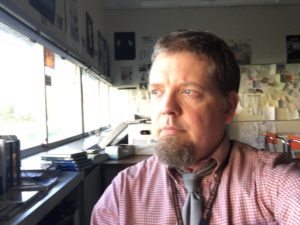
Wrapping Up National Poetry Month

I don’t ever remember a past April where I could visibly see poetry celebrated so often and in so many ways. Maybe one of the things we couldn’t predict about living in a dystopian world is how people would turn to poetry. Regardless, it was beautiful.

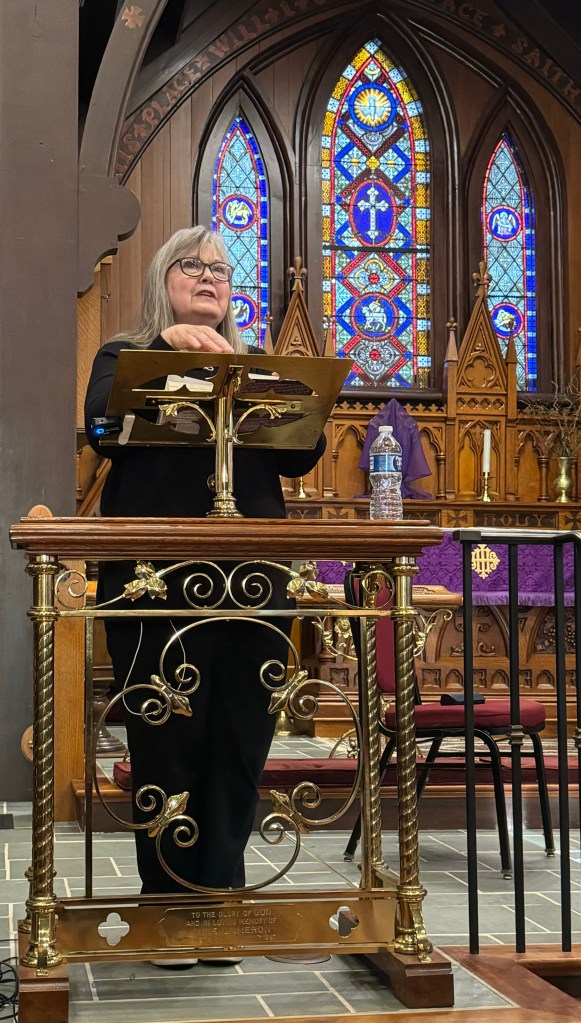
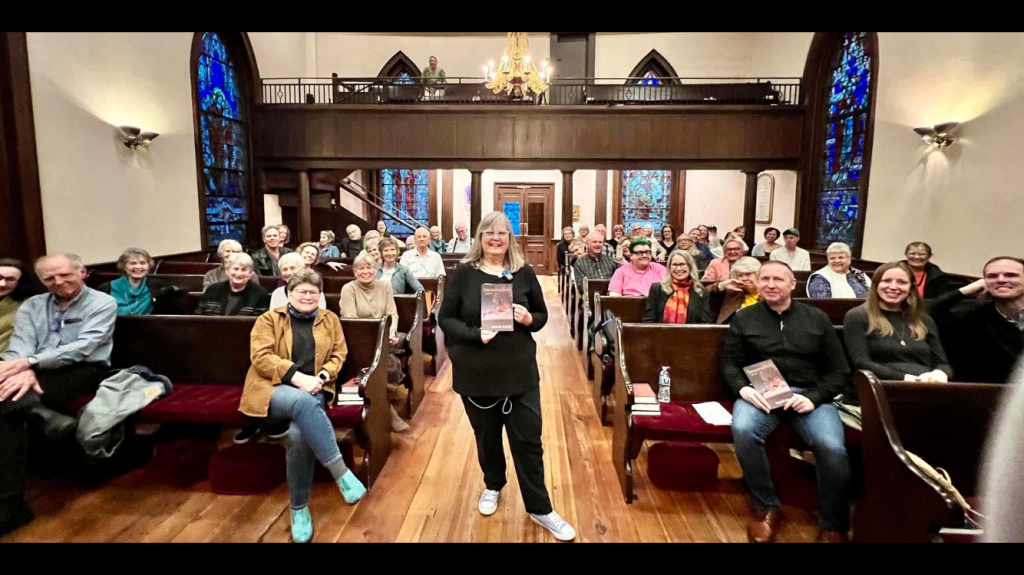
For my part, I had the privilege of reading poems to the monthly book discussion group, All Over the Page, at Lawson McGhee Library in Knoxville, Tennessee. I read poems from Tamp, as well as some new poems from a new book that will coming out in August.

Yeah, I sort of just buried the lede there, didn’t I? But that’s right. I have a new collection of poems coming out in August from Mercer University Press. It’s called Feller. I just saw the cover for the first time this week, and I love it so much. I can’t wait to share it with you all very soon.

In the meantime, that reading at Lawson McGhee Library was recorded as an episode of their podcast The Beat. You can listen to the episode here: https://the-beat.captivate.fm/episode/denton-loving-joins-us-live-for-all-over-the-page.

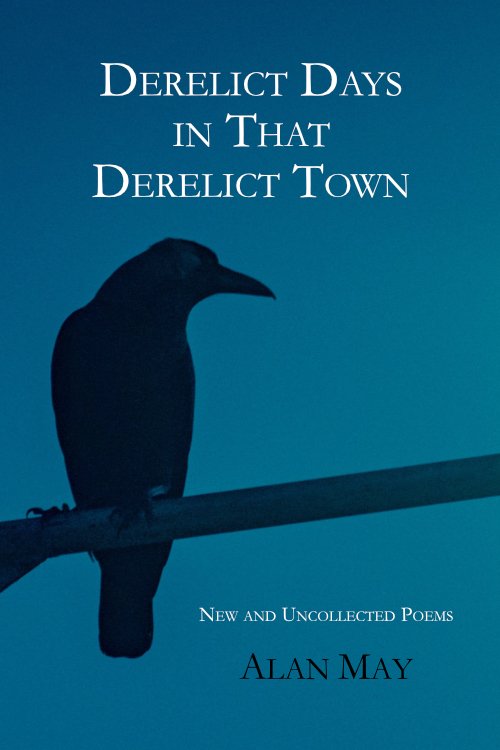
Special thanks to Alan May, Lawson McGhee librarian and host of The Beat, who invited me. Alan has a great book of poems out himself: Derelict Days in That Derelict Town: New and Uncollected Poems, published through BlazeVOX Books. I hope you’ll check it out.

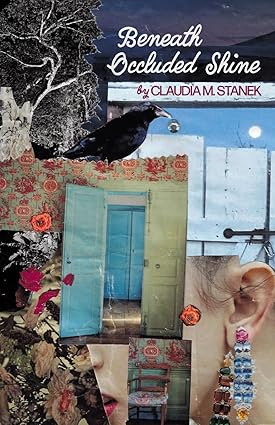
There’s another lovely book recently out that you should know about, and that’s Beneath Occluded Shine by Claudia Stanek, published by Finishing Line Press. Claudia will be celebrating an online book launch on Wednesday, April 30, 2025, at Jules’ Poetry Playhouse. I’ll also be there reading a couple of poems along with poets Gail Hosking and Catherine Faurot. The reading is at 6:00 p.m. Pacific / 9:00 p.m. Eastern. It would be so nice to see you there.

Thanks for reading. If you’re not already receiving these posts directly to your inbox, please subscribe.

Submission Calls for Writers 1/11/2025

It’s been a while, friends.

Last year, submission posts like this one fell by the wayside, and I’m sorry. When I looked back at 2024, I saw that I did not submit enough of my own work, and I realized how building and sharing these lists and my own submissions go hand in hand. So I’m trying to start 2025 off the right way by sending some of my own work out into the world.

As we move forward, I want to give some extra energy to finding new journals and magazines to recommend to you. There are so many great outlets, and there are new journals emerging all the time. I often feel overwhelmed by all these magazines I’ve never heard of. So you’ll see on this list of ten submission opportunities a few names that are new to me. I hope they are new for you also.

How do we rank these new journals or compare them to some of the ones we’re more familiar with? I don’t know that yet. Please take a look at each one to determine if it feels like a good match for your work and your publication goals.

Today was a great day for me to think about all this, as I was somewhat snowed in. I’m guessing some of the rest of you in the South and East might stuck inside, too, if not by snow then probably by these Arctic temperatures. I hope the timing is right for you to receive this list.

For those of you in Southern California, especially those directly affected by the wildfires, please know that there are so many of us heartbroken by the extreme loss that you’re experiencing. I’m praying for your safety. To anyone and everyone reading this, I wish you all the best for the new year. Happy submitting.

The 2025 Yeats Poetry Prize is a public program since 1997 of the all-volunteer WB Yeats Society of NY. Our 2025 Judge is January O’Neil who also served as last year’s judge. Poets of any age from anywhere in the world may enter through February 1, 2025. There is no limit on entries, and they can be on any topic. They must also be in English, unpublished, and no more than 60 lines in length. First prize is $1,000, second prize is $500, and two or three honorable mentions are usually awarded at the judge’s discretion. The entry fees, which help to underwrite the competition, are $15 for the first poem and $12 for each additional poem. Winners are announced in early March, and awards are presented in New York City in April. https://yeats.submittable.com/submit

Deep South Magazine accepts original fiction, short stories and shorts, nonfiction and poetry during open reading periods. For fiction and nonfiction, we will do special themed calls. We will announce a new theme sometime in 2024. For poetry, our reading period will be open through February 14, 2025. We will mainly publish poetry in April during National Poetry Month, so around 30 selections will be chosen. All submissions must have a Southern connection, whether the author lives in the South, used to live in the South, has family in the South or was inspired by a visit to the region. Poetry submissions can be up to five poems of any length. Fiction, short stories and nonfiction are limited to one work at a time and may not be longer than 3,500 words. https://deepsouthmag.com/submission-guidelines/

Beaver Magazine publishes poetry, flash fiction and nonfiction, hybrid works, art and anything else you have to offer during our open reading periods. For poetry, send 3-5 poems of any format, each beginning on a new page. We love work that plays with traditional forms and modes. We want the lyric, the narrative, and everything in between. For prose, send up to 3 flash pieces of no more than 1,000 words each (though we do prefer brevity). Creative nonfiction can include personal, research, or lyric essays as well as memoirs. Fiction can be of any genre or style. Hybrid work can be whatever you want it to be! We celebrate and yearn for work from LGBTQIA2S+ and BIPOC. Submit through February 15, 2025, for the Spring Issue. https://beavermag.org/submit/

The Santa Clara Review is a student-edited literary magazine that publishes poetry, fiction, nonfiction, and visual art. The magazine is published biannually in February and May, drawing on submissions from Santa Clara University students, faculty, and staff, as well as from writers around the nation and globe. Please submit works of fiction or nonfiction prose under 6,000 words. Please submit no more than five poems or pieces of artwork at a time. Submissions for Volume 112.2 are currently open through February 15, 2025. https://santaclarareview.com/submit

Canary is published four times a year to welcome each new season on the solstices and equinoxes. We will be open from February 1- 28 for Spring-themed work for the Spring Equinox issue due out March 21, 2025. Please submit no more than 5 poems, or essays/short stories of not more than 1500 words. We look forward to reading your work on your experience of the losses to the natural world in your home environment and the joys of that natural world that we stand to lose. https://canarylitmag.org/submissions.php

Brevity publishes well-known and emerging writers working in the extremely brief (750 words or fewer) essay form. We have featured work from Pulitzer prize winners, NEA fellows, Pushcart winners, Best American authors, and writers from India, Egypt, The Netherlands, Ireland, Spain, Malaysia, Qatar, and Japan. We have also featured many previously-unpublished authors, and take a special joy in helping to launch a new literary career. While Brevity (the magazine) publishes the finest examples of flash nonfiction, the Brevity Blog offers a place to discuss issues related to the writing of creative nonfiction. https://brevitymag.com/submissions/

Pine Hills Review seeks submissions of previously unpublished fiction, nonfiction, poetry, and visual art. We are interested in quality work, no matter the genre, form, or style. Hybrid and experimental works are especially encouraged. Poetry submissions should include no more than six poems total. Nonfiction, fiction submissions, and hybrid or cross-genre work should be no more than 3,000 words total. Our regular reading period ends April 30, 2025. https://pinehillsreview.com/submit/

The Baffler is America’s leading voice of incisive and unconventional left-wing political criticism, cultural analysis, short stories, poems, and art. Founded in 1988 by Thomas Frank and Keith White as “the journal that blunts the cutting edge,” the magazine is currently edited by Matthew Shen Goodman. Nonfiction should be submitted in pitch form (no complete manuscripts, please), consisting of two paragraphs that describe your project. Poetry and fiction are welcome; our preferred length for prose is between 2,200 and 5,000 words. https://thebaffler.com/about/submissions

Forge Literary Magazine publishes one prose piece per week selected by a rotating cast of editors. Free submissions open on the 1st of each month. If there is no free link, we’ve hit our quota. We will reopen at the top of each month, except for September and December. We prefer stories under 3,000 words but will consider up to 5,000 words. We love flash and micro! We consider previously unpublished pieces only. We are open to all genres and voices, and stories with any background, race, ethnicity, gender, sexual or personal identity from all over the world. Literary excellence is our only criteria. https://forgelitmag.submittable.com/submit

Streetlight Magazine reads year-round and typically responds to submissions within three months. Send us 3-5 unpublished poems in a single document. Please send one story at a time, 2,000 words max. We currently seek creative essays/memoirs with an emphasis on the interaction of place and one’s personal relationship to it. We also welcome guest bloggers. We’re interested in topics about the literary and visual arts as well as personal perspectives on much more. Blogs should be between 300-700 words and may be edited to fit SL format. https://streetlightmag.com/submissions/

~

Thanks for reading. Please feel free to share these opportunities with other writers. If you’re not already receiving these posts directly to your inbox, please subscribe.

~

Book Launch for Darnell Arnoult’s Incantations

Last week, I had the privilege to be part of the book launch for Darnell Arnoult’s new collection of poems, Incantations. This collection is a mesmerizing group of poems that celebrates language in unique but powerful ways. Many of the poems came out of a period of grief, but the poems are also celebratory and full of hope. They speak simultaneously to the personal and the political, addressing some of the most significant challenges of our times.

The launch took place in Hillsborough, North Carolina, at St. Matthew’s Episcopal Church as part of their Faith and Arts Series. Darnell gave a beautiful reading of her new work. The church was filled, and Purple Crow Books sold all of their copies after the reading. Alison Weiner accompanied her on the piano. And I had double duty that night, first introducing Darnell and then following up with an on-stage discussion about her work. The on-stage discussion was especially fun, and I hope an audio recording of it will be available at a later time. Until then, I want to share my introduction. It was such an honor to be part of welcoming this new book into the world, as well as to celebrate my good friend. I may have also added a little good-natured ribbing.

Welcome, and thank you all for coming out tonight to celebrate our friend Darnell Arnoult and her newest collection of poems, Incantations!

If you are here tonight, there is a good chance that you already know Darnell. Before I get too personal, allow me to properly impress you with a few of Darnell’s professional accomplishments.

Darnell is the author of the novel Sufficient Grace, and two previous collections of poems: Galaxie Wagon and What Travels With Us, and she has published stories, poems and essays in a variety of journals and anthologies.

She is the recipient of the Southern Indie Booksellers Alliance Poetry Book of the Year Award, the Weatherford Award for Appalachian Literature, the Thomas and Lillie D. Chaffin Award, and the Mary Frances Hobson Medal for Arts and Letters. In 2007 she was named Tennessee Writer of the Year by the Tennessee Writers Alliance. She holds degrees from The University of Memphis, North Carolina State University, and The University of North Carolina at Chapel Hill.

If you know Darnell, it’s likely because you have studied with Darnell, perhaps at the Table Rock Writers Workshop, the John C. Campbell Folk School, the Appalachian Writers Workshop, the Tennessee Mountain Writers annual conference, through Learning Events, the Mountain Heritage Literary Festival, or perhaps even as an undergraduate student from Lincoln Memorial University where Darnell served as Writer-in-Residence from 2010 to 2020.

Lincoln Memorial University is the place where Darnell’s and my lives began to intertwine. We co-directed the Mountain Heritage Literary Festival. And we also created and shared editing responsibilities for the literary journal drafthorse, a journal dedicated to writing about labor and occupation. Darnell and I worked together, often getting each other in and out of trouble, and we became wonderful friends in the process.

I cannot list all of the pieces of good fortune that have come to me because of Darnell, mostly because Darnell told me to do something—often something I didn’t want to do or didn’t have faith that I could do. There are too many of these instances to list, but I will tell you that when I decided to apply to MFA programs, Darnell decided I would go to Bennington College’s low residency program in Vermont. I, on the other hand, lacked the ability to imagine being accepted in that program. I didn’t even have any intention of trying. But if you know Darnell, you know that once she’s made up her mind, you might as well agree or get out of the way. It is no exaggeration to tell you that the only reason I applied to Bennington was to shut Darnell up. As she seemed to know in advance, my life changed in innumerable ways because of that program, all for the better.

Darnell is the person who has encouraged me the most as a writer and certainly as a poet. Darnell probably knows my poetry better than anyone, and she has probably influenced my poetry more than anyone. A lot of my early poems originated in workshops Darnell taught. She was the first person who thought I had enough poetry to form my first book, and she largely arranged the order of that book, which in itself was another incredible lesson in learning how to shape individual pieces into a larger narrative. She has seen so many first and early drafts that it’s a wonder she still opens my emails.

In the 10 years that Darnell taught at LMU and lived in Cumberland Gap, Tennessee, my life was richer, and a lot more exciting. In her absence, there are fewer people asking me if I have seen Darnell, if I have any idea where Darnell is, if I can find her, please, help, she’s not answering her phone, she never answers her phone! Why doesn’t she ever answer her phone? There are fewer reasons to rush to the emergency room. There are fewer visits from the fire department. In short, there is much less excitement, and my life is poorer for her absence.

To answer the question as to why Darnell rarely ever answers her phone, I can report that she may have turned the ringer off two days earlier and can’t find the phone, she may have left her phone at home or at someone else’s home, or any number of other places along the way, the battery may be dead, or more likely, she is just already on the other line with someone else who needs to talk to her just as badly as you may need to talk to her. The number of people who rely on Darnell is uncountable. The number of people whose lives have been enriched by Darnell is legion.

I would be remiss to not acknowledge that the 10 years in which Darnell lived in Cumberland Gap were not completely happy. For Darnell, I know that time period is framed by her husband William’s recurring illnesses, his battle with cancer, and his passing in 2020. The poems in Incantations were born from that grief. The deepest kinds of grief. Grief that comes, as she would describe, from worlds burning, from death that dances and glides, from widowhood with its slaughtered and emptied heart.

And yet, within these poems, Darnell also rejoices in the curative properties of language, how it can bewitch and rescue us from despair. When you look at the beautiful cover of Darnell’s new book, you will see an image of fire and light bursting into the darkness. As that image suggests, these poems tell us that there is salvation in the darkness. There is salvation in these poems that are also charms for remembrance, charms for protection and rebirth, and always charms for love, no matter how it may shift its shape.

Join me in welcoming Darnell to the stage as we celebrate her new collection of poems, Incantations.

~

You can read a sample of poems from Incantations online at Cutleaf. Or you can order a copy through Purple Crow Books, directly from Madville Publishing, from your own local bookstore or anywhere books are sold. (Photos courtesy of Donna Campbell and Kelly March.)

~

In case you missed it… check out my conversation with David Wesley Williams about his novel Everybody Knows.

~

If you’re not already receiving these posts directly to your inbox, please subscribe.

Honesty is Bravery Enough: Conversation with David Wesley Williams

Last October, as I was preparing to drive to Nashville for the Southern Festival of Books, my friend Patti Meredith told me to keep an eye out for David Wesley Williams. I found him quickly enough, signing books after his panel with George Singleton. We only had a brief time to chat, but I picked up his new novel, Everybody Knows, and asked him to sign it, not guessing that I would not have time to read it until the new year rolled around. But what a way to say goodbye to 2023 and hello to 2024.

Everybody Knows is a post-apocalyptic satire, but it’s also incredibly beautiful and smart, and a real pleasure to read. As far as apocalypses go, floating across Tennessee on a river boat is not a bad way to go. And it’s always a joy to read the work of an author who clearly enjoys language and is a master at putting words through their paces.

In addition to Everybody Knows, David Wesley Williams is the author of the novel Long Gone Daddies. His short fiction has been featured in Oxford American, Akashic Books’ Memphis Noir, Harper Perennial’s Forty Stories, and journals such as The Pinch and The Common. He spent thirty-five years as a reporter and editor, most of them in Memphis, where he still lives. David agreed to answer a few questions about his writing, his love of music, and the great state of Tennessee.

DL: As a fellow Tennessean, I have to tell you that I thoroughly enjoyed watching you destroy our state. Was that destruction as fun for you to write? And will you talk about how this narrative started for you? Would you say the tone of this book, especially the satirical nature, is similar or different from your first novel and your other writings?

DWW: I didn’t wish destruction upon Tennessee—really!—but I did relish the idea of Memphis, City on the Bluff, being the last hope and refuge for the state. Because as a long-time Memphian I know the ill will—in some cases, the outright hatred—a lot of Tennesseans hold toward Memphis. I suspect some Tennesseans would rather take their chances with a flood than come here.

The novel was written over several years and revised many times, but it always began with the couple on their porch, watching the rain and the coming flood, and one saying, “It’s not the end of the world,” and the other saying, “I think the end of the world’s been called on account of rain.” Later, it actually became a book about the end of the world.

I’d never written satire—or intended to. My first novel, Long Gone Daddies (2013), was about three generations of musicians and the family guitar they handed down. But with Everybody Knows, I was writing at a time when it was impossible to ignore what was going on with the country, the world, the planet: climate change, issues of race, religion, public health, gun violence, crime and punishment, the political divide. Everything was (and still is) so fraught. I felt like I had to write about those things, but in a way that made sense for me. In a way that helped me cope. Writing angry doesn’t work for me. Humor does. So I wrote a self-described “Southern Gothic, mock-apocalyptic, shrunken-epic satire.”

DL: Music is a driving engine in Everybody Knows. Even the title comes from an O.V. Wright song, which I’m so very glad to know now because of your book. It’s clear that you have a passion for all kinds of music, as well as an academic and historical understanding of music. How did you come to see music and particularly the state of country music and Music City as a way to talk about culture and politics?

DWW: I love music, particularly Southern music, which shows up in pretty much everything I write. Music gives Memphis so much of its cultural identity, and also some of its finest moments as a city—white and Black Memphians, working together, to create sublime art.

Also, I think Memphis musicians have always sought success, but on their terms. You can’t easily bend them to the will of the commercial gods. It’s about the song, not a gold record. Sure, we had a band that called itself Big Star, but it didn’t actually sell many records.

Nashville is a whole other place. It’s about business there. How can I say this? I hate modern country music. And when I say modern, I think they’ve been ruining country music in Nashville—turning it to pop—since at least Patsy Cline.

All that said, there’s a lot of Nashville music I love, past and present. One of the characters in Everybody Knows names his boat after Emmylou Harris. Gillian Welch and David Rawlings are on a short list of my favorite performers, alongside the likes of Bob Dylan, Neil Young and—another Nashville favorite—John Prine. Classic country is matchless music. And the Ryman is a national treasure. So there. I don’t hate Nashville. I don’t.

DL: In addition to using humor, irony, and exaggeration to make your readers laugh, you touch on some important topics, especially about race. I took note of how Emmett Till and George Floyd’s deaths were both touchstones within your narrative. Do you have advice for other writers about how to address big cultural moments in fiction?

DWW: I think it really comes down to one thing: Be honest. Say what you believe, say what you feel, say what needs to be said, by you, in the moment. Don’t pander, don’t hedge, don’t calculate. I guess I could add “be brave,” but honesty is bravery enough.

Now, all this may be easy for me to say, because not many people are reading what I write. Everybody Knows was published by a small press and not widely reviewed—but trust me, dear reader, there’s some wild stuff in there, hiding in plain sight!

DL: I’m always interested in the way we identify ourselves with location. You live in Western Tennessee, but you’re originally from Kentucky, as are several important characters in your novel. How does place inform your identity, and impact your writing?

DWW: I think place is everything in fiction. I tend to think of place as a character. Certainly Memphis is a character in most of my stories and novels. And what a character it is—“the old Delta synonym for pleasure, trouble, and shame,” as Eudora Welty called it in one of her books.

Kentucky keeps showing up in my books, in small ways. I think I’m working up to a full Kentucky novel, inspired by my hometown, Maysville—another character worthy of fiction. Daniel Boone lived there. Casey Stengel played ball there. It was Rosemary Clooney’s hometown.

DL: I often ask writers about the process of submitting their manuscripts for publication. Can you describe the time between writing and publishing Everybody Knows? How did you connect with Jackleg Press?

DWW: I queried some 60 agents with the first version of the book, in 2019. The majority didn’t respond. It was already a book about the country unraveling, so it felt natural to revise in 2020 amid the pandemic and the George Floyd murder and the country on fire. I started submitting again, this time with a query letter that began, “What would Kurt Vonnegut write about these times and those ahead for America, if he were alive today — and if he were Southern?”

I sent to a combination of agents and publishers—another 60 or so. The response was the same. They didn’t reject it as much as ignore it. They weren’t even reading it. Which was fine—I just needed one person to give it a chance. Then in early August 2021, I came across a small publisher called JackLeg Press. They asked to read the full manuscript, loved it, and within a couple of weeks I had a signed contract. They’ve been great partners, and we’re looking forward to another novel together. More news on that soon, hopefully.

I’m so grateful to David Wesley Williams for answering these questions. If you haven’t already read Everybody Knows, be sure to order your copy, available at bookshop.org or wherever books are sold.

~

In case you missed it… check out my conversation with Georgann Eubanks, where we discussed her travels across North Carolina celebrating some of the state’s most unique foodways in The Month of Their Ripening.

~

If you’re not already receiving these posts directly to your inbox, please subscribe.

Submission Calls for Writers 7/19/2023

Perhaps it’s the heat, but I can’t quite fathom how we are already steaming in the July sun. July. How did it get here so soon? Not only is summer at least half over, so too is the whole year. That makes it a good time to re-evaluate your goals for your writing and submitting? Do you have any ongoing projects? Are you moving them forward or feeling stuck? Are you submitting your work to journals and magazines?

When I first began to send my stories and poems out to literary journals, my friend Darnell Arnoult encouraged me and my writing group to give ourselves a goal, not for acceptances, but for rejections. That first year, my goal was to receive 50 rejections. Making a kind of game out of it took the sting away every time an editor rejected my work. But the surprise was that I agonized less over trying bigger, higher-tiered journals. I was only aiming for a rejection, but I got some surprise acceptances along the way.

Even though the year is half over, it’s not too late to set some goals for your writing. To that end, here are ten submission opportunities for writers plus a bonus if you will go back and see my recent conversation with Andy Fogle who shared that Salvation South is also open for your submissions. Good luck!

Granum Foundation Prize & Granum Foundation Translation Prize The Granum Foundation Prize will be awarded annually to help U.S.-based writers complete substantive literary works—such as poetry books, essay or short story collections, novels, and memoirs—or to help launch newly published works. One winner will be awarded $5,000. Up to three finalists will be awarded $500 or more. Additionally, the Granum Foundation Translation Prize will be awarded to support the completion of a work translated into English by a U.S.-based writer. One winner will receive $1,500 or more. Funding from both prizes can be used to provide a writer with the tools, time, and freedom to help ensure their success. For example, resources may be used to cover basic needs, equipment purchases, mentorship, or editing services. Competitive applicants will be able to present a compelling project with a reasonable timeline for completion. They also should be able to demonstrate a record of commitment to the literary arts. There is no fee to apply. Applications close on August 1, 2024. https://www.granumfoundation.org/granum-prize

Fried Chicken & Coffee FCAC is an ezine/blog edited by Rusty Barnes, mostly interested in crime fiction, rural, working-class and Appalachian concerns. FCAC accepts short stories, poems and essays. Rusty says: “Send me rural, funky, dirty stories about churchgoing women who never sin. I would love to see more stories about women. Get to the grit, get to the love, show me the scars, and take Harry Crews to heart: ‘Blood, bone, and nerve, that’s fiction. Show me the stuff that cuts to the quick.’” There are no word limits. To submit, send an email to rusty (dot) barnes (at) gmail (dot) com with the words FCAC and SUBMISSION in the subject line. https://friedchickenandcoffee.com/manifesto/submissions/

Lanternfish Press We are seeking novella-length manuscripts between 20K and 40K words that fall in the mist-wreathed borderlands between literary and speculative fiction. In particular, we are interested in climate fiction; regional American Gothic fiction—Midwestern, in the vein of These Bones by Kayla Chenault; Southern, like The Salt Fields by Stacy D. Flood; or Alaskan Gothic, or Rust Belt Gothic—whatever kind of luxuriant and atmospheric decay floats your boat; well-researched historical fiction that breathes life into its material and cultural milieu; queer monsters for readers who enjoyed Carmilla or Elegy for the Undead; fiction that can claim as a comp title the novel Wednesday Addams was typing on her typewriter in the attic. Deadline to submit is July 31, 2023. https://lanternfishpress.com/submissions

Orion We’re excited to read your pitches for our upcoming Summer 2024 issue. This time we will specifically be looking to read pitches for essays and reporting about animals and floods. How is marine life impacted by water reaching the shore? What are the interesting ways you’ve observed land animals responding to water? We’re looking for pitches for stories that would be 3,000 to 4,000 words in length for an issue of Orion looking with fresh eyes at the floods around us. Please try to keep pitches to 500 words or so. https://orion.submittable.com/submit/267484/pitches-for-summer-2024-issue-on-floods

Necessary Fiction This October, we want to be scared. We want to feel unsettled. We want to go to sleep with dread knotted in our stomachs. Send us your spooky tales, your uncanny narratives, your haunted places, your tortured monsters, and your Gothic twists. We accept unpublished fiction up to 3,000 words only. Deadline to submit: July 31, 2023. https://necessaryfiction.submittable.com/submit/200451/special-call-october-stories

Galileo Press  Galileo Press is open for submissions of full-length collections of poems, essays, stories, as well as novellas, novels, memoirs, or hybrids (with exception to 4-colour art / text hybrids).  Please indicate in the title of your submission which genre you feel best describes it. Galileo hopes to publish 2-4 selections while also reserving a few manuscripts for development. A small stipend of $200-$500 is provided, along with copies and standard royalties. A few elements we consider are a confident, appealing voice; the thematic cohesiveness and the emotional range and maturity; vivid imagery and the balance of abstract to concrete imagery; deft handling of highly charged emotion; the capacity to surprise; use of wit, humor, and self-implication; the elastic syntax, pace, and music; and the choice and use of extended metaphor, skillfully juxtaposing the micro and the macro. There is an $18 submission fee. Submissions are open through August 1, 2023. https://freegalileo.com/submissions/

Short Story, Long We are accepting short stories, 2k-8k words long (with the 3,000-5,500 range being our real sweet spot). What are we looking for? Honestly, best indicator is to read a story or two we’ve already published. Second best indicator is to generally be familiar with Editor Aaron Burch’s taste and what he’s published on HAD, and Hobart before that. Every published story will be paired with original art, with both the writer and artist receiving $100. Submissions are open until August 1, 2023. https://ashortstorylong.submittable.com/submit

Kitchen Table Quarterly Kitchen Table Quarterly is a journal preoccupied with history- cultural, political, geographical, personal, and how each interacts with the other to mold our experience. Adolescent blunders, dental records, the archaic origins of long-held or long-lost traditions— we want to know all of it. We are looking for work that spills secrets and wipes the dust off of old memories. Submit no more than five poems (with a maximum of 10 pages). For creative nonfiction, submit a stand-alone piece of up to 3000 words. While we accept all forms of creative nonfiction, we typically prefer essays. Submissions are open until August 1, 2023. https://www.kitchentablequarterly.org/submit

Salt Hill Salt Hill publishes poetry, prose, translations, essays, interviews, and artwork. Please submit no more than five poems at a time. For prose, please do not submit works of more than 30 pages, double-spaced.  We accept multiple flash pieces, so long as their combined length does not exceed 30 pages. We accept nonfiction and art submissions year-round. Deadline for all other submissions is September 13, 2023. https://salthill.submittable.com/submit

Potomac Review Rooted in the nation’s capital’s suburbs, Potomac Review is the antidote to the scripted republic that surrounds it. We seek literature from emerging as well as established writers around the globe to facilitate literary conversation. We accept submissions through October 15, 2023. We’ll read stories and essays of any size, though typically we find it difficult to make room for works that run longer than 7,500 words. Please submit up to five poems. http://mcblogs.montgomerycollege.edu/potomacreview/submission-guidelines/

~

Thanks for reading. Please feel free to share these opportunities with other writers. 

~

In case you missed it… I had the opportunity earlier this month to celebrate place poems alongside P. Scott Cunningham and J.D. Isip, as part of Emerge Journal’s Be Well Reading Series. And earlier this summer, I had a wonderful conversation with Patricia Hudson about her novel Traces, which gives voice to Rebecca Boone and her daughters.

~

If you’re not already receiving these posts directly to your inbox, please subscribe.

Conversation with Andy Fogle

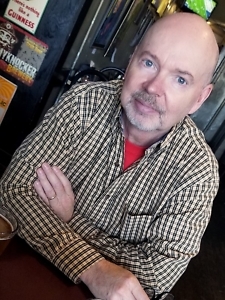
In 2021, founding editor-in-chief of The Bitter Southerner Chuck Reece and his wife Stacy Reece began publishing Salvation South. In the publication’s opening salvo, Reece famously said, “I’m not bitter anymore. What I am is hopeful.”  According to Salvation South’s guidelines, they accept stories, in all mediums, including journalism, essays, fiction, photography, filmmaking, and poetry. I saved poetry for the end of that list because Andy Fogle is Salvation South’s new poetry editor, and he’s looking to publish work by established, emerging and new poets. Andy agreed to share some insight into exactly what he’s looking for in terms of submissions. If you’re reading this, Andy (and I) hope you will consider sending Salvation South some of your own work.

DL: Congrats on your new role as poetry editor at Salvation South. I love the magazine’s origin story, and how Chuck and Stacy Reece have said to “think of Salvation South as a big old house party—filled with people who want to celebrate Southern culture and people who are searching for new reasons to be hopeful about the South.” Can you talk about how that ethos pertains to the kind of poetry you hope to curate for the magazine?

AF: Thank you much. I’ve been wanting to get back into doing something like this for a long time, and, among my various professional duties in this world, it’s really one of my favorite things to do.

To the house party metaphor and poetry: I want to cast as wide a net as I possibly can, so just come on in, at least for a cup of coffee. Ever since 10th grade when I realized I wanted to devote my life to the arts, I’ve found things to like all over the artistic map, both across and within genres, and they all swap around. In college and grad school, I ran kind of a punk literary zine called 5th Gear, and while I definitely made some mistakes, I also think I got an underground reputation for being seriously eclectic. You could read all kinds of crazy-different and interesting stuff in 5th Gear. I’m still proud of that, I still believe in that, and I still aim to act like that. I have an MFA; I’ve participated in (and won 2) poetry slams; I’ve taught in all kinds of schools; I’ve been into way-out experimental stuff, formal stuff, middle-of-the-road stuff, street stuff, uncategorizable stuff…I believe that the best poetry has an aesthetic energy and a social function. I believe in the beauty of both, the magic of many, the awe of all. If I can help present a consistent mosaic of diverse voices, I’m a happy dude.

DL: The first time that I became familiar with your work and your involvement at Salvation South was when I read your wonderful interview with the poet Annie Woodford. I loved this interview for a lot of reasons but in part because Woodford’s poetry and your interview with her takes a hard and honest look at her corner of the South. It shows that while Salvation South’s point of view is hopeful, it’s also very focused on narratives that seek to accurately depict the places where we live.

AF: Annie is my newest living poetry hero, for a bunch of reasons I tried to articulate in that piece. Part of it is what look you mention, which is hard, honest, and hopeful too, I think. Salvation South’s general guidelines say we’re looking for “stories, in all mediums, that reckon with the history and celebrate the culture of the American South.” We publish pieces that do one of those things, but I savor those that do both. Celebration should not be blind, and reckoning is kin to rapture. I think being able to face the hard things is a reason for hope, and I think we can even look for hope in the gut-wrenching stuff, not just despite it. Maybe struggling with history is a form of celebration; maybe celebration is predicated on some form of struggle. When we shine a light on what’s been tucked away in the corners of our consciousness, it’s uncomfortable, it’s uncertain, and it’s unpredictable—but remember it’s still light that is the tool.

DL: Let’s talk about the mechanics of the submission process. Are you looking for individual poems or groups of poems? Do you have preferences for style, length, etc.? 

AF: First of all, it’s free to submit. I like to see 3-5 poems rather than a single poem. It gives me a broader idea of a poet’s style(s), concerns, and abilities, and it also gives me more stuff to try to build a fire with. Obviously with a single poem, that’s your only shot, and I’m getting a very restricted view of your work; with at least a trio, there’s a higher probability of me finding something to encourage, which is what I want to do. Here’s something unusual and, I hope, useful: I write individualized comments in my responses with some regularity, I guess because I’m a teacher and I’m glad to strike up conversations and correspondence with poets.

Any length and any style, but I should say that I think branches and roots are related. It’s only a good thing when people have an idea of what’s been going on in the last few decades of poetry. But aside from that, if you love language, you’re probably a poet, at some level. And if you also have something…not necessarily to “say,” but if you have something intellectual, emotional, and/or sensual for readers to witness through that love of language—if you’ve got something to wrestle with in the joy of language—then send it on. I read pretty much all the time, year-round, and often respond to folks within a week.

DL: Should submitted work speak explicitly about the South?  

AF: We generally do need to see its relevance to the South, be that addressing its past (which is still present), celebrating its culture, or something else. There have been a couple of poems I’ve almost accepted, but then realized that at least geographically, culturally, or thematically, it could’ve been written by anyone from anywhere, and any kind of Southern relevance just wasn’t any part of the equation. Good poems, but not quite a good fit (I try to let people know that too, just to be clear).  

I’ll also say that it feels like Salvation South has become sort of a refuge for Southern storytellers of all types, whether their stories come out as prose or verse. We still love reported journalism, but we also love beautifully written personal essays that address all things Southern—identity, politics, history, culture, whatever. It would be nice to see more fiction submissions—we don’t get very many short stories.

(Read Patti Meredith’s short story Sand Dollar in Salvation South here.)

DL: Although you’re originally from Virginia, you now live in upstate New York. Has living outside of the region allowed you to view the South in a new light?

AF: If anything, it’s made me defensive. From what I’ve experienced in 18 years of upstate New York, there is, at best, a slowly-fading ignorance about the South. Too many people just blindly lean right into the stereotypes, some of which, to an extent, we’ve unfortunately earned. Living in the North has probably deepened some of my distaste for the stubborn isolationism that persists—although neither region is clean in that regard. Sometimes I do read news about something in the South and think, “What the hell is wrong with y’all?” And then the next day I’ll be calling out some of my high school students, asking why they snicker at the word “Alabama” when I mention my aunt lives there. Ignorance doesn’t use a map.

But look, then again, I recently came home—which is a complicated word for me—to visit my dad, and we took some stuff to the dump, and I very quickly wound up having a brief but detailed and familiar-feeling conversation with the attendant guy—about my compression sock, and how I’d pulled a calf muscle, and then they found two blood clots in there—and he’s friendly as can be, asking follow-up questions and everything. Guess what happens a few days later when my dad and I go to the dump with another load of stuff? Same thing with the same guy. We’re just talking. And it’s not at all weird. I love that. I feel like I’m home—at the dump, talking with the attendant about compression socks. My chest just swelled with love for that little convergence. I think I appreciate that kind of thing more at this point in my life, since I see that it happens way less often up where I live now.

DL: You’re a poet in your own right. Can you talk about some of your current or upcoming projects?

AF: I have my second full-length book of poems coming out in November with Main Street Rag Publishing out of Charlotte. It’s called Mother Countries. It’s mostly about my mom, divorce, death, Virginia, race, and a little grace. It’s not always pretty. A hard book for me, one I don’t expect to get comfortable with anytime soon. It took me way too long to address that particular knot of issues in my work, but I needed to. And I’m about 2/3 done with a long, multi-dimensional book of poems related to abolitionist John Brown, tentatively called Cutting Light. With a little luck, I’ll start sending that around sometime in the fall. I also, when time permits, co-translate an Egyptian poet named Farouk Goweda with my friend Walid Abdallah. We have a chapbook out last summer called Arc and Seam from Finishing Line in Georgetown, Kentucky, but we’re hoping to eventually develop a full-length of his work.

Many thanks to Salvation South and particularly to Andy Fogle for answering my questions.

~

If you missed it, I had the opportunity last week to read some poems about place alongside P. Scott Cunningham and J.D. Isip in Emerge Journal’s Be Well Reading Series. It was such a fund reading. You can watch it here. Check back next week when I plan to post a new list of summer submission opportunities.

A Celebration of Place Poems and More

Tonight, July 6th

If you’ve read almost any of my writing, you won’t be surprised that place is a central element in both my prose and poetry. So I couldn’t be more excited to be part of tonight’s Celebration of Place Poems, part of the Be Well Reading Series from ELJ Editions & Redacted Books. I’ll be reading alongside J.D. Isip and P. Scott Cunningham.

Tonight’s celebration of place poems begins at 7:00 p.m. EDT. The event is online, and it would be lovely to see you there. The event is free, but you must register in advance through Eventbright: https://www.eventbrite.com/e/be-well-reading-series-a-celebration-of-place-poems-tickets-666444412177

Sylva, North Carolina, on July 8th

If you’re in western North Carolina, please come out to the fantastic City Lights Bookstore in Sylva, North Carolina, on Saturday, July 8th at 3:00 p.m. EDT. I feel so lucky to be able to return to City Lights, one of my favorite book stores and one of my favorite places to read. And if that wasn’t enough, there’s more. I’ll be there with my friend Patti Frye Meredith who will be reading from her novel South of Heaven, a great book about a familiarly-dysfunctional family in a small Southern town. (You can read my past conversation with Patti about her book.) South of Heaven was so much fun to read, and it’s always a joy to be in Patti’s company. We both would love the chance to see you in person at City Lights!

Tamp in Chapter 16 & Change Seven

Finally, I want to say how grateful I am for the writers who give their time to reviewing other writers’ books. And especially those who review my book! It was great to see Tamp receive some love in the past few weeks, and I truly appreciate the generous views they’ve taken to my work.

Emily Choate at Chapter 16 said, “…each poem stretches taut between our perception of the material world around us and the ineffable, inescapable pull of a deeper world.”

And Ace Boggess at Change Seven said, “Tamp is not a book to be entered lightly. The poems have been crafted with the grave digger’s precision.”

~

Thanks also to all of you who subscribe to this newsletter, and for all of the ways you’ve already shown support for me and Tamp! Stay tuned for new posts in the coming weeks as I share a new list of summer submission opportunities, as well as my recent conversation with Salvation South‘s new poetry editor.

Submission Calls for Writers 6/15/2023

While I was putting together today’s list of submission opportunities, I discovered that Catamaran Literary Reader is charging $8 for general submissions. That’s insane. My personal philosophy is to never pay this much to submit my work. I’ve been involved with numerous literary journals and organizations over the years, and I understand all of the reasons to charge reading fees and generate income. I’m not opposed to the idea. But $8 is obscene even in a time plagued with inflation. Back to my own philosophy on the matter: There are too many good journals who don’t charge at all or who only charge a nominal fee. Submitting work can be expensive, and I try to take that into account when I compile submission lists. You’ll notice that some of today’s opportunities do come along with application or submission fees. Again, I’m not opposed to the concept. The key, I believe, is to make sure the benefit is proportionate to the risk and/or reward. In that spirit, here are 10 opportunities I recommend. Good luck!

Cimarron Review We accept submissions year-round in poetry, fiction, nonfiction, and art. Please include a cover letter with your submission. Please send 3-6 poems, one piece of fiction, or one piece of nonfiction. Please only submit to one genre at a time. Address all work to the appropriate editor. https://cimarronreview.com/submit/

Southeast Review The Southeast Review publishes poetry, literary fiction, creative nonfiction, and art in each biannual issue as well as on SER Online, in addition to online book reviews and interviews. We pride ourselves on presenting emerging writers alongside well-established ones. Please submit one double-spaced short story of up to 7500 words. Please submit no more than 5 single-spaced poems at a time, with a maximum of 15  pages per total submission. Place all poems in one document. https://www.southeastreview.org/general-submissions

32 Poems We welcome unsolicited poetry year round and accept simultaneous submissions.  As a rule we publish shorter poems that fit on a single page (about 32 lines), though we sometimes make exceptions to accommodate remarkable work that runs a little longer.  $3 submission fee. http://www.32poems.com/submission-guidelines

Berkeley Fiction Review Berkeley Fiction Review accepts short fiction, sudden fiction, comics, and art submissions. We look for innovative and reflective short fiction from new and emerging writers across all genres that play with form and content, as well as traditionally constructed stories with fresh voices and original ideas that say something new or bring nuance and perspective to an ongoing cultural conversation. https://berkeleyfictionreview.org/submit/

Juked There are no limits on word count for online fiction or nonfiction—we like narratives and essays of all sizes, so long as the colors fit. For our print issue, we accept prose submissions of at least 2,500 words. For poetry, we are looking for long poems (four pages or longer) or sequences of two or more linked poems. Submit a maximum of five poems. We read year-round. http://www.juked.com/info/submit.asp

Key West Literary Seminar Emerging Writer Awards The Cecelia Joyce Johnson Award, Scotti Merrill Award, and Marianne Russo Award recognize and support writers who possess exceptional talent and demonstrate potential for lasting literary careers. Each award is tailored to a particular literary form. The Merrill Award recognizes a poet, while fiction writers may apply for either the Johnson Award (for a short story) or the Russo Award (for a novel-in-progress). Winners of the 2024 Emerging Writer Awards will receive full tuition support for our January 2024 Seminar and Writers’ Workshop Program, round-trip airfare, lodging, a $500 honorarium, and the opportunity to appear on stage during the Seminar. There is a $12 application fee. Deadline is June 30, 2023. https://www.kwls.org/awards/emerging-writer-awards/

Rhino Poetry Rhino looks for the best-unpublished poems, translations, and flash fiction/nonfiction by local, national, and international writers. We welcome all styles of writing, particularly that which is well-crafted, uses language lovingly and surprisingly, and feels daring or quietly powerful. General submissions are open through June 30, 2023. https://rhinopoetry.org/general-submissions

Muzzle Magazine Muzzle publishes poetry, interviews, and book reviews. We are actively seeking submissions in poetry and are also open to queries about reviews and interviews. Please send 3-5 poems at a time. Include all poems in one DOC or PDF file. Make sure that your name does not appear anywhere in the document or submission title; our editors like to view submissions blindly. We are open from June 15 through July 15, 2023. http://www.muzzlemagazine.com/submissions.html

Sundress Publications Call for Full-Length Poetry Manuscripts Sundress Publications is open for submissions of full-length poetry manuscripts. All authors are welcome to submit qualifying manuscripts through August 31, 2023, but we especially welcome authors from marginalized and underrepresented communities. We’re looking for manuscripts of forty-eight to eighty (48-80) single-spaced pages; front matter is excluded from page count. Individual pieces or selections may have been previously published in anthologies, chapbooks, print journals, online journals, etc., but cannot have appeared in any full-length collection, including self-published collections. Single-author and collaborative author manuscripts will be considered. There is a $15 reading fee per manuscript, but the fee will be waived for entrants who purchase or pre-order any Sundress title or broadside. http://www.sundresspublications.com/fulllength/2023/06/sundress-opens-for-full-length-poetry-manuscripts/

Ploughshares We accept fiction and nonfiction that is less than 7,500 words. Excerpts of longer works are welcome if self-contained. Submit 1-5 pages of poetry at a time with each poem beginning on a new page. We accept submissions to the journal from June 1, 2023, to January 15, 2024. There is a $3 submission fee. https://www.pshares.org/submit/journal/guidelines

Thanks for reading. Please feel free to share these opportunities with other writers. 

~

In case you missed it… I had a wonderful conversation with Patricia Hudson about her novel Traces, which gives voice to Rebecca Boone and her daughters.

~

If you’re not already receiving these posts directly to your inbox, please subscribe.

~

Martin Amis’s “Oktober”

You may have seen that the writer Martin Amis died last week. I’ve never read any of Amis’s novels, but on hearing the news, I immediately recalled Amis’s short story ”Oktober,” a story that has lingered in my memory because of how much I have admired it ever since the first time I read it 7 or 8 years ago.

I’ve seen this story criticized as “non-fiction-ish” and “lightly fictionalized.” It doesn’t matter to me how much Amis heavily drew from his own experience and observations, as if there’s only a certain amount that’s okay. Rather, this story should be held up as an example of how we can fictionalize our own experiences to find deeper, emotional meaning on the page. Perhaps one reason this story speaks to me is because it’s archetypal in that it portrays a character on a journey, and, as Amis said:

“Even the dullest journey resembles a short story: beginning, middle, end, with the traveler displaced and, we hope, alerted.”

I admire this story for many reasons, most notably because it’s such a well-executed political story. It addresses world events on both the largest and smallest scales. In this case, the story centers on an Englishman in Munich during Oktoberfest, and more importantly, during an influx of Middle Eastern refugee movement. What the narrator witnesses is framed both by literature (Vladimir Nabokov & Thomas Wolfe) and history (Russian refugees in 1917 & German refugees following World War II).

The story’s refugee thread holds continued relevance in light of the migrations being politicized in the United States, centered around the expiration of Title 42.

One of the characters in “Oktober,” Bernhardt, is Iranian-German. He says about the migrants: “You know, they won’t stop coming. They pay large sums of money to risk their lives crossing the sea and then they walk across Europe. They walk across Europe. A few policemen and a stretch of barbed wire can’t keep them out. And there are millions more where they came from. This is going to go on for years. And they won’t stop coming.”

There are also mothers of various types appearing on virtually every page of “Oktober.” And in regard to the mothers that Amis portrays here, I would mention that one thing I admire about this story is how tightly he weaves all the threads of the story. It may not always seem so because the language is conversational, but everything seems to serve a purpose. Everything is connected. Meanwhile, the story is not so economical that it feels austere or lacking. It feels rather sprawling instead.

Amis received criticism during the last several years for some sloppy comments he made about terrorism and extremism. Some of these comments are not so far from those of Geoffrey, a British businessman in “Oktober” who has a less than welcoming attitude towards migrants. Geoffrey is also the character who brings the most shock value to the story. So while he is not a likeable character, he’s incredibly dramatic to follow.

I don’t know if I’ll ever get around to reading any of Amis’s better known works, but it was a pleasure to revisit this story and to remember all of the reasons I admired it in the first place. You can read Martin Amis’s short story, “Oktober,” online at The New Yorker: https://www.newyorker.com/magazine/2015/12/07/oktober. And I hope you will.

~

Thanks for reading. If you’re not already receiving these posts directly to your inbox, please subscribe.
~

In case you missed it… check out this month’s list of Submission Calls for Writers, and my conversation with Erika Nichols-Frazer, where we discussed my poetry collection Tamp and her memoir Feed Me, hosted by Birch Bark Editing.

Submission Calls for Writers 5/11/2023

I’ve had a lot of fun this last month as my new collection, Tamp, has found its way into readers’ hands. Thanks to all of you who have ordered the book, and extra thanks to those of you who’ve reached out to let me know what you think about the poems. Just as the days are growing warmer and longer, I’m very aware of how much I hope to accomplish this summer. I have several writing projects that I want to move forward in at least some way. And there also has to be time set aside to submitting our work. To that purpose, I offer this list of one dozen submission opportunities. It’s tempting to pretend most journals are taking the summer off, and maybe we should take it off, too. But neither is exactly true. A lot of great journals, like these 12, are open right now, and would love to read whatever you’ve been writing. Good luck!

Exacting Clam Exacting Clam is an online and in print quarterly journal from Sagging Meniscus Press, publishing short fiction, poetry, book, art and music reviews, essays, interviews, and visual art/illustrations. https://www.exactingclam.com/submit/

Florida Review & Aquifer: The Florida Review Online We are looking for innovative, luxuriant, insightful human stories—and for things that might surprise us. Please submit no more than one piece of fiction, nonfiction, graphic narrative, review, or digital story at a time. Poets and visual artists may submit up to (but no more than) five poems or artworks as a single submission. We charge a $2 or $3 submission fee depending on category. https://floridareview.submittable.com/submit

Pithead Chapel Pithead Chapel electronically publishes art, literary fiction, nonfiction, and prose poetry monthly. At present, we only accept submissions under 4,000 words. https://pitheadchapel.com/submission-guidelines/

Tipton Poetry Journal The Tipton Poetry Journal is published quarterly both in print and an online archive. The Tipton Poetry Journal publishes about 35 poems each. Poems with the best chance for acceptance are quality free verse which evokes a shared sense of common humanity. The Tipton Poetry Journal is published in Indiana, so themes with a regional focus are encouraged. Submissions are read year-round. http://tiptonpoetryjournal.com/submission.html

Waxwing We read submissions of poetry, short fiction, and literary essays Sept 1 to May 1; translations of poetry and literary prose are read year-round. Each issue features approximately thirteen poets, six prose writers, and six authors in translation. Poets should send one to five poems, and prose writers one story, essay, novella, or novel chapter (or up to three short-short stories or micro-essays). https://waxwing.submittable.com/submit

Qu Qu is a literary journal, published by the MFA program at Queens University of Charlotte. The Qu editorial staff is comprised of current students. We publish fiction, poetry, essays and script excerpts of outstanding quality. Payment upon publication is $100 per prose piece and $50 per poem. Next reading period opens May 15th, 2023. http://www.qulitmag.com/submit/

The Stinging Fly We publish new, previously unpublished work by Irish and international writers. Each issue of The Stinging Fly includes a mix of poetry, fiction, and non-fiction, alongside our Featured Poets and Comhchealg sections, occasional author interviews and novel extracts. We have a particular interest in promoting new writers, and in promoting the short story form. We plan on being open again for submissions from May 16 until May 31 2023, for Issue 49 Volume Two (November 2023). http://www.stingingfly.org/about-us/submission-guidelines 

Baltimore Review Summer The Baltimore Review is a quarterly, online literary journal. Submit one short story or creative nonfiction piece, no more than 5,000 words. Submit three poems. Our current submission period runs through May 31, 2023. www.baltimorereview.org

2023 New American Fiction Prize The New American Fiction Prize is awarded each year to a full-length fiction manuscript, such as a story collection, novel, novella(s), or something that blends forms, like a novel in verse. The winner receives $1,500 and a book contract, as well as 25 author’s copies and promotional support. Deadline is June 15, 2023. There is a $25 submission fee. https://newamericanpress.submittable.com/submit

The Fairy Tale Review Founding Editor Kate Bernheimer will edit the twentieth annual issue of Fairy Tale Review. Vol. 20 will not have a theme. We are looking for your best new work. Writers may submit a single prose piece up to 6,000 words or up to three prose pieces under 1,000 words each. We welcome short fiction, essays, lyric nonfiction, and creative scholarship. Submit up to four poems totaling no more than ten pages. Submissions will be accepted through July 15, 2023. http://fairytalereview.com/submit/

Poetry South Poetry South is a national journal that considers all kinds of poetry. Though we pay particular attention to writers from the South — born, raised, or living here — all poetry within our covers has a claim to the South because it is published here. The magazine has a tradition of including poets from other regions in the US and other countries. We are looking for a great mix of styles and voices that will appeal to our audience and breathe new life into the poetry of the South. Send 1-4 unpublished poems in Word or RTF format. Our annual submission deadline is July 15. https://www.muw.edu/poetrysouth/submit

Masque & Spectacle Masque & Spectacle is a bi-annual arts and literary journal. We publish short fiction of all genres, up to 7,500 words. We are looking for unpublished nonfiction essays, literary analysis pieces, and personal essay/memoirs of up to 7,500 words. We are looking for all forms of poetry, including formal and experimental work. Submit work to be included in our next issue between May 1 and July 31, 2023. http://masqueandspectacle.com/submission-guidelines/

Thanks for reading. Please feel free to share these opportunities with other writers.  If you’re not already receiving these posts directly to your inbox, please subscribe.
~

In case you missed it… I had a wonderful conversation with J.D. Isip about his newest collection of poems, Kissing the Wound. And I shared a writing exercise based on J.D.’s poem “Leaving Krypton.”

Coming up… Join me Tuesday, May 16, at 7:00 p.m., as I speak with Erica Nichols-Frazer about her book, Feed Me, in Birch Bark Editing’s InConversation series. The event is free but registration is required. I hope to see you there.

~