Where the Story Demands to Go: A Conversation with Melanie K. Hutsell

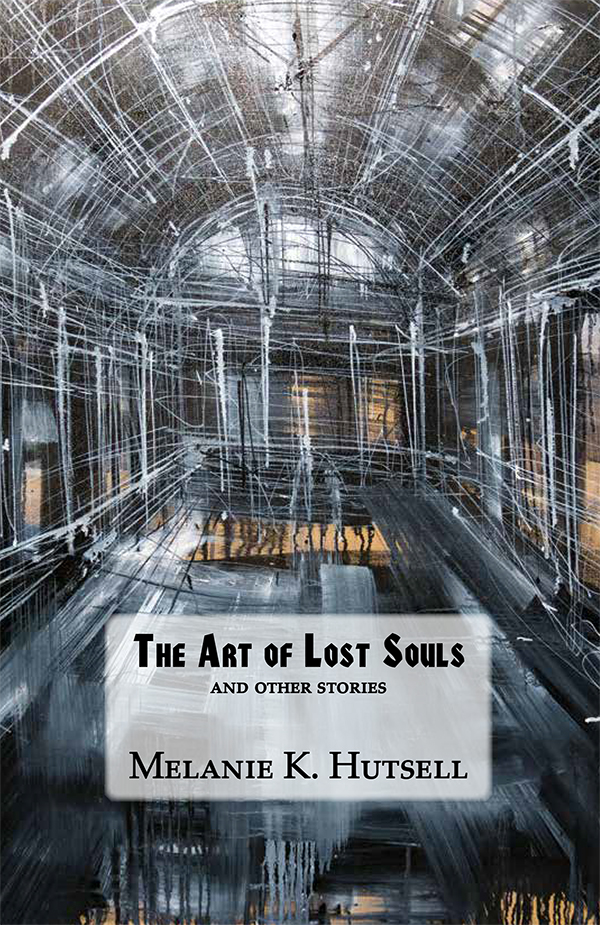
I’ve lost track of how long I’ve known Melanie K. Hutsell, but it’s been a few years. She’s a native of East Tennessee, and we share a mentor and many writer friends from this region. In the time we’ve known each other, she has published two novels, The Dead Shall Rise: A Tale of the Mountains, and The Book of Susan, which received the Award of Merit in the fiction category of the 2023 Christianity Today Book Awards. About a year ago, I ran into Melanie at a writers conference, and she told me about her new collection of short stories, The Art of Lost Souls, which she was in the process of sending out to publishers.

The Art of Lost Souls and Other Stories quickly found a home with Main Street Rag (MSR), and is currently available for pre-order. MSR and Editor Scott Douglass have a long history of publishing beautiful books. MSR is the press that published my first poetry collection, Crimes Against Birds. I’m forever grateful to MSR and Scott for taking a chance with my book, and I’m always excited to see MSR continue to publish good work like Melanie’s collection of short fiction.

In The Art of Lost Souls Melanie has created a cast of characters that are both achingly strange and sad. They are misunderstood dreamers, people on the verge of big transitions, wonderers asking what life would look like if all the pieces fit together. But as Hutsell’s characters face loss and uncertain futures, they reveal themselves to be creative souls with imaginations that help them survive. Melanie agreed to answer a few questions about writing, publishing, and not giving up on old projects.
DL: The title of this collection sets up how so many of your characters are some kind of artists, and usually, it’s their creativity that provides a sense of salvation to their stories. You’ve written in the past about having bipolar disorder. How does your background and your own experience of being a creative inform the characters you want to write about?

MH: This is interesting for me to consider. I’ve been aware that I do tend to write characters who are creatives—but until you asked this, I’d never really considered how seldom I write about writers. Because I do tend to think of my background as being fairly focused on words and pages, from an early age. And my fictional creatives tend toward other pursuits, like music or cooking or visual art. Maybe I tend to think, fictionally, of creativity as a way of expressing a character’s superpower, and of course, not everybody writes. I guess I tend to subscribe to the notion that all humans are here to create. I’m drawn towards the philosophy/theology in books like Divine Beauty by John O’Donohue or Art + Faith by Makoto Fujimura, which suggest humans are here to do and experience beauty and that creativity can be expressed in doing anything with love, and by love I mean with intention and giving, in the direction of God and humans.

DL: Some of the stories in The Art of Lost Souls are set in towns and locations that are real places, meaning you didn’t create them out of thin air. The first story is even titled Still Life in Townsend, referencing the town of Townsend, Tennessee. When you’re writing a story, how much do you draw on what you know about the place where it’s set?

MH: For someone who grew up reading a lot of fantasy, my adult work is pretty grounded in the Appalachia of East Tennessee. And I grew up in upper East Tennessee, and that is where most of my work is set, and Appalachian identity almost always is an important facet of my characters. Most of my settings are fictional, with strong underpinnings of reality to them. My two novels, The Dead Shall Rise and The Book of Susan, share some fictional towns with the short stories. Creating a fictional geography allows me to create needed settings or maybe to transport real-life places and set them down in new locations. But, yes, I do sometimes use real settings. In The Art of Lost Souls and Other Stories, both “Celestial Images” and “Still Life in Townsend” are set in real places, and the settings there really define the kind of stories they are. “Celestial Images” is about a homesick Appalachian living in Bloomington, Indiana, and “Still Life in Townsend” is about a motel family who specifically runs a business in the quiet—as opposed to the more tourist-deluged—side of the Smokies, and that’s pretty central to the story. The title story in the collection is set in Knoxville, though it’s a rather magical Knoxville. I was going there for a sense of urban history in that setting, something about time and distance. And sometimes I will invoke real places to make my fictional ones seem more real.

DL: One of the things I admire with the stories in The Art of Lost Souls is that you’re not afraid to go into some pretty dark spaces. But you usually bring some relief to the reader, too. Do good stories require pushing into that darkness?

MH: I do think the best writing is that which costs the author something to make and also requires great honesty. Often when something’s false in what I’m working on, it’s because I haven’t pushed myself enough in that spot, really faced what’s trying to be said there. I haven’t gone to where the story is demanding to go. And I think all of this is true whether one is writing realistic fiction or not, literary fiction or not. Because art is about being human. And there is a lot of darkness there. I consider myself to be generally wired up as someone who believes, but it’s dishonest not to acknowledge the dark.

DL: The Art of Lost Souls is your third book publication. But you’ve also been working for a long time on a magical realism novel. How do you balance multiple projects at the same time? And what keeps you returning to this unfinished novel?

MH: Well, the short answer is, I really don’t balance multiple projects at once. I actually become very absorbed in my writing projects, which is one reason—among many—that the unfinished novel remains unfinished. It’s a work that I’ve been wrestling with in many different variations since college. It began life as a fantasy novel and is a magic realism novel now. The Dead Shall Rise actually started, when I was in graduate school twenty-five or so years ago, as a manuscript written around a misbehaving character carved from the other work. After many years plagued by mental illness (though I didn’t know at the time that was what ailed me) and then devoted to recovery, the unfinished novel came back to me. But I set it aside to focus on writing and publishing short fiction to hone my craft and get a publication history. And then I opted to revise The Dead Shall Rise and seek publication with it, being a more complete manuscript, than to finish the messy, half-done one. And then The Book of Susan got written because of an agent’s interest engendered by reading one of my published short stories. (The agent ultimately passed on Susan.)  And I’ve long wanted to have a collection of my short work appear all in one place, and Main Street Rag publishing The Art of Lost Souls is a realization of that dream. Meanwhile, in between these projects, I’m writing along on the poor, longsuffering, untitled novel, because I can only do one thing at once. I suppose I find the protagonist compelling. Possibly he is my alter ego, more so than any other character I’ve written.

DL: I think you know that I have so much respect for small and independent publishers. Now that you’ve published three books with different small presses, do you have advice for writers about how to get published?

MH: You don’t need an MFA, and you don’t need an agent. Not that those are not good, helpful, and desirable things. But I have neither. I say: write and be a student of writing. I was fortunate to have a mentor when I was in high school, poet Jane Hicks, who was my guidance counselor and who taught me to approach writing professionally. Back then, it was the Writer’s Market and SASEs. Now it’s Submittable and Substack and unknown frontiers. Stay abreast of the ever-evolving business. Always read the guidelines. Don’t be afraid to submit. Don’t let rejection define you – learn from it. And definitely consider small presses as options for submitting your work. I’ve loved working with each press I’ve worked with. Each has devoted such care to seeing my manuscript through the process, helped me better realize the vision I’ve had for that particular work. I’ll pass along advice once given to me—you’re looking for the press that loves your manuscript as much as you do. There’s a lot to be said for sending your work to an indie press.

Many thanks to Melanie K. Hutsell for answering these questions. Find out more about Melanie here, and be sure to pre-order The Art of Lost Souls from Main Street Rag Publishers.

In case you missed it… I recently read with Georgann Eubanks for the Spoken & Heard series. And I’m so grateful that Feller has had some great reviews from Jake Lawson in MicroLit: a Tiny Journal of Prose & Poetry, Noah Soltau in Red Branch Review, and from Meredith Sue Willis in Books for Readers. I hope you’ll take a look.

If you’re not already receiving these posts directly to your inbox, please subscribe.

Writing Exercise 22.6

Writing Exercise 22.6

In my previous post, A.E. Hines shared his poem Waiting for the Diagnosis, one of many wonderful poems in his collection Any Dumb Animal. He also revealed the poem’s backstory. Today, I’m sharing a prompt from A.E. Hines based on this poem.

Writing Exercise 22.6

A.E. Hines: “Think and write of an example from your life of a time you were forced to wait. This doesn’t have to be a dramatic waiting—it could be as simple as idling impatiently at a traffic light, or waiting for an apology from an angry spouse that you are uncertain will come, or for a potential new love interest to call for that first date. The point is to pick a period of waiting, where the duration feels uncertain, and the outcome is unclear, and you can’t easily escape. What does this feel like? Waiting is not typically considered pleasant—but are there pleasant or helpful aspects to this waiting?  Let your waiting be a trigger, and then see what you discover by lingering there.”

As you write your own poem (or scene, story or essay), consider that Hines’s poem embraces the natural world outside of the physical space from which he writes. In this case, the poem’s speaker states that he’s lying with his lover, but many of the images in the poem delve into the wildness of the Colombian mountains which is where the speaker’s hopes for the future reside.

There’s also a celebration of the wild through the depictions of the bats and the monkeys and even in the language used to describe the earth. This prompt gives the same opportunity to embrace the far reaches of our own experience, and encourages us to step into the wider realms of possibility.

By this point, I hope your mind is racing with ideas for writing. If not, I’d offer these concrete steps to include in your first draft. One, don’t forget to tell the reader where the speaker is in the physical world. In Waiting for the Diagnosis, Hines says he is lying with the man he loves. Two, include the actions of at least two animals.

If this prompt helps you, I’d love to see the final product. In the meantime, please check out A.E. Hines’ website, and don’t forget to buy his collection, Any Dumb Animal, available from Main Street Rag Publishing, online retailers, and your local bookstore.

* * *

Make sure you never miss writing prompts like this one by subscribing here:

* * *

“Waiting for the Diagnosis” by A.E. Hines

About a year ago, I read a book that completely captured my attention. It was A.E. Hines’ Any Dumb Animal, published by Main Street Rag Publishing. Although Any Dumb Animal is a collection of poetry, it can also be likened to a memoir, moving through time to reveal moments of Hines’ personal life story. I was excited by the mixture of craft and accessibility in Hines’ writing. Many of his poems lean toward the narrative as well as the confessional. The result is that reading each poem feels like you’re being let in on a secret that has the potential to change your personal outlook of the world.

I’m far from alone in recognizing Hines’ talents. Any Dumb Animal received Honorable Mention in the North Carolina Poetry Society’s 2022 Brockman-Campbell Book contest and was a finalist for the Eric Hoffer Book award. His work has also appeared in some of the best journals of our time such as Alaska Quarterly Review, Southern Review, Rhino, American Poetry Review, Poet Lore, The Greensboro Review, Ninth Letter, The Missouri Review, I-70 Review, and Tar River Poetry, among other places.

He splits his time between Charlotte, North Carolina, and Medellín, Colombia. Last week, I reached out and asked if he would share one of his poems.

Waiting for the Diagnosis

Lying with the man I love,
I muse about a farm
high in the Colombian mountains
where terraced slopes of coffee
meander valley to peak
and disappear into mist.

There’s still time, I tell him,
to plant a thousand bamboo trees,
watch them leap into the sky,
to nail bat houses to the trunks
and hear the flitter of webbed-wings,
to hear the night monkeys
winding their way in the dark,
leaping branch to branch.

Let the shadows come
and wrap us
in their slippery shawls—
there’s still time to dig
our fingers into the black
brooding earth,
to taste the prickly fruit,

to believe we can grow old
listening to the bats shriek,
and night monkeys howl,
to bamboo trunks
rubbing together in the breeze,
their insistent music
like the luxury
of creaking old bones.

I asked A.E. Hines if he would share the inspiration for writing Waiting for the Diagnosis, and here’s what he wrote:

“When Any Dumb Animal first came out, a couple of friends contacted me after reading this poem to inquire about my health. “What’s going on?” one asked. As I told my friend, I’m fine now.  A few years ago, I did have one of those surprise health issues that stops you in your tracks, and leaves you worrying and waiting for the days and weeks it takes to get into doctor visits, to schedule and receive various test results. That gap in time was the genesis for this poem. I recall coming home after a particularly invasive test and wrote the title in my notebook. At the time, I was in a brand new relationship with the man who would later become my husband. We were still very new, and it was my first serious relationship after ending a twenty year marriage. Like all new couples, we were making plans for the future. But as middle-aged (and previously divorced) adults, we also understood time isn’t always on one’s side, and plans don’t always work out. Growing old (and doing it with someone you love) really is a luxury. This poem lives in the gap, that anxious moment of waiting. Of not knowing if plans will work out. But also in hope that they will.  PS:  As for me, so far, so good!”

Many thanks to A.E. Hines for sharing the background story of his poem Waiting for the Diagnosis. Just this week, he’s had new work published in the summer issue of The Southern Review and online at South Florida Poetry Journal. And don’t forget to order Any Dumb Animal from the Main Street Rag Online Bookstore, Powell’s or Amazon.

In my next post, I’ll share a writing exercise based on Waiting for the Diagnosis. If you’re not already subscribed, you can make sure you never miss a post by subscribing here:

Conversation with Patti Frye Meredith

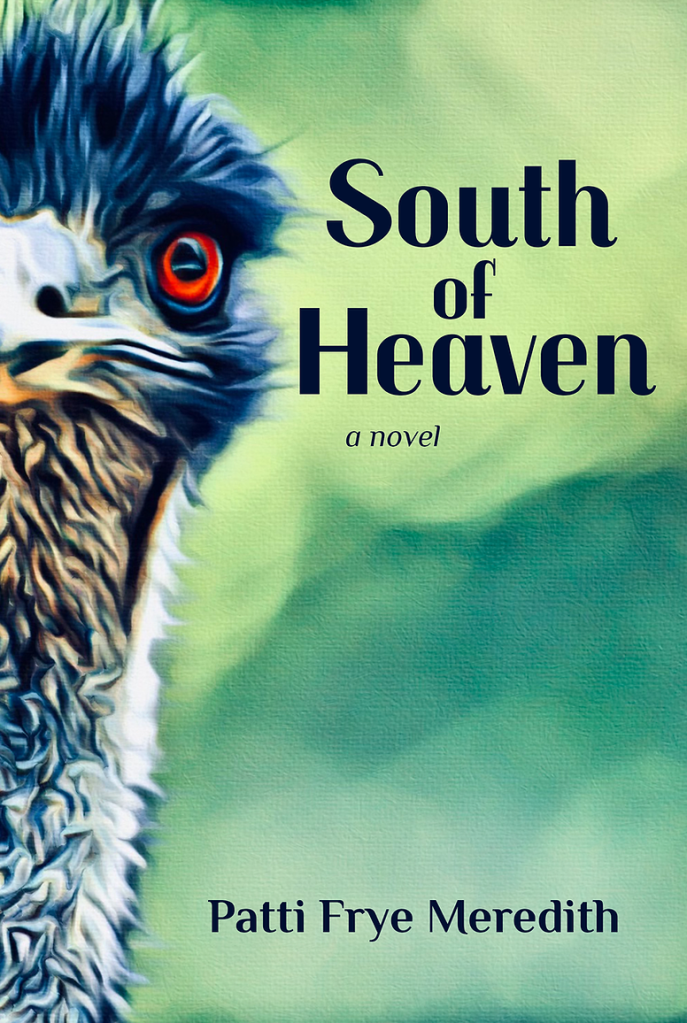
I can’t exactly remember the first time I met Patti Frye Meredith. I definitely have memories of her at one of the early Mountain Heritage Literary Festivals making people laugh and playing music late at night. One thing I know for certain is that Patti can make anyone laugh. That’s true whether you’re fortunate enough to sit down and share a meal with her, or whether you’re reading her beautiful new novel, South of Heaven, a multi-generation narrative set in Carthage, a small town in the Sandhills of North Carolina. At the center of the novel are two sisters, Fern and Leona. Both have secrets they are keeping from each other and from the world. There’s also Fern’s son Dean who, as Fern says, doesn’t have any secrets. South of Heaven is a meaningful exploration of how the things we try to keep bottled up complicate relationships. The novel is deeply Southern, completely universal and wonderfully fun to read.

DL: South of Heaven centers on the McQueen family, and it’s set in the late 1990’s, a time not so long ago but a time that feels infinitely different in hindsight. Do you have any advice for other writers writing about the recent past?

PM: When Dean first “talked to me in my head,” he told me his dad was MIA in Vietnam, and how as a child he pretended to find his daddy in the overgrown bamboo patch in his backyard.

I wrote the book from that one scene. I knew Dean was in his early 20’s, and that his father went missing at the very end of the war. That’s why I set the novel in 1998. After I got into it, other 1998 occurrences came into play like the Clinton/Lewinsky drama. There’s a lot in the book about the lengths we will go to avoid the truth, so that worked.

Early readers suggested that I move the story up in time, to make it more contemporary, to use the Iraq War instead of the Vietnam War and put it in present tense. I tried, but I couldn’t make it work. By that time, too, I felt like I knew Fern and Leona very well, and I realized they wouldn’t be the same people if they hadn’t grown up like they did in the sixties.

There are pitfalls. It’s not historic, and it’s not contemporary. The characters are just modern enough for readers to wonder, “Why would they think that?” or “Why would they do that?” It’s embarrassing, but I had to do research to remember if everyone had cell phones in 1998, or if fax machines were still a thing. We’ve seen a lot of change in twenty-four years, and it’s amazing how quickly we forget recent history.

DL: I loved reading the “Backstory” on your website about your job at University of North Carolina Public Television, and how you met so many writers there. The authors you mention (Lee Smith, Doris Betts, Reynolds Price, Fred Chappell) all come from the Southern tradition, and South of Heaven feels like a very Southern novel. How natural was it for you to write in that tradition?

PM: Like so many others, reading Eudora Welty, Elizabeth Spencer, Lee Smith, Jill McCorkle, Tim McLaurin, and so on and so on, showed me that stories set in small towns were okay to write.

I grew up in Galax, Virginia, population around 6,000. So, it was natural to stick to the world I knew. Thinking about it, I’ve now lived in Memphis and Chattanooga, Tennessee, Huntsville, Alabama, Durham and Charlotte, North Carolina, Columbia, South Carolina, and Baton Rouge, Louisiana. Cities large and small, but with the same southern sensibilities. (Or maybe I think all those places have the same southern sensibilities because “wherever you go, there you are”!)

DL: Did you feel any pressure to “live up” to the works of those writers you admired so much?

PM: If I thought I had to live up to their work, I’d never write another word! Back when I first started writing, I didn’t know what I didn’t know, however, it didn’t take long to realize I was never going to be in the same league with the writers I admired most. I’d give anything to see the world and put that world on the page like Fred Chappell, but I don’t have his complexity or depth. That doesn’t mean I don’t love reading his work. But, even when you study the craft and learn what makes great literature, even when you can recognize it, it’s still not possible to re-engineer your brain to create it. Thank heavens. There should be only one Lee Smith, one Jill McCorkle, one Darnell Arnoult.

That’s not to say I don’t spend a lot of time being discouraged! But you have to write what you write, be who you are, I mean, you can’t fake your subconscious! We all have our own perspectives and experiences, and we’ve all drawn our own conclusions.

I’m hooked on the joy of writing. The discoveries, the occasional good sentence, exploring the minds of my imaginary people. Writing helps me understand what matters and it’s my way of expressing what strikes me—good and bad—about being human.

And, since I love a cliché, I’ll say, “It’s the journey, not the destination.” Chasing after the “secret” to good writing has led me to friends who absolutely make my whole life better. Having the opportunity to be with other writers is the best reason to write!  Sorry for getting off on a tangent, but maybe that’s the southern tradition!

DL: How long did it take you to write South of Heaven? How many drafts did you go through?

PM: There’s no telling how many drafts I have. Dean’s voice came to me at Hindman Settlement School in 2005. I wrote the original draft in first person present tense. Then changed it to third person present tense for my MFA thesis at the University of Memphis in 2012. Then I wrote a draft in third person past tense. I was always changing something, adding, taking away. Starting over. We moved seven times in twenty-eight years for my husband’s job, so I had a lot of distractions (excuses) through the years.

When my husband retired and we moved back to North Carolina, I set up my little office and joined a weekly writer’s group. Then the pandemic hit. Everyone is different. I know there are many great writers with extremely busy lives, but for me, the stillness of the pandemic quarantine made it possible to devote the time I needed to work. No travel, no socializing. I don’t think I understood what it meant to really work until the pandemic. I discovered the long stretches of uninterrupted time helped keep the story together in my head, helped me play out the scenes I needed to make the story more cohesive. I think of it as bandwidth. Writing South of Heaven took a lot of bandwidth!

DL: Your novel is published by Mint Hill Books, an imprint of Main Street Rag which published my poetry collection, Crimes Against Birds. What was your experience like in finding a publisher?

PM: I can’t remember if I saw Main Street Rag’s call for novel chapters on social media or in Poets & Writers, but I had one of those “What the heck” moments and sent chapters. Months later, I got an e-mail saying they were interested in publishing the novel, and Scott Douglass sent a contract and a detailed explanation of how the process would go.

I had sent out query letters to agents off and on for years. (One agent had almost taken it years ago, but that fell through when the third reader in her office didn’t think they could sell it.) I knew South of Heaven wasn’t the kind of book that was getting the attention of traditional publishing, or the independent presses I was familiar with. It wasn’t full-blown literary, and it wasn’t quirky enough to be chick-lit.

I didn’t think it was going to set the literary world on fire, but I wanted my imaginary people to live in a real book. So, I asked you, Sue Dunlap, and Darnell Arnoult to read it and tell me if I was about to embarrass myself, and you all said, “Do it.” So, I did. I fiddled with it after I got it back from you all, and I hired an editor to make sure I hadn’t added a lot more typos. Then I fiddled with it some more, and my niece, Becki Vasques, found my last snafus. We made it a family and friend affair! You and Darnell suggested I put an emu on the cover, and my husband, Lee, and I put it together (with Darnell on the phone). It’s been fun. Not “have lunch with your agent in New York City” fun, but better. A true labor of love. And I like that my North Carolina story is published by a North Carolina press. Scott Douglass does something very special with Main Street Rag. He publishes wonderful poetry and stories. I’ve gotten to know him and his wife and his dog, Harley, and I really appreciate the work he does.

DL: Do you have any advice for other writers ready to send their novel out?

PM: Don’t discount the small independent presses. We all appreciate independent bookstores. These presses deserve our appreciation, too.

Do ask yourself if you’re ready to be in the book marketing business, though, and the weird thing is part of that is selling not just the book but yourself. The great thing about the small press is, “You have a book to sell.” The scary thing about the small press is “YOU have a book to sell.” Just be honest with yourself about what you want to accomplish and why you’re doing it.

For me, the experience has been amazing because it has reminded me that I have the very best family and friends in the world. The support has been phenomenal. People I haven’t seen or talked to in ages bought my book after seeing my Facebook posts. Friends talk about my characters like they’re real people they care about. So, if I don’t sell another book, I’m very happy with the response South of Heaven has gotten.

CYNICAL ALERT!

The truth is, without Facebook, I wouldn’t have sold m(any) books. South of Heaven is in two bookstores, Chapters in Galax, my hometown, and McIntyre’s in Chapel Hill, where I live now. I’ve had one reading at McIntyre’s. I hired a publicist, and maybe there will be more readings, but maybe not. Even if I devote a lot of time to driving around, going to bookstores, taking them a book and a nice press kit, there’s no guarantee they’ll carry it. I have a couple of book club gatherings coming up. The bottom line is: It’s up to you to promote your book, to make yourself known. I believe even if you have an agent and a traditional press, they want you to have a “platform” meaning they want you to use your social media connections to publicize and sell your book.

DL: You’ve described South of Heaven as coming out “late in life.” We could argue about what that means, but I’m more interested in something else you said which is that having the novel out in the world helped clarify where and on what you want to focus your energies. Can you talk more about that?

PM: I know for sure I don’t want to be an author who dresses up and talks about writing. I want to be a writer who writes. I want to spend more time with my imaginary people and less time telling real people why they ought to like my book! Ha! I recently got together with a group of my writing friends, and afterwards I realized all we’d talked about was how close each of us were to having finished products to try to get published. Like there was some big door we were all clamoring to walk through to get to a different, more perfect life. I want to spend more time talking about ideas, or break-through moments, or what we’ve discovered about the craft. I don’t want my energy focused on end-products. I want to focus on better writing and storytelling.

DL: What are you working on now?

PM: Not much. I’m caught up doing what I think I ought to be doing to sell books. It’s uncomfortable and not much fun. I did have a little “conversation” with one of the characters in South of Heaven the other day. So, I wrote that down.

* * *

Find out more about Patti on her website, and don’t forget to order South of Heaven, now available from the Main Street Rag Bookstore. Coming soon, I’ll share my conversation with Tony Taddei about his debut story collection, The Sons of the Santorelli. Make sure you never miss a post by subscribing here:

Michael Dowdy’s Urbilly

This week, I’ve been reading Michael Dowdy’s amazing debut collection, Urbilly, the winner of the 2017 Main Street Rag Poetry Book Award.  This is a great collection of poems that all work together to voice something really meaningful that is in some ways about modern Appalachia and its people. But it’s also about a great deal more.

cvrurbilly_postcard

Through the pages, the idea of the “urbilly” becomes so vivid. I would attempt to explain, myself, what an urbilly is, but I think Dowdy does that best on his website:

“Urbilly?  Think antic field guide to parts (un)known & exploited. Mountain / megacity mashups, rural / urban hullabaloo, New River / Gowanus cocktails. Backwoods & Brooklyn. Mountaintop removal & Edison bulbs, landfill & farm-to-table, Muriel Rukeyser & Big Daddy Kane, James Still & girders of steel. Think Urbilly as the anti-Hillbilly Elegy.”

When I was an editor at drafthorse a few years ago, we had the pleasure to publish a few of Dowdy’s poems that are included in Urbilly. Click on “drafthorse” to read a group of the poems, but here’s one of my favorites.

The Out-Migrant’s Family Tree, as Seen through Binoculars

Smudged along the lower ridge
a copse of knobby hardwoods

withers in coils of cold wind.
Squint past the blind curve scribbled

in cut banks of brush, just there,
where fog-coated sycamores

unfurl scrolls of icy bark,
where taillights trickle beyond

Oblivion, Virginia,
where calm haunts the revenant.

Laurel hells strangle hearth and flue.
Even springs zigzag uphill.

No good here my wistful words.
Those provenance jackets veil

a sparrow chest and stuffed gut.
Here, where decades stretch threadbare,

my grave dark eyes, sockets deep
as karst caves, skitter and rest.

A tongue rhododendron tied
slips loose; restless legs snap to.

My sneakers swoosh in hoarfrost,
scything kin from the harvest

of time, stutterers who hauled
fieldstone, sunk wells, and raised beams

right about there. You have to
cock your head just so, just there,

where clouds lung the mountains’ ribs.
Where trunks bend and crack the last

inky leaves bear down, hold outs
against the thieving north winds.