Last week, I had the privilege to be part of the book launch for Darnell Arnoult’s new collection of poems, Incantations. This collection is a mesmerizing group of poems that celebrates language in unique but powerful ways. Many of the poems came out of a period of grief, but the poems are also celebratory and full of hope. They speak simultaneously to the personal and the political, addressing some of the most significant challenges of our times.
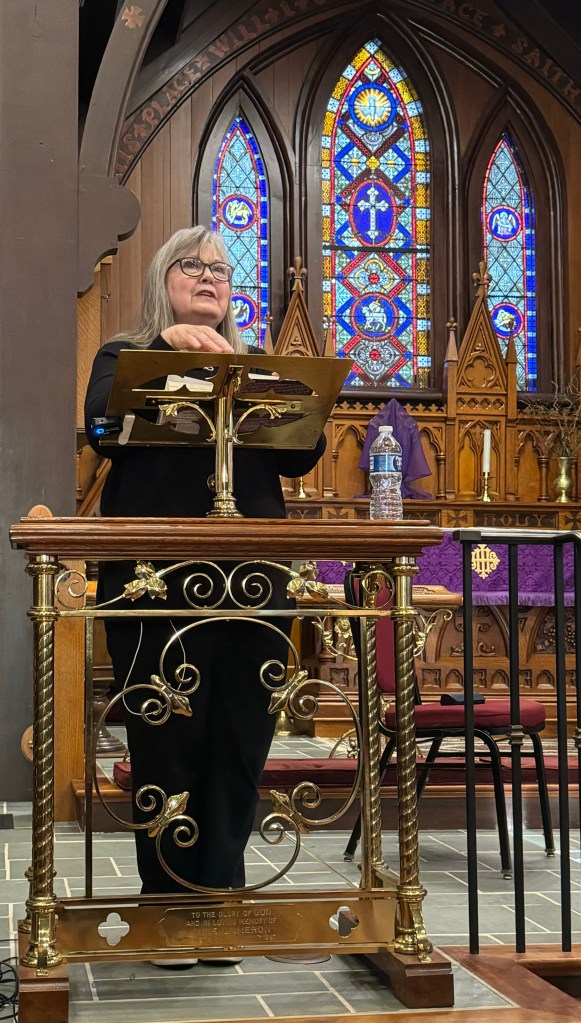
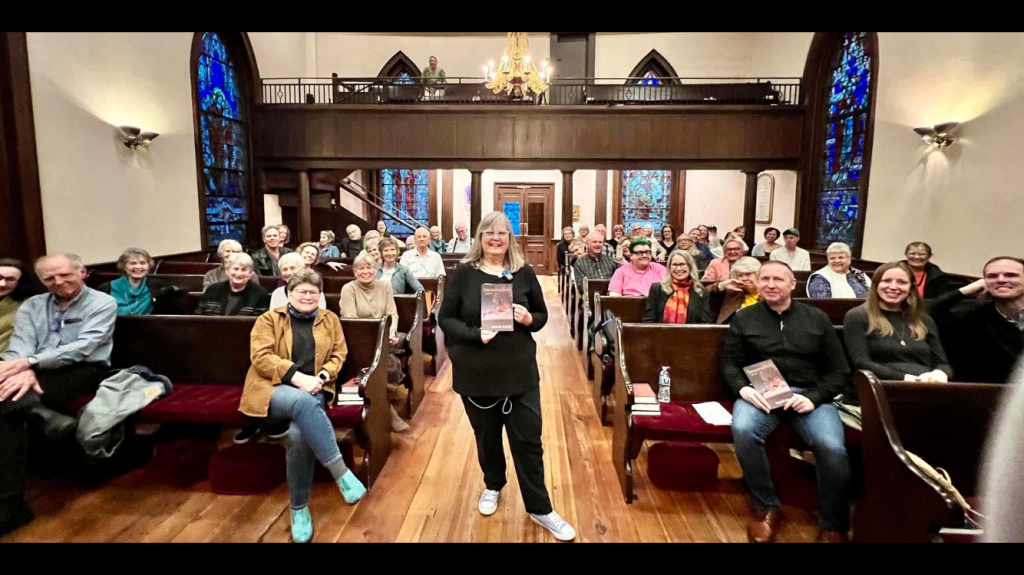
The launch took place in Hillsborough, North Carolina, at St. Matthew’s Episcopal Church as part of their Faith and Arts Series. Darnell gave a beautiful reading of her new work. The church was filled, and Purple Crow Books sold all of their copies after the reading. Alison Weiner accompanied her on the piano. And I had double duty that night, first introducing Darnell and then following up with an on-stage discussion about her work. The on-stage discussion was especially fun, and I hope an audio recording of it will be available at a later time. Until then, I want to share my introduction. It was such an honor to be part of welcoming this new book into the world, as well as to celebrate my good friend. I may have also added a little good-natured ribbing.
Welcome, and thank you all for coming out tonight to celebrate our friend Darnell Arnoult and her newest collection of poems, Incantations!
If you are here tonight, there is a good chance that you already know Darnell. Before I get too personal, allow me to properly impress you with a few of Darnell’s professional accomplishments.
Darnell is the author of the novel Sufficient Grace, and two previous collections of poems: Galaxie Wagon and What Travels With Us, and she has published stories, poems and essays in a variety of journals and anthologies.
She is the recipient of the Southern Indie Booksellers Alliance Poetry Book of the Year Award, the Weatherford Award for Appalachian Literature, the Thomas and Lillie D. Chaffin Award, and the Mary Frances Hobson Medal for Arts and Letters. In 2007 she was named Tennessee Writer of the Year by the Tennessee Writers Alliance. She holds degrees from The University of Memphis, North Carolina State University, and The University of North Carolina at Chapel Hill.
If you know Darnell, it’s likely because you have studied with Darnell, perhaps at the Table Rock Writers Workshop, the John C. Campbell Folk School, the Appalachian Writers Workshop, the Tennessee Mountain Writers annual conference, through Learning Events, the Mountain Heritage Literary Festival, or perhaps even as an undergraduate student from Lincoln Memorial University where Darnell served as Writer-in-Residence from 2010 to 2020.
Lincoln Memorial University is the place where Darnell’s and my lives began to intertwine. We co-directed the Mountain Heritage Literary Festival. And we also created and shared editing responsibilities for the literary journal drafthorse, a journal dedicated to writing about labor and occupation. Darnell and I worked together, often getting each other in and out of trouble, and we became wonderful friends in the process.
I cannot list all of the pieces of good fortune that have come to me because of Darnell, mostly because Darnell told me to do something—often something I didn’t want to do or didn’t have faith that I could do. There are too many of these instances to list, but I will tell you that when I decided to apply to MFA programs, Darnell decided I would go to Bennington College’s low residency program in Vermont. I, on the other hand, lacked the ability to imagine being accepted in that program. I didn’t even have any intention of trying. But if you know Darnell, you know that once she’s made up her mind, you might as well agree or get out of the way. It is no exaggeration to tell you that the only reason I applied to Bennington was to shut Darnell up. As she seemed to know in advance, my life changed in innumerable ways because of that program, all for the better.
Darnell is the person who has encouraged me the most as a writer and certainly as a poet. Darnell probably knows my poetry better than anyone, and she has probably influenced my poetry more than anyone. A lot of my early poems originated in workshops Darnell taught. She was the first person who thought I had enough poetry to form my first book, and she largely arranged the order of that book, which in itself was another incredible lesson in learning how to shape individual pieces into a larger narrative. She has seen so many first and early drafts that it’s a wonder she still opens my emails.
In the 10 years that Darnell taught at LMU and lived in Cumberland Gap, Tennessee, my life was richer, and a lot more exciting. In her absence, there are fewer people asking me if I have seen Darnell, if I have any idea where Darnell is, if I can find her, please, help, she’s not answering her phone, she never answers her phone! Why doesn’t she ever answer her phone? There are fewer reasons to rush to the emergency room. There are fewer visits from the fire department. In short, there is much less excitement, and my life is poorer for her absence.
To answer the question as to why Darnell rarely ever answers her phone, I can report that she may have turned the ringer off two days earlier and can’t find the phone, she may have left her phone at home or at someone else’s home, or any number of other places along the way, the battery may be dead, or more likely, she is just already on the other line with someone else who needs to talk to her just as badly as you may need to talk to her. The number of people who rely on Darnell is uncountable. The number of people whose lives have been enriched by Darnell is legion.
I would be remiss to not acknowledge that the 10 years in which Darnell lived in Cumberland Gap were not completely happy. For Darnell, I know that time period is framed by her husband William’s recurring illnesses, his battle with cancer, and his passing in 2020. The poems in Incantations were born from that grief. The deepest kinds of grief. Grief that comes, as she would describe, from worlds burning, from death that dances and glides, from widowhood with its slaughtered and emptied heart.
And yet, within these poems, Darnell also rejoices in the curative properties of language, how it can bewitch and rescue us from despair. When you look at the beautiful cover of Darnell’s new book, you will see an image of fire and light bursting into the darkness. As that image suggests, these poems tell us that there is salvation in the darkness. There is salvation in these poems that are also charms for remembrance, charms for protection and rebirth, and always charms for love, no matter how it may shift its shape.
Join me in welcoming Darnell to the stage as we celebrate her new collection of poems, Incantations.
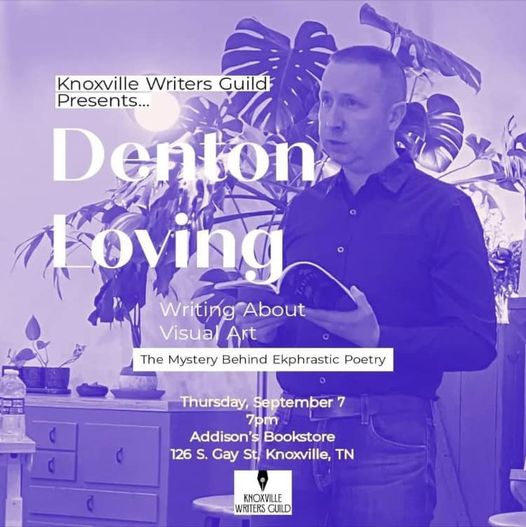
If you’re in the greater Knoxville area on Thursday, September 7th, I hope you’ll join me at the monthly meeting of the Knoxville Writers Guild at Addison’s Bookstore, located at 126 S. Gay St., in Knoxville. The meeting begins at 7:00 p.m.
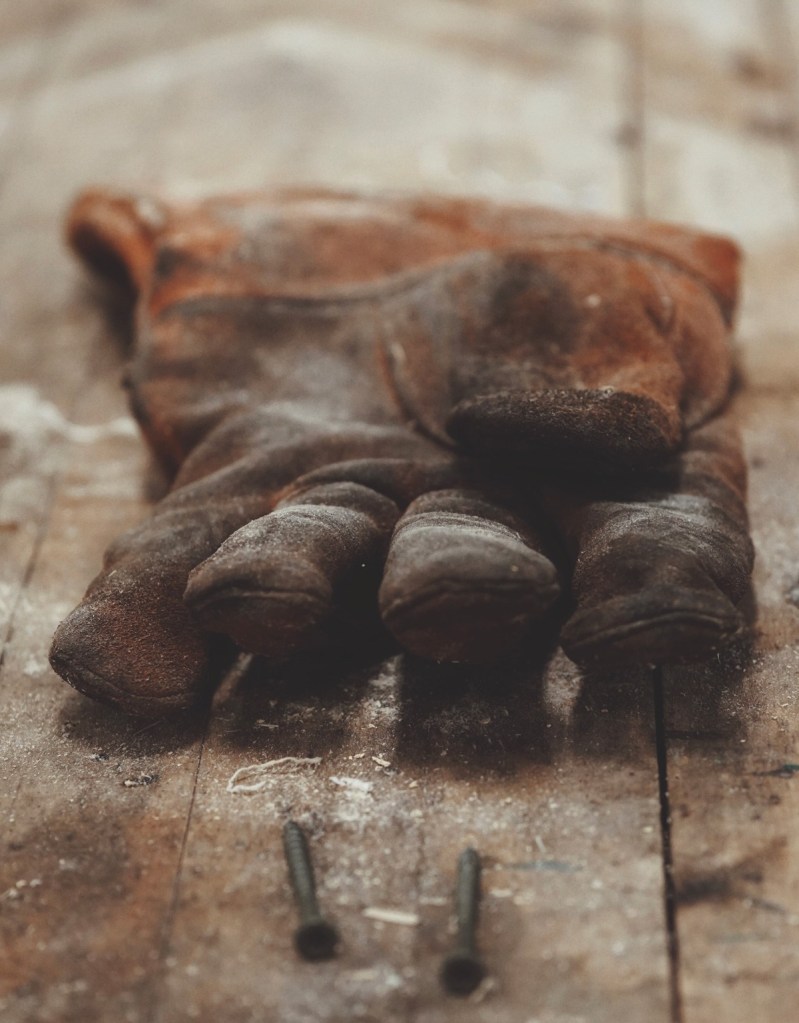
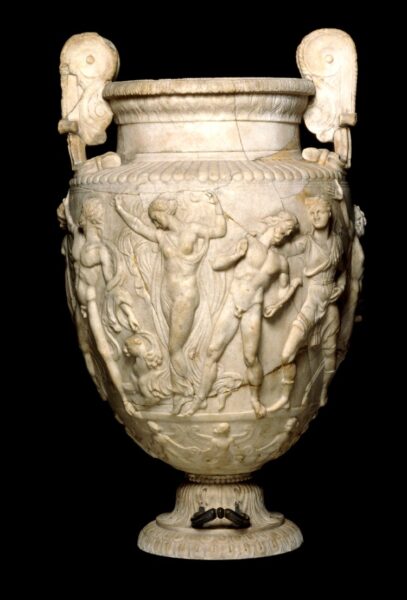
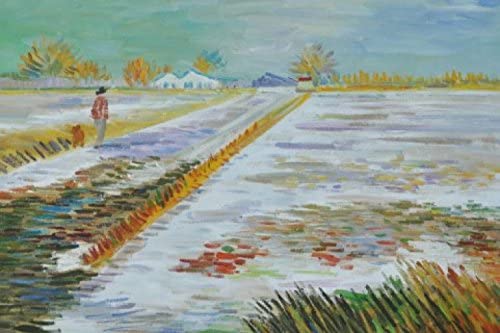
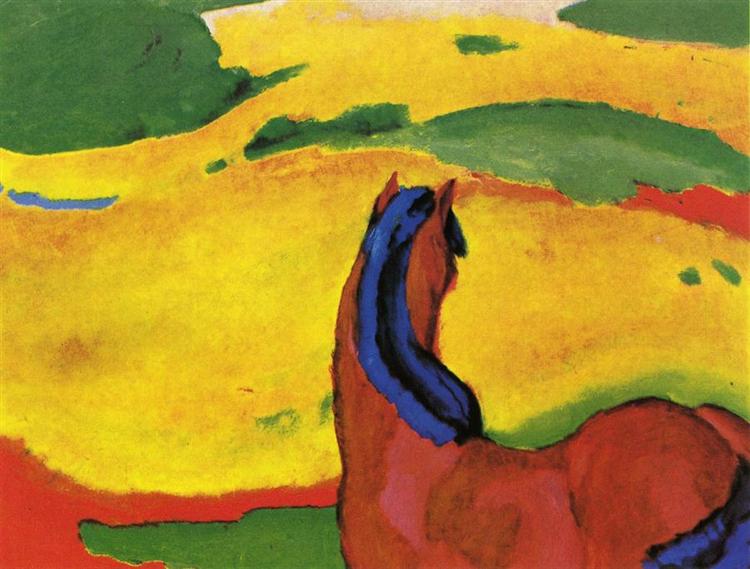
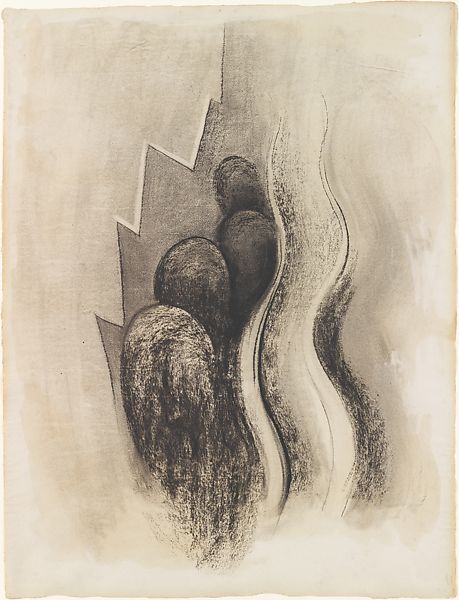
I’ll be talking about ekphrastic writing or ekphrasis. The word “ekphrasis” comes to us from the Greek where it means “description.” If you still aren’t sure what ekphrastic writing is, then I’ll briefly define it as writing that vividly describes a pre-existing work of art. I’ll share some of my favorite examples of ekphrasis, and we’ll even generate new work using some of the fantastic art on display at Addison’s.
Here are some of the images I’ll be talking about in this session.
.
.
.
.
.
.
.
.
If you live too far away to be in Knoxville on Thursday, I hope you’ll use one of these images or an image of your own in your writing practice this week. If you come up with something you especially like, please send it to me. If you need more guidance, check out my conversation with Julia Wendell about her ekphrastic poem “Horse in the Landscape.”
Perhaps it’s the heat, but I can’t quite fathom how we are already steaming in the July sun. July. How did it get here so soon? Not only is summer at least half over, so too is the whole year. That makes it a good time to re-evaluate your goals for your writing and submitting? Do you have any ongoing projects? Are you moving them forward or feeling stuck? Are you submitting your work to journals and magazines?
When I first began to send my stories and poems out to literary journals, my friend Darnell Arnoult encouraged me and my writing group to give ourselves a goal, not for acceptances, but for rejections. That first year, my goal was to receive 50 rejections. Making a kind of game out of it took the sting away every time an editor rejected my work. But the surprise was that I agonized less over trying bigger, higher-tiered journals. I was only aiming for a rejection, but I got some surprise acceptances along the way.
Even though the year is half over, it’s not too late to set some goals for your writing. To that end, here are ten submission opportunities for writers plus a bonus if you will go back and see my recent conversation with Andy Fogle who shared that Salvation South is also open for your submissions. Good luck!
Granum Foundation Prize&Granum Foundation Translation Prize The Granum Foundation Prize will be awarded annually to help U.S.-based writers complete substantive literary works—such as poetry books, essay or short story collections, novels, and memoirs—or to help launch newly published works. One winner will be awarded $5,000. Up to three finalists will be awarded $500 or more. Additionally, the Granum Foundation Translation Prize will be awarded to support the completion of a work translated into English by a U.S.-based writer. One winner will receive $1,500 or more. Funding from both prizes can be used to provide a writer with the tools, time, and freedom to help ensure their success. For example, resources may be used to cover basic needs, equipment purchases, mentorship, or editing services. Competitive applicants will be able to present a compelling project with a reasonable timeline for completion. They also should be able to demonstrate a record of commitment to the literary arts. There is no fee to apply. Applications close on August 1, 2024. https://www.granumfoundation.org/granum-prize
Fried Chicken & Coffee FCAC is an ezine/blog edited by Rusty Barnes, mostly interested in crime fiction, rural, working-class and Appalachian concerns. FCAC accepts short stories, poems and essays. Rusty says: “Send me rural, funky, dirty stories about churchgoing women who never sin. I would love to see more stories about women. Get to the grit, get to the love, show me the scars, and take Harry Crews to heart: ‘Blood, bone, and nerve, that’s fiction. Show me the stuff that cuts to the quick.’” There are no word limits. To submit, send an email to rusty (dot) barnes (at) gmail (dot) com with the words FCAC and SUBMISSION in the subject line. https://friedchickenandcoffee.com/manifesto/submissions/
Lanternfish Press We are seeking novella-length manuscripts between 20K and 40K words that fall in the mist-wreathed borderlands between literary and speculative fiction. In particular, we are interested in climate fiction; regional American Gothic fiction—Midwestern, in the vein of These Bones by Kayla Chenault; Southern, like The Salt Fields by Stacy D. Flood; or Alaskan Gothic, or Rust Belt Gothic—whatever kind of luxuriant and atmospheric decay floats your boat; well-researched historical fiction that breathes life into its material and cultural milieu; queer monsters for readers who enjoyed Carmilla or Elegy for the Undead; fiction that can claim as a comp title the novel Wednesday Addams was typing on her typewriter in the attic. Deadline to submit is July 31, 2023. https://lanternfishpress.com/submissions
Orion We’re excited to read your pitches for our upcoming Summer 2024 issue. This time we will specifically be looking to read pitches for essays and reporting about animals and floods. How is marine life impacted by water reaching the shore? What are the interesting ways you’ve observed land animals responding to water? We’re looking for pitches for stories that would be 3,000 to 4,000 words in length for an issue of Orion looking with fresh eyes at the floods around us. Please try to keep pitches to 500 words or so. https://orion.submittable.com/submit/267484/pitches-for-summer-2024-issue-on-floods
Necessary Fiction This October, we want to be scared. We want to feel unsettled. We want to go to sleep with dread knotted in our stomachs. Send us your spooky tales, your uncanny narratives, your haunted places, your tortured monsters, and your Gothic twists. We accept unpublished fiction up to 3,000 words only. Deadline to submit: July 31, 2023. https://necessaryfiction.submittable.com/submit/200451/special-call-october-stories
Galileo Press Galileo Press is open for submissions of full-length collections of poems, essays, stories, as well as novellas, novels, memoirs, or hybrids (with exception to 4-colour art / text hybrids). Please indicate in the title of your submission which genre you feel best describes it. Galileo hopes to publish 2-4 selections while also reserving a few manuscripts for development. A small stipend of $200-$500 is provided, along with copies and standard royalties. A few elements we consider are a confident, appealing voice; the thematic cohesiveness and the emotional range and maturity; vivid imagery and the balance of abstract to concrete imagery; deft handling of highly charged emotion; the capacity to surprise; use of wit, humor, and self-implication; the elastic syntax, pace, and music; and the choice and use of extended metaphor, skillfully juxtaposing the micro and the macro. There is an $18 submission fee. Submissions are open through August 1, 2023. https://freegalileo.com/submissions/
Short Story, Long We are accepting short stories, 2k-8k words long (with the 3,000-5,500 range being our real sweet spot). What are we looking for? Honestly, best indicator is to read a story or two we’ve already published. Second best indicator is to generally be familiar with Editor Aaron Burch’s taste and what he’s published on HAD, and Hobart before that. Every published story will be paired with original art, with both the writer and artist receiving $100. Submissions are open until August 1, 2023. https://ashortstorylong.submittable.com/submit
Kitchen Table Quarterly Kitchen Table Quarterly is a journal preoccupied with history- cultural, political, geographical, personal, and how each interacts with the other to mold our experience. Adolescent blunders, dental records, the archaic origins of long-held or long-lost traditions— we want to know all of it. We are looking for work that spills secrets and wipes the dust off of old memories. Submit no more than five poems (with a maximum of 10 pages). For creative nonfiction, submit a stand-alone piece of up to 3000 words. While we accept all forms of creative nonfiction, we typically prefer essays. Submissions are open until August 1, 2023. https://www.kitchentablequarterly.org/submit
Salt Hill Salt Hill publishes poetry, prose, translations, essays, interviews, and artwork. Please submit no more than five poems at a time. For prose, please do not submit works of more than 30 pages, double-spaced. We accept multiple flash pieces, so long as their combined length does not exceed 30 pages. We accept nonfiction and art submissions year-round. Deadline for all other submissions is September 13, 2023. https://salthill.submittable.com/submit
Potomac Review Rooted in the nation’s capital’s suburbs, Potomac Review is the antidote to the scripted republic that surrounds it. We seek literature from emerging as well as established writers around the globe to facilitate literary conversation. We accept submissions through October 15, 2023. We’ll read stories and essays of any size, though typically we find it difficult to make room for works that run longer than 7,500 words. Please submit up to five poems. http://mcblogs.montgomerycollege.edu/potomacreview/submission-guidelines/
~
Thanks for reading. Please feel free to share these opportunities with other writers.
~
In case you missed it… I had the opportunity earlier this month to celebrate place poems alongside P. Scott Cunningham and J.D. Isip, as part of Emerge Journal’s Be Well Reading Series. And earlier this summer, I had a wonderful conversation with Patricia Hudson about her novel Traces, which gives voice to Rebecca Boone and her daughters.
~
If you’re not already receiving these posts directly to your inbox, please subscribe.
In 2021, founding editor-in-chief of The Bitter Southerner Chuck Reece and his wife Stacy Reece began publishing Salvation South. In the publication’s opening salvo, Reece famously said, “I’m not bitter anymore. What I am is hopeful.” According to Salvation South’s guidelines, they accept stories, in all mediums, including journalism, essays, fiction, photography, filmmaking, and poetry. I saved poetry for the end of that list because Andy Fogle is Salvation South’s new poetry editor, and he’s looking to publish work by established, emerging and new poets. Andy agreed to share some insight into exactly what he’s looking for in terms of submissions. If you’re reading this, Andy (and I) hope you will consider sending Salvation South some of your own work.
DL: Congrats on your new role as poetry editor at Salvation South. I love the magazine’s origin story, and how Chuck and Stacy Reece have said to “think of Salvation South as a big old house party—filled with people who want to celebrate Southern culture and people who are searching for new reasons to be hopeful about the South.” Can you talk about how that ethos pertains to the kind of poetry you hope to curate for the magazine?
AF: Thank you much. I’ve been wanting to get back into doing something like this for a long time, and, among my various professional duties in this world, it’s really one of my favorite things to do.
To the house party metaphor and poetry: I want to cast as wide a net as I possibly can, so just come on in, at least for a cup of coffee. Ever since 10th grade when I realized I wanted to devote my life to the arts, I’ve found things to like all over the artistic map, both across and within genres, and they all swap around. In college and grad school, I ran kind of a punk literary zine called 5th Gear, and while I definitely made some mistakes, I also think I got an underground reputation for being seriously eclectic. You could read all kinds of crazy-different and interesting stuff in 5th Gear. I’m still proud of that, I still believe in that, and I still aim to act like that. I have an MFA; I’ve participated in (and won 2) poetry slams; I’ve taught in all kinds of schools; I’ve been into way-out experimental stuff, formal stuff, middle-of-the-road stuff, street stuff, uncategorizable stuff…I believe that the best poetry has an aesthetic energy and a social function. I believe in the beauty of both, the magic of many, the awe of all. If I can help present a consistent mosaic of diverse voices, I’m a happy dude.
DL: The first time that I became familiar with your work and your involvement at Salvation South was when I read your wonderful interview with the poet Annie Woodford. I loved this interview for a lot of reasons but in part because Woodford’s poetry and your interview with her takes a hard and honest look at her corner of the South. It shows that while Salvation South’s point of view is hopeful, it’s also very focused on narratives that seek to accurately depict the places where we live.
AF: Annie is my newest living poetry hero, for a bunch of reasons I tried to articulate in that piece. Part of it is what look you mention, which is hard, honest, and hopeful too, I think. Salvation South’s general guidelines say we’re looking for “stories, in all mediums, that reckon with the history and celebrate the culture of the American South.” We publish pieces that do one of those things, but I savor those that do both. Celebration should not be blind, and reckoning is kin to rapture. I think being able to face the hard things is a reason for hope, and I think we can even look for hope in the gut-wrenching stuff, not just despite it. Maybe struggling with history is a form of celebration; maybe celebration is predicated on some form of struggle. When we shine a light on what’s been tucked away in the corners of our consciousness, it’s uncomfortable, it’s uncertain, and it’s unpredictable—but remember it’s still light that is the tool.
DL: Let’s talk about the mechanics of the submission process. Are you looking for individual poems or groups of poems? Do you have preferences for style, length, etc.?
AF: First of all, it’s free to submit. I like to see 3-5 poems rather than a single poem. It gives me a broader idea of a poet’s style(s), concerns, and abilities, and it also gives me more stuff to try to build a fire with. Obviously with a single poem, that’s your only shot, and I’m getting a very restricted view of your work; with at least a trio, there’s a higher probability of me finding something to encourage, which is what I want to do. Here’s something unusual and, I hope, useful: I write individualized comments in my responses with some regularity, I guess because I’m a teacher and I’m glad to strike up conversations and correspondence with poets.
Any length and any style, but I should say that I think branches and roots are related. It’s only a good thing when people have an idea of what’s been going on in the last few decades of poetry. But aside from that, if you love language, you’re probably a poet, at some level. And if you also have something…not necessarily to “say,” but if you have something intellectual, emotional, and/or sensual for readers to witness through that love of language—if you’ve got something to wrestle with in the joy of language—then send it on. I read pretty much all the time, year-round, and often respond to folks within a week.
DL: Should submitted work speak explicitly about the South?
AF: We generally do need to see its relevance to the South, be that addressing its past (which is still present), celebrating its culture, or something else. There have been a couple of poems I’ve almost accepted, but then realized that at least geographically, culturally, or thematically, it could’ve been written by anyone from anywhere, and any kind of Southern relevance just wasn’t any part of the equation. Good poems, but not quite a good fit (I try to let people know that too, just to be clear).
I’ll also say that it feels like Salvation South has become sort of a refuge for Southern storytellers of all types, whether their stories come out as prose or verse. We still love reported journalism, but we also love beautifully written personal essays that address all things Southern—identity, politics, history, culture, whatever. It would be nice to see more fiction submissions—we don’t get very many short stories.
DL: Although you’re originally from Virginia, you now live in upstate New York. Has living outside of the region allowed you to view the South in a new light?
AF: If anything, it’s made me defensive. From what I’ve experienced in 18 years of upstate New York, there is, at best, a slowly-fading ignorance about the South. Too many people just blindly lean right into the stereotypes, some of which, to an extent, we’ve unfortunately earned. Living in the North has probably deepened some of my distaste for the stubborn isolationism that persists—although neither region is clean in that regard. Sometimes I do read news about something in the South and think, “What the hell is wrong with y’all?” And then the next day I’ll be calling out some of my high school students, asking why they snicker at the word “Alabama” when I mention my aunt lives there. Ignorance doesn’t use a map.
But look, then again, I recently came home—which is a complicated word for me—to visit my dad, and we took some stuff to the dump, and I very quickly wound up having a brief but detailed and familiar-feeling conversation with the attendant guy—about my compression sock, and how I’d pulled a calf muscle, and then they found two blood clots in there—and he’s friendly as can be, asking follow-up questions and everything. Guess what happens a few days later when my dad and I go to the dump with another load of stuff? Same thing with the same guy. We’re just talking. And it’s not at all weird. I love that. I feel like I’m home—at the dump, talking with the attendant about compression socks. My chest just swelled with love for that little convergence. I think I appreciate that kind of thing more at this point in my life, since I see that it happens way less often up where I live now.
DL: You’re a poet in your own right. Can you talk about some of your current or upcoming projects?
AF: I have my second full-length book of poems coming out in November with Main Street Rag Publishing out of Charlotte. It’s called Mother Countries. It’s mostly about my mom, divorce, death, Virginia, race, and a little grace. It’s not always pretty. A hard book for me, one I don’t expect to get comfortable with anytime soon. It took me way too long to address that particular knot of issues in my work, but I needed to. And I’m about 2/3 done with a long, multi-dimensional book of poems related to abolitionist John Brown, tentatively called Cutting Light. With a little luck, I’ll start sending that around sometime in the fall. I also, when time permits, co-translate an Egyptian poet named Farouk Goweda with my friend Walid Abdallah. We have a chapbook out last summer called Arc and Seam from Finishing Line in Georgetown, Kentucky, but we’re hoping to eventually develop a full-length of his work.
Many thanks to Salvation South and particularly to Andy Fogle for answering my questions.
~
If you missed it, I had the opportunity last week to read some poems about place alongside P. Scott Cunningham and J.D. Isip in Emerge Journal’s Be Well Reading Series. It was such a fund reading. You can watch it here. Check back next week when I plan to post a new list of summer submission opportunities.
If you’ve read almost any of my writing, you won’t be surprised that place is a central element in both my prose and poetry. So I couldn’t be more excited to be part of tonight’s Celebration of Place Poems, part of the Be Well Reading Series from ELJ Editions & Redacted Books. I’ll be reading alongside J.D. Isip and P. Scott Cunningham.
If you’re in western North Carolina, please come out to the fantastic City Lights Bookstore in Sylva, North Carolina, on Saturday, July 8th at 3:00 p.m. EDT. I feel so lucky to be able to return to City Lights, one of my favorite book stores and one of my favorite places to read. And if that wasn’t enough, there’s more. I’ll be there with my friend Patti Frye Meredith who will be reading from her novel South of Heaven, a great book about a familiarly-dysfunctional family in a small Southern town. (You can read my past conversation with Patti about her book.) South of Heaven was so much fun to read, and it’s always a joy to be in Patti’s company. We both would love the chance to see you in person at City Lights!
Tamp in Chapter 16 & Change Seven
Finally, I want to say how grateful I am for the writers who give their time to reviewing other writers’ books. And especially those who review my book! It was great to see Tamp receive some love in the past few weeks, and I truly appreciate the generous views they’ve taken to my work.
Emily Choate at Chapter 16 said, “…each poem stretches taut between our perception of the material world around us and the ineffable, inescapable pull of a deeper world.”
And Ace Boggess at Change Seven said, “Tamp is not a book to be entered lightly. The poems have been crafted with the grave digger’s precision.”
~
Thanks also to all of you who subscribe to this newsletter, and for all of the ways you’ve already shown support for me and Tamp! Stay tuned for new posts in the coming weeks as I share a new list of summer submission opportunities, as well as my recent conversation with Salvation South‘s new poetry editor.
While I was putting together today’s list of submission opportunities, I discovered that Catamaran Literary Reader is charging $8 for general submissions. That’s insane. My personal philosophy is to never pay this much to submit my work. I’ve been involved with numerous literary journals and organizations over the years, and I understand all of the reasons to charge reading fees and generate income. I’m not opposed to the idea. But $8 is obscene even in a time plagued with inflation. Back to my own philosophy on the matter: There are too many good journals who don’t charge at all or who only charge a nominal fee. Submitting work can be expensive, and I try to take that into account when I compile submission lists. You’ll notice that some of today’s opportunities do come along with application or submission fees. Again, I’m not opposed to the concept. The key, I believe, is to make sure the benefit is proportionate to the risk and/or reward. In that spirit, here are 10 opportunities I recommend. Good luck!
Cimarron Review We accept submissions year-round in poetry, fiction, nonfiction, and art. Please include a cover letter with your submission. Please send 3-6 poems, one piece of fiction, or one piece of nonfiction. Please only submit to one genre at a time. Address all work to the appropriate editor. https://cimarronreview.com/submit/
Southeast Review The Southeast Review publishes poetry, literary fiction, creative nonfiction, and art in each biannual issue as well as on SER Online, in addition to online book reviews and interviews. We pride ourselves on presenting emerging writers alongside well-established ones. Please submit one double-spaced short story of up to 7500 words. Please submit no more than 5 single-spaced poems at a time, with a maximum of 15 pages per total submission. Place all poems in one document. https://www.southeastreview.org/general-submissions
32 PoemsWe welcome unsolicited poetry year round and accept simultaneous submissions. As a rule we publish shorter poems that fit on a single page (about 32 lines), though we sometimes make exceptions to accommodate remarkable work that runs a little longer. $3 submission fee. http://www.32poems.com/submission-guidelines
Berkeley Fiction Review Berkeley Fiction Review accepts short fiction, sudden fiction, comics, and art submissions. We look for innovative and reflective short fiction from new and emerging writers across all genres that play with form and content, as well as traditionally constructed stories with fresh voices and original ideas that say something new or bring nuance and perspective to an ongoing cultural conversation. https://berkeleyfictionreview.org/submit/
Juked There are no limits on word count for online fiction or nonfiction—we like narratives and essays of all sizes, so long as the colors fit. For our print issue, we accept prose submissions of at least 2,500 words. For poetry, we are looking for long poems (four pages or longer) or sequences of two or more linked poems. Submit a maximum of five poems. We read year-round. http://www.juked.com/info/submit.asp
Key West Literary Seminar Emerging Writer Awards The Cecelia Joyce Johnson Award, Scotti Merrill Award, and Marianne Russo Award recognize and support writers who possess exceptional talent and demonstrate potential for lasting literary careers. Each award is tailored to a particular literary form. The Merrill Award recognizes a poet, while fiction writers may apply for either the Johnson Award (for a short story) or the Russo Award (for a novel-in-progress). Winners of the 2024 Emerging Writer Awards will receive full tuition support for our January 2024 Seminar and Writers’ Workshop Program, round-trip airfare, lodging, a $500 honorarium, and the opportunity to appear on stage during the Seminar. There is a $12 application fee. Deadline is June 30, 2023. https://www.kwls.org/awards/emerging-writer-awards/
Rhino PoetryRhino looks for the best-unpublished poems, translations, and flash fiction/nonfiction by local, national, and international writers. We welcome all styles of writing, particularly that which is well-crafted, uses language lovingly and surprisingly, and feels daring or quietly powerful. General submissions are open through June 30, 2023. https://rhinopoetry.org/general-submissions
Muzzle Magazine Muzzle publishes poetry, interviews, and book reviews. We are actively seeking submissions in poetry and are also open to queries about reviews and interviews. Please send 3-5 poems at a time. Include all poems in one DOC or PDF file. Make sure that your name does not appear anywhere in the document or submission title; our editors like to view submissions blindly. We are open from June 15 through July 15, 2023. http://www.muzzlemagazine.com/submissions.html
Sundress Publications Call for Full-Length Poetry Manuscripts Sundress Publications is open for submissions of full-length poetry manuscripts. All authors are welcome to submit qualifying manuscripts through August 31, 2023, but we especially welcome authors from marginalized and underrepresented communities. We’re looking for manuscripts of forty-eight to eighty (48-80) single-spaced pages; front matter is excluded from page count. Individual pieces or selections may have been previously published in anthologies, chapbooks, print journals, online journals, etc., but cannot have appeared in any full-length collection, including self-published collections. Single-author and collaborative author manuscripts will be considered. There is a $15 reading fee per manuscript, but the fee will be waived for entrants who purchase or pre-order any Sundress title or broadside. http://www.sundresspublications.com/fulllength/2023/06/sundress-opens-for-full-length-poetry-manuscripts/
Ploughshares We accept fiction and nonfiction that is less than 7,500 words. Excerpts of longer works are welcome if self-contained. Submit 1-5 pages of poetry at a time with each poem beginning on a new page. We accept submissions to the journal from June 1, 2023, to January 15, 2024. There is a $3 submission fee. https://www.pshares.org/submit/journal/guidelines
Thanks for reading. Please feel free to share these opportunities with other writers.
~
In case you missed it… I had a wonderful conversation with Patricia Hudson about her novel Traces, which gives voice to Rebecca Boone and her daughters.
~
If you’re not already receiving these posts directly to your inbox, please subscribe.
I’ve had a lot of fun this last month as my new collection, Tamp, has found its way into readers’ hands. Thanks to all of you who have ordered the book, and extra thanks to those of you who’ve reached out to let me know what you think about the poems. Just as the days are growing warmer and longer, I’m very aware of how much I hope to accomplish this summer. I have several writing projects that I want to move forward in at least some way. And there also has to be time set aside to submitting our work. To that purpose, I offer this list of one dozen submission opportunities. It’s tempting to pretend most journals are taking the summer off, and maybe we should take it off, too. But neither is exactly true. A lot of great journals, like these 12, are open right now, and would love to read whatever you’ve been writing. Good luck!
Exacting ClamExacting Clam is an online and in print quarterly journal from Sagging Meniscus Press, publishing short fiction, poetry, book, art and music reviews, essays, interviews, and visual art/illustrations. https://www.exactingclam.com/submit/
Florida Review & Aquifer: The Florida Review Online We are looking for innovative, luxuriant, insightful human stories—and for things that might surprise us. Please submit no more than one piece of fiction, nonfiction, graphic narrative, review, or digital story at a time. Poets and visual artists may submit up to (but no more than) five poems or artworks as a single submission. We charge a $2 or $3 submission fee depending on category. https://floridareview.submittable.com/submit
Pithead ChapelPithead Chapel electronically publishes art, literary fiction, nonfiction, and prose poetry monthly. At present, we only accept submissions under 4,000 words. https://pitheadchapel.com/submission-guidelines/
Tipton Poetry Journal The Tipton Poetry Journal is published quarterly both in print and an online archive. The Tipton Poetry Journal publishes about 35 poems each. Poems with the best chance for acceptance are quality free verse which evokes a shared sense of common humanity. The Tipton Poetry Journal is published in Indiana, so themes with a regional focus are encouraged. Submissions are read year-round. http://tiptonpoetryjournal.com/submission.html
Waxwing We read submissions of poetry, short fiction, and literary essays Sept 1 to May 1; translations of poetry and literary prose are read year-round. Each issue features approximately thirteen poets, six prose writers, and six authors in translation. Poets should send one to five poems, and prose writers one story, essay, novella, or novel chapter (or up to three short-short stories or micro-essays). https://waxwing.submittable.com/submit
Qu Qu is a literary journal, published by the MFA program at Queens University of Charlotte. The Qu editorial staff is comprised of current students. We publish fiction, poetry, essays and script excerpts of outstanding quality. Payment upon publication is $100 per prose piece and $50 per poem. Next reading period opens May 15th, 2023. http://www.qulitmag.com/submit/
The Stinging Fly We publish new, previously unpublished work by Irish and international writers. Each issue of The Stinging Fly includes a mix of poetry, fiction, and non-fiction, alongside our Featured Poets and Comhchealg sections, occasional author interviews and novel extracts. We have a particular interest in promoting new writers, and in promoting the short story form. We plan on being open again for submissions from May 16 until May 31 2023, for Issue 49 Volume Two (November 2023). http://www.stingingfly.org/about-us/submission-guidelines
Baltimore Review Summer The Baltimore Review is a quarterly, online literary journal. Submit one short story or creative nonfiction piece, no more than 5,000 words. Submit three poems. Our current submission period runs through May 31, 2023. www.baltimorereview.org
2023 New American Fiction Prize The New American Fiction Prize is awarded each year to a full-length fiction manuscript, such as a story collection, novel, novella(s), or something that blends forms, like a novel in verse. The winner receives $1,500 and a book contract, as well as 25 author’s copies and promotional support. Deadline is June 15, 2023. There is a $25 submission fee. https://newamericanpress.submittable.com/submit
The Fairy Tale Review Founding Editor Kate Bernheimer will edit the twentieth annual issue of Fairy Tale Review. Vol. 20 will not have a theme. We are looking for your best new work. Writers may submit a single prose piece up to 6,000 words or up to three prose pieces under 1,000 words each. We welcome short fiction, essays, lyric nonfiction, and creative scholarship. Submit up to four poems totaling no more than ten pages. Submissions will be accepted through July 15, 2023. http://fairytalereview.com/submit/
Poetry South Poetry South is a national journal that considers all kinds of poetry. Though we pay particular attention to writers from the South — born, raised, or living here — all poetry within our covers has a claim to the South because it is published here. The magazine has a tradition of including poets from other regions in the US and other countries. We are looking for a great mix of styles and voices that will appeal to our audience and breathe new life into the poetry of the South. Send 1-4 unpublished poems in Word or RTF format. Our annual submission deadline is July 15. https://www.muw.edu/poetrysouth/submit
Masque & Spectacle Masque & Spectacle is a bi-annual arts and literary journal.We publish short fiction of all genres, up to 7,500 words. We are looking for unpublished nonfiction essays, literary analysis pieces, and personal essay/memoirs of up to 7,500 words. We are looking for all forms of poetry, including formal and experimental work. Submit work to be included in our next issue between May 1 and July 31, 2023. http://masqueandspectacle.com/submission-guidelines/
Thanks for reading. Please feel free to share these opportunities with other writers. If you’re not already receiving these posts directly to your inbox, please subscribe.
Coming up… Join me Tuesday, May 16, at 7:00 p.m., as I speak with Erica Nichols-Frazer about her book, Feed Me, in Birch Bark Editing’s InConversation series. The event is free but registration is required. I hope to see you there.
The Artist’s Statement has only been around for a little over 2 years, but in that time, some amazing writers have been featured there, writers such as Nikki Giovanni, Kathy Fish and Colm Toibin, just to name a few. Somehow, I am fortunate enough to now be included on that list. Huge thanks to my friend Davin Malasarn for inviting me to talk about Tamp, and some of the ideas that Tamp explores such as ancestry, mythology, and our interactions with both the natural and dream worlds.
In addition to producing awesome podcasts that talk about writing, The Granum Foundation is also doing wonderful work to support writers and their projects through the Granum Foundation Prize and the Granum Foundation Translation Prize. The Foundation Prize is a $5,000 award for one writer, and up to three finalists are awarded $500 or more. The Translation Prize is an award of $1,500 or more.
Coming up later this week, I’ll share a new list of submission opportunities for writers. And next week, I’ll be in conversation with Erika Nichols-Frazer about her memoir, Feed Me, sponsored by Birch Bark Editing. The online event is free, but registration is required. Hope to see you there.
In my previous post, I had a wonderful conversation with J.D. Isipabout his new collection Kissing the Wound. One of the threads in these poems explores the way we are connected to place. One of the places J.D. writes about is The Carmelitos Public Housing Development where he grew up. While reading Kissing the Wound, I admired the way he was able to write about that place and others from multiple views such as from the present and the past, from the inside and the outside. I mentioned to J.D. how place-based writing is always on interest to me, and I asked if he had any advice for writing about place. I’ll share J.D.’s response here:
J.D. Isip: Yes, after reading Tamp, I can definitely see how important place is to you. My time in Carmelitos was from my childhood, over forty years ago. I think that distance in time helped me to be more objective. I like a lot of the ideas of psychogeography, the idea that there is a spiritual imprint on a place that never goes away, that there are times that keep playing over and over just beyond our vision. One might say that I write about Carmelitos from a place of disdain, but I don’t think that’s entirely true. It was a difficult place to exist in, but, going back to the idea of trauma, I think any place can be difficult to exist in depending on what you might be going through. Yes, I lived in the hood at the height of the Crips and the Bloods, but how does that compare to a middle-class woman in a seemingly loving relationship who just can’t find the will to get out of bed, the depression is so bad? So, for me, I try to think back to whatever I was holding onto – maybe it was my mom or my brother, maybe it was the beautiful neighbor boy who was kind to me, maybe it was my white-hot hatred for being poor or hungry. Whatever it was, I think you have to excavate it like an anthropologist (or whatever Indiana Jones was). You have to be willing to look at a past where you weren’t always right, where you made mistakes, where things weren’t always black and white.
My best advice here, and again, after reading your work, I think you might agree, is you have to talk to everyone you can who existed where you existed. Get their stories. See what they verify or contradict. If you can, use their voices. I like having other characters speak in my work. Yes, I am giving them those words, but I feel like there’s a little more ethos there. It’s like, “Oh, I believe everything about Spoon River, cause all these dead folks told me so!” Also, one of my mentors, Frank Gaspar, told me that the more specific you get in the details, the more universal your message can be. So, it’s not just this tree or that flower, it’s the specific kind, the color, the stage they are in growth, etc. For Camelitos, in “Carmelitos Ever After,” I wanted to take the reader through that psychogeographic journey – this is what was, what is, what ever shall be.
DL: One of my favorite poems in Kissing the Wound is “Leaving Krypton”. I quickly knew that I’d love to share this poem on my blog because the conceit is so interesting and makes for a wonderful prompt. Thanks to J.D. for allowing me to share the poem here.
Leaving Krypton for Anne
It is better you had not stayed long enough to know what alchemy binds us to a place, how extracting yourself begins a dissolution, the cloud-capped towers, the cracked cement slab you’d jump every day on your way to school, the band you worshipped, a dog you pet in your sleep, friends, parents, all
melt away before you think to look back, you think turning around, just a glance, will be too much for you and you are right, some ancient knowledge forces your stare forward, drowns out the chain-reacting atoms, the splitting crust of a world where once you were essential as its gravity, its rotation, its sun—
But, O! What crests into view? A light you never felt pulls you closer, a strength you’ve never had takes over, and you are flying this foreign galaxy, feeling yourself for the first time yourself, arms outstretched, open to embrace a brand-new atmosphere, the sweet air, a woman you kiss to sleep, adopted parents, friends, all
will need your new powers to survive this new adventure: x-ray vision to see the imposters; piercing heat to bore deep into layers of tradition, stubbornness, scars; a cold breath for those who call you a false god; and the wisdom to keep that shrunken city from this place as a reminder we never fully lose the past, but what we knew is gone
the instant that we leave it.
DL: One reason I love “Leaving Krypton” is because it is infused with all of the qualities of place-based writing. Even though a specific place isn’t named, the reader gains a sense of the place based on the place’s specific imagery. The sense of that place is expanded by ideas of what will be left behind as well as what will be gained, as well as the strengths that were gained (and will be exported) as we leave the place we’re from. The title allows us to connect the place with the fictional Krypton even though we retain the sense that a more-realistic setting is being described. I asked J.D. if he could relay the inspiration for this poem, and how he came up with the idea to write it from the angle of what I assumed was Superman.
JI: Thank you for asking about this poem, means a lot. One of my best friends, Anne, whom the poem is dedicated to, had hit a real crossroads in her life. I talk a little about it in Kissing the Wound, specifically the prose piece, “A Wedding at Cana.” She’d been in this long, emotionally abusive relationship, her work situation was getting pretty bad, and she had just, pretty late in life, accepted that she was a lesbian. I mean damn, one of those would put me under! After a lot of me and other friends telling her to leave this place, she finally did. She did it for her and for her son. And it was one of the bravest, scariest things I’d ever seen a person do.
I wanted to write something to say goodbye. Superman is one of my favorite characters, so of course I thought of him. But I actually thought of Kara, Supergirl. But Anne and Kal shared more, so I just followed Kal’s story. And I threw in a couple of nods to things she’d know were me saying goodbye – the “O” for Walt Whitman and the “cloud capped towers” for Shakespeare. I wrote it in one night, and I read it to her as she was driving away. We both cried. My hope was that she would see her move as so much bigger than it was, and that she wasn’t only running away from her past but running toward her future. I’m a cheesy person. It took everything in me not to say somewhere, “The S stands for hope” – but it’s implied.
Prompt: If you’d like to use “Leaving Krypton” as a prompt for your own poem, then you probably need to begin with the title by which I also mean you begin with a fictional place. This should be informed by your own interests and likes. J.D. Isip loves to call himself a nerd because he likes, among other things, comic books and superheroes. Krypton is immediately recognizable to most readers. So begin by selecting a fictional place to draw on that will also be fairly recognizable: Gotham, Neverland, The Emerald City, Mansfield Park, Yoknapatawpha County.
Begin your poem, not with this fictional place but with details from the real place that you are writing about. Or from your life if you’re writing about yourself. Think about J.D.’s “cracked cement slab you’d jump every / day on your way to school.” That could be from anywhere, but it feels meaningful because the reader understands it’s from personal experience.
The important factor about the fictional place you pick is that you must know some strengths about the character related to that place. Because you will want to draw on those strengths as your work through your own poem.
I think this is an exercise that can be applied, not only to poetry, but to creative nonfiction and fiction. Give it a try. And if you are able to write something from this prompt, send it to me. I’d love to see it.
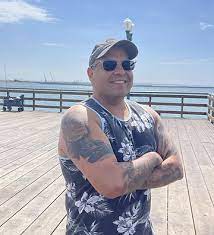
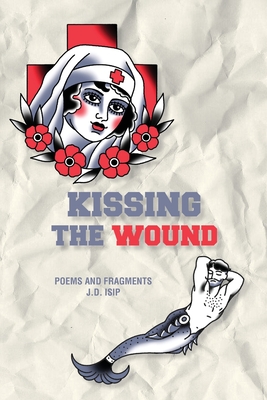
J.D. Isip is originally from Long Beach, California, but has lived the last decade or so in Plano, Texas. He received his MA from California State University, Fullerton, and his PhD from Texas A&M University-Commerce. He is a Professor of English at Collin College in North Texas, and he serves as an editor for The Blue Mountain Review. His poetry, plays, short fiction, and essays have appeared in a variety of journals and magazines. His first full-length collection, Pocketing Feathers, was published by Sadie Girl Press (2015). His new collection, Kissing the Wound, was published earlier this year by Moon Tide Press. In Kissing the Wound, J.D. asks readers to look through a multiversal lens to consider how our lives and our loves, our traumas and our triumphs, fold in on one another. J.D. was kind enough to answer some questions about Kissing the Wound, as well as to offer advice about how to approach writing about trauma, and how to mix forms—including fragments—to inform a larger narrative.
DL: I love the title of your newest collection, Kissing the Wound, and how it speaks to the ways our most traumatic experiences shape us. I’m thinking too of the beautiful opening lines from your poem Tornado Radio, “Nostalgia, defined, is a scar in your mind, / that pulled at or picked, bleeds across time…” Do you have advice for writing about trauma, particularly the difficult task of stepping outside of yourself to craft personal experience into art?
JI: Thank you so much, Denton. The story behind this title, but also behind a lot of things I’ve written and revised over the years is that we (the writers) are sometimes too laser focused on a particular idea. This can be useful, and I personally love many poets who would fall into this category (Victoria Chang, Richie Hofmann, and Patrick Phillips come to mind) of being meticulous almost to the point of obsession. With this book, I had picked the title Number Our Days early on. There’s a lot of Bible in much of what I write, so it seemed a good choice. Plus, the fragmented nature of the book seemed to pair well with this idea of trying to count or recount the days we live, have lived, and will live. Well, very late into the editing process, my publisher calls me and says, “We have a problem, J.D. Neil Hilborn has a book and a poem called Our Numbered Days, and, man, I just don’t feel comfortable doing something that sounds so much like that title.” I kinda panicked, but I had just finished a poem that I moved to the front of the book – “Kissing the Wound.” I suggested it as an alternative, and my publisher, Eric, was like, “Oh man! That’s perfect! It’s better!” That was that.
See, in my mind the book was about recounting, about “memoir-izing” my past in lyric form. But, as you point out, it was much simpler than that. It was about trauma, both individual and collective. What I want to say, the advice I would give here about writing trauma, is maybe not something I always follow, but it is certainly something I strive for. I think it’s important for us to push against two impulses: one, to relive the trauma in some masochistic or voyeuristic way; two, to homilize the trauma to the “all things happen for a reason” point of dishonesty. Instead, I think it’s better to pluck out the particulars, as much as you can remember, and let the scene and/or the action take the lead over whatever “lesson” we are trying to communicate. Also, be gut-wrenchingly honest, or what is the point? I think of student papers where maybe they spend pages talking about a really screwed up relationship with a parent or an abusive love, then the last paragraph is, “But I am happy that happened, or I wouldn’t be who I am today. I don’t even think about it anymore.” Um, Sure, Jan.
To that final point of, to paraphrase, moving from “Dear Diary” to something more universal, or at least welcoming to readers – read, read, read. What you are talking about is something that we learn by watching (reading) others do it well. How can I read Audre Lorde or John Keats and feel like I have anything in common with them? But I do. Why? Because I may have never felt romantic love for a woman, but I have felt love… and longing, and all of that. I think when you read widely, your writing starts to feel more like you are in conversation rather than screaming from a soapbox. You’re not under the impression you’re the only one who ever said this or felt this, but your story adds to what has come before. So, yeah, there’s my traditionalist leanings showing!
DL: Kissing the Wound is described as containing “poems and fragments”. I would describe some of these fragments as prose pieces, even as essays. How do poems and nonfiction overlap in terms of their autobiographical qualities? Are there other ways the two forms connect in your mind? Are there challenges to interweaving different genres into one cohesive book?
JI: I love that more and more writers are crossing genre lines or hobbling together so-called “new” genres. Not to get too pedantic, but I think we generationally tend to congratulate ourselves for innovation that has always been there. Take this delineation between poem and play and essay and recipe and whatever else. Alexander Pope, Christine de Pizan, Borges, Eliot, tons of folks were crossing those genre lines decades, centuries before us. But, we forget, and it is always nice when some memory of “permission” stirs in us: Can I do this? Why the hell not?
That preamble is my way of saying, “I know what I am about to say has probably been said before.” Years ago, I had started jotting down “fragments” I thought might be part of something bigger. A book? A memoir? Poems? Maybe. For the most part, I was a little desperate not to lose these moments or images that would pop into my mind. I’ve seen a lot of friends and family die now, and it pains me to see them try to recall something. You see it in their face, in that disappointment: they can’t, it’s gone forever. As writers, we have this unique gift to preserve a little time. That’s how the fragments started.
Because they are more like prose, these pieces definitely lean more into the “lesson” aspect, or homily. Unlike poems, I feel like prose needs to land somewhere for a reader (a poem can just leave you hanging – many times, that’s the point). Donald Murray said that all writing was autobiographical, and I tend to agree. Walt Disney chose Snow White and the Seven Dwarfs as his first feature based almost exclusively on the fact that he remembered reading the story to his daughters. Charlie Brown is basically Charles Schulz. If we accept that whatever we write is going to tell our story, I think it gives us permission to tell bigger stories, stories with more characters, stories where we don’t have to be at the center of the action.
The first prose piece in the book, “How Long Was I Gone,” helped to pull the whole collection together. The night I wrote the first draft, I sent it to my friend Allyson (who wrote my spectacular forward). I was over the moon because all of a sudden I had this idea of how to tie everything I had been working on together. My first book was published in 2015, so it had been years since I had even thought about pulling together another collection. However, just like with that first book, I think when you know you’ve landed on something you have to follow your gut. That’s tricky, because there are many, many writers who will tell you, “My gut tells me every day I should be jotting out a whole collection.” I mean, if that works for you, awesome. Darren Demaree, Nicole Tallman, and Jenn Givhan are my friends who do this—and they just pump out gem after gem. For us mere mortals, it takes a little more time. I think you have to trust your writing to lead you… and you can’t do that if you’re trying to keep up with others. I am a lot happier being able to be truly happy for my friends getting published all over, getting all of the awards – rather than grousing about things being unfair, or “they’re just so much more talented” or “so much more connected” etc. Who cares? Do you. You’ll be okay.
Oh, the interweaving of the prose and poems. One, I saw someone on Twitter griping (shocker, I know) about “people who divide their poetry collections into individual sections”; it’s such a specific and therefore hilarious thing to be miffed about. I have done it with both of my collections, and I am doing it with my third collection. I don’t have any plans to stop. It helps to have those guideposts. It gives you more freedom so your collection can be about one overarching idea but also several smaller ones. Not that a collection has to be about anything, but I tend to like collections that are about something. I feel like the hodgepodge approach is an odd one. If I wanted a grab bag of subject matter, I can just read a poetry journal or magazine. Anyway, the prose pieces in Kissing the Wound started working as these kinds of guideposts, too. I could group them with poems that would, hopefully, emphasize or challenge the point or lesson of the prose piece. I liked that idea of having my cake and eating it too – here’s a lesson, but do I actually buy it? Should you? I had a lot of fun pulling it together, moving things around. I was lucky to have a patient and enthusiastic publisher. And good friends to read over drafts! So important!
DL: I’d like to go back to the idea of the word “fragment” as you use it alongside “poem”. Can you talk about what a poem is or does, for you, in its perfect form? Is it supposed to center on a single moment, an image, an emotion? All of the above or something else?
JI: I did an interview a couple of weeks ago, and I thought of an answer to this question after I said whatever I said during that interview. So, thank you for this chance to redeem myself! For me, poems are questions at their heart. They can sometimes sound like statements, proclamations, edicts, arguments, solutions, and all of that. But not so far behind even the most self-assured poem is a do you think? And I don’t think there is any other genre that has that consistency (except maybe American musical theater). The gift of a poem, then, is that it comes alongside you when “shit doesn’t make sense,” and it says, “Yeah, why is that?” Not, “so let me tell you why that is.”
Prose pieces allow ideas to breathe. That is important. But poems, for me, are in a bit more of a hurry. Prose are the divorced couple in front of the lawyers or the marriage counselor. Poems are the fights before bed, the one liners to poison the kids against the other spouse, the angry sex. You can probably guess which I like reading more. But I make a point to read both and read lots of everything. I think it would be foolish to think prose take longer to write than poems. That was not the case in Kissing the Wound – generally speaking, the poems almost all took longer than the prose pieces. And, because I set up the prose to be fragments – meaning I didn’t have to flesh out each scene, just layered them on top of one another – they were even easier to pull together. Truth be told, we always have a little more fun doing the thing we don’t always do. It was really fun, even freeing to play between genres.
DL: I often ask writers about the process of submitting their manuscripts for publication. Can you describe the time between writing and publishing these stories? How did you connect with Moon Tide Press?
JI: It took me years to write the manuscript, a solid eight years of plugging away. It’s not because I am meticulous or anything like that. It’s because I work full time as a professor, like most other artists I know. I like to think if I were given some sort of writing fellowship, I’d just crank out book after book, year after year. But that’s not true. I’d probably do what I did with my dissertation and with this book – let it simmer for years, then bang it out when I finally get tired of simmering.
I gave myself $300 to send out manuscripts to contests or editors. That’s honestly not a lot when you consider most contests are $25 or more to enter. There are also editors who will take manuscripts via email, so that costs you nothing (no printing, no postage). Moon Tide Press had been on my radar because it’s pretty big in Southern California, where I grew up. You have Red Hen Press, Write Bloody Publishing, and Moon Tide Press – those were the places I was a fan of in grad school, and the places where I had met or seen most of the writers they published. Eric Morago picked up the press years ago. I didn’t know that—but I had read his first collection a while back, and I watched him do some of his slam stuff. I was a big fan (Eric’s easy on the eyes, he has lots of fans).
Anyway, I wrote to my friend who published my first book, Sarah Thursday with Sadie Girl Press. She’d semi-retired at the time, but she was enthusiastic about me getting another book out. I think that’s important. You need to have a group of folks doing this writing thing who you can turn to who will give you honest feedback. This isn’t your mom saying she likes the pretty things you write (though that is nice if you can get it). It’s the friends who will tell you this is what you were meant to do, and they aren’t bullshitting you. They have no reason to. She told me about Moon Tide being open to unsolicited submissions. That’s worth knowing about. A lot of places, especially big publishers, are not going to look at your work unless they have sought you out (this is rare). It’s often in contests where “unknowns” get picked up by the big presses. That’s good, but the odds are generally stacked against you. Especially if you didn’t go to a specific MFA program, didn’t publish in the big magazines, haven’t gone to AWP.
That’s all to say, yeah, I got a lot of rejections. But not as many as I feared. And, as luck would have it, I got an offer for a chapbook the same week Eric accepted my full manuscript. I felt terrible about having to turn down the chapbook, but the publishers were so excited, and that I learned you shouldn’t feel bad if you have to say no to a publisher. They probably have dozens of folks waiting in the wings and, if they are decent folks, they are gonna cheer for you – after all, they just chose you. It should make sense to them.
My friend R. Flowers Rivera came to do a reading at my alma mater, and when I came up to talk with her afterward, she said, “So, when am I going to see a book from you?” This was maybe 2012, and I told her I had submitted to contests for years, but nothing ever came of it. She said, “If the contests don’t pick you, pick yourself. Send out your manuscript.” It took about a year and some kismet with a friend from high school, Sarah, but I got my first book published a few years later. The point is that if you feel like your work needs to be out in the world, you will find a way. It might take some hustle. It might take years. It sounds cliché, but you just have to keep at it. Also, honestly, and you probably know this well, just be incredibly humble when dealing with publishers. They are almost always doing it as a passion project, and they are almost always getting paid far less than they are worth. Being patient and humble goes a long way.
DL: Are there any upcoming opportunities for readers to hear you read from Kissing the Wound either via Zoom or in person?
JI: I will be on #SundaySweetChats with Charles K. Carter on Sunday, May 28th on YouTube. I’ll be the featured reader at The Ugly Mug in Orange, California, on Wednesday, May 31st. And I will be on a future episode of Be Well: A Reading Series hosted by Nicole Tallman. I’d love to see folks in California, and I highly recommend folks check out Charlie and Nicole’s shows. Both have several videos already up.
Huge thanks to J.D. Isip for speaking to me about his new book. Don’t forget to order Kissing the Wound now. Stay tuned for my next post where I’ll share the advice J.D. shared with me about writing about the places we come from, as well as a writing exercise from J.D. based on one of his poems. Make sure you never miss a post by subscribing.










 Denton Loving