
I met Rachel Miranda back in 2012 when we both entered the Writing Seminars at Bennington College. We were placed in the same workshop during our first residency, where we were gifted to learn under the remarkable talents of Brian Morton and Lynne Sharon Schwartz. Despite coming from vastly different backgrounds, Rachel and I found a lot of common ground, especially in workshop, and we’ve managed to keep in touch in the years since we graduated from Bennington.
Rachel is a freelance editor and writing coach based in the metro New York area. Before attending Bennington, she earned a BA in European Cultural Studies from Brandeis University. She is the managing editor of Plamen Press, a small publisher of translated Eastern and Central European literature, and the co-recipient of a Literature Translation Fellowship from the National Endowment for the Arts, among other grants. She agreed to answer a few questions about writing and publishing her debut novel, Broken Chocolate, published by Vine Leaves Press on March 31, 2026.
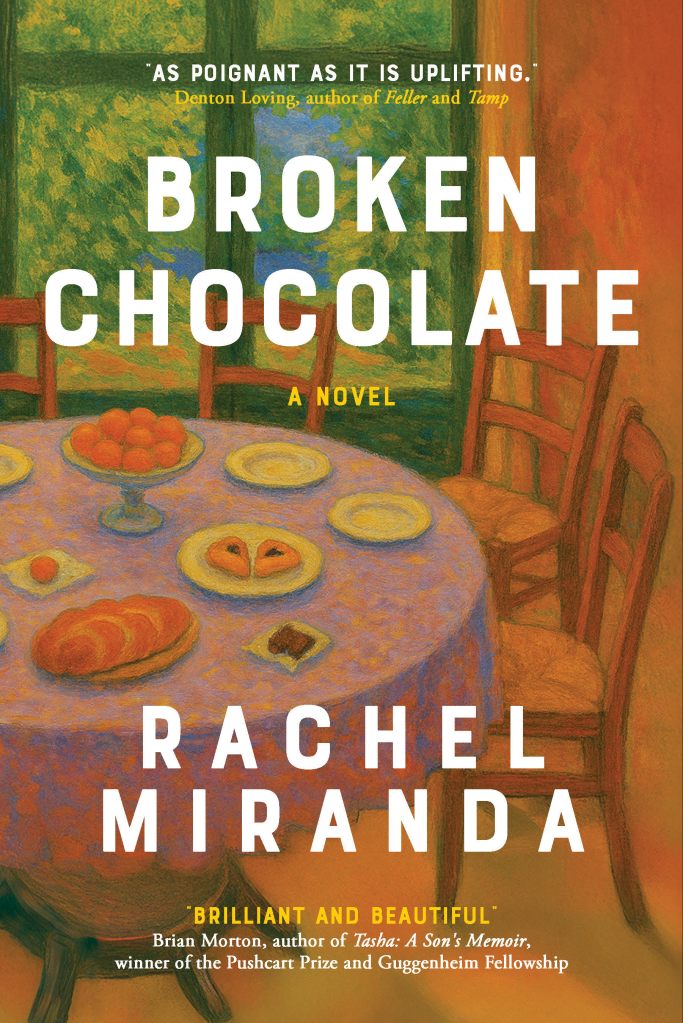
DL: I remember reading chapters from Broken Chocolate back when you and I were in workshops together at Bennington, which was more than a decade ago. How long did it take you to write the novel, and how did it change through different drafts? (Feel free to talk about the winding path to publication here, too, if you want.)
RM: I remember those workshops like they were yesterday. But it was fifteen years ago that I started writing this book. I thought it was finished several times before it really was. In the beginning, I wrote in secret, mostly because I was stunned to realize, in my mid-forties, that I wanted to write fiction. I was an insatiable reader throughout my life, and I’d been a student of nineteenth and early twentieth century European literature as an undergrad. But until it hit me like a lightning strike one day—when a friend of mine announced the publication of her first book—it just never occurred to me that I could add my own words to that body of work that had shaped me. Once I had the thought, I could never unthink it.
So I started at a neighborhood coffee shop, stealing an hour between dropping my four kids off at school and heading to work in my then-husband’s medical practice. It took me two years to write the first draft, and when it was done, I finally came out of my self-imposed closet and got myself to a week-long writer’s workshop at the Fine Arts Work Center, led by Alice Mattison, who also taught at the Bennington Writing Seminars. She was such a gifted and rigorous teacher, I immediately longed for more of that kind of feedback. She encouraged me to apply to Bennington and was a sort of mentor to me there. I revised chunks of Broken Chocolate through workshops and one-on-one critiques, not so much the plot as the flow of the narrative and slowing down for the small details—and I learned tricks for resisting my tendency towards wordiness and over-explaining. I got such positive feedback on the story from our wonderful teachers there that I found the courage to start querying agents during and after our MFA studies. I came close a couple of times, but no dice. After well over 100 rejections, I let Broken Chocolate—and my bruised ego—rest for a while as I worked on a different novel and then a memoir.
I went through several rounds of resting and submitting over the next few years, and then I fell seriously ill with interstitial lung disease and my future became suddenly uncertain. In the reckoning that followed, I realized that getting this story out into the world was one of a few things on my “deathbed list.” How could I make that happen? I decided that it was time for me to give up on the agent search and turn my attention to small presses. A few months—and dozens of bespoke query letters—later, I got what’s called a “revise and resubmit” request from Vine Leaves Press with some very specific suggestions for changes. They are a small but steady and high quality publishing house, and I thought the editor’s ideas were sound, so I dove back into the story, clarifying timelines and gritting my teeth while I eliminated sub-plots I was very attached to in order to tighten the narrative further. “Kill your darlings,” right? I sent it back and was immediately offered a contract. And since then, the story has gone through more small but significant revisions in our pre-publishing process. When I sent in my final copy for layout, I cried all day—from relief and happiness for the leap it took to finally let it go.
DL: I don’t think I’m spoiling anything by revealing that Broken Chocolate begins with one character suffering from a Traumatic Brain Injury (TBI). You write about TBIs so clearly, as well as the recovery process and what it’s like for the family of a TBI patient. You must have researched these areas significantly. Do you have tips for other writers about how to integrate research into fiction, as well as how not to let the research take over the story?
RM: My situation was a bit unusual where research was concerned, because during those early writing years, I was also managing my husband’s medical practice for patients with TBIs and other neurological illnesses and injuries. So I had a veritable front-row seat, not only to clinical information but to the perspectives of staff, patients, and caregivers. I was inspired daily by the resilience and determination and hopefulness of these patients and their families, whose lives had been irrevocably altered. I started to think about how we redefine a meaningful life when the one we envisioned (for ourselves and our children) becomes impossible, and that became the guiding question or theme of Broken Chocolate. When I wrote it, I never could have imagined that this question would take on existential meaning for me during my own illness.
In terms of craft, it was still a challenge to take all the knowledge I had gathered—or absorbed through osmosis—and avoid info-dumping or just losing the reader by being overly detailed. I spent a lot of time thinking about this and found that one of the most natural ways to convey research in my story was through dialogue. I wrote numerous scenes where characters asked questions and information was revealed or explained through the answers they got from more knowledgeable people they were speaking to. Even when Sam Sandor was seeing patients, I gave him a Fellow, a post-grad in training for a specialty, so he could explain procedures or symptoms—or better yet, get her to explain them. I worked hard to make the language of these exchanges realistic, and I was lucky to have lots of examples in my work life to look toward—and a live-in expert to check my work for errors. Mostly, I tried to keep in mind who would be receiving that information and how they would understand it.
DL: You state in your end notes for the novel that the Sandor family is not meant to be a fictionalized version of your own family despite very similar family dynamics. Can you talk about some of the differences and similarities between your family and the Sandors? How did borrowing from a similar family composition help guide you in writing Broken Chocolate?
RM: I think this is one of the great pleasures of writing fiction: to be able to take what you know deeply or have experienced and bend it any which way to work for your story, which then, inevitably, takes on a life of its own. When I started writing Broken Chocolate, my kids were all teenagers, so I had a lot of day-to-day insight into how they operate that I applied to Zev and Zoey, the fifteen-then-sixteen-year-old Sandor twins at the center of the story. The music and art that I’ve woven into the Sandors’ family life likewise is similar to our family life back then. We really did have Friday night jams with our kids when they were growing up. Sometimes we still do, when we can all be together. We really did let our budding-artist daughter paint murals across the whole of her bedroom. More generally, a big family has a certain dynamic that shifts and changes as the children grow and become more independent, and I was trying to capture some of that, from the perspectives of both the kids and the parents. I also should say that in my mind, the story was meant to bring into the light—and by doing so, to expunge—the ever-present fear my then-husband carried around with him, that one of our children would sustain a TBI. But I think the expunging worked better for me than for him. It’s hard not to carry that fear with you when you are on the frontlines of TBI treatment, as he was then and still is, every day.
Occasionally, I borrowed something from my own childhood as well—like when Liv is remembering Zoey preparing for her bat mitzvah, and Zoey says to Liv, “But if you’re not perfect, how can you teach me to be perfect?” That was one of my mother’s favorite stories to tell about young me, and it just seemed to fit with the back history of Zoey that I built into the story. I guess when I said the Sandors are not a proxy for my family, I meant that the specific details of the Sandor kids’ personalities, interests, relationships, physical appearance, particular challenges, and triumphs were not lifted from those of my own kids. I didn’t borrow things they said or did; there are no events in the book that are taken directly from their lives, except for Birthday Breakfast. So, I would say that from a gestalt perspective, there’s a good amount of correlation, but from a minute, detailed perspective, it’s all from my imagination, if that makes sense.
DL: One of the things I remember most vividly about you from when we were both students at Bennington was that you would often share your menus for your family dinners, and they sounded like some of the most elaborate, mouth-watering feasts that I could ever imagine. So I was really excited to see you bring your love for cooking and baking into Broken Chocolate, and it reminded me that you’ve also published a cookbook, The World at Our Table. Was it fun for you to write about something you’re so passionate about?
RM: That part of the writing was pure fun! Giving the character of the mother, Liv, this connection to cooking and baking really allowed me to pour into the story my own passion for making and sharing beautiful food. Some of the dishes I describe in Broken Chocolate are in my cookbook, like the butternut squash lasagna, and the chocolate bread pudding the Sandors always have for Birthday Breakfast. Most of all, I wanted to celebrate the aesthetic and sensual pleasures of cooking and baking, which obviously come with a lot of labor and a certain amount of privilege, but still—we all have to eat every day, right? When circumstances and skills allow that to become a creative endeavor, it brings something else to the table beyond nourishment—a certain light, I think.
Those feasts I used to describe during our grad school days were specifically for Shabbat and Jewish holidays in the years when I was raising my kids as part of a Modern Orthodox Jewish community where everyone stopped their weekday work for 25 hours a week (from sundown Friday to nightfall Saturday) and became something else entirely. My way of being part of that intentional community was that I cooked like crazy every Thursday and invited lots of friends and family to partake. Posting those menus on our grad school Facebook page was my way of expressing how connected I felt to the Bennington community and inviting you all to my table.
If I were to have any advice to give about trying to integrate something you’re passionate about into your stories, it’s to tap into both the minute details of the creative work and the feelings you have when doing that work—delight, satisfaction, a sense of promise or striving or ambition, whatever it is for you—and try to infuse any writing about the process itself with those authentic emotions and sensory details. I’ve found it a strange truth of creative writing that the more particular and detailed you are, the more universally appealing the story is to readers.
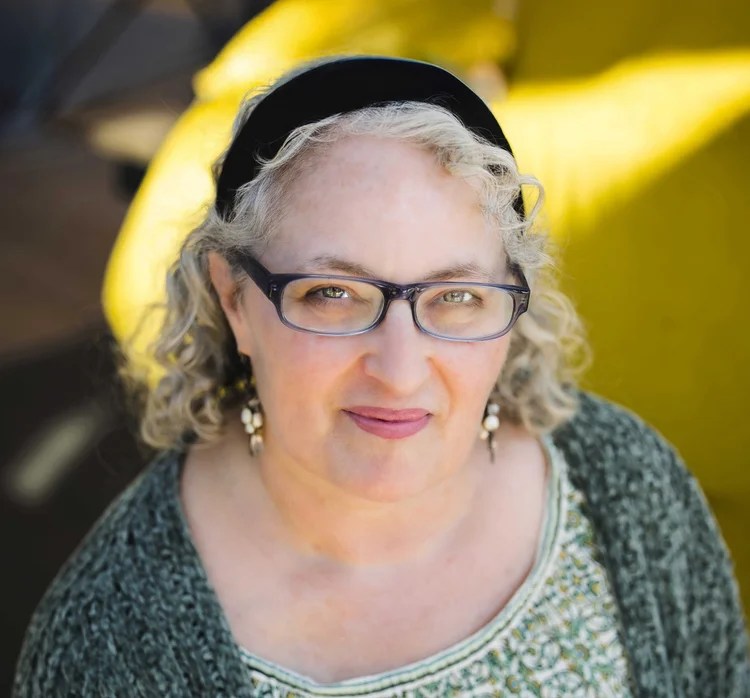
DL: You’ve recently created a Substack titled Air Hunger, where you’re writing about many topics but especially about your recovery from receiving a lung transplant. Do you find that writing about your recovery is part of the healing process? And has your fiction changed or evolved in any ways through this time?
RM: There’s no doubt that writing about this crazy, almost-science-fictional surgery that saved my life on May 4, 2025, is essential for me during this time. It’s hard to wrap my head around the radical thing that was done to my body; it changes things on the cellular level—in every sense of the word. Before the transplant, I was wheeling around giant oxygen tanks behind me everywhere I went; I had to place a chair between my bedroom and living room so I could rest in between; just getting into the car for a medical appointment was inconceivably exhausting. This post-transplant year is no picnic, but I’m alive and breathing freely again. Writing about it on Substack is very challenging emotionally, but it helps me to make sense of what happened—is still happening—and it often reveals new insights to me in the process that would not have come otherwise. I am aware, too, that lung disease is the little-known cousin of cancer and heart disease and Alzheimer’s and even such rare diseases as Lou Gherig’s, all of which have appeared in books and movies and television so that there is some broad cultural understanding of what those illnesses mean for the patient. I feel hopeful that my Substack writing will give readers a glimpse into life with lung disease and life after transplant—and of course, that it will also reach pulmonary patients who are out there, isolated and looking for someone who gets what it’s like to go through this. And there is a certain parallel here to Broken Chocolate, since traumatic brain injuries are not often talked about or depicted, either—and I like the idea that people might come away from reading the book with some insights into TBI that they didn’t have before.
As I mentioned, reviving and revising Broken Chocolate in the middle of my own health crisis was a revelation to me. How did I know, all those years ago, that I needed to tell this story about redefining meaningful life after a catastrophic medical event? It’s a mystery, one that the Substack series is meant to explore, too. And it’s very affirming—serendipitous, I guess you could say—that my book is finally being published at a time when I understand it so much more deeply than when I first wrote it. I think my writing has changed from the very fact of what’s happened, of having to reimagine my life in the aftermath, as the Sandor family does in my book.
~
Many thanks to Rachel for answering these questions. Find out more about Rachel Miranda here, and be sure to order Broken Chocolate.
In case you missed it… I have new poems published in recent issues of Five Poems and Porchlight: A Journal of Southern Literature, and I recently interviewed Stephen Barefoot for Salvation South. I will be offering a virtual workshop about place-based poetry through EastOver Press, and I’d love for you to come write with me.
If you’re not already receiving these posts directly to your inbox, please subscribe.
 Denton Loving