If you’ve read almost any of my writing, you won’t be surprised that place is a central element in both my prose and poetry. So I couldn’t be more excited to be part of tonight’s Celebration of Place Poems, part of the Be Well Reading Series from ELJ Editions & Redacted Books. I’ll be reading alongside J.D. Isip and P. Scott Cunningham.
If you’re in western North Carolina, please come out to the fantastic City Lights Bookstore in Sylva, North Carolina, on Saturday, July 8th at 3:00 p.m. EDT. I feel so lucky to be able to return to City Lights, one of my favorite book stores and one of my favorite places to read. And if that wasn’t enough, there’s more. I’ll be there with my friend Patti Frye Meredith who will be reading from her novel South of Heaven, a great book about a familiarly-dysfunctional family in a small Southern town. (You can read my past conversation with Patti about her book.) South of Heaven was so much fun to read, and it’s always a joy to be in Patti’s company. We both would love the chance to see you in person at City Lights!
Tamp in Chapter 16 & Change Seven
Finally, I want to say how grateful I am for the writers who give their time to reviewing other writers’ books. And especially those who review my book! It was great to see Tamp receive some love in the past few weeks, and I truly appreciate the generous views they’ve taken to my work.
Emily Choate at Chapter 16 said, “…each poem stretches taut between our perception of the material world around us and the ineffable, inescapable pull of a deeper world.”
And Ace Boggess at Change Seven said, “Tamp is not a book to be entered lightly. The poems have been crafted with the grave digger’s precision.”
~
Thanks also to all of you who subscribe to this newsletter, and for all of the ways you’ve already shown support for me and Tamp! Stay tuned for new posts in the coming weeks as I share a new list of summer submission opportunities, as well as my recent conversation with Salvation South‘s new poetry editor.
While I was putting together today’s list of submission opportunities, I discovered that Catamaran Literary Reader is charging $8 for general submissions. That’s insane. My personal philosophy is to never pay this much to submit my work. I’ve been involved with numerous literary journals and organizations over the years, and I understand all of the reasons to charge reading fees and generate income. I’m not opposed to the idea. But $8 is obscene even in a time plagued with inflation. Back to my own philosophy on the matter: There are too many good journals who don’t charge at all or who only charge a nominal fee. Submitting work can be expensive, and I try to take that into account when I compile submission lists. You’ll notice that some of today’s opportunities do come along with application or submission fees. Again, I’m not opposed to the concept. The key, I believe, is to make sure the benefit is proportionate to the risk and/or reward. In that spirit, here are 10 opportunities I recommend. Good luck!
Cimarron Review We accept submissions year-round in poetry, fiction, nonfiction, and art. Please include a cover letter with your submission. Please send 3-6 poems, one piece of fiction, or one piece of nonfiction. Please only submit to one genre at a time. Address all work to the appropriate editor. https://cimarronreview.com/submit/
Southeast Review The Southeast Review publishes poetry, literary fiction, creative nonfiction, and art in each biannual issue as well as on SER Online, in addition to online book reviews and interviews. We pride ourselves on presenting emerging writers alongside well-established ones. Please submit one double-spaced short story of up to 7500 words. Please submit no more than 5 single-spaced poems at a time, with a maximum of 15 pages per total submission. Place all poems in one document. https://www.southeastreview.org/general-submissions
32 PoemsWe welcome unsolicited poetry year round and accept simultaneous submissions. As a rule we publish shorter poems that fit on a single page (about 32 lines), though we sometimes make exceptions to accommodate remarkable work that runs a little longer. $3 submission fee. http://www.32poems.com/submission-guidelines
Berkeley Fiction Review Berkeley Fiction Review accepts short fiction, sudden fiction, comics, and art submissions. We look for innovative and reflective short fiction from new and emerging writers across all genres that play with form and content, as well as traditionally constructed stories with fresh voices and original ideas that say something new or bring nuance and perspective to an ongoing cultural conversation. https://berkeleyfictionreview.org/submit/
Juked There are no limits on word count for online fiction or nonfiction—we like narratives and essays of all sizes, so long as the colors fit. For our print issue, we accept prose submissions of at least 2,500 words. For poetry, we are looking for long poems (four pages or longer) or sequences of two or more linked poems. Submit a maximum of five poems. We read year-round. http://www.juked.com/info/submit.asp
Key West Literary Seminar Emerging Writer Awards The Cecelia Joyce Johnson Award, Scotti Merrill Award, and Marianne Russo Award recognize and support writers who possess exceptional talent and demonstrate potential for lasting literary careers. Each award is tailored to a particular literary form. The Merrill Award recognizes a poet, while fiction writers may apply for either the Johnson Award (for a short story) or the Russo Award (for a novel-in-progress). Winners of the 2024 Emerging Writer Awards will receive full tuition support for our January 2024 Seminar and Writers’ Workshop Program, round-trip airfare, lodging, a $500 honorarium, and the opportunity to appear on stage during the Seminar. There is a $12 application fee. Deadline is June 30, 2023. https://www.kwls.org/awards/emerging-writer-awards/
Rhino PoetryRhino looks for the best-unpublished poems, translations, and flash fiction/nonfiction by local, national, and international writers. We welcome all styles of writing, particularly that which is well-crafted, uses language lovingly and surprisingly, and feels daring or quietly powerful. General submissions are open through June 30, 2023. https://rhinopoetry.org/general-submissions
Muzzle Magazine Muzzle publishes poetry, interviews, and book reviews. We are actively seeking submissions in poetry and are also open to queries about reviews and interviews. Please send 3-5 poems at a time. Include all poems in one DOC or PDF file. Make sure that your name does not appear anywhere in the document or submission title; our editors like to view submissions blindly. We are open from June 15 through July 15, 2023. http://www.muzzlemagazine.com/submissions.html
Sundress Publications Call for Full-Length Poetry Manuscripts Sundress Publications is open for submissions of full-length poetry manuscripts. All authors are welcome to submit qualifying manuscripts through August 31, 2023, but we especially welcome authors from marginalized and underrepresented communities. We’re looking for manuscripts of forty-eight to eighty (48-80) single-spaced pages; front matter is excluded from page count. Individual pieces or selections may have been previously published in anthologies, chapbooks, print journals, online journals, etc., but cannot have appeared in any full-length collection, including self-published collections. Single-author and collaborative author manuscripts will be considered. There is a $15 reading fee per manuscript, but the fee will be waived for entrants who purchase or pre-order any Sundress title or broadside. http://www.sundresspublications.com/fulllength/2023/06/sundress-opens-for-full-length-poetry-manuscripts/
Ploughshares We accept fiction and nonfiction that is less than 7,500 words. Excerpts of longer works are welcome if self-contained. Submit 1-5 pages of poetry at a time with each poem beginning on a new page. We accept submissions to the journal from June 1, 2023, to January 15, 2024. There is a $3 submission fee. https://www.pshares.org/submit/journal/guidelines
Thanks for reading. Please feel free to share these opportunities with other writers.
~
In case you missed it… I had a wonderful conversation with Patricia Hudson about her novel Traces, which gives voice to Rebecca Boone and her daughters.
~
If you’re not already receiving these posts directly to your inbox, please subscribe.
You may have seen that the writer Martin Amis died last week. I’ve never read any of Amis’s novels, but on hearing the news, I immediately recalled Amis’s short story ”Oktober,” a story that has lingered in my memory because of how much I have admired it ever since the first time I read it 7 or 8 years ago.
I’ve seen this story criticized as “non-fiction-ish” and “lightly fictionalized.” It doesn’t matter to me how much Amis heavily drew from his own experience and observations, as if there’s only a certain amount that’s okay. Rather, this story should be held up as an example of how we can fictionalize our own experiences to find deeper, emotional meaning on the page. Perhaps one reason this story speaks to me is because it’s archetypal in that it portrays a character on a journey, and, as Amis said:
“Even the dullest journey resembles a short story: beginning, middle, end, with the traveler displaced and, we hope, alerted.”
I admire this story for many reasons, most notably because it’s such a well-executed political story. It addresses world events on both the largest and smallest scales. In this case, the story centers on an Englishman in Munich during Oktoberfest, and more importantly, during an influx of Middle Eastern refugee movement. What the narrator witnesses is framed both by literature (Vladimir Nabokov & Thomas Wolfe) and history (Russian refugees in 1917 & German refugees following World War II).
The story’s refugee thread holds continued relevance in light of the migrations being politicized in the United States, centered around the expiration of Title 42.
One of the characters in “Oktober,” Bernhardt, is Iranian-German. He says about the migrants: “You know, they won’t stop coming. They pay large sums of money to risk their lives crossing the sea and then they walk across Europe. They walk across Europe. A few policemen and a stretch of barbed wire can’t keep them out. And there are millions more where they came from. This is going to go on for years. And they won’t stop coming.”
There are also mothers of various types appearing on virtually every page of “Oktober.” And in regard to the mothers that Amis portrays here, I would mention that one thing I admire about this story is how tightly he weaves all the threads of the story. It may not always seem so because the language is conversational, but everything seems to serve a purpose. Everything is connected. Meanwhile, the story is not so economical that it feels austere or lacking. It feels rather sprawling instead.
Amis received criticism during the last several years for some sloppy comments he made about terrorism and extremism. Some of these comments are not so far from those of Geoffrey, a British businessman in “Oktober” who has a less than welcoming attitude towards migrants. Geoffrey is also the character who brings the most shock value to the story. So while he is not a likeable character, he’s incredibly dramatic to follow.
I don’t know if I’ll ever get around to reading any of Amis’s better known works, but it was a pleasure to revisit this story and to remember all of the reasons I admired it in the first place. You can read Martin Amis’s short story, “Oktober,” online at The New Yorker: https://www.newyorker.com/magazine/2015/12/07/oktober. And I hope you will.
~
Thanks for reading. If you’re not already receiving these posts directly to your inbox, please subscribe.
I’ve had a lot of fun this last month as my new collection, Tamp, has found its way into readers’ hands. Thanks to all of you who have ordered the book, and extra thanks to those of you who’ve reached out to let me know what you think about the poems. Just as the days are growing warmer and longer, I’m very aware of how much I hope to accomplish this summer. I have several writing projects that I want to move forward in at least some way. And there also has to be time set aside to submitting our work. To that purpose, I offer this list of one dozen submission opportunities. It’s tempting to pretend most journals are taking the summer off, and maybe we should take it off, too. But neither is exactly true. A lot of great journals, like these 12, are open right now, and would love to read whatever you’ve been writing. Good luck!
Exacting ClamExacting Clam is an online and in print quarterly journal from Sagging Meniscus Press, publishing short fiction, poetry, book, art and music reviews, essays, interviews, and visual art/illustrations. https://www.exactingclam.com/submit/
Florida Review & Aquifer: The Florida Review Online We are looking for innovative, luxuriant, insightful human stories—and for things that might surprise us. Please submit no more than one piece of fiction, nonfiction, graphic narrative, review, or digital story at a time. Poets and visual artists may submit up to (but no more than) five poems or artworks as a single submission. We charge a $2 or $3 submission fee depending on category. https://floridareview.submittable.com/submit
Pithead ChapelPithead Chapel electronically publishes art, literary fiction, nonfiction, and prose poetry monthly. At present, we only accept submissions under 4,000 words. https://pitheadchapel.com/submission-guidelines/
Tipton Poetry Journal The Tipton Poetry Journal is published quarterly both in print and an online archive. The Tipton Poetry Journal publishes about 35 poems each. Poems with the best chance for acceptance are quality free verse which evokes a shared sense of common humanity. The Tipton Poetry Journal is published in Indiana, so themes with a regional focus are encouraged. Submissions are read year-round. http://tiptonpoetryjournal.com/submission.html
Waxwing We read submissions of poetry, short fiction, and literary essays Sept 1 to May 1; translations of poetry and literary prose are read year-round. Each issue features approximately thirteen poets, six prose writers, and six authors in translation. Poets should send one to five poems, and prose writers one story, essay, novella, or novel chapter (or up to three short-short stories or micro-essays). https://waxwing.submittable.com/submit
Qu Qu is a literary journal, published by the MFA program at Queens University of Charlotte. The Qu editorial staff is comprised of current students. We publish fiction, poetry, essays and script excerpts of outstanding quality. Payment upon publication is $100 per prose piece and $50 per poem. Next reading period opens May 15th, 2023. http://www.qulitmag.com/submit/
The Stinging Fly We publish new, previously unpublished work by Irish and international writers. Each issue of The Stinging Fly includes a mix of poetry, fiction, and non-fiction, alongside our Featured Poets and Comhchealg sections, occasional author interviews and novel extracts. We have a particular interest in promoting new writers, and in promoting the short story form. We plan on being open again for submissions from May 16 until May 31 2023, for Issue 49 Volume Two (November 2023). http://www.stingingfly.org/about-us/submission-guidelines
Baltimore Review Summer The Baltimore Review is a quarterly, online literary journal. Submit one short story or creative nonfiction piece, no more than 5,000 words. Submit three poems. Our current submission period runs through May 31, 2023. www.baltimorereview.org
2023 New American Fiction Prize The New American Fiction Prize is awarded each year to a full-length fiction manuscript, such as a story collection, novel, novella(s), or something that blends forms, like a novel in verse. The winner receives $1,500 and a book contract, as well as 25 author’s copies and promotional support. Deadline is June 15, 2023. There is a $25 submission fee. https://newamericanpress.submittable.com/submit
The Fairy Tale Review Founding Editor Kate Bernheimer will edit the twentieth annual issue of Fairy Tale Review. Vol. 20 will not have a theme. We are looking for your best new work. Writers may submit a single prose piece up to 6,000 words or up to three prose pieces under 1,000 words each. We welcome short fiction, essays, lyric nonfiction, and creative scholarship. Submit up to four poems totaling no more than ten pages. Submissions will be accepted through July 15, 2023. http://fairytalereview.com/submit/
Poetry South Poetry South is a national journal that considers all kinds of poetry. Though we pay particular attention to writers from the South — born, raised, or living here — all poetry within our covers has a claim to the South because it is published here. The magazine has a tradition of including poets from other regions in the US and other countries. We are looking for a great mix of styles and voices that will appeal to our audience and breathe new life into the poetry of the South. Send 1-4 unpublished poems in Word or RTF format. Our annual submission deadline is July 15. https://www.muw.edu/poetrysouth/submit
Masque & Spectacle Masque & Spectacle is a bi-annual arts and literary journal.We publish short fiction of all genres, up to 7,500 words. We are looking for unpublished nonfiction essays, literary analysis pieces, and personal essay/memoirs of up to 7,500 words. We are looking for all forms of poetry, including formal and experimental work. Submit work to be included in our next issue between May 1 and July 31, 2023. http://masqueandspectacle.com/submission-guidelines/
Thanks for reading. Please feel free to share these opportunities with other writers. If you’re not already receiving these posts directly to your inbox, please subscribe.
Coming up… Join me Tuesday, May 16, at 7:00 p.m., as I speak with Erica Nichols-Frazer about her book, Feed Me, in Birch Bark Editing’s InConversation series. The event is free but registration is required. I hope to see you there.
The Artist’s Statement has only been around for a little over 2 years, but in that time, some amazing writers have been featured there, writers such as Nikki Giovanni, Kathy Fish and Colm Toibin, just to name a few. Somehow, I am fortunate enough to now be included on that list. Huge thanks to my friend Davin Malasarn for inviting me to talk about Tamp, and some of the ideas that Tamp explores such as ancestry, mythology, and our interactions with both the natural and dream worlds.
In addition to producing awesome podcasts that talk about writing, The Granum Foundation is also doing wonderful work to support writers and their projects through the Granum Foundation Prize and the Granum Foundation Translation Prize. The Foundation Prize is a $5,000 award for one writer, and up to three finalists are awarded $500 or more. The Translation Prize is an award of $1,500 or more.
Coming up later this week, I’ll share a new list of submission opportunities for writers. And next week, I’ll be in conversation with Erika Nichols-Frazer about her memoir, Feed Me, sponsored by Birch Bark Editing. The online event is free, but registration is required. Hope to see you there.
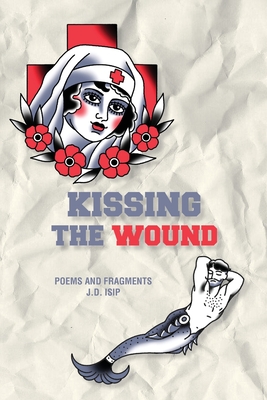
In my previous post, I had a wonderful conversation with J.D. Isipabout his new collection Kissing the Wound. One of the threads in these poems explores the way we are connected to place. One of the places J.D. writes about is The Carmelitos Public Housing Development where he grew up. While reading Kissing the Wound, I admired the way he was able to write about that place and others from multiple views such as from the present and the past, from the inside and the outside. I mentioned to J.D. how place-based writing is always on interest to me, and I asked if he had any advice for writing about place. I’ll share J.D.’s response here:
J.D. Isip: Yes, after reading Tamp, I can definitely see how important place is to you. My time in Carmelitos was from my childhood, over forty years ago. I think that distance in time helped me to be more objective. I like a lot of the ideas of psychogeography, the idea that there is a spiritual imprint on a place that never goes away, that there are times that keep playing over and over just beyond our vision. One might say that I write about Carmelitos from a place of disdain, but I don’t think that’s entirely true. It was a difficult place to exist in, but, going back to the idea of trauma, I think any place can be difficult to exist in depending on what you might be going through. Yes, I lived in the hood at the height of the Crips and the Bloods, but how does that compare to a middle-class woman in a seemingly loving relationship who just can’t find the will to get out of bed, the depression is so bad? So, for me, I try to think back to whatever I was holding onto – maybe it was my mom or my brother, maybe it was the beautiful neighbor boy who was kind to me, maybe it was my white-hot hatred for being poor or hungry. Whatever it was, I think you have to excavate it like an anthropologist (or whatever Indiana Jones was). You have to be willing to look at a past where you weren’t always right, where you made mistakes, where things weren’t always black and white.
My best advice here, and again, after reading your work, I think you might agree, is you have to talk to everyone you can who existed where you existed. Get their stories. See what they verify or contradict. If you can, use their voices. I like having other characters speak in my work. Yes, I am giving them those words, but I feel like there’s a little more ethos there. It’s like, “Oh, I believe everything about Spoon River, cause all these dead folks told me so!” Also, one of my mentors, Frank Gaspar, told me that the more specific you get in the details, the more universal your message can be. So, it’s not just this tree or that flower, it’s the specific kind, the color, the stage they are in growth, etc. For Camelitos, in “Carmelitos Ever After,” I wanted to take the reader through that psychogeographic journey – this is what was, what is, what ever shall be.
DL: One of my favorite poems in Kissing the Wound is “Leaving Krypton”. I quickly knew that I’d love to share this poem on my blog because the conceit is so interesting and makes for a wonderful prompt. Thanks to J.D. for allowing me to share the poem here.
Leaving Krypton for Anne
It is better you had not stayed long enough to know what alchemy binds us to a place, how extracting yourself begins a dissolution, the cloud-capped towers, the cracked cement slab you’d jump every day on your way to school, the band you worshipped, a dog you pet in your sleep, friends, parents, all
melt away before you think to look back, you think turning around, just a glance, will be too much for you and you are right, some ancient knowledge forces your stare forward, drowns out the chain-reacting atoms, the splitting crust of a world where once you were essential as its gravity, its rotation, its sun—
But, O! What crests into view? A light you never felt pulls you closer, a strength you’ve never had takes over, and you are flying this foreign galaxy, feeling yourself for the first time yourself, arms outstretched, open to embrace a brand-new atmosphere, the sweet air, a woman you kiss to sleep, adopted parents, friends, all
will need your new powers to survive this new adventure: x-ray vision to see the imposters; piercing heat to bore deep into layers of tradition, stubbornness, scars; a cold breath for those who call you a false god; and the wisdom to keep that shrunken city from this place as a reminder we never fully lose the past, but what we knew is gone
the instant that we leave it.
DL: One reason I love “Leaving Krypton” is because it is infused with all of the qualities of place-based writing. Even though a specific place isn’t named, the reader gains a sense of the place based on the place’s specific imagery. The sense of that place is expanded by ideas of what will be left behind as well as what will be gained, as well as the strengths that were gained (and will be exported) as we leave the place we’re from. The title allows us to connect the place with the fictional Krypton even though we retain the sense that a more-realistic setting is being described. I asked J.D. if he could relay the inspiration for this poem, and how he came up with the idea to write it from the angle of what I assumed was Superman.
JI: Thank you for asking about this poem, means a lot. One of my best friends, Anne, whom the poem is dedicated to, had hit a real crossroads in her life. I talk a little about it in Kissing the Wound, specifically the prose piece, “A Wedding at Cana.” She’d been in this long, emotionally abusive relationship, her work situation was getting pretty bad, and she had just, pretty late in life, accepted that she was a lesbian. I mean damn, one of those would put me under! After a lot of me and other friends telling her to leave this place, she finally did. She did it for her and for her son. And it was one of the bravest, scariest things I’d ever seen a person do.
I wanted to write something to say goodbye. Superman is one of my favorite characters, so of course I thought of him. But I actually thought of Kara, Supergirl. But Anne and Kal shared more, so I just followed Kal’s story. And I threw in a couple of nods to things she’d know were me saying goodbye – the “O” for Walt Whitman and the “cloud capped towers” for Shakespeare. I wrote it in one night, and I read it to her as she was driving away. We both cried. My hope was that she would see her move as so much bigger than it was, and that she wasn’t only running away from her past but running toward her future. I’m a cheesy person. It took everything in me not to say somewhere, “The S stands for hope” – but it’s implied.
Prompt: If you’d like to use “Leaving Krypton” as a prompt for your own poem, then you probably need to begin with the title by which I also mean you begin with a fictional place. This should be informed by your own interests and likes. J.D. Isip loves to call himself a nerd because he likes, among other things, comic books and superheroes. Krypton is immediately recognizable to most readers. So begin by selecting a fictional place to draw on that will also be fairly recognizable: Gotham, Neverland, The Emerald City, Mansfield Park, Yoknapatawpha County.
Begin your poem, not with this fictional place but with details from the real place that you are writing about. Or from your life if you’re writing about yourself. Think about J.D.’s “cracked cement slab you’d jump every / day on your way to school.” That could be from anywhere, but it feels meaningful because the reader understands it’s from personal experience.
The important factor about the fictional place you pick is that you must know some strengths about the character related to that place. Because you will want to draw on those strengths as your work through your own poem.
I think this is an exercise that can be applied, not only to poetry, but to creative nonfiction and fiction. Give it a try. And if you are able to write something from this prompt, send it to me. I’d love to see it.
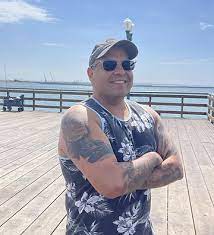
J.D. Isip is originally from Long Beach, California, but has lived the last decade or so in Plano, Texas. He received his MA from California State University, Fullerton, and his PhD from Texas A&M University-Commerce. He is a Professor of English at Collin College in North Texas, and he serves as an editor for The Blue Mountain Review. His poetry, plays, short fiction, and essays have appeared in a variety of journals and magazines. His first full-length collection, Pocketing Feathers, was published by Sadie Girl Press (2015). His new collection, Kissing the Wound, was published earlier this year by Moon Tide Press. In Kissing the Wound, J.D. asks readers to look through a multiversal lens to consider how our lives and our loves, our traumas and our triumphs, fold in on one another. J.D. was kind enough to answer some questions about Kissing the Wound, as well as to offer advice about how to approach writing about trauma, and how to mix forms—including fragments—to inform a larger narrative.
DL: I love the title of your newest collection, Kissing the Wound, and how it speaks to the ways our most traumatic experiences shape us. I’m thinking too of the beautiful opening lines from your poem Tornado Radio, “Nostalgia, defined, is a scar in your mind, / that pulled at or picked, bleeds across time…” Do you have advice for writing about trauma, particularly the difficult task of stepping outside of yourself to craft personal experience into art?
JI: Thank you so much, Denton. The story behind this title, but also behind a lot of things I’ve written and revised over the years is that we (the writers) are sometimes too laser focused on a particular idea. This can be useful, and I personally love many poets who would fall into this category (Victoria Chang, Richie Hofmann, and Patrick Phillips come to mind) of being meticulous almost to the point of obsession. With this book, I had picked the title Number Our Days early on. There’s a lot of Bible in much of what I write, so it seemed a good choice. Plus, the fragmented nature of the book seemed to pair well with this idea of trying to count or recount the days we live, have lived, and will live. Well, very late into the editing process, my publisher calls me and says, “We have a problem, J.D. Neil Hilborn has a book and a poem called Our Numbered Days, and, man, I just don’t feel comfortable doing something that sounds so much like that title.” I kinda panicked, but I had just finished a poem that I moved to the front of the book – “Kissing the Wound.” I suggested it as an alternative, and my publisher, Eric, was like, “Oh man! That’s perfect! It’s better!” That was that.
See, in my mind the book was about recounting, about “memoir-izing” my past in lyric form. But, as you point out, it was much simpler than that. It was about trauma, both individual and collective. What I want to say, the advice I would give here about writing trauma, is maybe not something I always follow, but it is certainly something I strive for. I think it’s important for us to push against two impulses: one, to relive the trauma in some masochistic or voyeuristic way; two, to homilize the trauma to the “all things happen for a reason” point of dishonesty. Instead, I think it’s better to pluck out the particulars, as much as you can remember, and let the scene and/or the action take the lead over whatever “lesson” we are trying to communicate. Also, be gut-wrenchingly honest, or what is the point? I think of student papers where maybe they spend pages talking about a really screwed up relationship with a parent or an abusive love, then the last paragraph is, “But I am happy that happened, or I wouldn’t be who I am today. I don’t even think about it anymore.” Um, Sure, Jan.
To that final point of, to paraphrase, moving from “Dear Diary” to something more universal, or at least welcoming to readers – read, read, read. What you are talking about is something that we learn by watching (reading) others do it well. How can I read Audre Lorde or John Keats and feel like I have anything in common with them? But I do. Why? Because I may have never felt romantic love for a woman, but I have felt love… and longing, and all of that. I think when you read widely, your writing starts to feel more like you are in conversation rather than screaming from a soapbox. You’re not under the impression you’re the only one who ever said this or felt this, but your story adds to what has come before. So, yeah, there’s my traditionalist leanings showing!
DL: Kissing the Wound is described as containing “poems and fragments”. I would describe some of these fragments as prose pieces, even as essays. How do poems and nonfiction overlap in terms of their autobiographical qualities? Are there other ways the two forms connect in your mind? Are there challenges to interweaving different genres into one cohesive book?
JI: I love that more and more writers are crossing genre lines or hobbling together so-called “new” genres. Not to get too pedantic, but I think we generationally tend to congratulate ourselves for innovation that has always been there. Take this delineation between poem and play and essay and recipe and whatever else. Alexander Pope, Christine de Pizan, Borges, Eliot, tons of folks were crossing those genre lines decades, centuries before us. But, we forget, and it is always nice when some memory of “permission” stirs in us: Can I do this? Why the hell not?
That preamble is my way of saying, “I know what I am about to say has probably been said before.” Years ago, I had started jotting down “fragments” I thought might be part of something bigger. A book? A memoir? Poems? Maybe. For the most part, I was a little desperate not to lose these moments or images that would pop into my mind. I’ve seen a lot of friends and family die now, and it pains me to see them try to recall something. You see it in their face, in that disappointment: they can’t, it’s gone forever. As writers, we have this unique gift to preserve a little time. That’s how the fragments started.
Because they are more like prose, these pieces definitely lean more into the “lesson” aspect, or homily. Unlike poems, I feel like prose needs to land somewhere for a reader (a poem can just leave you hanging – many times, that’s the point). Donald Murray said that all writing was autobiographical, and I tend to agree. Walt Disney chose Snow White and the Seven Dwarfs as his first feature based almost exclusively on the fact that he remembered reading the story to his daughters. Charlie Brown is basically Charles Schulz. If we accept that whatever we write is going to tell our story, I think it gives us permission to tell bigger stories, stories with more characters, stories where we don’t have to be at the center of the action.
The first prose piece in the book, “How Long Was I Gone,” helped to pull the whole collection together. The night I wrote the first draft, I sent it to my friend Allyson (who wrote my spectacular forward). I was over the moon because all of a sudden I had this idea of how to tie everything I had been working on together. My first book was published in 2015, so it had been years since I had even thought about pulling together another collection. However, just like with that first book, I think when you know you’ve landed on something you have to follow your gut. That’s tricky, because there are many, many writers who will tell you, “My gut tells me every day I should be jotting out a whole collection.” I mean, if that works for you, awesome. Darren Demaree, Nicole Tallman, and Jenn Givhan are my friends who do this—and they just pump out gem after gem. For us mere mortals, it takes a little more time. I think you have to trust your writing to lead you… and you can’t do that if you’re trying to keep up with others. I am a lot happier being able to be truly happy for my friends getting published all over, getting all of the awards – rather than grousing about things being unfair, or “they’re just so much more talented” or “so much more connected” etc. Who cares? Do you. You’ll be okay.
Oh, the interweaving of the prose and poems. One, I saw someone on Twitter griping (shocker, I know) about “people who divide their poetry collections into individual sections”; it’s such a specific and therefore hilarious thing to be miffed about. I have done it with both of my collections, and I am doing it with my third collection. I don’t have any plans to stop. It helps to have those guideposts. It gives you more freedom so your collection can be about one overarching idea but also several smaller ones. Not that a collection has to be about anything, but I tend to like collections that are about something. I feel like the hodgepodge approach is an odd one. If I wanted a grab bag of subject matter, I can just read a poetry journal or magazine. Anyway, the prose pieces in Kissing the Wound started working as these kinds of guideposts, too. I could group them with poems that would, hopefully, emphasize or challenge the point or lesson of the prose piece. I liked that idea of having my cake and eating it too – here’s a lesson, but do I actually buy it? Should you? I had a lot of fun pulling it together, moving things around. I was lucky to have a patient and enthusiastic publisher. And good friends to read over drafts! So important!
DL: I’d like to go back to the idea of the word “fragment” as you use it alongside “poem”. Can you talk about what a poem is or does, for you, in its perfect form? Is it supposed to center on a single moment, an image, an emotion? All of the above or something else?
JI: I did an interview a couple of weeks ago, and I thought of an answer to this question after I said whatever I said during that interview. So, thank you for this chance to redeem myself! For me, poems are questions at their heart. They can sometimes sound like statements, proclamations, edicts, arguments, solutions, and all of that. But not so far behind even the most self-assured poem is a do you think? And I don’t think there is any other genre that has that consistency (except maybe American musical theater). The gift of a poem, then, is that it comes alongside you when “shit doesn’t make sense,” and it says, “Yeah, why is that?” Not, “so let me tell you why that is.”
Prose pieces allow ideas to breathe. That is important. But poems, for me, are in a bit more of a hurry. Prose are the divorced couple in front of the lawyers or the marriage counselor. Poems are the fights before bed, the one liners to poison the kids against the other spouse, the angry sex. You can probably guess which I like reading more. But I make a point to read both and read lots of everything. I think it would be foolish to think prose take longer to write than poems. That was not the case in Kissing the Wound – generally speaking, the poems almost all took longer than the prose pieces. And, because I set up the prose to be fragments – meaning I didn’t have to flesh out each scene, just layered them on top of one another – they were even easier to pull together. Truth be told, we always have a little more fun doing the thing we don’t always do. It was really fun, even freeing to play between genres.
DL: I often ask writers about the process of submitting their manuscripts for publication. Can you describe the time between writing and publishing these stories? How did you connect with Moon Tide Press?
JI: It took me years to write the manuscript, a solid eight years of plugging away. It’s not because I am meticulous or anything like that. It’s because I work full time as a professor, like most other artists I know. I like to think if I were given some sort of writing fellowship, I’d just crank out book after book, year after year. But that’s not true. I’d probably do what I did with my dissertation and with this book – let it simmer for years, then bang it out when I finally get tired of simmering.
I gave myself $300 to send out manuscripts to contests or editors. That’s honestly not a lot when you consider most contests are $25 or more to enter. There are also editors who will take manuscripts via email, so that costs you nothing (no printing, no postage). Moon Tide Press had been on my radar because it’s pretty big in Southern California, where I grew up. You have Red Hen Press, Write Bloody Publishing, and Moon Tide Press – those were the places I was a fan of in grad school, and the places where I had met or seen most of the writers they published. Eric Morago picked up the press years ago. I didn’t know that—but I had read his first collection a while back, and I watched him do some of his slam stuff. I was a big fan (Eric’s easy on the eyes, he has lots of fans).
Anyway, I wrote to my friend who published my first book, Sarah Thursday with Sadie Girl Press. She’d semi-retired at the time, but she was enthusiastic about me getting another book out. I think that’s important. You need to have a group of folks doing this writing thing who you can turn to who will give you honest feedback. This isn’t your mom saying she likes the pretty things you write (though that is nice if you can get it). It’s the friends who will tell you this is what you were meant to do, and they aren’t bullshitting you. They have no reason to. She told me about Moon Tide being open to unsolicited submissions. That’s worth knowing about. A lot of places, especially big publishers, are not going to look at your work unless they have sought you out (this is rare). It’s often in contests where “unknowns” get picked up by the big presses. That’s good, but the odds are generally stacked against you. Especially if you didn’t go to a specific MFA program, didn’t publish in the big magazines, haven’t gone to AWP.
That’s all to say, yeah, I got a lot of rejections. But not as many as I feared. And, as luck would have it, I got an offer for a chapbook the same week Eric accepted my full manuscript. I felt terrible about having to turn down the chapbook, but the publishers were so excited, and that I learned you shouldn’t feel bad if you have to say no to a publisher. They probably have dozens of folks waiting in the wings and, if they are decent folks, they are gonna cheer for you – after all, they just chose you. It should make sense to them.
My friend R. Flowers Rivera came to do a reading at my alma mater, and when I came up to talk with her afterward, she said, “So, when am I going to see a book from you?” This was maybe 2012, and I told her I had submitted to contests for years, but nothing ever came of it. She said, “If the contests don’t pick you, pick yourself. Send out your manuscript.” It took about a year and some kismet with a friend from high school, Sarah, but I got my first book published a few years later. The point is that if you feel like your work needs to be out in the world, you will find a way. It might take some hustle. It might take years. It sounds cliché, but you just have to keep at it. Also, honestly, and you probably know this well, just be incredibly humble when dealing with publishers. They are almost always doing it as a passion project, and they are almost always getting paid far less than they are worth. Being patient and humble goes a long way.
DL: Are there any upcoming opportunities for readers to hear you read from Kissing the Wound either via Zoom or in person?
JI: I will be on #SundaySweetChats with Charles K. Carter on Sunday, May 28th on YouTube. I’ll be the featured reader at The Ugly Mug in Orange, California, on Wednesday, May 31st. And I will be on a future episode of Be Well: A Reading Series hosted by Nicole Tallman. I’d love to see folks in California, and I highly recommend folks check out Charlie and Nicole’s shows. Both have several videos already up.
Huge thanks to J.D. Isip for speaking to me about his new book. Don’t forget to order Kissing the Wound now. Stay tuned for my next post where I’ll share the advice J.D. shared with me about writing about the places we come from, as well as a writing exercise from J.D. based on one of his poems. Make sure you never miss a post by subscribing.
Since it’s still January, it feels acceptable to still wish you a happy new year. In yet another attempt to get the year off to a good start, I spent much of yesterday sorting through these calls and submitting my own work. I was reminded both of how much time and effort it takes, and how important it is. Submitting is vastly different than the work of writing. We can be steadfast writers, dedicated to our craft, but the act of submitting our work forces us to evaluate our words in new ways. Which of my poems work together? Which of my essays is the most ready for others to read? Which of my stories is a good fit for this journal? Sometimes we’re lucky and our work is accepted. But even rejection can prompt us to see our pieces under new eyes. If we’re very fortunate, a kind editor takes time to offer a word of encouragement or advice. So yeah, I believe submitting is an important part of our job as a writer. Toward that end, I offer this list of one dozen submission opportunities. Good luck!
Glass: A Journal of Poetry Glass is back and now actively accepting submissions. We’ll be publishing weekly, a single poem every Wednesday, starting in July and we’d love to see your work. We’ll never charge reading fees and we’ll read year-round (except in March when we’ll be reading chapbook submissions). Past contributors have included Rane Arroyo, Saeed Jones, Lisa Fay Coutley, Adam Tavel, Sandy Longhorn, and Xochitl-Julisa Bermejo, among many many others. Past work has been included in Sundress Publication’s Best of the Net and on Verse Daily. Submit 3-5 poems, any style, any length. http://www.glass-poetry.com/journal/submit.html
Café Review Submit up to three unpublished poems in one file. The Café Review welcomes both new and established voices and has no limitations or preferences as to form or style. We publish the most exciting, impressive, and affecting poems that come to us. https://www.thecafereview.com/submissions/poetry/
Prelude Prelude is a journal of poetry and criticism based in New York. We publish online quarterly. Send us up to 8 pages of poetry. Send us a draft or a description of an essay. It could be a critical essay, an experimental essay, a personal essay relating to poetry, etc. https://preludemag.com/about/
Hawai`i Pacific Review HPC is Hawai`i Pacific University’s award-winning online literary magazine. While we often publish work about Hawai`i and the Pacific, we accept great work from all regions and on all subjects. Submit no more than 3 poems at a time. Fiction and Creative Nonfiction submissions should be less than 4000 words. We also accept flash fiction and flash nonfiction up to 750 words. Deadline: February 4, 2023. https://hawaiipacificreview.org/submissions/
Orange Blossom Review OBR publishes innovative poetry, short fiction, creative nonfiction, and visual art. Submit short fiction and creative nonfiction up to 5,000 words. Submit up to three poems. We accept unsolicited general submissions through February 15, 2023. https://orangeblossomreview.org/
Swing Swing is home for the emerging writer to the renowned, the discovered to the too-long neglected. We are creating a magazine with the energy and verve of its home city, Nashville, a town of vagabonds and roots, where new influences course through the old. Swing wants the poetry, fiction (auto-, hybrid, very short, or regular but extraordinary), nonfiction (creative, travel, personal, hybrid, surely there are other variations), and comics that could only have been written by you. Submit up to 5 poems or up to 8,000 words of prose. Deadline: February 16, 2023. https://www.porchtn.org/swing
Dunes Review The Dunes Review is published in northern lower Michigan, a place of exquisite natural beauty and hardy local culture. Place is really important to us. Not only physical place, but the place created in a piece of writing. The feeling of being rooted in any somewhere grounds our work. If your work expresses or includes a significant tie to a significant somewhere, we are bound to love it. You and your work do not necessarily need a tie to a Michigan location, but we do appreciate work that fits Michigan-like themes or motifs. We consider short fiction or creative nonfiction up to 3,000 words, or up to 4 poems. Deadline: March 1, 2023, or when we have received 300 submissions, whichever comes first. www.michwriters.org/dunesreview/dunes-review-submission-guidelines/
Gulf Coast Stories and essays should be no more than 7,000 words. Send up to 5 poems per submission. Gulf Coast typically commissions book reviews, but unsolicited reviews are accepted and occasionally published. We are particularly interested in reviews of first or second books. Interviews should not exceed twelve pages. Deadline: March 1, 2023. http://gulfcoastmag.org/submit/
Barrow Street BS is a nonprofit literary arts organization that was started in Greenwich Village, NYC in 1994. Submit up to five manuscript pages. Response time is one week to four months. Deadline: March 31, 2023. http://barrowstreet.org/press/submit/
Raleigh Review General submissions are open from January through March for Poetry. Send up to 5 poems. Deadline: March 31, 2023. https://www.raleighreview.org/submit.html
Salamander Published biannually, Salamander features poetry, fiction, and nonfiction. Submit no more than five poems at a time, OR one story or memoir at a time, OR up to three flash pieces in either fiction or nonfiction. Deadline: April 1, 2023. https://salamandermag.org/how-to-submit/
Asheville Poetry Review APR is an annual literary journal that publishes 180–220 pages of poems, interviews, translations, essays, historical perspectives, and book reviews. Send 3–6 poems of any length or style. We are open for regular submissions from January 15 through July 15, 2023. http://www.ashevillepoetryreview.com/submissions
Thanks for reading. To receive posts like these directly in your inbox, subscribe here:
A lot of journals and magazines are opening up now that schools are also starting back. This month, I’ve compiled a list of a dozen opportunities for writers in every genre. So take advantage of the timing and send them some work.
* * *
Anomaly CALL FOR BLOG & FEATURE WRITERSWe’re looking for writers who are interested in contributing in an ongoing manner to the Anomaly Blog, either by proposing a column or series, or by joining a team of staff writers who both pitch and take on assigned pieces for the blog. We are particularly interested in writers to focus on reviews, interviews, and profiles of artists and writers; and in getting pitches for columns or series that focus specifically on a particular artistic or writing community within the purview of our expanded mission. If you are interested, please send an email to Features & Reviews Editor Sarah Clark [sarah (at) anomalouspress (dot) org] with a paragraph about what you’re interested in writing about and your CV attached. https://anmly.org/calls/
Bodega Bodega releases digital issues on the first Monday of every month, featuring poetry, prose, and occasional interviews by established and emerging writers. Submit up to 3 poems or up to 3000 words of fiction or nonfiction. http://www.bodegamag.com/about
Lime Hawk Lime Hawk, a quarterly independent online journal of culture, environment, and sustainability, seeks new, unpublished submissions of short fiction, creative nonfiction, poetry, and visual art. No deadline to submit. No reading fees. www.limehawk.org/journal
Four Way Review FWR accepts poetry and fiction from both established and emerging authors. We look for work that demonstrates fine attention to craft while retaining a powerful and compelling voice. We want writing that showcases the imagination’s unique ability to refine the raw materials of human experience. Unsolicited submissions are considered year round. Submit 3-5 poems or up to 6,000 words of fiction in a single document. http://fourwayreview.com/submit-3/
CRAFT Our creative categories are open year-round to any emerging or established author. For flash fiction and flash creative nonfiction, send work up to 1,000 words. For short fiction or creative nonfiction, send work up to 6,000 words. We will also consider previously published creative work. We pay our authors $100 for original flash and $200 for original short fiction and creative nonfiction. https://www.craftliterary.com/submit/
BULL We are dedicated to examining and discussing modern masculinity: what works, what doesn’t, what needs to change and what needs to go. We’re in quickly shifting times and more than ever this conversation is crucial. We want fiction and essays that engage that conversation from every angle from men and women, gay and straight, Americans and citizens of the world. Everybody has a stake in making men better and, by proxy, culture as a whole. We want stories of exemplary masculinity, cautionary tales, accounts from every possible perspective and persuasion. https://mrbullbull.com/newbull/submit/
2022 University of New Orleans Press Publishing Lab Prize We are looking for the best unpublished novel or short story collection. The Publishing Laboratory at the University of New Orleans seeks to bring innovative publicity and broad distribution to authors. We collect submissions through August 31, 2022, deciding on 15-20 finalists. The finalists are read by students from The Publishing Laboratory in the fall, and one is chosen for publication. The work does not have to be regionally focused. There is no word limit. There is no limit on subjects covered. https://unopress.submittable.com/submit
Another Chicago Magazine We’re open through August 31, 2022, for poetry, fiction, nonfiction, reviews, and translations on the theme of Trans/formation. (Trans/formation: shifting, fluidity, change, and rediscovery in all forms, big and small. Consider how trans/formation raises the ideas of both a continuing process of becoming, and of some kind of coalescence. What does trans/formation mean to you?) We have no restrictions on length or style. https://anotherchicagomagazine.net/submissions/
Apple Valley Review Apple Valley Review is currently reading submissions of poetry, personal essays, and short fiction. Several pieces from the journal have later appeared as selections, finalists, and/or notable stories in Best American Essays, Best of the Net, Best of the Web, and storySouth Million Writers Award. We accept poetry, short fiction, flash fiction, and essays. Submissions are read year-round, but the deadline for the fall issue is September 15. http://www.applevalleyreview.com/
Cream City Review We devote ourselves to publishing memorable and energetic fiction, nonfiction, poetry, and artwork which represent a broad range of creators with diverse, unique backgrounds. Both beginning and well-known writers are welcome. We are currently reading for our Fall/Winter Issue from now through November 1, 2022. For Fiction and Nonfiction, send fewer than twenty double-spaced pages. We are interested in dynamic, well-crafted nonfiction, including creative journalism, personal essays, travelogues, flash, and polemics. We seek book reviews of any CCR-published genre and relevant author interviews. Please submit no more than five poems at a time. https://uwm.edu/creamcityreview/general/
Scholarships & Fellowships Available for the 2023 Eckerd College Writers’ Conference: Writers in Paradise Located on the coast of the picturesque Boca Ciega Bay in St. Petersburg, Florida, Eckerd College Writers’ Conference: Writers in Paradise offers an intimate experience of workshop classes in Crime & Suspense, Memoir, Non-fiction, Novel, Poetry, Structure, Short Story and Historical Fiction, along with craft talks, panel discussions, Q&As, readings, book signings, and receptions with our award-winning faculty and lecturers. The workshop is scheduled for January 14 – 21, 2023. Deadline is November 1, 2022. www.writersinparadise.com
Outlook Springs Send us stories we can’t put down. Our emphasis is literary fiction, but we aren’t biased against genre. Send poems that ooze with sonic pleasure and stagger from line-to-line with an animated corpse’s lingering bravado. As for nonfiction, send us your travel narratives, your lyrical essays, your personal essays, and everything in between. If it’s real, if it’s interesting, if it’s well-written and gives us a new and exciting way to see the world (or – even better—inside your head), then we’ll publish it. Our current reading period ends December 14, 2022. http://outlooksprings.com/
* * *
Thanks for reading. Please feel free to share these opportunities with other writers. If you’re not already receiving these posts directly to your inbox, please visit my wordpress site and subscribe.
About a year ago, I read a book that completely captured my attention. It was A.E. Hines’ Any Dumb Animal, published by Main Street Rag Publishing. Although Any Dumb Animal is a collection of poetry, it can also be likened to a memoir, moving through time to reveal moments of Hines’ personal life story. I was excited by the mixture of craft and accessibility in Hines’ writing. Many of his poems lean toward the narrative as well as the confessional. The result is that reading each poem feels like you’re being let in on a secret that has the potential to change your personal outlook of the world.
I’m far from alone in recognizing Hines’ talents. Any Dumb Animal received Honorable Mention in the North Carolina Poetry Society’s 2022 Brockman-Campbell Book contest and was a finalist for the Eric Hoffer Book award. His work has also appeared in some of the best journals of our time such as Alaska Quarterly Review, Southern Review, Rhino, American Poetry Review, Poet Lore, The Greensboro Review, Ninth Letter, The Missouri Review, I-70 Review, and Tar River Poetry, among other places.
He splits his time between Charlotte, North Carolina, and Medellín, Colombia. Last week, I reached out and asked if he would share one of his poems.
Waiting for the Diagnosis
Lying with the man I love, I muse about a farm high in the Colombian mountains where terraced slopes of coffee meander valley to peak and disappear into mist.
There’s still time, I tell him, to plant a thousand bamboo trees, watch them leap into the sky, to nail bat houses to the trunks and hear the flitter of webbed-wings, to hear the night monkeys winding their way in the dark, leaping branch to branch.
Let the shadows come and wrap us in their slippery shawls— there’s still time to dig our fingers into the black brooding earth, to taste the prickly fruit,
to believe we can grow old listening to the bats shriek, and night monkeys howl, to bamboo trunks rubbing together in the breeze, their insistent music like the luxury of creaking old bones.
I asked A.E. Hines if he would share the inspiration for writing Waiting for the Diagnosis, and here’s what he wrote:
“When Any Dumb Animal first came out, a couple of friends contacted me after reading this poem to inquire about my health. “What’s going on?” one asked. As I told my friend, I’m fine now. A few years ago, I did have one of those surprise health issues that stops you in your tracks, and leaves you worrying and waiting for the days and weeks it takes to get into doctor visits, to schedule and receive various test results. That gap in time was the genesis for this poem. I recall coming home after a particularly invasive test and wrote the title in my notebook. At the time, I was in a brand new relationship with the man who would later become my husband. We were still very new, and it was my first serious relationship after ending a twenty year marriage. Like all new couples, we were making plans for the future. But as middle-aged (and previously divorced) adults, we also understood time isn’t always on one’s side, and plans don’t always work out. Growing old (and doing it with someone you love) really is a luxury. This poem lives in the gap, that anxious moment of waiting. Of not knowing if plans will work out. But also in hope that they will. PS: As for me, so far, so good!”
In my next post, I’ll share a writing exercise based on Waiting for the Diagnosis. If you’re not already subscribed, you can make sure you never miss a post by subscribing here:




 Denton Loving