Conversation with Lauren Davis

Lauren Davis is a writer who lives on the Olympic Peninsula. I first met Lauren when we were both MFA students at Bennington College. Since that time, Lauren has published two chapbooks of poetry, and, most recently, a full-length collection, Home Beneath the Church. “Lauren Davis is the poet you need to be reading,” says Kelli Russell Agodon, and I couldn’t agree more.

Home Beneath the Church includes deeply personal poems about the body and then moves into writing about religious spaces. Clearly, the body is one such religious space, perhaps even the holiest. But there are also churches, French basilicas, grottoes reserved for anchoresses and saints. And there is also the outside world: the forest, the bay, the moon, and everything that lives and endures in that outside world. Davis finds the holiness in it all.

Lauren agreed to answer some questions about Home Beneath the Church as well as about the writing and publishing process. Come back tomorrow for a writing exercise inspired by Lauren’s new collection.

DL: So many of the poems in Home Beneath the Church explore deeply personal material about your body and particularly your health. I often feel that we poets are inherently confessional, but can you talk about the process of writing these poems?

LD: I sometimes wept while putting pen to paper. One thing that kept me going was my absolute rage at the shame that surrounds women’s bodies. There was nothing for me to be ashamed of in these poems, and yet, I struggled. I found this struggle infuriating, so I pressed forward.

DL: Do you have advice for writers who are attempting to write about the body? Were there other poets or specific poems you referred to for guidance?

LD: Read, read, read. That’s my advice. Somewhere someone has taken the plunge, or they’ve taken a similar risk. I turned many times to Sharon Olds and Jason Shinder. I also made use of therapy. There’s so much to unravel when we talk about bodies.

DL: One of the questions I’m asked the most, especially by poets early in their career, is how to not sound overly prosaic. What kind of craft elements do you employ to identify and modify those prosaic turns of phrase?

LD: We’re not supposed to be overly prosaic? That’s news to me! I often find the opposite situation in new writers. They’re writing in such a complicated or elevated manner that the music, imagery, and meaning gets lost. But my advice, whether the new writer is dealing with either side of the spectrum, is to read, read, read. There is no substitute. And read living poets. Give the Greats a rest for a moment. Come back to them in a couple of years. For now, find those writers that are winning awards and branch out from there.

DL: In my conversation with Rosemary Royston last month, she said that it took her about six years of reorganizing, resending, and hoping before she found a publisher for her most recent collection of poems. How long did it take you to write and shape this collection? What was the submission and publication process like for Home Beneath the Church?

LD: Oh, Lord. Who really knows how long this took? Five years? And forty-eight rejections, I think. Each rejection helped shape the book in its own way. The publication process was a little rocky. We entered the pandemic shutdown, and I just took my hands off of it. Full surrender. And I could not be happier with the final product that Fernwood Press delivered.

DL: I know you have another collection of poems already in the works. If it’s not too early, can you tell us when that will be available? And what are you working on now?

LD: When I Drowned will be available in Winter 2023 through Aldrich Press. At the moment, I’m working on a novel titled The Sleeping Cure, and I’m seeking a publisher for my short-story collection The Milk of Dead Mothers.

* * *

My next post will feature a writing exercise inspired by one of Lauren Davis’s poems in Home Beneath the Church, as well as more information about where you can hear Lauren read this spring.

Submission Calls for Writers 3/16/2021


submissions

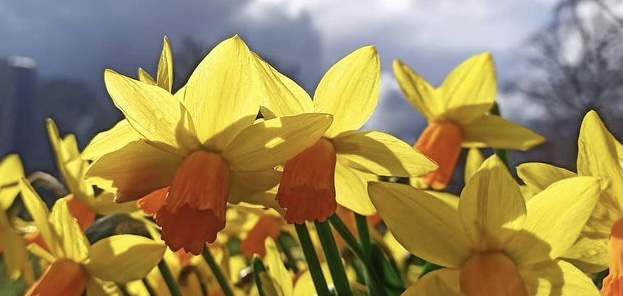
Where I live in East Tennessee, it feels like the weather is finally shifting to spring in a more permanent way. Not just a flirtation but the real thing with daffodils blooming everywhere you look. I hope you’re getting a taste of this kind of reawakening wherever you are. Here are ten new submission opportunities where you should consider sending your writing. Good luck.

Cortland Review

TCR considers poetry, prose, essays, translations, book reviews. Editorial decisions are based on content and quality. TCR does not accept simultaneous submissions or previously published work. Submit 3-5 poems at a time. For fiction, submit one story only, and nothing longer than 3500 words.

https://www.cortlandreview.com/submissions/


South Florida Poetry Journal

We want poetry, flash fiction and essays that inspire, stimulates, evokes, emotes, shocks and surprises. We want to be transported by your words to wondrous and strange places, and familiar places that you have made new. We read year-round and publish quarterly. Send 3-5 unpublished pieces.

https://www.southfloridapoetryjournal.com/submission-guidelines.html


Summerset Review

Prose writers are invited to submit literary fiction/nonfiction of up to eight thousand words. Poets may submit up to five poems. This literary journal is primarily an online publication. We read year-round.

http://www.summersetreview.org/guidelines.htm


Ghost Ocean Magazine

Founded in Chicago in 2010, Ghost Ocean is an award-winning literary magazine whose work has been reprinted in Best of the Net, Pushcart Prize: Best of the Small Presses, Fiction Daily, and has been shortlisted for the Wigleaf Top 50. Ghost Ocean is open for submissions year-round. We accept simultaneous submissions, but please notify us immediately if your work is accepted elsewhere. You may submit up to 5 poems, 3 pieces of flash prose, or 1 work of fiction under 3,000 words in a single document; submissions in multiple genres are accepted, but please do so separately.

http://ghostoceanmagazine.com/


Bearings Online

Bearings Online is accepting poetry submissions. We are seeking clear, accessible poetry (30 lines or less) that addresses faith, culture, or what it means to be human. Submit as a Word document to poetry editor Susan Sink: ssink (at) collegevilleinstitute (dot) org.

https://collegevilleinstitute.org/bearings/submission-guidelines/   


Split Lip Magazine

Split Lip Review is a literary journal of voice-driven writing with a pop culture twist. We publish online monthly and in print yearly. We accept fiction between 1,000 and 5,000 words, flash fiction under 1,000 words, and memoir up to 2,000 words.  We accept only one (yes, just one) poem at a time. Please do not send us more than one poem. Send your best poem, but only one. We mean it. Free submission in March. https://splitlipthemag.com/submit


The Hudson Prize in Fiction / The Hudson Prize in Poetry

Each year Black Lawrence Press will award The Hudson Prize for an unpublished collection of poems or short stories. The prize is open to new, emerging, and established writers. The winner of this contest will receive book publication, a $1,000 cash award, and ten copies of the book. Prizes awarded on publication. $27 Submission Fee. Deadline: March 31, 2021.

https://blacklawrencepress.com/submissions-and-contests/


Passages North

Passages North is open for submissions for Issue 40 until April 15, 2021. http://passagesnorth.com/submissions/


Consequence

Consequence is reading submissions until May 1, 2021. We publish short fiction, poetry, non-fiction, interviews, visual art, and reviews primarily focused on the culture of war. For fiction and non-fiction: please submit one piece of no more than 5,000 words. For poetry: please submit up to five poems of any length.

https://www.consequenceforum.org/submissions


The Writer’s Chronicle Seeks Articles on the Craft of Writing

The editors read submissions for the Writer’s Chronicle through September 30 of each year. All craft essays must analyze an element of creative writing. Articles should not overlap with topics covered in recent issues of the Chronicle. Craft essays should contain concrete examples to illustrate the writerly advice they offer. Many of our published essays combine appreciations with a study of elements of craft. Using more than one author to illustrate your analysis is recommended. A query on a specific topic is always welcome. Craft essays run between 2,000 and 6,000 words, depending on the topic.

https://www.awpwriter.org/magazine_media/submission_guidelines


IMG-1280

Submission Calls for Writers 1/5/2021

submissions

Happy New Year. It seems as though we have a ways to go before we escape the shadow of 2020. But the new year is really here, and I want to embrace that certain feeling of optimism that comes from the change of calendars. In that spirit, I offer you 12 submission opportunities for this month.

Last month, Bill Griffin contacted me to share his unique and super thorough submission calendar. If you struggle to keep track of so many different journals and when they do and don’t accept submissions, you’ll want to check out the pdf document on Bill’s page, here: https://griffinpoetry.com/2020/11/18/poetry-submissions-calendar/griffin-submissions-calendar-2020-11/?unapproved=59650&moderation-hash=e5c05a1237c73e68ffcfc085aef83a9b#comment-59650         (Thank you, Bill!)

StorySouth

StorySouth accepts unsolicited submissions of fiction, poetry, and creative nonfiction through January 15, 2021. Authors should limit submissions to 3-5 poems, one story, or one essay. There are no word limits on submissions. Long pieces are encouraged. Please make only one submission in a single genre per reading period. Response time is approximately 2-6 months.

http://storysouth.com/submissions/   


Gigantic Sequins

Gigantic Sequins is a print literary arts journal whose issues come out twice a year. Twice a year, we read submissions for these issues. When our current issue debuts, we select a few pieces from the most recent past issue to publish online. Submit 3-5 previously unpublished poems, or either one long (up to 3500 words) short story/novel excerpt or up to 3 short (1000 words each) pieces of flash fiction/micro fiction. Essays may go as long as 4000 words. Deadline: January 16, 2021.

https://giganticsequins.submittable.com/submit


10th Annual Zocalo Public Square Poetry Prize

Zócalo is accepting submissions for the 10th annual Zócalo Public Square Poetry Prize, awarded to a U.S. poet whose poem best evokes a connection to place. “Place” may be interpreted in many ways, be it of historical, cultural, political, or personal importance; the landscape may also be literal, imaginary, or metaphorical. The deadline for entries will close on January 29, 2021. Send up to three poems to enter. There’s no submission/entry fee.

https://www.zocalopublicsquare.org/2020/09/04/zocalo-public-square-is-accepting-entries-for-its-ninth-annual-poetry-prize-2/inquiries/prizes/


The Rumpus

We welcome essay submissions between 1500-4000 words in length. In addition to personal narrative-driven essays we are interested in non-traditional forms of nonfiction. Essays should explore issues and ideas with depth and breadth, illuminating a larger cultural context or human struggle. Regardless of topic, we are looking for well-crafted sentences, a clear voice, vivid scenes, dramatic arc, reflection, thematic build, and attention to the musicality of prose. Our Rumpus Original Poetry reading period is from January 15 through January 31, 2021.

https://therumpus.net/about-4/?mc_cid=0aaa00764e&mc_eid=508eb4b613#WritersGuidelines


Ecotone

Ecotone, the literary magazine dedicated to reimagining place, welcomes work from a wide range of voices. Our upcoming submissions windows will be open from January 26 to February 2, 2021. For Issue 30, we want to hear about gardens, be they literal or metaphorical. What do you tend? Where do you find green? We’re interested in permaculture and flower clocks, pollinators and pesticides, heirlooms and hybrids, plant poetics, the Old Farmer’s Almanac, flower reports, community gardens, food deserts, citizen science, ecological anthropology.  And don’t forget seeds—seed saving, seed banks and libraries, seeds carried across seas in the lining of people’s clothing. We’d like to see more nonfiction that delves into ecology, botany, entomology; we want stories that show us the effort and reward of gardening; we do love a good flower poem, and a bee poem is not bad either. Send one prose piece of no more than 10,000 words (ca. thirty double-spaced pages). We are also interested in brief prose works (minimum 2,000 to ca. 3,000 words), one per submission. Send three to five poems at a time.

https://ecotonemagazine.org/submissions/upcoming-issues/


Good Hart Artist Residency

Located in Good Hart, Michigan. The call is now open for writers and composers/songwriters. Application deadline is February 17, 2021. We will limit the number of applications for the writer residencies to 40 applicants, so we may close the application deadline early. One- week, two-week, or three-week residencies are available depending on the program selected.  Most residency time slots are two weeks long. Food is provided as well as a $500 stipend.

https://goodhartartistresidency.org/


The Puritan

Baffle us, tangle us up, or break our hearts. We’re looking for poems of any length (including sequences and long poems). Send up to four poems at a time. Feel encouraged to push boundaries with your fiction. We have diverse tastes; try us out. Length is up to you, but a story over 10,000 words will only be considered if it is of exceptional quality (and nothing over 12,000 words, please). Only send one story at a time, unless you are writing flash fiction (or stories under 500 words), in which case you can send up to three. We accept essays as pitches–no more than 250 words–or finished essays. Deadline: March 25, 2021.

http://puritan-magazine.com/submissions/


Black Moon Magazine

Black Moon is a brand-new literary magazine, and our first issue will be released in January 2021. We operate on a rolling submission basis and publish quarterly. Submissions received from January through March will be considered for our April issue. We will accept up to 3 short stories between 1,000 and 8,000 words. We will also accept up to 5 flash fiction pieces (1,000 words or less). We will accept up to 5 poems up to 5 pages each.

http://box5887.temp.domains/~blackmy8/sample-page/


Quarterly West Special Feature “100 Syllables”

Quarterly West invites submissions of pieces totaling 100 syllables or fewer (excluding the title). Whether poetry, prose, hybrid, or fragment, we’re interested in texts that offer–however fragmentary or disjointed their forms–wholenesses. Whole scenes, whole stories, whole emotions all contained within a small shell. The editors will select 21 pieces by 21 separate artists. Please send no more than five individual pieces per submission packet. Deadline April 16, 2021.

https://quarterlywest.submittable.com/submit


Puerto del Sol

Puerto del Sol accepts submissions year round but only reads from August to April. Poetry submissions are limited to five (5) poems. Prose submissions are limited to one (1) self-contained work (no excerpts), including flash prose.

https://www.puertodelsol.org/submit


South Florida Poetry Journal

We want poetry, flash fiction and essays that inspire, stimulates, evokes, emotes, shocks and surprises. We want to be transported by your words to wondrous and strange places, and familiar places that you have made new. We read year-round and publish quarterly. Send 3-5 unpublished pieces.

https://www.southfloridapoetryjournal.com/submission-guidelines.html


The London Magazine

We publish literary writing of the highest quality. We look for poetry and short fiction that startles and entertains us. Reviews, essays, memoir pieces and features should be erudite, lucid and incisive. We are obviously interested in writing that has a London focus, but not exclusively so, since London is a world city with international concerns. Non-Fiction pieces should be between 800 and 2,000 words. For Short Fiction, above all we look for elegance in style, structure and characterization. We are open to both experimental and traditional forms, although we do not normally publish genre fiction such as science fiction or fantasy writing, or erotica. Please make sure they are no more than 4,000 words in length. Poetry should display a commitment to the ultra-specificities of language, and show a refined sense of simile and metaphor. The structure should be tight and exact. Poems should be no longer than 40 lines.

https://www.thelondonmagazine.org/submission-guidelines/

Submission Calls for Writers 12/8/2020

submissions

After a long hiatus, here are a dozen submission opportunities for writers to consider before the end of the year. I hope to return to regularly posting submission opportunities in 2021. If these listings are helpful to you, I’d love to hear about it. Feel free to share with others.

Adirondack Review

The Adirondack Review accepts submissions year-round in poetry, short stories, art, photography, creative nonfiction, book reviews, and translations from the French, German, and Russian. We do not accept simultaneous submissions.

http://www.theadirondackreview.com/submissions

Free State Review

We are looking for poetry, fiction, personal essay, and one-minute plays. Prose should be 500-4,000 words; poetry can be any length or style. Poetry submissions can include 3-5 poems in a single document. Strange is not always better; simple and clear are not always memorable. Try to split the difference between the abstract and the concrete.

https://freestatereview.com/submissions/

The Journal, a Literary Magazine (formerly The Ohio Journal)

We are interested in quality fiction, poetry, nonfiction, photo essays, author interviews, and reviews of new books of poetry and prose. We impose no restrictions on category or type of submission for fiction, poetry, and nonfiction.   Fiction and essays: All prose submissions should be double-spaced. We are happy to consider self-contained excerpts of novels and long stories and essays, but please note that historically it is unusual for us to publish stories longer than 10,000 words and essays longer than 6,000 words.   Poetry: Please limit poetry submissions to 3 – 5 poems grouped in a single .doc or .pdf document.    Reviews and Interviews: Reviews should double-spaced be no more than 1,200 words. We are particularly interested in reviews of new books that have been published within the last two years. Interviews should be double-spaced and between 6 – 12 pages.

http://thejournalmag.org/submit

Foundry

Submit 4-6 original, previously unpublished poems through Submittable. All poems should be included in a single .DOC/.DOCX or PDF file with one poem per page (eight pages maximum). Enter a cover letter with a brief third-person bio in the space provided by Submittable. We do not consider translations. Submissions are free.

https://www.foundryjournal.com/submit.html

Frontier Poetry

Submissions for our New Voices poetry category are open year round to any new and emerging poet who has not published more than one full-length collection of poetry. New Voices are published online only and will feature a number of poems from new authors each month. We also warmly invite under-represented and marginalized voices to submit. All submissions must be no more than 10 pages and no more than 5 poems.

https://frontier.submittable.com/submit

Cosmonauts Avenue

For poetry, send 5 poems or less, no matter the length. For prose, submit up to 8,000 words. We do accept novel excerpts. We are open to reading writing in any genre, including multi-media and experimental. Send us original work; get our attention.

https://cosmonautsavenue.submittable.com/submit

Mississippi Review Contest

Our annual contest awards prizes of $1,000 in poetry, fiction, and nonfiction. Winners and finalists will make up next summer’s print issue of Mississippi Review. Fiction and nonfiction entries should be 1000-8000 words; poetry entries should be three to five poems totaling ten pages or less. Please attach as one document. There is no limit on the number of entries you may submit. Online entry fee is $16 per entry. Each entrant will receive a copy of the prize issue. All submissions will be read anonymously. Please remove or redact any contact information from your submission. Contest deadline is January 1, 2021.

http://sites.usm.edu/mississippi-review/contest.html

Cincinnati Review

The Cincinnati Review welcomes submissions from writers at any point in their careers. We read through January 1, 2021. Please submit up to five poems, which should total no more than ten manuscript pages, at a time. Fiction submissions should be no more than forty double-spaced pages. We’re interested mostly in pieces of nonfiction less than twenty double-spaced pages, though you can try us for longer pieces if you think they’ll knock our socks off.

https://www.cincinnatireview.com/submission_guidelines-2/

Rattle’s Tribute to Appalachian Poets

Our Summer 2021 issue will be dedicated to Appalachian Poets. The poems may be any subject, style, or length, but must written by poets who themselves identify with Appalachia and were born or have lived in the region for a large portion of their lives. The poems need not be about Appalachia—our goal is to honor these poets by sharing the diverse creative work that they’re producing. Deadline: January 16, 2021.

https://rattle.submittable.com/submit/34382/tribute-to-appalachian-poets

Parabola / Theme issue: “Young & Old”

Parabola welcomes original poetry, essays and translations. We look for lively, penetrating material unencumbered by jargon or academic argument. We prefer well-researched, objective, and unsentimental pieces that are grounded in one or more religious or cultural tradition; articles that focus on dreams, visions, or other very personal experiences are unlikely to be accepted. All articles must be directly related to the theme of an issue. Poetry submissions should be limited to a maximum of five (5) poems per author. Deadline: Mar 1, 2021.

http://parabola.org/submissions/

The Account

We are open to a diverse range of styles, including experimental and hybrid work. We require that you send us not only your creative work, but also an account of that work. The account is an opportunity for the artist to lift the curtain and say something that might not be present on the page. We are interested in exploring the relationship between what is known (the work on the page) and what is often left unknown (the artist’s intentions behind that work). Poets: Send 3-5 poems, with your 150-500 word account. Creative nonfiction writers: Send us your essay of no more than 6,000 words. Include your 150-500 word account as the last page of the file. Fiction writers: Send us your short stories of 1,000-6,000 words. Include your 150-500 word account as the final page of the file. Deadline: Mar 1, 2021.

http://theaccountmagazine.com/guidelines

Green Mountain Review

Green Mountain Review is currently accepting submissions for the Black Voices issue, guest edited by Naomi Jackson and Keith Wilson. Please submit a cover letter and include up to 5 poems or up to 25 pages of prose. We publish poetry, essays, fiction, interviews, book reviews, and art. We are also always looking for work that pushes these boundaries and are open to audio and video submissions; we’re also happy to be surprised. Surprise us.

https://greenmountainsreview.submittable.com/submit

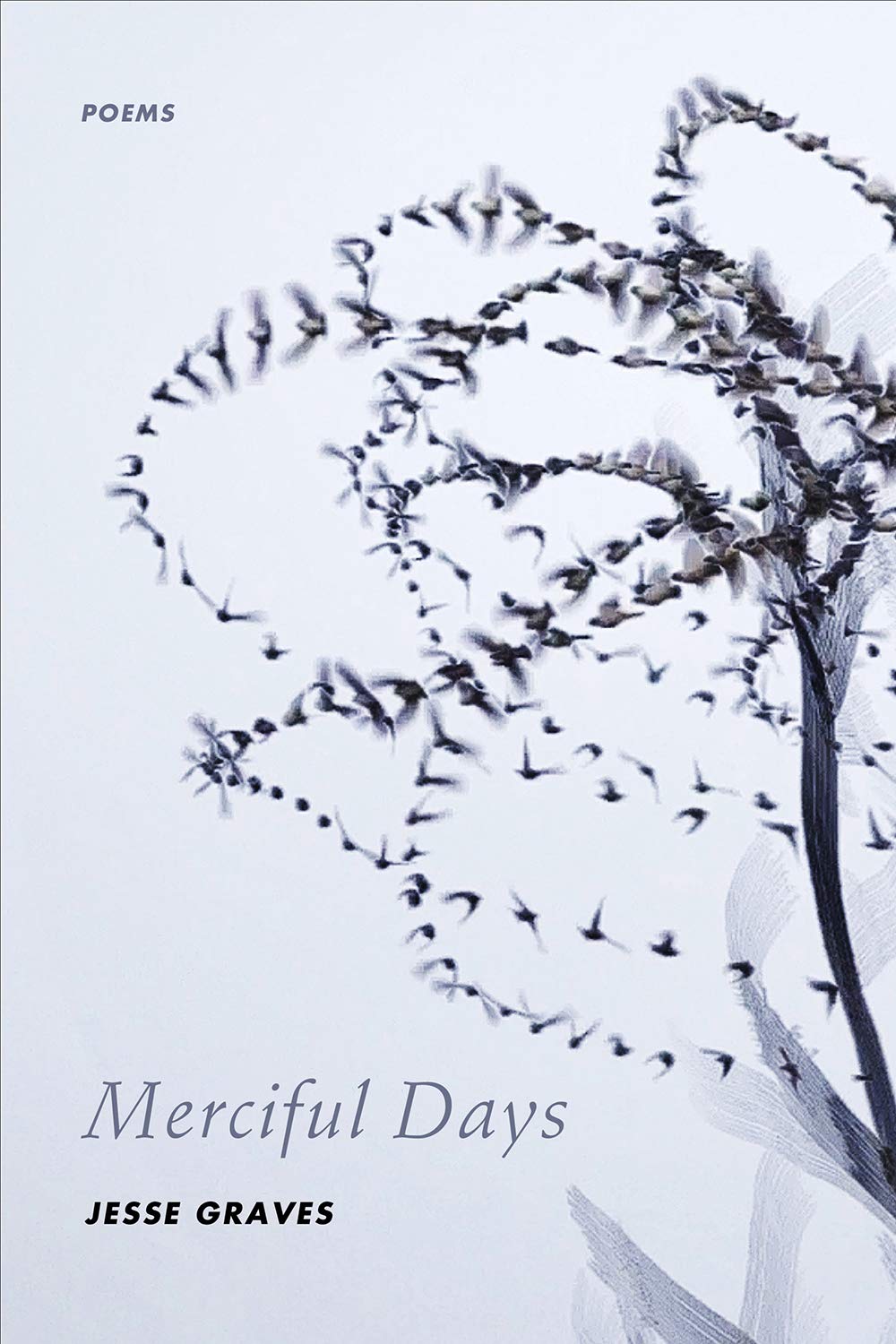
Jesse Graves’ Merciful Days

In his third solo poetry collection, Merciful Days, Jesse Graves returns to the East Tennessee farm of his youth. The land Graves writes about is also his ancestral home. Sense of place is almost a requirement for Tennessee writers, but Graves’ abiding connection to place gives exquisite life and meaning to his work. Many poems center around the loss of the author’s father and brother. Those poems are poignant in their own right, but they speak to a larger theme that flows throughout the collection: that we as individuals are only a fleeting part of something much larger and more mysterious than we can fully comprehend. This idea is evident in “Mossy Springs” where the narrator revisits a watering hole on the family farm:

…you wonder at the bloodlines
that drank here before you,
dating as far back as time records.

Hunters from the original tribes,
trackers chasing game upstream,
farmers drawn over from the fields,

and now you, looking for the lost
kingdom of your ancestors,
their eternal thirst to be found.

For Graves, this big examination of generations extending “as far back as time records” is inseparable from his own personal experience. His life is tied to the past in ways that are not completely understood even though they are tangibly felt. “Come Running” depicts this, and it is perhaps my favorite poem in this collection:

Come Running

They amble across the field, drawn to shade,
sniffing for uncropped clover and sprout,
their slowness measurable by galactic tilt.
From a distance the calves look identical,
but watch closely, and the shadings around
white faces range from salmon to maroon,
and the little curls on their foreheads
twist in tighter and looser tangles.
If a baby separates from its mother,
she calls for it like a foghorn, the lowing
anyone can tell means “find me now.”
But listen closer, and a mother can signal
her child with the slightest grunt
from the other side of the field—
no other calf will move or even look up,
yet one comes running, summoned home.

In many ways, Merciful Days is simply about the idea of memory—how memory keeps the past connected to the present and the future, and how memory sustains us through loss and sadness. Merciful Days is an elegy, but it’s not a dirge. These poems are full of joyous moments, as well as of the deepest sense of love, the kind that only expands and grows.

Merciful Days cover