Mark Powell’s Small Treasons

Mark Powell’s latest novel, Small Treasons, examines a number of the tragedies and obstacles that particularly face us in these uncertain times.  But also, as with the best of literature, Powell is exploring some of the most universal questions of humanity.  Perhaps the central question of this book is about forgiveness.  Forgiveness of others, and more importantly, forgiveness of ourselves.

At the heart of this question is John Maynard, man whose past blocks him from having genuine relationships with his parents, his children and even his wife.  His wife, Tess, has a secret also.  She has become obsessed with videos ISIS beheadings.  And then there is Reed Sharma, one of Powell’s most complex characters: a young, would-be jihadist searching for something truthful, something more meaningful than those things that satisfy most young Americans, but unable to discern love from hate.

One of the strongest factors that keeps forgiveness at bay is the distance that builds between us and others.  Powell wrote an essay for Authors ‘Round The South about Don DeLillo’s book Players and how that book and the idea of distance inspired Small Treasons: http://authorsroundthesouth.com/90-the-southern-bookstore/10693-mark-powell-finds-his-bookstore.

I’ve read all of Mark Powell’s novels, falling in love along the way with all of them.  There are lines and images from each one that stick with me, and even more so, there are life-shattering questions and explorations from each book that haunt me.  Possibly to Powell’s own detriment, he is able to see the ever-moving mechanics of our modern world, all of the forces working with and against each other.  To our great fortune, Powell is able to use that knowledge to write a book like Small Treasons, both beautiful and tragic.

MarkPowell_AndBook_m

For more about Mark Powell and his work, check out his webpage http://www.markpowellauthor.com/.

My CutBank Interview with Keith Lesmeister

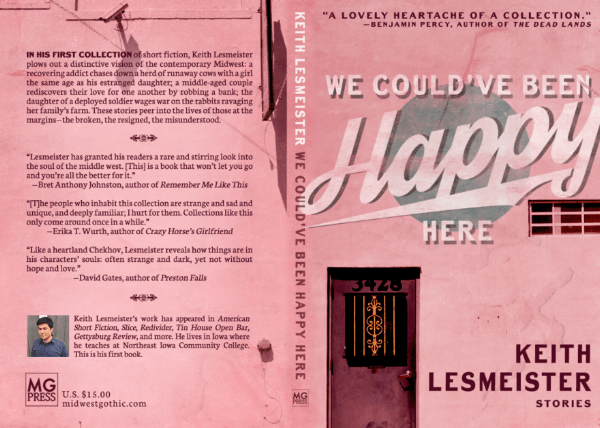
Thanks to Barry Maxwell and CutBank Literary Magazine for allowing me to interview my friend Keith Lesmeister about his new collection of stories, We Could’ve Been Happy Here (published by Midwest Gothic Press). Lesmeister lives and works in rural northeast Iowa, and all 12 of these stories explore the contemporary Midwest in some way. Here’s an excerpt from the interview.

DL: I wanted to ask you about the stories all being set in Iowa, which is your home state. The idea of the Mid-West is apparent in a lot of your work, especially in regards to how you create a sense of place to inform and impact your characters. Do you find it easy or difficult to write about this region that you call home?

KL: Very difficult because I’m from here, which means I take a lot for granted. I’ve had to readjust how I interpret my surroundings, thinking of myself like a tourist when I drive around, trying to take it all in. And despite the stereotypes, several parts of Iowa are quite beautiful. That’s been a big surprise for me as I’ve written this collection—how much I truly love the landscape around here.

It’s funny for this to come as a surprise to Lesmeister because when you’re reading his work, it’s pretty obvious how much to loves the place he’s writing about.

There’s also more in the interview about his love of basketball, and there’s some talk about how difficult it can be to herd cattle. Please read the entire piece at CutBank Onlinehttp://www.cutbankonline.org/cutbank-blog/2017/9/cutbank-interviews-keith-lesmeister.

Lesmeister’s fiction and nonfiction have been widely published, and We Could’ve Been Happy Here has received praise from writers such as Benjamin Percy and David Gates. Bret Anthony Johnston said, “These are brutal stories—brutally good, brutally urgent, brutally hopeful.”

Most importantly, be sure to buy the book.  You won’t be sorry.

Keith - full-cover-final-880x629.png

Joanne Proulx’s We All Love the Beautiful Girls

I met Canadian author Joanne Proulx about five years ago.  When we met, she had already published a wonderful novel called Anthem of a Reluctant Prophet, which I fell in love with quickly and deeply and for real.  It’s a beautiful book.  And it’s being made into a major motion film starring Juliette Lewis, Cameron Monaghan, Grayson Gabriel and Alexander MacNicoll.  It’s scheduled for release in 2018, and I can’t wait to watch.

Now Proulx has written another novel, We All Love the Beautiful Girls. I had an opportunity to read an advanced copy of the novel, and it’s so good that it hurts—heartbreaking and full of hope all at the same time.

Joanne Proulx book cover

Robert Wiersema reviewed the book for The Toronto Star, and he gave this synopsis of how the book starts:

Proulx spends the book’s first few pages offering glimpses into what seem nearly blessed lives. Mia and Michael are happily married, with a certain level of financial freedom: Michael is partner in a property management company and Mia, having left a job in banking, is now trying to build a career as a photographer. They might not be able to afford a spontaneous weekend in Whistler, but they own their own home and make do with skiing vacations closer to home in the company of their friends Helen and Peter — Michael’s partner — and their daughter Frankie. Their son, Finn, 17, is a good student, popular, who receives secret nocturnal visits from Jess, the beautiful girl next door, who years before was his babysitter.

Their idyllic lives are shattered, however, with the events of one night in late February. Early that evening, Mia and Michael are informed that not only has Peter been embezzling from the company, he has actually written Michael out of the partnership, stealing the firm out from under him. Later that night, intoxicated and fleeing a debauched house party, Finn passes out in the snow, and loses his right hand to the cold.

While this sounds like it might be the set-up for a standard triumph-against-adversity narrative, a fall-and-rise story, Proulx has something considerably stronger, and subtler, in store. The shifting fortunes of the Slate family put each character through their own individual struggles, pushing them to the breaking point, and beyond.   (Read all of Wiersema’s review here.)

“The book is also about anger and its consequences, both sexual and physical,” says Peter Robb in Ottawa’s artsfile. Robb also reports:

When she was young, Joanne Proulx had a brush with danger. A young man threw her over his shoulder at a party and headed upstairs. It was funny to start and then it wasn’t funny at all. Proulx avoided being sexually assaulted because, she said, she’s a fighter, but many, many women aren’t so fortunate.

The Ottawa writer has taken her own life experiences and those of many others, and built a book, a complex, thoughtful and provocative second novel called We All Love the Beautiful Girls that probes deeply into the lives and relationships of privileged people and those that they hold in their sway.

Proulx says this novel was written in part because she saw a terrifying rise in violence against women all over the world.  “It was always there but the conversation seemed to be moving more to the centre,” she told Robb.  And although this novel is not overtly political, it’s definitely a novel of our current political ad social atmosphere, where anyone who has power will use it regardless of the consequences.  Despite that truth, We All Love the Beautiful Girls is a pleasure to read.  Buy it today.

Recommended Reading 8/4/2017

If you’re looking for something worthwhile to read this weekend, look no further.

Lorraine Comanor’s essay, “The Carnevale Masks,” is online at The Raven’s Perch: http://www.theravensperch.com/the-carnevale-masks-by-lorraine-commanor/

LA Times - X PressAgatha French interviewed the publishers of the new L.A. press X Artists’ Books, and yeah, one of them happens to be Keanu Reeves: http://www.latimes.com/books/la-ca-jc-keanu-reeves-artists-books-20170719-story.html.

Emily Mohn-Slate’s essay, “The Colossal”—about Iris van Herpen, Girls Write Museum and the way art and poetry makes our worlds larger—is in At Length’s art section: http://atlengthmag.com/art/the-colossal-iris-van-herpen-and-girls-write-the-museum/.

Jennifer Stewart Miller has two great poems in The Green Mountains Reviewhttp://greenmountainsreview.com/two-poems-28/.  Here’s a small taste from her poem, “Thirsty Birds:”

You don’t have to believe,
to think there’s something about

the flicker’s up-stretched profile
that’s like a shaft of sunlight

piercing an old church.

Barrett Warner reviewed Keith Lesmeister’s book, We Could’ve Been Happy Here, for Atticus Review: https://atticusreview.org/life-rattling-review-couldve-happy-keith-lesmeister/.  Barrett also has new poems online at Verse Wrights: http://www.versewrights.com/warner-barrett.html, including one called “Rainbow Pig.”  Here’s a few lines from “All the Latest Talk in Paradise Concerning Butterflies:”

This we know: butterflies need milkweed–
their only food—and its poison, their only defense,
 
and we are pitchfork lonely for connection,
the piercing tines make five holes in our lungs.

Fiction lovers won’t want to miss Tiffany Williams’ new short story, “Murmuration,” in Appalachian Heritage: http://appalachianheritage.net/2017/05/26/murmuration/.

And if you haven’t seen it yet, check out the new issue of The Tishman Reviewhttp://www.thetishmanreview.com/.

Friends From the Past

Pembroke cover.jpg

My story, “Friends From the Past,” is in the new issue of Pembroke Magazine.  The editor in chief, Jessica Pitchford, was really wonderful to work with, and it was an extra bonus to share these pages with Scott Gould, a great writer and the chair of the creative writing department at South Carolina Governor’s School for the Arts and Humanities.

Recommended Reading 2/26/2017

If you’re looking for something good to read or listen to, here are some suggestions!

K.L. Browne wrote about the podcast A Phone Call from Paul over at Entropyhttp://entropymag.org/podcast-philia-a-phone-call-from-paul-with-paul-holdengraber/.

Susan Ishmael wrote a beautiful essay about religion at Parabolahttps://parabola.org/2017/01/31/the-turn-of-the-dial-seeking-god-in-the-fringes-by-susan-ishmael/?utm_content=buffer49356&utm_medium=social&utm_source=twitter.com&utm_campaign=buffer.  Be careful reading if you’re afraid of snakes.

Kate Jayroe has a new story in Juked: http://www.juked.com/2017/02/kate-jayroe-woonwinkel.asp.

Gail Tyson has a beautiful new poem in the February issue of Art Ascent, which is a really cool journal worth exploringhttp://www.magcloud.com/browse/issue/1229904.

There’s a wonderful interview with Barrett Warner over at Tethered By Letters: https://tetheredbyletters.com/author-qa-barrett-warner/.

The always funny Corina Zappia writes about 50 Shades Darker and “asinine dating choices” online at Salonhttp://www.salon.com/2017/02/20/50-shades-of-regret-a-cautionary-tale-about-online-dating-and-the-movies/.

And the Best of the Net awards have been announced! Congrats to Cassie Pruyn for making the list with her poem, “Traveler’s Monologue,” originally published in Border Crossing.  And congrats to Adam Clay who’s on the list with his poem, “When the People We Know Become the People We Don’t,” originally published at Jet Fuel Review.  You can see the whole list here: http://www.sundresspublications.com/bestof/.

cover-spring-2016-2-crop-u94041

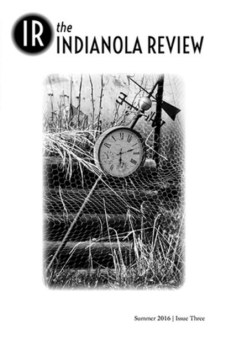
Finally, check out this story about how Danny Judge faced some pretty incredible difficulties while creating of The Indianola Reviewhttp://m.washingtontimes.com/news/2017/feb/18/iowa-man-creates-literary-journal-while-supporting/.

Life as a Shorty

Many thanks to Keith Lesmeister for featuring my story, “How the Mammoth’s Blood Flows” on this blog, “Life as a Shorty.”  There’s a short interview there also where Keith asked some questions about the story and my writing process.  “Life as a Shorty” is a great forum that Keith publishes online everyweek to talk about short fiction.  I hope you’ll follow his blog to be part of the discussion.

https://keithlesmeister.com/2017/01/life-as-a-shorty-how-the-mammoths-blood-flows-by-denton-loving-published-in-prime-number-magazine/

Recommended Reading 1/16/2017

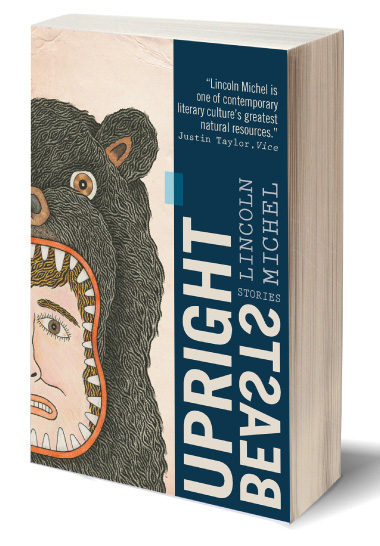
I just finished reading Lincoln Michel‘s collection, Upright Beasts.  One of my favorite stories is “Things Left Outside,” which also appears online at Weird Fiction Reviewhttp://weirdfictionreview.com/2015/10/things-left-outside/.

lmbookpage3_edited

An essay of Walter Robinson’s that was originally published in The Sun has now been picked up by Reader’s Digest, and you can read the whole piece here: http://www.rd.com/health/conditions/doctor-becomes-the-patient/. (Check out Walter’s new website for more of his work: https://wmrobinson.com/.)

Corina Zappia has a new piece, My Sandwich Is Going to Eat Me, at The Stranger: http://www.thestranger.com/food-and-drink/2017/01/03/24758265/my-sandwich-is-going-to-eat-me.

Kate Jayroe has an essay online at JMWW: https://jmwwblog.wordpress.com/2017/01/09/essay-parts-by-kate-jayroe/.

Keith Lesmeister interviewed Susan Pagani on his blog (Life as a Shorty) about her story, The Fledgling, in The Rappahannock Review: https://keithlesmeister.com/blog/.

Finally, I was excited to read Lynne Sharon Schwartz’s thoughts about the English poet Stevie Smith in this review: https://lareviewofbooks.org/article/looking-for-parents-and-cover-all-the-poems-of-stevie-smith/#! I didn’t know much about Smith’s poetry before reading this piece, and Lynne Sharon Schwartz continues to be so smart.  I admire her more all of the time.

Recommended Reading 1/4/2017

As the new year is starting, I wanted to share some of the great stories, poems and essays that I’ve been reading lately.  I hope you enjoy these as much as I have.

Darnell Arnoult’s essay, When I Started to Cry, is online at Blackbird: http://www.blackbird.vcu.edu/v15n2/nonfiction/arnoult-d/started_page.shtml.

Becky Bond, who is always hilarious, writes about the anxiety that comes with filling out forms: http://www.beckybondwrites.com/ffa-form-filling-anxiety.

Agatha French, the new staff writer in books at the Los Angeles Times, recently interviewed Stephanie Danler about her bestseller, Sweetbitter: http://www.latimes.com/books/jacketcopy/la-ca-jc-danler-sweetbitter-20160916-snap-story.html.  She also interviewed Jill Soloway and Eileen Myles about creativity, “queer art,” and the end of their relationship: http://www.latimes.com/books/jacketcopy/la-ca-jc-soloway-myles-20161031-story.html?utm_source=Books&utm_campaign=5465d277fe-EMAIL_CAMPAIGN_2016_10_26&utm_medium=email&utm_term=0_ee9d7b9236-5465d277fe-79848189.

Megan Galbraith’s wonderful essay, Learning to Mother Myself, was published in The Manifest Station: http://themanifeststation.net/2016/11/22/learning-to-mother-myself/.

Keith Lesmeister’s forthcoming collection, We Could Have Been Happy Here, is included in Memorious’s list of most anticipated books of 2017: https://memoriousmag.wordpress.com/2016/12/28/barrett-bowlins-anticipated-books-of-2017/.

Linda Michel-Cassidy interviewed Gonzalo Torne for The Rumpus: http://therumpus.net/2016/11/the-rumpus-interview-with-gonzalo-torne/.

Shawna Kay Rodenberg has written an important article about education, coal and poverty in Eastern Kentucky for Salon: http://www.salon.com/2016/12/31/sheltering-in-place-for-students-in-donald-trump-loving-coal-country-school-choice-isnt-a-solution/.

Susan Pagani’s story, The Fledgling, is in the new issue of The Rappahannock Review: http://www.rappahannockreview.com/susan-pagani-the-fledgling-f/.

Cassie Pruyn wrote a brilliant essay for VIDA that you should read and share: http://www.vidaweb.org/report-from-the-field-speaking-into-silences/.

Corina Zappia is a frequent contributor to The Stranger’s Food & Drink section. Recently, she wrote “Mackerel, You Sexy Bastard: In Defense of Sardines, Herring, and other Maligned Fishy Fish,” http://www.thestranger.com/food-and-drink/2016/10/26/24645304/mackerel-you-sexy-bastard and “Washington Is Getting so Cheesy,” http://www.thestranger.com/food-and-drink/2016/09/09/24551761/washington-is-getting-so-cheesy.


My 2016 Reading List


In regards to reading, I had two goals this year.  Actually, I’m going to refer to them as one goal and one hope.

The goal was to read one Shakespeare play each month.  The few I had read before this year were school assignments, which I mostly wasn’t prepared to read and didn’t get much out of.  I got a bit behind during the fall semester, but I managed to catch up just this week in order to complete my goal.

My hope was to read 100 books this year.  Why 100?  I don’t know.  It’s a fairly arbitrary number, but it’s nice and round, and I thought this was the year that I could do it.  Unfortunately, I’m a bit short, clocking in at only 91 books read this year (full list below).  I admit that almost half of those books were poetry books, which means that many were a bit short.  Still, 91 is a respectable number, or so I’m telling myself.

Here’s the full list.  FYI, a few of these books are unpublished manuscripts.  You won’t find them for purchase yet, but I hope you’ll find them one day soon.

  1. Leo Tolstoy – War and Peace
  2. Diane Cook – Man V. Nature
  3. Steven Pressfield – The War of Art
  4. David Daniel – Seven-Star Bird
  5. Charles Dodd White & Larry Smith – Appalachia Now
  6. William Trent Pancoast – Valley Real Estate
  7. William Shakespeare – Othello
  8. William Kelley Woolfitt – Beauty Strip
  9. William Kelley Woolfitt – Charles of the Desert
  10. Richie Hofmann – Second Empire
  11. Jill McCorkle – Creatures of Habit
  12. Junot Diaz – The Brief and Wondrous Life of Oscar Wao
  13. Michael Ondaatje – Divisadero
  14. William Shakespeare – The First Part of Henry VI
  15. Jeremy Jones – Bearwallow
  16. Elijah Burrell – The Skin of the River
  17. William Shakespeare – The Second Part of Henry VI
  18. Wesley Browne – Slice
  19. Pauletta Hansel – The Lives We Live in Houses
  20. Alex Taylor – The Name of the Nearest River
  21. Major Jackson – Holding Company
  22. Kyle McCord – You Are Indeed an Elk, But This is Not the Forest You Were Born to Graze
  23. Jodi Lynn Anderson – Tiger Lily
  24. Brent Martin – Hunting for Camellias at Horseshoe Bend
  25. William Shakespeare – The Third Part of Henry VI
  26. Robert Zubrin – The Case for Mars
  27. Rose McLarney – The Always Broken Plates of Mountains
  28. Rose McLarney – Its Day Being Gone
  29. Lee Smith – Cakewalk
  30. Amy Willoughby-Burle – Out Across the Nowhere
  31. Darnell Arnoult – Galaxie Wagon
  32. William Shakespeare – Richard III
  33. Pasture Art – Marlin Barton
  34. Barrett Warner – Why is it so hard to kill You?
  35. New Stories from the South 2008 – ZZ Packer
  36. A Fox Appears – Jennifer Stewart-Miller
  37. Larry Brown – Joe (June)
  38. Bob Shachohis – The Woman Who Lost Her Soul
  39. Geoff Dyer – Yoga For People Who Can’t Be Bothered to Do It
  40. Theodore Wheeler – Bad Faith
  41. Joanne Proulx – We All Love the Beautiful Girls
  42. William Shakespeare – The Tempest
  43. Ross Gay – Catalog of Unabashed Gratitude
  44. Jim Elledge – Tapping My Arm for a Vein
  45. William Shakespeare – Two Gentleman of Verona
  46. Keith Stewart – Bernadette Peters Hates Me
  47. Cassie Pruyn – Lena
  48. Nathan Hill – The Nix
  49. Erica Anderson-Senter – Seven Days Now
  50. J.K. Daniels – Wedding Pulls
  51. Sue Weaver Dunlap – Knead
  52. Lauren K. Alleyne – Difficult Fruit
  53. Major Jackson – Hoops
  54. Brandon Courtney – Rooms for Rent in the Burning City
  55. Henry Real Bird – Horse Tacks
  56. Jen Leija – Good Bones
  57. William Shakespeare – A Midsummer Night’s Dream
  58. Lyrae Van Clief-Stafanon – Open Interval
  59. Ron Houchin – Death and the River
  60. David Armand – My Mother’s House
  61. William Shakespeare – The Merry Wives of Windsor
  62. Thomas Rain Crowe – Radiogenesis
  63. Dorianne Laux – The Book of Men
  64. Mark Eisner – The Essential Neruda – Selected Poems
  65. Richard Hague – Possible Debris
  66. Nathalie Handal – Poet in Andalucia
  67. Saeed Jones – Prelude to Bruise
  68. Joseph Bathanti – Anson County
  69. Jim Minick – Burning Heaven
  70. Jim Harrison – Letters to Yesenin
  71. Tim Peeler – Fresh Horses
  72. Mark Wagenaar – Body Distances
  73. Richard Hague – Alive in Hard Country
  74. Connie Jordan Green – Darwin’s Breath
  75. Grace Paley – Later the Same Day
  76. William Shakespeare – Measure for Measure
  77. TJ Jarrett – Zion
  78. Carrie Mullins – Night Garden
  79. William Shakespeare – Comedy of Errors
  80. William Shakespeare – Love’s Labour’s Lost
  81. -91. (11 poetry manuscripts I read for a contest)

I’d love to know what you read this year.  If you don’t want to include your full list, what were your favorite books of 2016?