Jeff Hardin’s “Seed Heads Bursting Gold Light”

The first book I read this month was Jeff Hardin‘s collection, Notes for a Praise Book, published by Jacar Press. Jeff Hardin’s poems are always thoughtful and beautiful, and here’s one I wanted to share:

SEEDS HEADS BURSTING GOLD LIGHT

We need to busy ourselves with memorizing autumn
in the puddles down the drive. A single
forgotten reflection
makes all the others tremble.

I didn’t think twice as a boy, lying prostrate
to watch a dandelion bend with the breeze.
Amazing!
I knew already what to do with my life.

I’d wager Solomon, had he lived nearby,
would have taken long walks in the sage grass field,
just to watch how seed heads
burst with gold light.

I’m an advocate of letting things lean as they must.
When one tree rests its dying toward another,
I go among them
to listen in and take my place.

No big difference, I say, between years that lean that way
and a shared gaze between me and some friend’s eyes.
Some weakness unspoken
may be the strongest voice we have.

My 2021 Reading List

It’s been almost 8 months since my last blog post here. I’m afraid a lot of my plans for this space escaped me as the year rushed by. Probably the biggest reason for this is because of the role I accepted as an editor for EastOver Press and EOP’s literary journal Cutleaf. In our first year, we published 23 bi-weekly issues of the journal. We also published 4 wonderful books of poetry that I’m really proud of. (See the links below to purchase EOP books and others!) This new position as an editor requires a lot of reading, and so my list of published books I read last year (2021) isn’t quite as robust as I’d like. But I love seeing other people’s what-I’ve-read lists, so here’s mine.

  1. Julia Cameron – Finding Water
  2. Haruki Murakami – What I Talk About When I Talk About Running
  3. Wesley Browne – Spoon (manuscript)
  4. Jennifer Stewart Miller – Thief
  5. Haruki Murakami – After Dark
  6. Jay McCoy – The Occupation
  7. Britton Shurley – Spinning the Vast Fantastic
  8. Matthew Landrum – Berlin Poems
  9. Katrin Ottarsdóttir – Are There Copper Pipes in Heaven
  10. Chaelee Dalton – Mother Tongue
  11. Frank Jamison – Marginal Notes
  12. Daniel Corrie – For the Future
  13. Jesse Donaldson – On Homesickness
  14. Matt Urmy – The Rain in the Bell
  15. Liz Ahl – Beginning Ballroom Dance
  16. Cathryn Hankla – Galaxies
  17. Erica Anderson-Senter – Midwestern Poet’s Incomplete Guide to Symbolism
  18. Ralph Sneeden – Surface Fugue
  19. Rosemary Royston – Second Sight
  20. John Davis, Jr. – The Places That Hold
  21. Marie Parsons – An Echo in the Wind
  22. Katherine Hauswirth – The Book of Noticing
  23. Larry Pike – Even in the Slums of Providence
  24. A.E. Hines – Any Dumb Animal
  25. Tarn Wilson – In Praise of Inadequate Gifts
  26. Ross Gay – The Book of Delights
  27. Virginia Woolf – To the Lighthouse
  28. Megan Culhane Galbraith – The Guild of the Infant Saviour: An Adopted Child’s Memory Book
  29. Sylvia Woods – What We Take With Us
  30. Lauren Davis – The Missing Ones
  31. Ralph Sneeden – Evidence of the Journey
  32. Shawna Kay Rodenberg – Kin: A Memoir

I’d like to think that my list for next year will be at least twice this long. And maybe it will be. But it really doesn’t matter. These days, I’m trying to be more comfortable with the idea of slowing down the process. What this means to me is sometimes reading fewer books, but giving more time to think about and engage with each one.

If you’ve posted your own 2021 list or have recommendations for what to read in 2022, please post links and ideas in the comments section. I’d love to hear from you. Happy New Year!

Lauren Davis’s The Missing Ones

Lauren Davis’s The Missing Ones is a slim but engrossing collection that reimagines disappearance of Russell and Blanch Warren. In 1929, the couple were driving home to reunite with their two young sons and to celebrate theLauren Davis - The Missing Ones 4th of July. Their route took them on Route 101 along Lake Crescent where they presumably drowned. What makes these poems work so well is that Davis doesn’t waste time recreating the ways the Warrens may have ended up driving into the lake. Instead, these poems give voice to the dead as in the very short poem that introduces the collection:
Blanch Says

There are dangers
in deep waters no one

speaks of. Like dark
that climbs the spine.

There’s a stain on the rock
Unfolding. I drink the lake,

all of it. I make it mine.

Many of the poems are in Blanch’s voice. In some, she gives advice, such as in “I’ll Tell You What Happened,” where she says: “Your husband has something to tell you— / you can sense it in the cold. Wait until you are both done / drowning. The build a new home.”

The idea of the lake as a home is one of my favorite aspects of these poems. A grave is a home of a kind, but the lake is a living ecosystem. Some poems reference the lake’s “population” which sometimes mean the fish in the water, or the birds outside, and sometimes it refers to others who have perished in the lake’s waters. In some poems, the idea of the lake as a home is expressed through its “rooms,” all of which suggests that the Warrens are still there, unable to die or be truly forgotten because they were never found. The idea is haunting in numerous ways, especially when the reader is reminded of the couple’s two young sons. This is expressed in Blanch’s voice again in the poem, “Have You Seen,” where she says,

My love haunts good as
any ghost. It is more
than lake deep. Boys—

I am never so buried,
gloated, hemorrhaged with blue
That I forget you.

My only criticism of this lovely book is that it’s too short. I wanted it to go on and on. I guess I could say that I, too, am now haunted by this story.

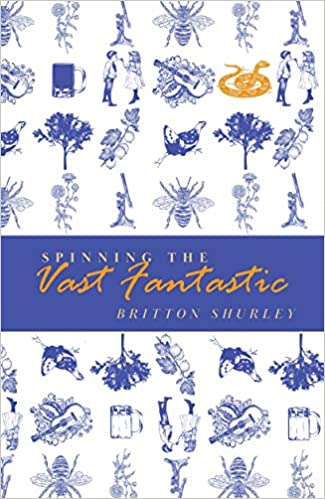
Britton Shurley’s Spinning the Vast Fantastic

Britton Shurley’s new collection, Spinning the Vast Fantastic, is a beautiful guide for spiritual sustainment in a complicated and down-heartening world. The first poem in the collection, “When I Think I’m Through with Beauty,” refers to the world as one that “gnaws us to gristle, if we / don’t work free from its teeth.”

Britton Shurley - Spinning the Vast FantasticMany of Shurley’s other poems make similar references. Shurley is not speaking specifically the restrictions and hardships suffered under a pandemic. He’s talking mostly about how hard life can be in general, and yet, these poems feel especially appropriate for our time. This isn’t because of the way Shurley sees how life can beat us down. It’s more so because of the ways Shurley finds solace. In so many of the poems, that solace is found by taking a breath and paying attention to our surroundings.
In “When I Think I’m Through with Beauty,” the beauty that surprises and pleases is a “boy who’s built / like a thick brick shit-house / spinning a whip of forsythia // just bursting with bright / yellow blossoms, while his // boom box floods the street / with velvet organ chords / of old-time Baptist gospel.” As evidenced in this passage, one of the other ways Shurley finds delight and gives delight to the reader is through sound. The language here and in every poem in the collection is stunning, filled with assonance and internal rhyme, all of which help bring alive these amazing images like this boy with his forsythia.

A recurring theme in these poems is the joy that children bring, as well as the promise for their ability to better the future, as seen in “The Red-Winged Blackbird.”

THE RED-WINGED BLACKBIRD

     Its name is a strut for the tongue.
A song that can crack the heart
     like mine did when that bird lit down

on a purpled redbud’s branch
     in Ron and Kelli’s field. This handful

of acres saved from an inland flood
     of McMansions drowning half of Indiana.
This field where chickens roam—

     Orpingtons, Wynadottes, and Rhode
Island Reds—all hunting for bugs at dusk

     by a garden of onions and melons.
And as if that’s not enough, a child’s
     on his way in fall. Now I know

I know nothing for certain, but this boy
     will be born amidst magic, in a home

where cabbage, apple, and ginger
     turn to jars of kraut so crisp
my mouth wants to shout and dance.

     I hope his name holds such a tune,
that it sings like the sound of the red-

     winged blackbird and can bare
a hyphen’s weight. Maybe Banjo-
     Nectarine or Cannonball-Daffodil Abdon.

Either way, his life will be music;
     he’ll make this cold world swoon.

One of the immense strengths of these poems is in Shurley’s ability to juxtapose the bucolic and familial against the material and trivial. With similar hope and promise, he references his own daughters, notably in “To the Harvey Weinsteins et al.” Shurley begins the poem, “Know my daughters believe in their power.” He then describes the girls performing a “spell” to bring snow and a snow day from school. “And damn, if it didn’t work,” he writes, “so that we could wake in a world / slowed and stilled for a day.” Shurley brings the end of the poem back to Weinstein—not only Weinstein but all the men he represents—warning such abusers to be careful, and to see what powers these young women have.

Spinning the Vast Fantastic is overwhelmingly an optimistic view of life. We see this in the view of young women like his daughters but also in the hope for young men like the aforementioned Banjo-Nectarine. But Shurley’s optimism is seen also by the wonders found in the world. One example is in the poem “Headless Wonder” that examines a 1945 report of a chicken who lived for 18 months without its head. Another example in the book’s title poem re-imagines an 1876 report of fresh meat falling from the sky. In “Parthenogenesis” Shurley writes, “If the ankle of the horse is holy, then so is the cow’s / cracked hoof, the sheep’s bleating tongue…” What I take away from these poems is that the world is always miraculous, even during dangerous and frightening times.

Buy Spinning the Vast Fantastic from Bull City Press.

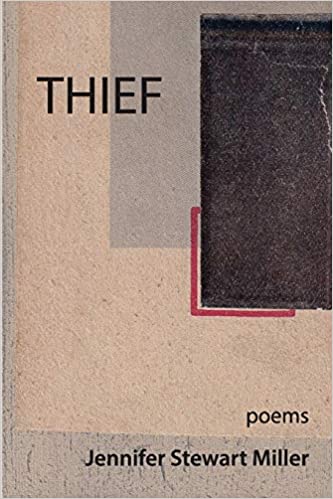
Jennifer Stewart Miller’s Thief

Jennifer Stewart Miller’s new collection, Thief, (Grayson Press 2021) begins with the poem, “My Dead,” wherein she says, “Maybe your dead / are kinder. But mine— / they won’t look you / in the eye. Won’t / say sorry or / bare their hearts.” Such are the privileges of death, one might argue. But not Miller. Instead, Thief is a collection of poems that gives voice to the deceased. They seldom say they’re sorry, but their hearts are revealed all the same.

Miller’s poems have a history of this sort of exploration. Her chapbook, The Strangers Burial Ground, recreates the lives of historical people found in New England cemeteries. But Thief hits far closer to home. These poems are more personal. In Thief, Miller explores many different forms of her own personal grief. There is the grief that follows the deaths of her father and her stepfather. But there is also the grief of a sister lost to addiction and ongoing mental health crises. In these poems are also incredible depictions of the ways that the living manage (or are forced) to endure, often because of everyday necessity. This is perhaps best explored in her poem, “The End,” where Miller writes:

I keep coming back to how my mother
left my stepfather

at Rutland Regional Medical Center
to hurry off to the bank in Granville—

thinking she could still add her name
to some account or other by

bringing in a few shaky words he’d
scribbled on a scrap of paper.

And that was that.
After all the grand passion—

just an old married couple
trying to sort things out.

One of Miller’s many strengths is the slantwise framework of her poetry as seen in “Poems I Probably Won’t Write About My Stepfather” that hints some parts of the past are better left unexplored no matter how much they haunt us. In “This poem has a highway in it” the poem takes on geographical qualities that reveal history, and yet, like the aforementioned highway, the poem and the narrative inside it move ever forward. It’s impossible to read this poem without feeling such forward momentum that you feel part of the narrative.

Another of Miller’s strengths is her knowledge of the natural world and a gift for mixing biological details with current events and elements of her own life, as in this poem:

To the Dead Striped Bass Swimming in Sunset

Swim on, beached beauty, agog
in the chilly marsh, aglow without
scales or skin. May the jut
of your jaw, your eyeless eyes,
guide you back to the sea. May
your body—filleted of flesh—
follow so lightly. Long, supple,
golden spine. Ribs vaulted with
air and light. Moony-white tail.
Even the waves lap you a prayer—
undulate, undulate. Striped bass—
gather up my newly dead, school
with them, show them the way
out of the still-dead April grass.

And the title poem, “Thief” celebrates the masked banditry of a raccoon even though its life is fleeting. “Tonight, I’ll raise a glass to what moon there is,” Miller says in this poem, “and lick up every last tongue-full of grief.” And really, this entire collection is like a celebration of that sweet taste that comes alongside grief. How would we go on without it?

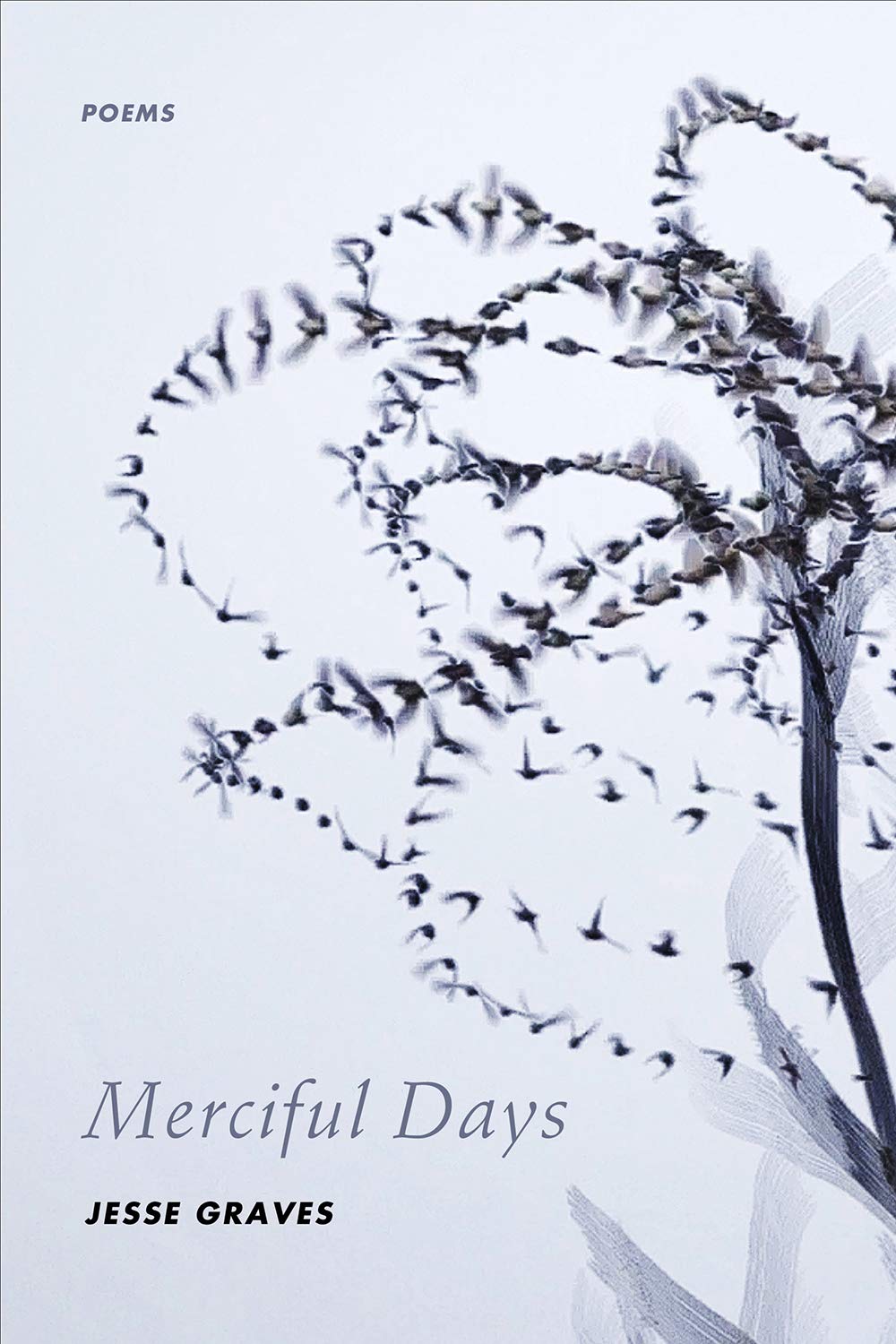
Jesse Graves’ Merciful Days

In his third solo poetry collection, Merciful Days, Jesse Graves returns to the East Tennessee farm of his youth. The land Graves writes about is also his ancestral home. Sense of place is almost a requirement for Tennessee writers, but Graves’ abiding connection to place gives exquisite life and meaning to his work. Many poems center around the loss of the author’s father and brother. Those poems are poignant in their own right, but they speak to a larger theme that flows throughout the collection: that we as individuals are only a fleeting part of something much larger and more mysterious than we can fully comprehend. This idea is evident in “Mossy Springs” where the narrator revisits a watering hole on the family farm:

…you wonder at the bloodlines
that drank here before you,
dating as far back as time records.

Hunters from the original tribes,
trackers chasing game upstream,
farmers drawn over from the fields,

and now you, looking for the lost
kingdom of your ancestors,
their eternal thirst to be found.

For Graves, this big examination of generations extending “as far back as time records” is inseparable from his own personal experience. His life is tied to the past in ways that are not completely understood even though they are tangibly felt. “Come Running” depicts this, and it is perhaps my favorite poem in this collection:

Come Running

They amble across the field, drawn to shade,
sniffing for uncropped clover and sprout,
their slowness measurable by galactic tilt.
From a distance the calves look identical,
but watch closely, and the shadings around
white faces range from salmon to maroon,
and the little curls on their foreheads
twist in tighter and looser tangles.
If a baby separates from its mother,
she calls for it like a foghorn, the lowing
anyone can tell means “find me now.”
But listen closer, and a mother can signal
her child with the slightest grunt
from the other side of the field—
no other calf will move or even look up,
yet one comes running, summoned home.

In many ways, Merciful Days is simply about the idea of memory—how memory keeps the past connected to the present and the future, and how memory sustains us through loss and sadness. Merciful Days is an elegy, but it’s not a dirge. These poems are full of joyous moments, as well as of the deepest sense of love, the kind that only expands and grows.

Merciful Days cover

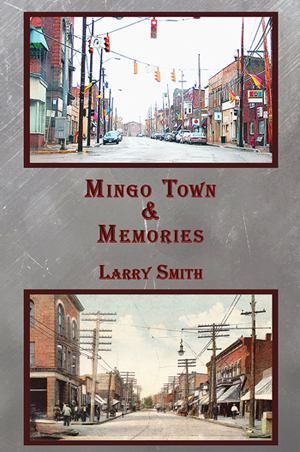
Larry Smith’s Mingo Town & Memories

In “Mingo Town & Memories,” Larry Smith has compiled some of his best work from past books along with new pieces to paint the perfect elegy of not only a place, but the lives lived in that particular place during a particular time. Smith mixes genres here by including traditional poetry along with short prose pieces. Sometimes, the town is given a voice. Sometimes the river, depicted clearly as the heart of the town, is also allowed to speak. Smith shows it from several different perspectives. One of my favorite poems is “The River.”

The River

And we went down
boys and girls together
in our school clothes
along the smelly creek
all the way to the river.
Brambles and stones
beneath our feet,
we passed rails and mill gates.
And there we stood
looking out in silence
at the great river
too wide to swim across
though some might have tried
and drowned too young.
And our teacher stepped in
allowing her skirt to rise
to her hips like a cloud
with her inside, and
lifting her arms she beckoned
one by one to her side
where she blessed aloud
our baptism, not to God,
but to the waters,
and we the fish
that lived inside
and it inside of us,
“Forever and forever,”
she simply said,
“You are one.”
And some laughed for joy
and some bowed their heads
and cried.

The idea of work is central in these poems. And if the river is the heart of this town, then the work and workers are the town’s lifeblood. In “Delivering Papers” Smith recalls that early job of his, the people on his route, the extra jobs he took along the way each morning. Rather than being too sentimental, the poem is a vehicle for showing how this job, one of the first a young boy could get and therefore lowly in one sense, made him a king in another sense. More so, a sense of belonging emerges in the poem, a sense that encapsulates the drive for much of this collection: “I would survey the town as dawning light / spread along the streets, on houses and trees, / down to the mill’s steaming cauldrons and rails / and I would know somehow, I owned this town, and / what’s more this town owned me.”

Some of the poems that resonate the most with me are the ones where Smith writes about his father. In “Cutting Down the Maple in My Father’s Yard” Smith writes, “I’ve come to love his act of work, the surest thing I know.” In shifting from the town to this personal relationship, Smith simultaneously connects all the dots. The love Smith has for his town is no more diminished than the love he has for his father throughout their respective dying.

But if not diminished, everything is still changed. Even the sense of belonging felt in “Delivering Papers” evaporates into something else. In “Hometown Immigrant—2020” Smith writes, “What I write of this place / lives in memory now, / like an old love affair or divorce.” And therein lies the heat in this work: the friction between what was and what is and the ever-shifting distance between the two.

You can listen to Smith read some poems from the book here: https://www.youtube.com/watch?v=eHn5kkZ63jo&feature=youtu.be.

You can purchase your own copy of “Mingo Town & Memories” here: https://smithdocs.net/working_lives__appalachian_writing_page.

perf5.500x8.500.indd

Emily Mohn-Slate’s The Falls

The Falls

Emily Mohn-Slate is one of the greatest emerging poets I know, and THE FALLS is a beautiful, often breathtaking, portrait of a woman’s life in our times. These poems range from a painful first marriage and its lingering scars to finding new love and becoming a mother.

Mohn-Slate’s motherhood poems are some of the most revealing of her work and perspective. In “I’m Trying to Write a Joyful Poem” she asks, “why does joy always slide / into darkness?” All along, she juxtaposes the joy of tickling her son with “the collapse of long / love, how even the brightest / glint in the eye / becomes shadow eventually.”

Possibly a better example is in the poem “Girl on the Street” where she overlays her daughter just learning to walk with overly-sexualized, objectifying comments from men. In the mix are a series of poems written to the obscure poet, Charlotte Mew. In these poems, Mohn-Slate resurrects Mew and her work for a new generation of readers while simultaneously using Mew’s life to make revelations about our current time.

The title poem for the collection originally appeared in the April / May 2016 issue of Rogue Agent Journal (http://www.rogueagentjournal.com/issue13-14), but I’m pasting the entire poem here:

The Falls

White noise like galloping
horses, water twisting over

rock edge, a green-grey pour.
Long-fingered voices

lure me down. Heavy creatures,
we were not made to rise.

The mist packs a shape
like a hand reaching.

I want to be inside it.

A woman on her honeymoon
climbed down to the falls alone.

She picked her way over
slippery rocks, and disappeared.

Barely alive in her hospital bed,
she told reporters, I wanted

to touch beauty. It was like
a tornado pulled me in.

Mohn-Slate is such accomplished poet. Some of her newer work deals with the ways our lives merge with technology. One such poem, “People at Yellow Lights Scrolling,” appears online at AGNI. Please go and read it!

You can find links to more of her work on her author page: https://emilymohnslate.com/poems/.

THE FALLS is engaging and accessible while also working at the highest levels of craft. You will read these poems and only wish there were more. Please buy a copy of this book and see for yourself. A great place to purchase is from White Whale Books, Mohn-Slate’s home book store in Pittsburg, Pennsylvania. They are also hosting a virtual reading on November 20, 2020, featuring Mohn-Slate, and it would be awesome to see you there.

3 New Poems in Delta Poetry Review

Delta Poetry Review

I’ve been excitedly waiting for the inaugural issue of Delta Poetry Review to be released, and the day is finally at hand. DPR is a new online journal edited by Dixon Hearne. They are most interested in poetry from and about the American delta region and the Deep South generally, but they’re open to all work written in English from anywhere.

Mr. Hearne and DPR were kind include to include three of my poems in this issue. “South Through Kentucky” describes driving through parts of the state where my dad grew up and where our family has extended roots. “We are Called to Invent Ourselves” was inspired from a walk in the woods near by house. And “2:00 a.m. at Three Crow Bar” is an homage to one of my best friends, set in a great Nashville bar that you should check out.

This first issue of DPR also includes work from Stephen Hundley, a poet whose work is popping up everywhere. I predict you’ll continue to see his writing a lot in the future. So get to know him now.

Delta Poetry Review is scheduled to publish their next issue in June. So now is a great time for writers to submit new work.

2 New Poems in Connotation Press & One

It’s wonderful to have two new poems published this week.

“My Ghost” was published at Connotation Press. Poetry editor Julie Brooks Barbour said some really great things about the poem. I’m so grateful to Julie and all of the crew at Connotation.

It was fun, too, to be in the same issue as Rita Quillen. Be sure to check out Rita’s poems in the issue.

The following day, “Mystery of the Hereafter” was published in Issue 17 of One, the online journal from Jacar Press. I’m grateful to editor Richard Krawiec for including my work among that of many other fine poets.

“Mystery of the Hereafter” was written after visiting the Smithsonian American Art Museum in Washington D.C. and seeing The Adams Memorial, a sculpture by Augustus Saint-Gaudens (see the image below).

sculpture

I’ve heard a lot of nice comments from people since these poems have been released. Thanks to all of you who take the time to read these poems.