Georgann Eubanks is a veteran writer and storyteller. She has published five books of nonfiction ranging from literary guides of North Carolina to natural phenomena across multiple Southern states. Along with photographer Donna Campbell, Georgann operates Minnow Media which has produced a number of public television documentaries. When I was visiting City Lights Bookstore in Sylva, North Carolina, last month, I stumbled across Georgann’s fourth book, The Month of Their Ripening. This book explores 12 different heritage foods found within North Carolina while drawing on first hand accounts from the foods’ producers. Along the way, Eubanks reveals fascinating histories of the foods, the people who produce the foods, and the places where they’re produced. I first met Georgann about ten years ago, and since that time, I’ve seen that she is also a consummate community builder. This fact echoes throughout her work in The Month of Their Ripening, one of several reasons why I emailed Georgann even before I could finish reading the book. I was so excited to ask her questions about this book and her writing process, and now I’m excited to share our conversation with you.

DL: One of the pleasures in reading The Month of Their Ripening is the diversity of foods you write about, and especially that they cover all areas of North Carolina which in itself is a large, diverse geography. How did you come to the idea to write about heritage foods? And how long did it take you to write The Month of Their Ripening?
GE: It took a couple of years to do the research, travel, and writing for this book. But as I always say when someone asks this question, the only proper answer is to give my age at the time of completion of a manuscript. A book takes everything I’ve learned over all my years! To be ready to write it, I had to ripen, too!
My first three books with UNC Press were literary travel guides featuring excerpts from North Carolina writers about very specific places where they had lived, worked, or visited in the state. So yes, North Carolina is big, and it took three regional volumes—mountains, piedmont, and coastal plain—to cover the 400 years of writers and the 600+ miles it takes to cross the state. That was a ten-year project, but once photographer Donna Campbell and I rested up after that long journey, we wanted to travel the state again. This time we would eat our way across North Carolina!
How it started: I planted a fig in my yard that was the first to survive of many I had tried to grow over the years. When it began producing figs, I was stunned by the delicious fragility and ephemeral nature of the fruit. You have to WAIT for a fig to ripen, and they only come around once a year. The figs got me to thinking about how spoiled we are in this country, being able to find most any food any time of the year at the grocery.
I started wondering about the foods that are a key part of North Carolina’s history and heritage, and further, what are the foods that our forebears planted in the ground or harvested from the water that they looked forward to eating as a seasonal ritual? Twelve essays seemed a good size to match up to a whole year of foods in their time of ripening. Of course, January was tricky—nothing much to harvest here in January—so the book starts with snow, which becomes a rarer treat the farther east you go in North Carolina. Nevertheless, people have been fanatically making snow cream forever, and as it turns out, there are a million recipes and very strong opinions here about the best way to make snow cream. So that’s where the book begins.
DL: Each chapter in The Month of Their Ripening is beautifully written, and as I read, I was often struck by the voice of your writing which finds the perfect intersection between essay (what some would call creative nonfiction with lush description and personal experience) and investigative journalism (that involves some deep research). Was it difficult to arrive at this intersection, or is this just your natural voice? Do you have tips for writers who want to employ personal interviews or research in their projects?
GE: This is a style that works for me. I start out with my ignorance and take the reader with me on the journey to discover the history, science, and people who have perpetuated these food traditions. As I discover the stories, the reader does, too. And I try to capture my own joy and surprise in what I learn—some of it deep history, like how figs are discussed in the Old Testament. Then there’s the funny story about how a lady friend of Thomas Jefferson was told by her kitchen staff that she could not serve figs in Washington, DC, at a formal dinner party because figs were “vulgar.” And of course, there’s D.H. Lawrence’s sexy prose on the fig. But these are historical anecdotes anyone can find. What made these stories only mine were the interviews/visits with people on the ground, such as the single man left in Ridgeway, North Carolina, who is still growing a special variety of cantaloupe that was once was harvested by his extended family and shipped north by train in great quantities and served as a special seasonal treat at New York’s Waldorf Astoria.
My advice is to embrace your ignorance and go from there—find the best stories from people who have good tales and expertise to share. Honor their stories.
DL: One of my favorite aspects in these chapters is the exploration of these various communities that exist all around us. There’s a good amount of detective work involved in your writing, as one person connects you to another and another. More than simply following the pathways from production to consumption, you’re actually getting to know the people you’re talking to and understanding how their lives and livelihoods are connected. How much of that is driven by your own curiosity such as when you wonder what the berries are on the tree outside your home? Do you have advice for writers about following their own curiosities?
GE: I wanted to show the diversity of communities and people in North Carolina. And now, at least three of the homegrown experts on foods who are featured in The Month of Their Ripening have passed away—the octogenarian and scuppernong grower Clara Brickhouse, the persimmon festival host Gene Stafford, and the snow ice cream expert and unforgettable writer/scholar Randall Kenan. I am so glad to have known them and learned from them and shared their food stories in print. I think this quote from nonfiction writer Tracy Kidder says it best:
“Essays often gain authority from a particular sensibility’s fresh apprehension of generalized wisdom. But the point is not to brush aside the particular in favor of the general, not to make everything a grand idea, but to treat something specific with such attention that it magnifies into significance.”
— from Good Prose: The Art of Nonfiction by Tracy Kidder and Richard Todd
DL: As with your past books, this one was published by The University of North Carolina Press. Can you talk about how you developed a relationship with them and about your experience publishing with a university press?
I have been with UNC Press for so long that I have had three editors—the first two have now retired. I first worked with them on the literary guidebooks. That project was a work-for-hire with a contract from the North Carolina Arts Council. The last two books I pitched to UNC Press on my own. Both are trade books, the last being Saving the Wild South: The Fight for Native Plants on the Brink of Extinction, which has done pretty well, too. I am finishing my sixth book now, also about natural phenomena and covering seven states of the South. (Saving the Wild South featured endangered plants in six states.)
These days university presses are doing more trade books, meaning popular books that are not written only for an academic audience. This is a good thing in that the commercial publishing industry has become more and more centralized and seems only interested in best sellers or what they hope will be best sellers. Regional books have a better chance with a university press. For the press, their trade list often sells enough to supplement the small revenues (if any) that come from highly specialized academic books that have a narrower audience.
But here’s the thing, no matter who your publisher is nowadays, the success of a book rests on the shoulders of the author. You need to be able to present the book in such a way that readers buy it. I think my books have been accepted because they are evergreen, as the publisher likes to say—they tell stories that will last. I also have a track record of giving countless book talks through all five of these books, and I enjoy speaking about the work. Truth is, there is only so much time and money that a press has to give to an individual book. My editor at UNC Press just launched 12 new books this spring that are his babies. Meanwhile, he is going to be reading my new manuscript come November and trying to acquire new titles and coaching first time authors. He called upon me last week to read a book proposal from a new author and give my assessment of its distinctions and potential. That’s how university presses work—the editors depend on the proposal and later the manuscript being reviewed by professionals in the academic field being addressed or by seasoned writers with trade book experience who know the marketplace.
I also have an editor I privately engage to read and critique the manuscript because I know that is necessary. I am also responsible for creating an index—that’s part of the contract these days, too. I have gotten a small grant to cover my travel expenses for the current book I’m writing, which helps, but I don’t do this for the money. I do it because it’s a great challenge, I care about the topic, and I can make a little money giving talks. I get other writing assignments that also help support me.
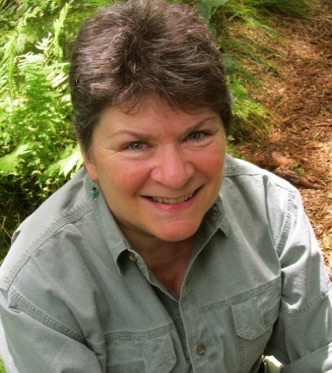
DL: I’m looking forward to seeing you later this month at the Table Rock Writers Workshop, which is a lovely community of writers and musicians that you shepherd. I believe registration will be closed by the time our conversation is published, but can you talk about your work with TRWW for readers who aren’t familiar? And do you have anything to say about why community is important for writers?
GE: The Table Rock Writers Workshop was born out of the Duke University Writers Workshop, which I attended in the 1980s and then directed for 20 years starting in the 90s. The workshop at Duke was heavily focused on the faculty, getting big name writers—lots of them—to teach. Over the years, we have carved out a different path. We are focused on the participants. I invite faculty who love to teach and have a passion for writing that transcends any concern about commercial success. We don’t really talk much about publication per se, or the marketplace. We focus on writing the best book or story or poem you can. Our workshop is about craft and being in community—getting the support and encouragement you need for the story you want to tell. Our way of building that community of writers is having generous teachers who model how to give useful feedback. Participants begin to learn how to edit themselves and how to stick with the discipline needed to finish a draft. Our teachers are people like you, Denton, who do it for the love of words and are generous with sharing what you know.
I’m very grateful for Georgann’s time in speaking to me. You can order The Month of Their Ripening directly from University of North Carolina Press, or wherever books are sold. Please visit Georgann’s website for more information about her and her work.
In case you missed it… I’ve had wonderful conversations with summer with Andy Fogle, the new poetry editor at Salvation South, with Patrician Hudson, author of the historical novel Traces, and with J.D. Isip, author of the poetry collection Kissing the Wound.
If you’re in the Knoxville, Tennessee, area, I hope you’ll join me at Union Avenue Books on Sunday, August 13. I’ll be reading alongside my great friend Sylvia Woods, author of What We Take With Us, a beautiful collection of poems that explores Sylvia’s personal experience as an educator, as well as her own transition from daughter to mother and eventually to grandmother. The reading begins at 2:00 p.m., and we’d love to see you there.
 Denton Loving
[…] case you missed it… check out my conversation with Georgann Eubanks, where we discussed her travels across North Carolina celebrating some of the state’s most […]
LikeLike
[…] my past conversations about writing and publishing with Kendra Winchester, Melanie K. Hutsell and Georgann Eubanks. Also, I hope you’ll have a look at Bill Griffin’s wonderful site, Verse and Image, […]
LikeLike