Recommended Reading 12/12/2017

The year is slipping away, but here are a few last-minute reading recommendations.  Enjoy!

Megan Culhane Galbraith has a short essay about sex, virginity, and Planned Parenthood online at Boink: http://boinkzine.com/2017/11/10/losing-it/.

Linda Michel-Cassidy’s essay, “This Snow, This Day,” (originally published at Harpur Palate) has been republished at Entropy: https://entropymag.org/this-snow-this-day/.

Rosemary Royston has two poems in the new issue of museum of americahttps://themuseumofamericana.net/current-issue/two-poems-by-rosemary-royston/.

Brian Tierney’s poem, “Morning in Galilee,” is online at Cincinnati Reviewhttps://www.cincinnatireview.com/samples/morning-in-galilee-by-brian-tierney/

You don’t want to miss this fascinating conversation in real pants, “HALF REVEALING, AND HALF CONCEALING THE SOUL: BARRETT WARNER INTERVIEWS CASSIE PRUYN”: https://realpants.com/half-revealing-and-half-concealing-the-soul-barrett-warner-interviews-cassie-pruyn/.

And Christian Whitney’s story, “Acceptance,” was a finalist in the summer fiction contest at Gulf Stream Literary Magazine.  Check out the story here: https://gulfstreamlitmag.com/acceptance/.

Keegan Lester’s “A Psalm against J.D. Vance”

I’ve written and spoken much about my disgust for media darling J.D. Vance and his book, Hillbilly Elegy.  If you don’t already know my position, you can check out my review of the book in issue #189 of Meredith Sue Willis’s Books for Readers.  There have been far more articulate arguments against Vance’s terrible book, but up until now, most of those responses have been in the form of reviews and op-eds.

I was excited to discover that Keegan Lester responded in a beautiful poem, published recently online at Anastamos and well worth the read.

A Psalm against J.D. Vance by Keegan Lester

Spill a little lighting for Ryan & Marcus, Natalie, &
my great grandfather. Spill

a little lightning for Tom & Jason & Joe & Teresa.
Graveyards round here full

of people cause there’s a thousand ways into the mine,
a thousand ways to be

killed in the mine, cause the American coal miner
can only be seen in light

when they’re dead. The only time the media has a big interest
is the day after & one day a hundred years will pass

& they wont even love nature anymore,
& they will say what we did to the natives was genocide

& they will say what we did to those cities was apartheid
& they will say what we did to Appalachia was colonialism,

we treated them as if not our people, but things
to bring ore up out of a mountain,

& one day they will use the word slave
& one day they will let Appalachian children speak for themselves

& one day they will let Appalachian children into colleges
& not ask them to denounce the place they came from

their culture, their religion, their hands,
& one day they will let Appalachian children speak

& the Appalachian children will say you can’t lose but so much blood,
then the body

shutting down; it was cheaper to destroy a mountain
than put up a man to work underground,

my brother’s body mangled in such a way,
every bone crushed, I could not recognize him,

that’s what they gave us back
of the miners up at Upper Big Branch,

Don Blankenship’s employees, they were our friends, beneath the surface.
They were brave men at work.

Recommended Reading 10/9/2017

Here’s a quick list of some of the wonderful poetry and nonfiction that I’ve found online in the last couple of weeks.  This list is woefully short of fiction recommendations, but I’ll try to fix that soon.  In the meantime, enjoy these pieces:

Joanne Nelson has a new essay, “Just Leave the Damn Thing Open” online in the new issue of museum of americana: https://themuseumofamericana.net/current-issue/just-leave-the-damn-thing-open-nonfiction-by-joanne-nelson/.

Linda Michel-Cassidy interviewed Louise Marburg for Why There Are Wordshttps://www.wtawpress.org/louise-marburg-interview?platform=hootsuite

Megan Culhane-Galbraith and Walter Robinson both have work listed as Notable Essays in the Best American Essays 2017.  Megan’s piece, “Sin Will Find You Out” was originally published at Catapult: https://catapult.co/stories/sin-will-find-you-out.  Walter’s essay, “This Will Sting and Burn,” was originally published at The Sun: https://www.thesunmagazine.org/issues/481/this-will-sting-and-burn.

Didi Jackson has a beautiful poem, “Signs for the Living,” in The New Yorker: https://www.newyorker.com/magazine/2017/10/02/signs-for-the-living.

Corina Zappia has a brilliant new essay in Catapult about growing up in Texas, and a lot of it sure reminds me of what it’s like to live in Tennessee: https://catapult.co/stories/places-loving-hating-and-being-from-texas.

Cassie Pruyn’s poetry collection, Lena, has been reviewed by Lambda Literary Review: https://www.lambdaliterary.org/reviews/09/13/lena-by-cassie-pruyn/ .

Emily Mohn-Slate’s poem, “Landscape with Ex-husband Lingering,” has been nominated for a Best of the Net Award by Gulf Stream Literary Magazine: https://gulfstreamlitmag.com/landscape-with-ex-husband-lingering/

Recommended Reading 8/4/2017

If you’re looking for something worthwhile to read this weekend, look no further.

Lorraine Comanor’s essay, “The Carnevale Masks,” is online at The Raven’s Perch: http://www.theravensperch.com/the-carnevale-masks-by-lorraine-commanor/

LA Times - X PressAgatha French interviewed the publishers of the new L.A. press X Artists’ Books, and yeah, one of them happens to be Keanu Reeves: http://www.latimes.com/books/la-ca-jc-keanu-reeves-artists-books-20170719-story.html.

Emily Mohn-Slate’s essay, “The Colossal”—about Iris van Herpen, Girls Write Museum and the way art and poetry makes our worlds larger—is in At Length’s art section: http://atlengthmag.com/art/the-colossal-iris-van-herpen-and-girls-write-the-museum/.

Jennifer Stewart Miller has two great poems in The Green Mountains Reviewhttp://greenmountainsreview.com/two-poems-28/.  Here’s a small taste from her poem, “Thirsty Birds:”

You don’t have to believe,
to think there’s something about

the flicker’s up-stretched profile
that’s like a shaft of sunlight

piercing an old church.

Barrett Warner reviewed Keith Lesmeister’s book, We Could’ve Been Happy Here, for Atticus Review: https://atticusreview.org/life-rattling-review-couldve-happy-keith-lesmeister/.  Barrett also has new poems online at Verse Wrights: http://www.versewrights.com/warner-barrett.html, including one called “Rainbow Pig.”  Here’s a few lines from “All the Latest Talk in Paradise Concerning Butterflies:”

This we know: butterflies need milkweed–
their only food—and its poison, their only defense,
 
and we are pitchfork lonely for connection,
the piercing tines make five holes in our lungs.

Fiction lovers won’t want to miss Tiffany Williams’ new short story, “Murmuration,” in Appalachian Heritage: http://appalachianheritage.net/2017/05/26/murmuration/.

And if you haven’t seen it yet, check out the new issue of The Tishman Reviewhttp://www.thetishmanreview.com/.

Jeanne Bryner’s “Breach Calf”

Years ago, when I was a student at The Hindman Settlement School’s Appalachian Writers Workshop, I met Jeanne Bryner.  We became instant friends, bonding over poems written about cows and calves, both of us having lived on or near cattle farms for much of our lives.  Jeanne is an award winning poet, fiction writer and playwright.  She was born in Appalachia and grew up near Warren, Ohio.  She has a beautiful new book (her 7th) called Both Shoes Off, published by Bottom Dog Press.  The book is filled with many wonderful poems, but here is one of my favorites from this new collection:

Breach Calf by Jeanne Bryner

The calf’s hind feet point to barn rafters.
Inside his mama, he dreams a baby brother,

how they sit the moon’s lap for a story.
Climbing down, he does a somersault, lands wrong.

And now, this farmer, his gloved arm pushes him
back and back and back, his mama strains at her plow.

Then, other rough men, special chains, metal wrapped
just below his knees, not wanting a cripple,

a calf who cannot run or play. Mama’s fresh blood,
pain’s awful hands squeeze, no breath for his whistle.

The beautiful boy asleep in clean straw,
but all in the manger are still,

save the bawling mother
washing her son, calling his name to the moon.

Recommended Reading 2/26/2017

If you’re looking for something good to read or listen to, here are some suggestions!

K.L. Browne wrote about the podcast A Phone Call from Paul over at Entropyhttp://entropymag.org/podcast-philia-a-phone-call-from-paul-with-paul-holdengraber/.

Susan Ishmael wrote a beautiful essay about religion at Parabolahttps://parabola.org/2017/01/31/the-turn-of-the-dial-seeking-god-in-the-fringes-by-susan-ishmael/?utm_content=buffer49356&utm_medium=social&utm_source=twitter.com&utm_campaign=buffer.  Be careful reading if you’re afraid of snakes.

Kate Jayroe has a new story in Juked: http://www.juked.com/2017/02/kate-jayroe-woonwinkel.asp.

Gail Tyson has a beautiful new poem in the February issue of Art Ascent, which is a really cool journal worth exploringhttp://www.magcloud.com/browse/issue/1229904.

There’s a wonderful interview with Barrett Warner over at Tethered By Letters: https://tetheredbyletters.com/author-qa-barrett-warner/.

The always funny Corina Zappia writes about 50 Shades Darker and “asinine dating choices” online at Salonhttp://www.salon.com/2017/02/20/50-shades-of-regret-a-cautionary-tale-about-online-dating-and-the-movies/.

And the Best of the Net awards have been announced! Congrats to Cassie Pruyn for making the list with her poem, “Traveler’s Monologue,” originally published in Border Crossing.  And congrats to Adam Clay who’s on the list with his poem, “When the People We Know Become the People We Don’t,” originally published at Jet Fuel Review.  You can see the whole list here: http://www.sundresspublications.com/bestof/.

cover-spring-2016-2-crop-u94041

Finally, check out this story about how Danny Judge faced some pretty incredible difficulties while creating of The Indianola Reviewhttp://m.washingtontimes.com/news/2017/feb/18/iowa-man-creates-literary-journal-while-supporting/.

Recommended Reading 1/16/2017

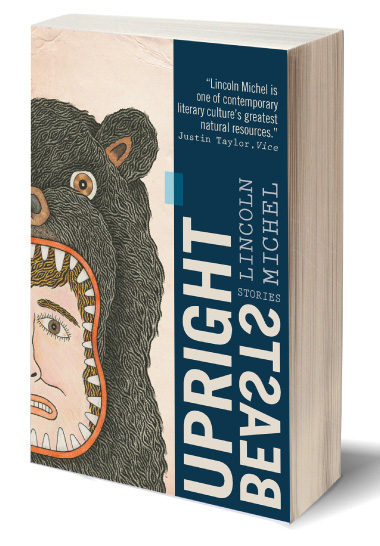
I just finished reading Lincoln Michel‘s collection, Upright Beasts.  One of my favorite stories is “Things Left Outside,” which also appears online at Weird Fiction Reviewhttp://weirdfictionreview.com/2015/10/things-left-outside/.

lmbookpage3_edited

An essay of Walter Robinson’s that was originally published in The Sun has now been picked up by Reader’s Digest, and you can read the whole piece here: http://www.rd.com/health/conditions/doctor-becomes-the-patient/. (Check out Walter’s new website for more of his work: https://wmrobinson.com/.)

Corina Zappia has a new piece, My Sandwich Is Going to Eat Me, at The Stranger: http://www.thestranger.com/food-and-drink/2017/01/03/24758265/my-sandwich-is-going-to-eat-me.

Kate Jayroe has an essay online at JMWW: https://jmwwblog.wordpress.com/2017/01/09/essay-parts-by-kate-jayroe/.

Keith Lesmeister interviewed Susan Pagani on his blog (Life as a Shorty) about her story, The Fledgling, in The Rappahannock Review: https://keithlesmeister.com/blog/.

Finally, I was excited to read Lynne Sharon Schwartz’s thoughts about the English poet Stevie Smith in this review: https://lareviewofbooks.org/article/looking-for-parents-and-cover-all-the-poems-of-stevie-smith/#! I didn’t know much about Smith’s poetry before reading this piece, and Lynne Sharon Schwartz continues to be so smart.  I admire her more all of the time.

Alison Stine’s “Ohio Violence” and “On Poverty”

Recently my friend William Kelley Woolfitt sent me an essay he thought I should see: Alison Stine’s “On Poverty” at The Kenyon Review.  This essay was a response to an essay by Claire Vaye Watkins’ called “On Pandering.”  Watkins’ essay received a lot of attention in literary circles, and there were many responses.  But Alison Stine’s response is the best I have seen, and I wish more people would read it.

Earlier this week, I railed about J. D. Vance’s ignorant and stumbling assessment of Appalachia, the Rust Belt and the wider world in his poorly named memoir Hillbilly Elegy. One of my chief complaints about the book is that Vance addresses shockingly little about class structures and dynamics.  Stine says infinitely more in her short essay than Vance says in his entire book.

alison-stine-ohio-violence

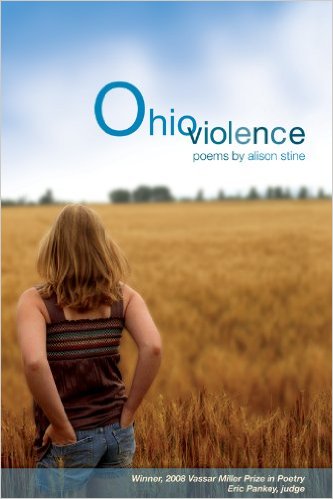
When I asked William to tell me more about Stine, he recommended her poetry collection, Ohio Violence, which I read this week and which I highly recommend. Ohio Violence was the 2008 winner of the Vassar Miller Prize in Poetry, and she’s written three books since it.  Stine’s website links to a number of individual poems and essays, but here is one from Ohio Violence that I especially like.  This poem, “When I Taught Mary to Eat Avacado,” is also found at Verse Daily.  I hope you’ll enjoy her work as much as I do.


When I Taught Mary to Eat Avacado

                      She didn’t understand.

You couldn’t cut straight through with the big knife
because of the pit, or heart, or stone.

                      We gave it many names,

and when it was revealed, bone-shade,
heavy-bottomed, she wanted to keep it.

                      She washed it, and the skin

dried and crackled, lost shards. I taught her to salt
the pebbled rim, and dig with the tip

                      of a spoon, which is like a knife.

The flesh curl surprises, but it’s a taste you’ll miss.
When she stole the story I told then,

                      how the Aztecs locked up virgins

during the avocado harvest, how this was repeated
to others in her own language,

                      I knew we were bound to take

what we could from each other and go.
I didn’t tell her what the name

                      for avocado meant, its connection

to the male body, which she wanted no part of,
which I am now a part of.

                      Perhaps that is the end

of the story, his flesh in my mouth. Perhaps
the women were not locked up,

                      but went, willing.


Recommended Reading 1/4/2017

As the new year is starting, I wanted to share some of the great stories, poems and essays that I’ve been reading lately.  I hope you enjoy these as much as I have.

Darnell Arnoult’s essay, When I Started to Cry, is online at Blackbird: http://www.blackbird.vcu.edu/v15n2/nonfiction/arnoult-d/started_page.shtml.

Becky Bond, who is always hilarious, writes about the anxiety that comes with filling out forms: http://www.beckybondwrites.com/ffa-form-filling-anxiety.

Agatha French, the new staff writer in books at the Los Angeles Times, recently interviewed Stephanie Danler about her bestseller, Sweetbitter: http://www.latimes.com/books/jacketcopy/la-ca-jc-danler-sweetbitter-20160916-snap-story.html.  She also interviewed Jill Soloway and Eileen Myles about creativity, “queer art,” and the end of their relationship: http://www.latimes.com/books/jacketcopy/la-ca-jc-soloway-myles-20161031-story.html?utm_source=Books&utm_campaign=5465d277fe-EMAIL_CAMPAIGN_2016_10_26&utm_medium=email&utm_term=0_ee9d7b9236-5465d277fe-79848189.

Megan Galbraith’s wonderful essay, Learning to Mother Myself, was published in The Manifest Station: http://themanifeststation.net/2016/11/22/learning-to-mother-myself/.

Keith Lesmeister’s forthcoming collection, We Could Have Been Happy Here, is included in Memorious’s list of most anticipated books of 2017: https://memoriousmag.wordpress.com/2016/12/28/barrett-bowlins-anticipated-books-of-2017/.

Linda Michel-Cassidy interviewed Gonzalo Torne for The Rumpus: http://therumpus.net/2016/11/the-rumpus-interview-with-gonzalo-torne/.

Shawna Kay Rodenberg has written an important article about education, coal and poverty in Eastern Kentucky for Salon: http://www.salon.com/2016/12/31/sheltering-in-place-for-students-in-donald-trump-loving-coal-country-school-choice-isnt-a-solution/.

Susan Pagani’s story, The Fledgling, is in the new issue of The Rappahannock Review: http://www.rappahannockreview.com/susan-pagani-the-fledgling-f/.

Cassie Pruyn wrote a brilliant essay for VIDA that you should read and share: http://www.vidaweb.org/report-from-the-field-speaking-into-silences/.

Corina Zappia is a frequent contributor to The Stranger’s Food & Drink section. Recently, she wrote “Mackerel, You Sexy Bastard: In Defense of Sardines, Herring, and other Maligned Fishy Fish,” http://www.thestranger.com/food-and-drink/2016/10/26/24645304/mackerel-you-sexy-bastard and “Washington Is Getting so Cheesy,” http://www.thestranger.com/food-and-drink/2016/09/09/24551761/washington-is-getting-so-cheesy.


My 2016 Reading List


In regards to reading, I had two goals this year.  Actually, I’m going to refer to them as one goal and one hope.

The goal was to read one Shakespeare play each month.  The few I had read before this year were school assignments, which I mostly wasn’t prepared to read and didn’t get much out of.  I got a bit behind during the fall semester, but I managed to catch up just this week in order to complete my goal.

My hope was to read 100 books this year.  Why 100?  I don’t know.  It’s a fairly arbitrary number, but it’s nice and round, and I thought this was the year that I could do it.  Unfortunately, I’m a bit short, clocking in at only 91 books read this year (full list below).  I admit that almost half of those books were poetry books, which means that many were a bit short.  Still, 91 is a respectable number, or so I’m telling myself.

Here’s the full list.  FYI, a few of these books are unpublished manuscripts.  You won’t find them for purchase yet, but I hope you’ll find them one day soon.

  1. Leo Tolstoy – War and Peace
  2. Diane Cook – Man V. Nature
  3. Steven Pressfield – The War of Art
  4. David Daniel – Seven-Star Bird
  5. Charles Dodd White & Larry Smith – Appalachia Now
  6. William Trent Pancoast – Valley Real Estate
  7. William Shakespeare – Othello
  8. William Kelley Woolfitt – Beauty Strip
  9. William Kelley Woolfitt – Charles of the Desert
  10. Richie Hofmann – Second Empire
  11. Jill McCorkle – Creatures of Habit
  12. Junot Diaz – The Brief and Wondrous Life of Oscar Wao
  13. Michael Ondaatje – Divisadero
  14. William Shakespeare – The First Part of Henry VI
  15. Jeremy Jones – Bearwallow
  16. Elijah Burrell – The Skin of the River
  17. William Shakespeare – The Second Part of Henry VI
  18. Wesley Browne – Slice
  19. Pauletta Hansel – The Lives We Live in Houses
  20. Alex Taylor – The Name of the Nearest River
  21. Major Jackson – Holding Company
  22. Kyle McCord – You Are Indeed an Elk, But This is Not the Forest You Were Born to Graze
  23. Jodi Lynn Anderson – Tiger Lily
  24. Brent Martin – Hunting for Camellias at Horseshoe Bend
  25. William Shakespeare – The Third Part of Henry VI
  26. Robert Zubrin – The Case for Mars
  27. Rose McLarney – The Always Broken Plates of Mountains
  28. Rose McLarney – Its Day Being Gone
  29. Lee Smith – Cakewalk
  30. Amy Willoughby-Burle – Out Across the Nowhere
  31. Darnell Arnoult – Galaxie Wagon
  32. William Shakespeare – Richard III
  33. Pasture Art – Marlin Barton
  34. Barrett Warner – Why is it so hard to kill You?
  35. New Stories from the South 2008 – ZZ Packer
  36. A Fox Appears – Jennifer Stewart-Miller
  37. Larry Brown – Joe (June)
  38. Bob Shachohis – The Woman Who Lost Her Soul
  39. Geoff Dyer – Yoga For People Who Can’t Be Bothered to Do It
  40. Theodore Wheeler – Bad Faith
  41. Joanne Proulx – We All Love the Beautiful Girls
  42. William Shakespeare – The Tempest
  43. Ross Gay – Catalog of Unabashed Gratitude
  44. Jim Elledge – Tapping My Arm for a Vein
  45. William Shakespeare – Two Gentleman of Verona
  46. Keith Stewart – Bernadette Peters Hates Me
  47. Cassie Pruyn – Lena
  48. Nathan Hill – The Nix
  49. Erica Anderson-Senter – Seven Days Now
  50. J.K. Daniels – Wedding Pulls
  51. Sue Weaver Dunlap – Knead
  52. Lauren K. Alleyne – Difficult Fruit
  53. Major Jackson – Hoops
  54. Brandon Courtney – Rooms for Rent in the Burning City
  55. Henry Real Bird – Horse Tacks
  56. Jen Leija – Good Bones
  57. William Shakespeare – A Midsummer Night’s Dream
  58. Lyrae Van Clief-Stafanon – Open Interval
  59. Ron Houchin – Death and the River
  60. David Armand – My Mother’s House
  61. William Shakespeare – The Merry Wives of Windsor
  62. Thomas Rain Crowe – Radiogenesis
  63. Dorianne Laux – The Book of Men
  64. Mark Eisner – The Essential Neruda – Selected Poems
  65. Richard Hague – Possible Debris
  66. Nathalie Handal – Poet in Andalucia
  67. Saeed Jones – Prelude to Bruise
  68. Joseph Bathanti – Anson County
  69. Jim Minick – Burning Heaven
  70. Jim Harrison – Letters to Yesenin
  71. Tim Peeler – Fresh Horses
  72. Mark Wagenaar – Body Distances
  73. Richard Hague – Alive in Hard Country
  74. Connie Jordan Green – Darwin’s Breath
  75. Grace Paley – Later the Same Day
  76. William Shakespeare – Measure for Measure
  77. TJ Jarrett – Zion
  78. Carrie Mullins – Night Garden
  79. William Shakespeare – Comedy of Errors
  80. William Shakespeare – Love’s Labour’s Lost
  81. -91. (11 poetry manuscripts I read for a contest)

I’d love to know what you read this year.  If you don’t want to include your full list, what were your favorite books of 2016?