Joanne Proulx’s We All Love the Beautiful Girls

I met Canadian author Joanne Proulx about five years ago.  When we met, she had already published a wonderful novel called Anthem of a Reluctant Prophet, which I fell in love with quickly and deeply and for real.  It’s a beautiful book.  And it’s being made into a major motion film starring Juliette Lewis, Cameron Monaghan, Grayson Gabriel and Alexander MacNicoll.  It’s scheduled for release in 2018, and I can’t wait to watch.

Now Proulx has written another novel, We All Love the Beautiful Girls. I had an opportunity to read an advanced copy of the novel, and it’s so good that it hurts—heartbreaking and full of hope all at the same time.

Joanne Proulx book cover

Robert Wiersema reviewed the book for The Toronto Star, and he gave this synopsis of how the book starts:

Proulx spends the book’s first few pages offering glimpses into what seem nearly blessed lives. Mia and Michael are happily married, with a certain level of financial freedom: Michael is partner in a property management company and Mia, having left a job in banking, is now trying to build a career as a photographer. They might not be able to afford a spontaneous weekend in Whistler, but they own their own home and make do with skiing vacations closer to home in the company of their friends Helen and Peter — Michael’s partner — and their daughter Frankie. Their son, Finn, 17, is a good student, popular, who receives secret nocturnal visits from Jess, the beautiful girl next door, who years before was his babysitter.

Their idyllic lives are shattered, however, with the events of one night in late February. Early that evening, Mia and Michael are informed that not only has Peter been embezzling from the company, he has actually written Michael out of the partnership, stealing the firm out from under him. Later that night, intoxicated and fleeing a debauched house party, Finn passes out in the snow, and loses his right hand to the cold.

While this sounds like it might be the set-up for a standard triumph-against-adversity narrative, a fall-and-rise story, Proulx has something considerably stronger, and subtler, in store. The shifting fortunes of the Slate family put each character through their own individual struggles, pushing them to the breaking point, and beyond.   (Read all of Wiersema’s review here.)

“The book is also about anger and its consequences, both sexual and physical,” says Peter Robb in Ottawa’s artsfile. Robb also reports:

When she was young, Joanne Proulx had a brush with danger. A young man threw her over his shoulder at a party and headed upstairs. It was funny to start and then it wasn’t funny at all. Proulx avoided being sexually assaulted because, she said, she’s a fighter, but many, many women aren’t so fortunate.

The Ottawa writer has taken her own life experiences and those of many others, and built a book, a complex, thoughtful and provocative second novel called We All Love the Beautiful Girls that probes deeply into the lives and relationships of privileged people and those that they hold in their sway.

Proulx says this novel was written in part because she saw a terrifying rise in violence against women all over the world.  “It was always there but the conversation seemed to be moving more to the centre,” she told Robb.  And although this novel is not overtly political, it’s definitely a novel of our current political ad social atmosphere, where anyone who has power will use it regardless of the consequences.  Despite that truth, We All Love the Beautiful Girls is a pleasure to read.  Buy it today.

Recommended Reading 8/4/2017

If you’re looking for something worthwhile to read this weekend, look no further.

Lorraine Comanor’s essay, “The Carnevale Masks,” is online at The Raven’s Perch: http://www.theravensperch.com/the-carnevale-masks-by-lorraine-commanor/

LA Times - X PressAgatha French interviewed the publishers of the new L.A. press X Artists’ Books, and yeah, one of them happens to be Keanu Reeves: http://www.latimes.com/books/la-ca-jc-keanu-reeves-artists-books-20170719-story.html.

Emily Mohn-Slate’s essay, “The Colossal”—about Iris van Herpen, Girls Write Museum and the way art and poetry makes our worlds larger—is in At Length’s art section: http://atlengthmag.com/art/the-colossal-iris-van-herpen-and-girls-write-the-museum/.

Jennifer Stewart Miller has two great poems in The Green Mountains Reviewhttp://greenmountainsreview.com/two-poems-28/.  Here’s a small taste from her poem, “Thirsty Birds:”

You don’t have to believe,
to think there’s something about

the flicker’s up-stretched profile
that’s like a shaft of sunlight

piercing an old church.

Barrett Warner reviewed Keith Lesmeister’s book, We Could’ve Been Happy Here, for Atticus Review: https://atticusreview.org/life-rattling-review-couldve-happy-keith-lesmeister/.  Barrett also has new poems online at Verse Wrights: http://www.versewrights.com/warner-barrett.html, including one called “Rainbow Pig.”  Here’s a few lines from “All the Latest Talk in Paradise Concerning Butterflies:”

This we know: butterflies need milkweed–
their only food—and its poison, their only defense,
 
and we are pitchfork lonely for connection,
the piercing tines make five holes in our lungs.

Fiction lovers won’t want to miss Tiffany Williams’ new short story, “Murmuration,” in Appalachian Heritage: http://appalachianheritage.net/2017/05/26/murmuration/.

And if you haven’t seen it yet, check out the new issue of The Tishman Reviewhttp://www.thetishmanreview.com/.

Recommended Non-fiction Reading 7/24/2017

I don’t know if it’s something in the air or the water, but I’ve read some really wonderful nonfiction pieces lately, and I wanted to share them.

After the birth of her children, Emily Mohn-Slate had trouble finding her way back to herself.  Check out her essay at Rackedhttps://www.racked.com/2017/6/19/15757368/motherhood-bodies-postpartum-clothes .

If I told you, “She was warned. She was given an explanation. Nevertheless, she persisted,” you might think I was speaking about Elizabeth Warren, but I’m actually talking about Megan Culhane Galbraith.  She writes about how divine rules were meant to be broken for The Coachella Reviewhttp://thecoachellareview.com/wordpress/talking-points/

I love to read book reviews and interviews, especially when they are smart and insightful.  K.L. Brown interviewed Brad Listi over at Entropyhttps://entropymag.org/otherppl-with-brad-listi-an-interview-with-the-interviewer-of-todays-leading-writers/

And Cassie Pruyn reviewed Joshua Jennifer Espinoza’s second book, There Should Be Flowers, for Blackbird: http://www.blackbird.vcu.edu/v16n1/nonfiction/pruyn-c/flowers_page.shtml#.WUqxKA_P-PU.facebook.

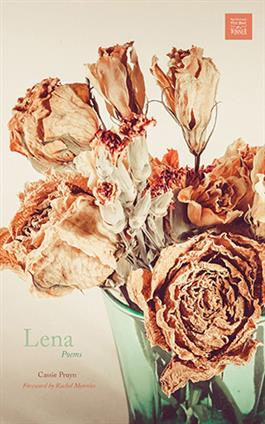
Cassie Pruyn has her own book of poetry, Lena, that was recently released by Texas Tech University Press.  If you don’t own it yet, you really should buy it immediately. I’ll be sharing more about this beautiful collection soon, but as a teaser, check out this mention at Rosemary and Reading Glasseshttps://rosemaryandreadingglasses.com/2017/07/18/recommended-reading-lena-by-cassie-pruyn/.

Lena cover


Friends From the Past

Pembroke cover.jpg

My story, “Friends From the Past,” is in the new issue of Pembroke Magazine.  The editor in chief, Jessica Pitchford, was really wonderful to work with, and it was an extra bonus to share these pages with Scott Gould, a great writer and the chair of the creative writing department at South Carolina Governor’s School for the Arts and Humanities.

Jeanne Bryner’s “Breach Calf”

Years ago, when I was a student at The Hindman Settlement School’s Appalachian Writers Workshop, I met Jeanne Bryner.  We became instant friends, bonding over poems written about cows and calves, both of us having lived on or near cattle farms for much of our lives.  Jeanne is an award winning poet, fiction writer and playwright.  She was born in Appalachia and grew up near Warren, Ohio.  She has a beautiful new book (her 7th) called Both Shoes Off, published by Bottom Dog Press.  The book is filled with many wonderful poems, but here is one of my favorites from this new collection:

Breach Calf by Jeanne Bryner

The calf’s hind feet point to barn rafters.
Inside his mama, he dreams a baby brother,

how they sit the moon’s lap for a story.
Climbing down, he does a somersault, lands wrong.

And now, this farmer, his gloved arm pushes him
back and back and back, his mama strains at her plow.

Then, other rough men, special chains, metal wrapped
just below his knees, not wanting a cripple,

a calf who cannot run or play. Mama’s fresh blood,
pain’s awful hands squeeze, no breath for his whistle.

The beautiful boy asleep in clean straw,
but all in the manger are still,

save the bawling mother
washing her son, calling his name to the moon.

Recommended Reading 2/26/2017

If you’re looking for something good to read or listen to, here are some suggestions!

K.L. Browne wrote about the podcast A Phone Call from Paul over at Entropyhttp://entropymag.org/podcast-philia-a-phone-call-from-paul-with-paul-holdengraber/.

Susan Ishmael wrote a beautiful essay about religion at Parabolahttps://parabola.org/2017/01/31/the-turn-of-the-dial-seeking-god-in-the-fringes-by-susan-ishmael/?utm_content=buffer49356&utm_medium=social&utm_source=twitter.com&utm_campaign=buffer.  Be careful reading if you’re afraid of snakes.

Kate Jayroe has a new story in Juked: http://www.juked.com/2017/02/kate-jayroe-woonwinkel.asp.

Gail Tyson has a beautiful new poem in the February issue of Art Ascent, which is a really cool journal worth exploringhttp://www.magcloud.com/browse/issue/1229904.

There’s a wonderful interview with Barrett Warner over at Tethered By Letters: https://tetheredbyletters.com/author-qa-barrett-warner/.

The always funny Corina Zappia writes about 50 Shades Darker and “asinine dating choices” online at Salonhttp://www.salon.com/2017/02/20/50-shades-of-regret-a-cautionary-tale-about-online-dating-and-the-movies/.

And the Best of the Net awards have been announced! Congrats to Cassie Pruyn for making the list with her poem, “Traveler’s Monologue,” originally published in Border Crossing.  And congrats to Adam Clay who’s on the list with his poem, “When the People We Know Become the People We Don’t,” originally published at Jet Fuel Review.  You can see the whole list here: http://www.sundresspublications.com/bestof/.

cover-spring-2016-2-crop-u94041

Finally, check out this story about how Danny Judge faced some pretty incredible difficulties while creating of The Indianola Reviewhttp://m.washingtontimes.com/news/2017/feb/18/iowa-man-creates-literary-journal-while-supporting/.

Life as a Shorty

Many thanks to Keith Lesmeister for featuring my story, “How the Mammoth’s Blood Flows” on this blog, “Life as a Shorty.”  There’s a short interview there also where Keith asked some questions about the story and my writing process.  “Life as a Shorty” is a great forum that Keith publishes online everyweek to talk about short fiction.  I hope you’ll follow his blog to be part of the discussion.

https://keithlesmeister.com/2017/01/life-as-a-shorty-how-the-mammoths-blood-flows-by-denton-loving-published-in-prime-number-magazine/

Recommended Reading 1/16/2017

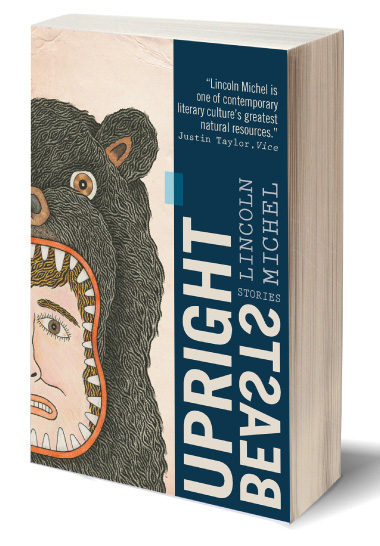
I just finished reading Lincoln Michel‘s collection, Upright Beasts.  One of my favorite stories is “Things Left Outside,” which also appears online at Weird Fiction Reviewhttp://weirdfictionreview.com/2015/10/things-left-outside/.

lmbookpage3_edited

An essay of Walter Robinson’s that was originally published in The Sun has now been picked up by Reader’s Digest, and you can read the whole piece here: http://www.rd.com/health/conditions/doctor-becomes-the-patient/. (Check out Walter’s new website for more of his work: https://wmrobinson.com/.)

Corina Zappia has a new piece, My Sandwich Is Going to Eat Me, at The Stranger: http://www.thestranger.com/food-and-drink/2017/01/03/24758265/my-sandwich-is-going-to-eat-me.

Kate Jayroe has an essay online at JMWW: https://jmwwblog.wordpress.com/2017/01/09/essay-parts-by-kate-jayroe/.

Keith Lesmeister interviewed Susan Pagani on his blog (Life as a Shorty) about her story, The Fledgling, in The Rappahannock Review: https://keithlesmeister.com/blog/.

Finally, I was excited to read Lynne Sharon Schwartz’s thoughts about the English poet Stevie Smith in this review: https://lareviewofbooks.org/article/looking-for-parents-and-cover-all-the-poems-of-stevie-smith/#! I didn’t know much about Smith’s poetry before reading this piece, and Lynne Sharon Schwartz continues to be so smart.  I admire her more all of the time.

Alison Stine’s “Ohio Violence” and “On Poverty”

Recently my friend William Kelley Woolfitt sent me an essay he thought I should see: Alison Stine’s “On Poverty” at The Kenyon Review.  This essay was a response to an essay by Claire Vaye Watkins’ called “On Pandering.”  Watkins’ essay received a lot of attention in literary circles, and there were many responses.  But Alison Stine’s response is the best I have seen, and I wish more people would read it.

Earlier this week, I railed about J. D. Vance’s ignorant and stumbling assessment of Appalachia, the Rust Belt and the wider world in his poorly named memoir Hillbilly Elegy. One of my chief complaints about the book is that Vance addresses shockingly little about class structures and dynamics.  Stine says infinitely more in her short essay than Vance says in his entire book.

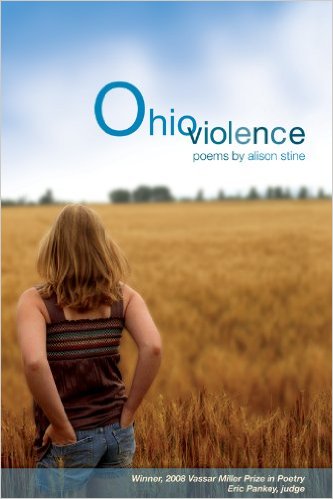
alison-stine-ohio-violence

When I asked William to tell me more about Stine, he recommended her poetry collection, Ohio Violence, which I read this week and which I highly recommend. Ohio Violence was the 2008 winner of the Vassar Miller Prize in Poetry, and she’s written three books since it.  Stine’s website links to a number of individual poems and essays, but here is one from Ohio Violence that I especially like.  This poem, “When I Taught Mary to Eat Avacado,” is also found at Verse Daily.  I hope you’ll enjoy her work as much as I do.


When I Taught Mary to Eat Avacado

                      She didn’t understand.

You couldn’t cut straight through with the big knife
because of the pit, or heart, or stone.

                      We gave it many names,

and when it was revealed, bone-shade,
heavy-bottomed, she wanted to keep it.

                      She washed it, and the skin

dried and crackled, lost shards. I taught her to salt
the pebbled rim, and dig with the tip

                      of a spoon, which is like a knife.

The flesh curl surprises, but it’s a taste you’ll miss.
When she stole the story I told then,

                      how the Aztecs locked up virgins

during the avocado harvest, how this was repeated
to others in her own language,

                      I knew we were bound to take

what we could from each other and go.
I didn’t tell her what the name

                      for avocado meant, its connection

to the male body, which she wanted no part of,
which I am now a part of.

                      Perhaps that is the end

of the story, his flesh in my mouth. Perhaps
the women were not locked up,

                      but went, willing.


Recommended Reading 1/4/2017

As the new year is starting, I wanted to share some of the great stories, poems and essays that I’ve been reading lately.  I hope you enjoy these as much as I have.

Darnell Arnoult’s essay, When I Started to Cry, is online at Blackbird: http://www.blackbird.vcu.edu/v15n2/nonfiction/arnoult-d/started_page.shtml.

Becky Bond, who is always hilarious, writes about the anxiety that comes with filling out forms: http://www.beckybondwrites.com/ffa-form-filling-anxiety.

Agatha French, the new staff writer in books at the Los Angeles Times, recently interviewed Stephanie Danler about her bestseller, Sweetbitter: http://www.latimes.com/books/jacketcopy/la-ca-jc-danler-sweetbitter-20160916-snap-story.html.  She also interviewed Jill Soloway and Eileen Myles about creativity, “queer art,” and the end of their relationship: http://www.latimes.com/books/jacketcopy/la-ca-jc-soloway-myles-20161031-story.html?utm_source=Books&utm_campaign=5465d277fe-EMAIL_CAMPAIGN_2016_10_26&utm_medium=email&utm_term=0_ee9d7b9236-5465d277fe-79848189.

Megan Galbraith’s wonderful essay, Learning to Mother Myself, was published in The Manifest Station: http://themanifeststation.net/2016/11/22/learning-to-mother-myself/.

Keith Lesmeister’s forthcoming collection, We Could Have Been Happy Here, is included in Memorious’s list of most anticipated books of 2017: https://memoriousmag.wordpress.com/2016/12/28/barrett-bowlins-anticipated-books-of-2017/.

Linda Michel-Cassidy interviewed Gonzalo Torne for The Rumpus: http://therumpus.net/2016/11/the-rumpus-interview-with-gonzalo-torne/.

Shawna Kay Rodenberg has written an important article about education, coal and poverty in Eastern Kentucky for Salon: http://www.salon.com/2016/12/31/sheltering-in-place-for-students-in-donald-trump-loving-coal-country-school-choice-isnt-a-solution/.

Susan Pagani’s story, The Fledgling, is in the new issue of The Rappahannock Review: http://www.rappahannockreview.com/susan-pagani-the-fledgling-f/.

Cassie Pruyn wrote a brilliant essay for VIDA that you should read and share: http://www.vidaweb.org/report-from-the-field-speaking-into-silences/.

Corina Zappia is a frequent contributor to The Stranger’s Food & Drink section. Recently, she wrote “Mackerel, You Sexy Bastard: In Defense of Sardines, Herring, and other Maligned Fishy Fish,” http://www.thestranger.com/food-and-drink/2016/10/26/24645304/mackerel-you-sexy-bastard and “Washington Is Getting so Cheesy,” http://www.thestranger.com/food-and-drink/2016/09/09/24551761/washington-is-getting-so-cheesy.